
 By Siti Muinah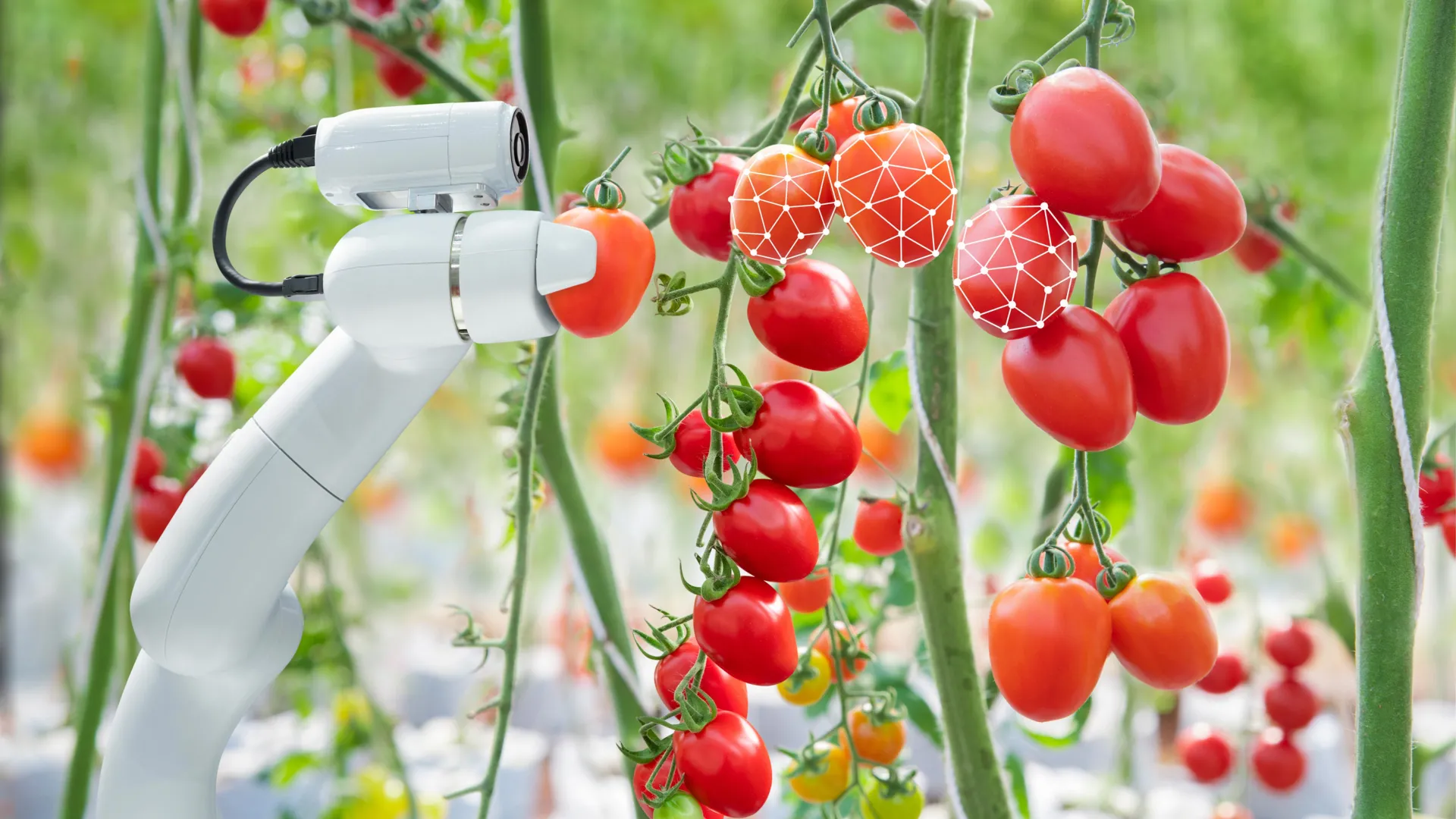
As the global agricultural sector grapples with an aging workforce and chronic labor shortages, the promise of robotic automation has shifted from a futuristic concept to an economic necessity. While industrial farming has long utilized machinery for large-scale operations like grain harvesting, the delicate, high-value world of fresh produce—specifically tomatoes—has remained a stubborn challenge for automation. A breakthrough at Osaka Metropolitan University (OMU) is now changing the calculus, moving robotics beyond simple detection and into the realm of nuanced, "intelligent" decision-making.
The Challenge of the Cluster: Why Tomatoes Defy Automation
The difficulty in automating tomato harvesting lies in the plant’s natural growth pattern. Unlike crops that grow in uniform rows or singular stalks, tomatoes grow in clusters. This biological complexity presents a significant hurdle for standard robotic vision systems.
A robot operating in a greenhouse must navigate a chaotic environment of tangled vines, broad leaves, and varying fruit maturity levels. To successfully harvest a tomato, a machine must not only identify the fruit but also distinguish between ripe and unripe specimens, account for the stem’s orientation, and maneuver around physical obstructions without damaging the plant.
Traditional robotic approaches have focused heavily on "detection"—identifying that a tomato exists in a specific coordinate. However, detection is only half the battle. A robot can identify a tomato, but if the fruit is tucked behind a thick canopy of leaves or attached to a stem at an awkward angle, the robotic arm may fail to grasp it or, worse, bruise the fruit. This binary "success or failure" approach has historically limited the efficacy of agricultural robots, leading to high damage rates and slow operational speeds.
Chronology of the Innovation: From Detection to Decision-Making
The shift in perspective championed by Assistant Professor Takuya Fujinaga of OMU’s Graduate School of Engineering represents a fundamental change in agricultural robotics.
Phase I: Identifying the Gap
In early field studies, researchers observed that robotic arms often struggled with "visual occlusion"—the phenomenon where leaves or other tomatoes block the robot’s path. Engineers realized that existing algorithms were attempting to force picks based on static coordinates, ignoring the physical reality of the harvest.
Phase II: The Development of "Harvest-Ease"
Recognizing that not all tomatoes are created equal, Fujinaga pivoted the research focus toward a new metric: "harvest-ease estimation." Instead of asking the robot to grab every detected tomato, the system was programmed to evaluate the probability of a successful pick before engaging. This involved integrating advanced image recognition with statistical modeling to calculate the optimal approach angle.
Phase III: Field Validation and Iterative Learning
Testing was conducted in controlled greenhouse environments where the robot was exposed to a variety of real-world variables. The system began to treat the harvest not as a single task, but as a multi-step process. If the robot’s initial approach to a tomato was deemed "low-ease" due to an obstruction, the system would calculate an alternative trajectory—often approaching from the side—to ensure a clean harvest.
Supporting Data: The Metrics of Success
The efficacy of the OMU system is reflected in its performance metrics, which have set a new benchmark for robotic agricultural dexterity. In recent trials, the system achieved an 81% success rate in harvesting tomatoes. While 81% might seem modest in a vacuum, in the context of robotic harvesting, it is a significant leap forward.
Perhaps more telling is the data regarding "recovery picks." Approximately 25% of all successful harvests were achieved only after an initial, front-facing approach was rejected by the algorithm as having a low probability of success. The robot effectively "decided" that the first path was suboptimal and immediately recalculated a lateral approach. This ability to adapt in real-time is the hallmark of the "harvest-ease" methodology.
The research, recently published in Smart Agricultural Technology, quantifies the variables that impact this success, including:
- Stem Geometry: The angle and length of the peduncle (the stalk attaching the tomato to the vine).
- Occlusion Density: The percentage of the fruit covered by leaves or stems.
- Cluster Proximity: How tightly packed the fruit are within a specific cluster.
By transforming these physical factors into a "quantitatively evaluable metric," Fujinaga has moved agricultural robotics from a hardware-centric discipline to one rooted in intelligent, data-driven strategy.
Official Responses and Expert Perspective
In discussions regarding the implementation of this technology, Assistant Professor Takuya Fujinaga has been clear about the intent of his work. "This moves beyond simply asking ‘can a robot pick a tomato?’ to thinking about ‘how likely is a successful pick?’, which is more meaningful for real-world farming," Fujinaga stated.
He emphasizes that the goal is not to eliminate human intervention, but to redefine it. "This research establishes ‘ease of harvesting’ as a quantitatively evaluable metric, bringing us one step closer to the realization of agricultural robots that can make informed decisions and act intelligently," he noted.
Industry analysts suggest that this breakthrough addresses the "cost-benefit" wall that many ag-tech startups have hit. By increasing the efficiency and decreasing the damage rate of robotic harvesters, the "harvest-ease" model makes these machines financially viable for medium-sized operations, not just massive, industrial-scale greenhouses.
Implications: The Future of Human-Robot Collaboration
The implications of the OMU study extend far beyond the tomato patch. As the population grows and the agricultural labor force continues to dwindle, the integration of robots into the daily farming cycle is inevitable. However, the nature of this integration is evolving into a model of "collaborative agriculture."
A New Division of Labor
Fujinaga envisions a future where the farm floor is a collaborative space. In this model, robots function as high-efficiency harvesters for the "easy" produce—those fruits that are clearly visible and easily accessible. By offloading these repetitive and straightforward tasks to machines, the robots handle the bulk of the harvest volume.
Human farmers, conversely, would shift into a more managerial and surgical role. They would handle the "difficult" picks—tomatoes located in complex, high-occlusion clusters where human dexterity and judgment are still superior to machine vision. This symbiosis ensures that the harvest is completed faster while minimizing human fatigue and maximizing the utilization of both labor and technology.
Economic and Sustainability Impacts
The adoption of such systems could have profound effects on the supply chain. By reducing the reliance on manual labor for the entirety of the harvest, farmers can mitigate the impact of labor shortages, stabilize production costs, and potentially lower the retail price of fresh produce. Furthermore, as these robots become more efficient at identifying the specific moment of ripeness, food waste—a major issue in modern agriculture—could be significantly reduced.
The Path Toward Full Autonomy
While the current system requires human-robot collaboration, the foundational logic established by the "harvest-ease" metric provides a roadmap for full autonomy. As computer vision hardware improves and the statistical models are fed more data, the percentage of "difficult" picks that a robot can successfully navigate will increase. Eventually, the threshold for what constitutes a "human-only" task will continue to shrink.
Conclusion
The work being conducted at Osaka Metropolitan University represents a critical bridge between the theoretical potential of robotics and the practical demands of the field. By quantifying the complexity of the harvest and prioritizing intelligent decision-making over brute-force automation, Professor Fujinaga and his team have provided a template for the future of food production.
As the agricultural industry faces the dual pressures of an increasing global food demand and a decreasing labor supply, technologies that foster human-robot collaboration will be the key to survival. The intelligent, adaptive tomato-picking robot is not just a clever machine; it is a vital component of a more resilient, efficient, and sustainable food system. As these findings move from the pages of Smart Agricultural Technology to the greenhouse floor, they promise to change not just how we harvest, but how we conceptualize the very nature of agricultural labor in the 21st century.
 Sagoh
Sagoh  Asro
Asro 