
 By Layla Zulfa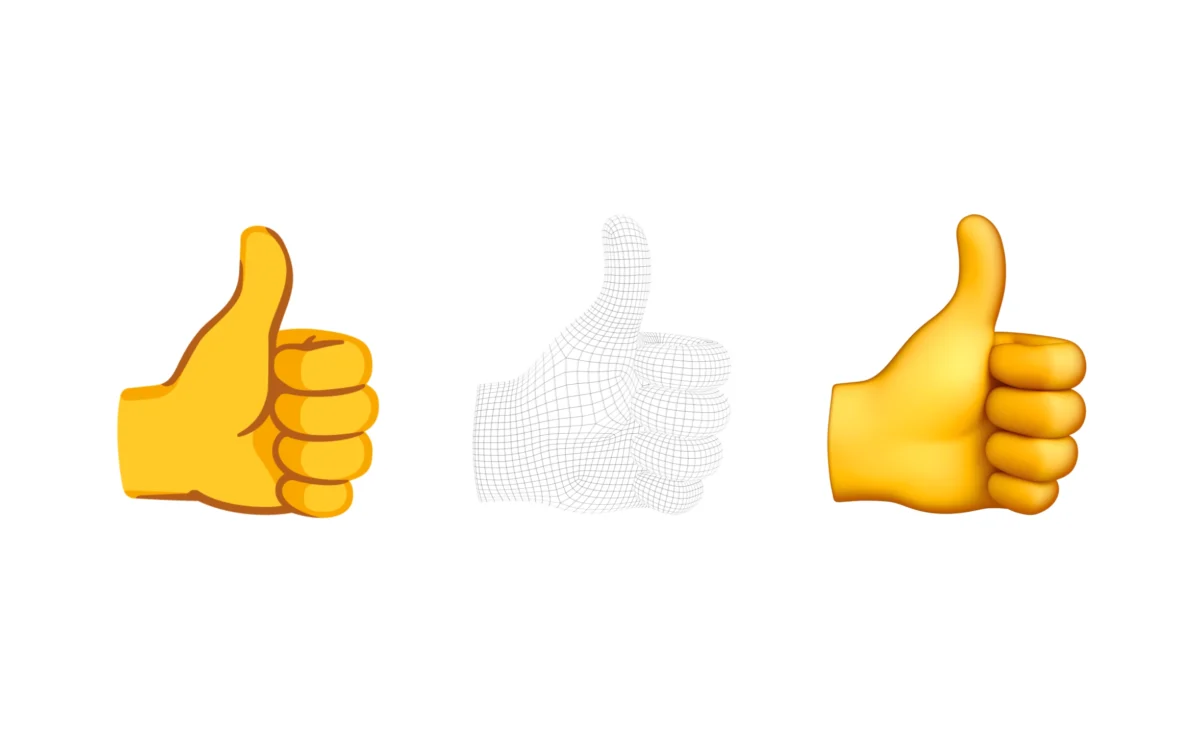
By Terrence O’Brien
July 18, 2026
In a move that bridges the gap between digital iconography and spatial computing, Google has pulled back the curtain on the intricate design philosophy behind its Noto Emoji 3D set. To mark World Emoji Day, the tech giant did more than just explain the "how" and "why" of its latest visual language; it took the unprecedented step of open-sourcing the entire collection. By releasing the raw .OBJ files to the public, Google is inviting developers, artists, and creators to integrate these assets into VR environments, indie software, and the burgeoning landscape of digital memes.
The Evolution of the Pictogram: From 2D to 3D
For over a decade, emojis have functioned as the shorthand of the internet. They are the emotional punctuation marks of our digital lives, typically rendered as flat, vector-based illustrations. However, as the industry pivots toward spatial computing, augmented reality (AR), and virtual reality (VR), the two-dimensional nature of the classic emoji began to feel restrictive.
Google’s design team faced a fundamental existential question: How do you translate a symbol designed for a flat screen into a tangible, three-dimensional object?
"When you move from 2D to 3D, every assumption about the icon changes," says the internal design team. "A smiley face isn’t just a circle anymore. Is it a sphere? Is it a convex mask? Is it a flat disc floating in space? These decisions dictate how light interacts with the object, how it occupies space, and how it feels to the user."
The design process involved a deep dive into material physics. Google sought to maintain the "Noto" aesthetic—a design language characterized by simplicity, readability, and warmth—while introducing depth, texture, and shading. The result is a set of assets that feel like physical clay or plastic models, retaining the charm of the original 2D versions while gaining the heft required for immersive environments.
Chronology: The Journey to Noto 3D
The road to this open-source release has been a calculated, multi-stage rollout:
- Initial Concept Phase (2024–2025): Google’s design team began experimenting with volume-based emoji designs. The goal was to maintain consistency across various operating systems while ensuring the icons remained recognizable at a glance.
- The May 2026 Debut: The Noto Emoji 3D collection officially launched on Android. The reaction was immediate and polarized. While many praised the tactile quality and whimsical nature of the designs, others—specifically fans of the traditional, flatter aesthetic—expressed concern about the potential for "visual clutter" in messaging apps.
- Refinement Period: Following the launch, Google monitored feedback regarding accessibility and legibility. The designers focused on balancing "pop" with "clarity," ensuring that the 3D depth didn’t hinder the user’s ability to quickly identify an emoji’s intent.
- World Emoji Day 2026: Google officially announced the open-sourcing of the entire Noto 3D library. By releasing the raw .OBJ files, the company has effectively handed the keys to its visual identity over to the community.
Supporting Data: Why Geometry Matters
The technical challenges of this transition cannot be understated. In 2D, the primary constraint is color and line weight. In 3D, developers must contend with vertex counts, polygon topology, and texture mapping.
Google’s decision to release .OBJ files—a standard, widely compatible file format—is a strategic move to lower the barrier to entry for independent developers. By providing high-quality, pre-modeled assets, Google is essentially providing a "starter kit" for anyone looking to build:
- VR Chatrooms: Allowing users to express themselves with 3D objects that can be manipulated in virtual space.
- Indie Gaming: Utilizing these assets as environmental decorations or UI elements in small-scale games.
- Creative Expression: Empowering digital artists to remix these models into surrealist art or "weird memes," as the company suggested in its announcement.
The data suggests that the demand for these assets is high. Since the announcement, early-adopter developers have already begun importing the assets into engines like Unity and Unreal, exploring how these emojis react to dynamic lighting and physics engines.
Official Responses and the "Emoji Movie" Factor
Google’s official statement was clear: "We’re handing over raw .OBJ files to the community so they can use them to build immersive VR worlds, indie apps, or weird memes."

The tone from the company is one of playful experimentation. However, the move has prompted some skepticism. The mention of "immersive VR worlds" inevitably triggers memories of The Emoji Movie, a cultural touchstone that became synonymous with the commodification of digital communication. The fear, for some, is that moving emojis into the 3D realm might strip them of their simple, utility-driven charm.
Google seems cognizant of this, emphasizing that the assets are provided "as-is" for the community to define their purpose. They are not prescribing how these emojis should be used; they are merely providing the tools for the next generation of digital interaction.
Implications: The Future of Spatial Interaction
The implications of this move are twofold: cultural and technological.
Cultural Implications
Emojis have become a universal language. By making their 3D iterations open-source, Google is essentially "democratizing" the aesthetic of the next era of computing. If these 3D models become the standard for VR interfaces, they will shape how we communicate in the metaverse. We are no longer just sending a symbol; we are potentially placing a 3D object into someone else’s field of vision. This necessitates a new set of digital etiquette and design standards.
Technological Implications
From a technical standpoint, this is a masterclass in platform building. By allowing third-party developers to use Noto 3D assets, Google ensures that its visual language remains dominant across different platforms. If an indie app on a competitor’s headset uses Google’s Noto 3D emojis, the brand’s visual identity remains present, even outside of the Android ecosystem.
Furthermore, this release puts pressure on other tech giants—such as Apple and Meta—to reconsider their own approaches to emoji design. Will they continue to iterate on flat, proprietary designs, or will they follow Google’s lead and embrace the collaborative potential of open-source 3D assets?
Looking Ahead: A New Language for a New World
As we look toward the remainder of 2026 and beyond, the influence of these 3D models will likely expand. While some critics remain wary of the "sassy cat" emoji gaining a physical presence, the creative possibilities are vast.
Whether these emojis will truly define the "immersive VR worlds" of the future remains to be seen. However, one thing is certain: the conversation around digital communication is shifting. We are moving away from the flat, two-dimensional walls of the text message and into a space where our expressions can have depth, shadow, and substance.
Google has taken a gamble by releasing these assets into the wild. By inviting the community to take their work and "make it weird," they are betting that the collective creativity of the internet will do more to advance the medium than any corporate-led design board ever could. For now, the files are live, the models are ready, and the digital landscape is about to get a whole lot more tactile.
As developers, artists, and enthusiasts begin to populate their own virtual corners of the internet with these familiar icons, we may find that our digital shorthand has more depth than we ever imagined—literally. The evolution of the emoji is no longer just about which character we choose; it’s about how that character occupies the world we are building together.
 Raul Delapena Setiawan
  Siti Muinah
  Asro
Asro 