
 By Raul Delapena Setiawan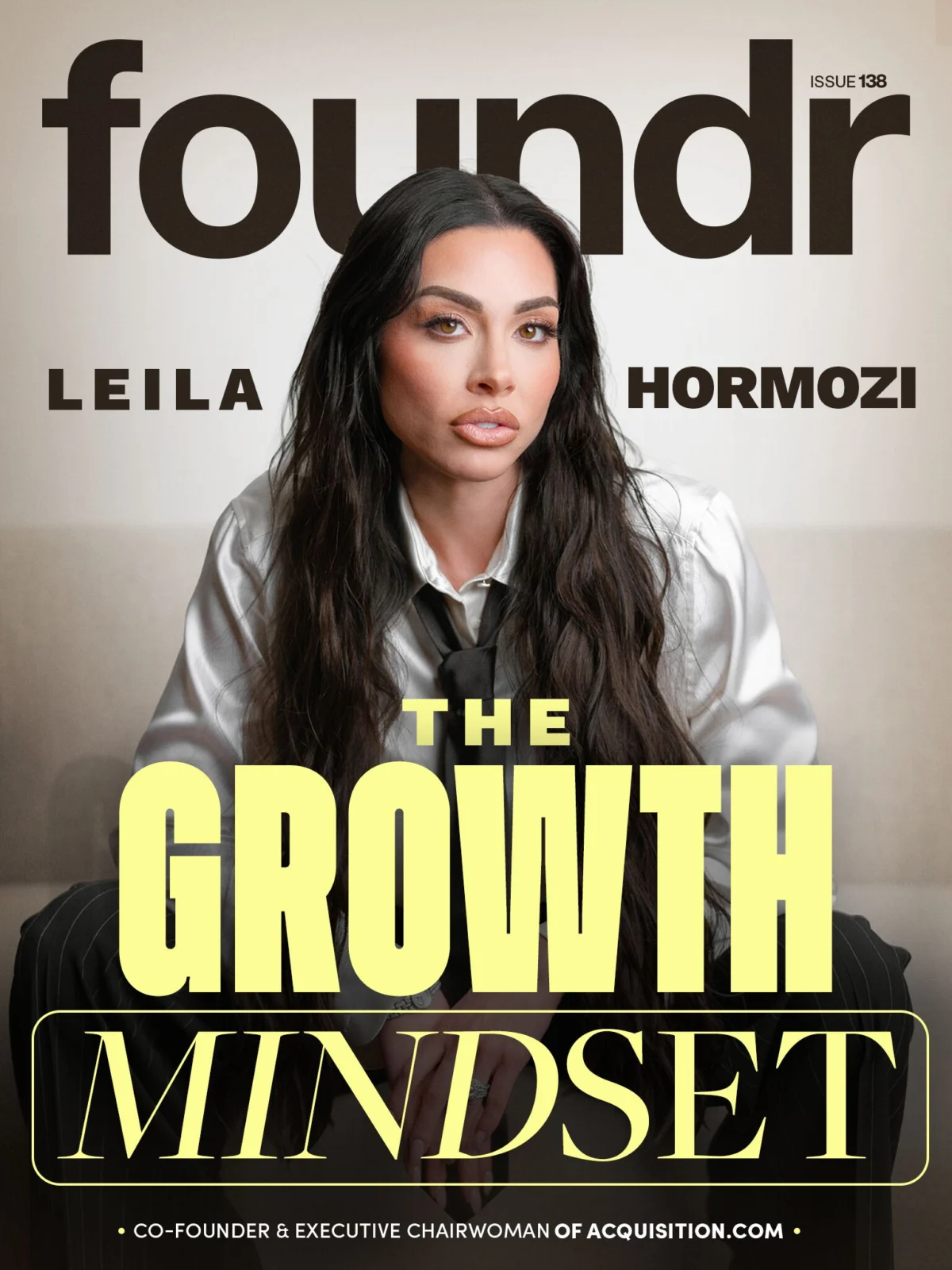
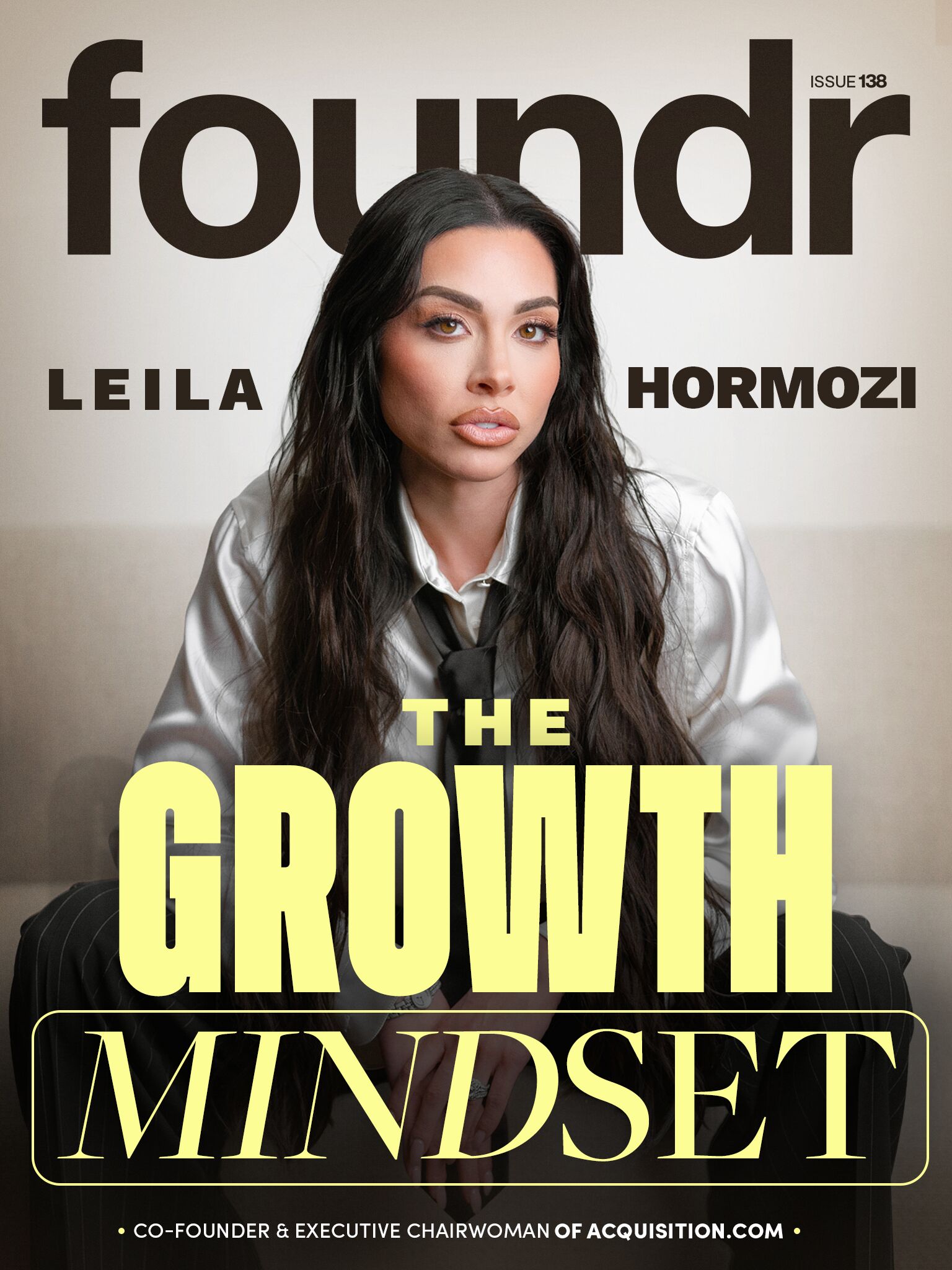
Leila Hormozi is not your typical Silicon Valley success story. There are no venture capital funding rounds fueled by hype, no ivy-league pedigree, and certainly no clean-cut path to the top. Instead, her ascent to co-founding Acquisition.com—a portfolio of companies generating over $250 million in annual revenue—is a narrative defined by the raw, often uncomfortable reality of personal transformation.
In a candid interview with Foundr CEO Nathan Chan, Hormozi dismantles the polished veneer of entrepreneurship, offering a stark look at how a journey that began with six arrests in eighteen months became the crucible for a high-performance business philosophy.
The Chronology of a Transformation
Hormozi’s life can be bisected into two distinct eras: the period of self-destruction and the era of radical self-responsibility.
The Low Point
In her early twenties, Hormozi was spiraling. Plagued by family turmoil and internal anger, she turned to substance abuse and destructive behavior. The result was a string of six arrests within a year and a half. For many, this would be the end of the line, but for Hormozi, it served as a brutal wake-up call.
The turning point came at her father’s house following her sixth arrest. Expecting a volatile confrontation, she was instead met with a quiet, devastating truth: her father told her that if she continued on her current path, she would likely lose her life.

"It was the first time I realized that my actions had real consequences," Hormozi recalls. "I wasn’t a kid anymore, and this was my fault."
That moment of realization triggered an immediate pivot. She moved across the country, cut ties with her former life, and began an obsessive journey of self-education, devouring the works of personal development titans like Jim Rohn and Tony Robbins. She stresses that this wasn’t the result of "discipline," but rather "complete pain." She reached a threshold where the agony of remaining the same finally eclipsed the fear of changing.
The Grind of the Early Days
With just $5,000 in her bank account and rent consuming $1,500 of it, Hormozi began working as a personal trainer. This was her apprenticeship in high-stakes survival. She walked to local gyms, hustled for every client, and learned the fundamental mechanics of sales and customer retention. It was here that she developed the "operator" mindset that would later define her career.
When she met her business partner and husband, Alex Hormozi, the duo leaned into the chaos. The early days of their first major venture, Gym Launch, were defined by "one disaster after another," including a fraudulent business partner and locked merchant accounts. Despite the volatility, they scaled the company from zero to $50 million in just twenty months.
Data-Driven Growth and Structural Execution
Hormozi’s success isn’t just about grit; it is about a clinical understanding of business infrastructure. She argues that most businesses fail not due to a lack of vision or a bad product, but because of poor execution.
The Four Capacities of Scale
According to Hormozi, before any company can scale, it must build "in excess" in four specific areas:
- Financial Capacity: Having the capital to weather market volatility.
- Personnel Capacity: Ensuring the right human capital is in place before the growth surge.
- Systems Capacity: Building repeatable processes that function without the founder’s constant intervention.
- Thinking Capacity: Having a leadership team that can synthesize data and make high-level strategic decisions.
She notes that out of the dozens of portfolio companies she has analyzed, the vast majority were capped by execution failures—specifically the inability to manage growth projections—rather than flaws in their underlying business strategy.
The Leadership Philosophy: From "Nice" to "Effective"
One of the most poignant moments in Hormozi’s evolution involves her transition from a leader who wanted to be liked to a leader who prioritizes the growth of her team.
The Glassdoor Lesson
During the rapid scaling of Gym Launch, Hormozi learned a painful lesson about hiring projections. Inexperienced managers, empowered by her, hired 35 people when only five were needed. The resulting layoffs were handled poorly, leading to a catastrophic drop in their Glassdoor rating from 4.9 to 2.2.
This experience forced her to confront her own people-pleasing tendencies. She realized that by being "too nice" and avoiding difficult feedback, she was actually doing a disservice to her employees. She compares the role of a founder to that of a coach: "The coach’s job is to tell you: you’re at a six. I need you at a ten. Here’s how to get there."
Implications for Future Entrepreneurs
Hormozi’s trajectory offers several critical takeaways for the next generation of founders:
1. Self-Leadership is the Foundation
You cannot lead others if you cannot manage your own internal state. Hormozi emphasizes that the founder is the "heartbeat" of the organization. If the founder is reactive or undisciplined, the culture will mirror that behavior.
2. Radical Transparency
Hormozi advocates for brutal honesty, even when it is uncomfortable. Deceiving team members to spare their feelings (or your own) is a form of cowardice that ultimately stalls the growth of the business and the individual.
3. Hiring for "Challenge" vs. "Threat"
In a high-growth environment, change is constant. Hormozi looks for employees who view inflection points as challenges to overcome rather than threats to their security. She has invested heavily in a massive "people team," prioritizing the employee experience with the same intensity as the customer experience.
Conclusion: Success as a Rite of Passage
Leila Hormozi’s story serves as a reminder that the capacity for extreme success is often tied to the capacity for extreme experience. She views her past failures—from the arrests to the business management disasters—not as anomalies, but as essential "rites of passage."

By stripping away the ego and focusing on the unglamorous mechanics of systems, execution, and honest feedback, she has built an empire that defies traditional corporate logic. For those looking to replicate her success, the path is clear: stop being a victim of your circumstances, take full responsibility for your output, and realize that the pain of growth is always preferable to the comfort of stagnation.
As Hormozi puts it, "I just want to make an amazing place for people to work. I had the desire. I didn’t have the skill." Today, she possesses both—and her trajectory suggests that the $250 million mark is only the beginning.
 Dwi Wanna
  rifanmuazin
  Asep Darmawan