
 By Reynand Wu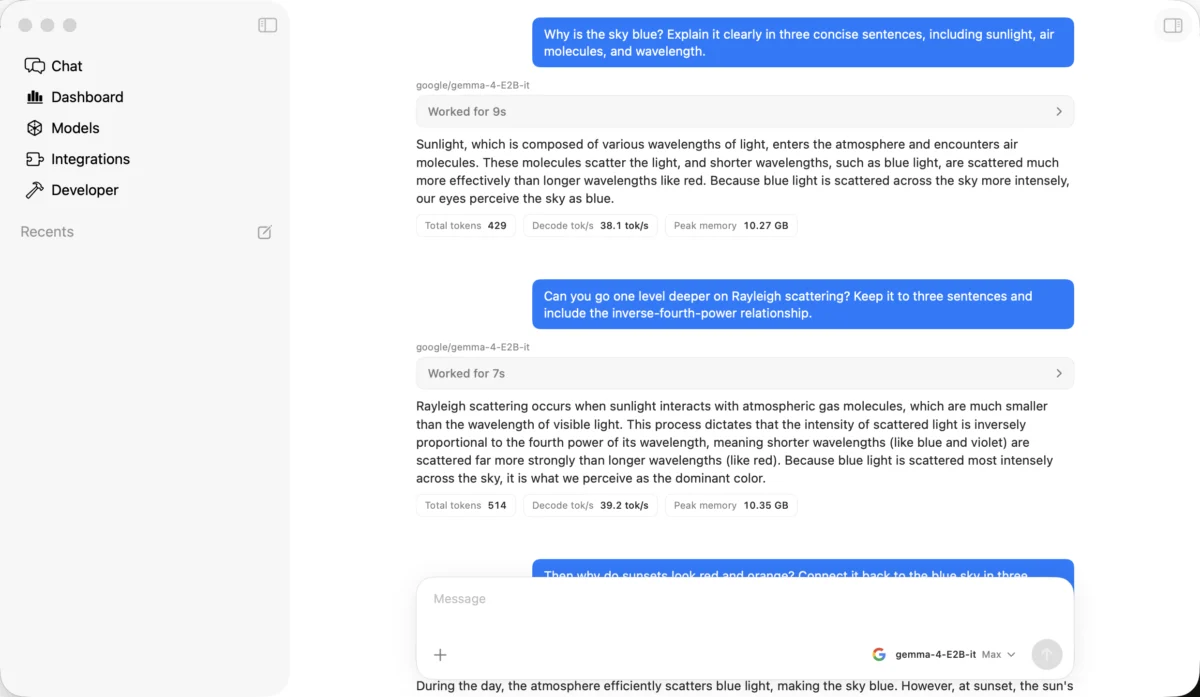
In an era where "artificial intelligence" has become synonymous with "cloud-based subscription," a new project is looking to reclaim the agency of the individual user. Nativ, a fully open-source desktop application designed specifically for Apple Silicon, has officially launched, offering a direct challenge to the walled gardens of major tech conglomerates. By enabling users to run frontier-grade AI models directly on their Mac hardware, Nativ is shifting the paradigm from rented intelligence to personal sovereignty.
The Core Proposition: Sovereign Intelligence
For the past two years, the AI landscape has been defined by a simple, restrictive transaction: users provide data and compute resources in exchange for access to black-box models via expensive, recurring monthly subscriptions. Nativ flips this script. It is an MIT-licensed, 100% open-source application that turns a standard MacBook into a powerful, local inference engine.
The software requires no account, no cloud connectivity, and no data telemetry that leaves the user’s machine. By leveraging the specific architecture of Apple’s M-series chips—specifically the unified memory architecture and the Metal performance shaders—Nativ provides a high-fidelity experience that rivals web-based services while maintaining absolute privacy.
A Chronology of the Local Inference Movement
To understand the significance of Nativ, one must look at the rapid evolution of local machine learning (ML) over the past 36 months.
- Mid-2023: The "Llama 2" moment ignited a wave of excitement, but running large models remained the domain of command-line wizards and specialized researchers.
- Early 2024: The introduction of MLX by Apple’s machine learning research team provided the foundation for efficient model execution on Apple Silicon. This allowed developers to finally bridge the gap between heavy research papers and usable desktop software.
- Late 2024 – 2025: A "Gold Rush" of proprietary "local" apps emerged. These applications often utilized open-source backends (like Llama.cpp or Ollama) but wrapped them in restrictive, closed-source shells, often adding paywalls or data-harvesting telemetry.
- July 2026 (The Nativ Launch): Nativ arrives as a reaction to this enclosure. Developed by a coalition of researchers and open-source advocates, the platform marks the first time that professional-grade telemetry, multi-modal support, and seamless integration for coding agents have been bundled into a completely transparent, open-source desktop environment.
Supporting Data: The Hardware Advantage
The primary technical argument for Nativ is the optimization of the Apple Silicon stack. Most AI platforms treat a Mac as a generic device. Nativ, by contrast, treats it as a dedicated compute node.
Performance Metrics
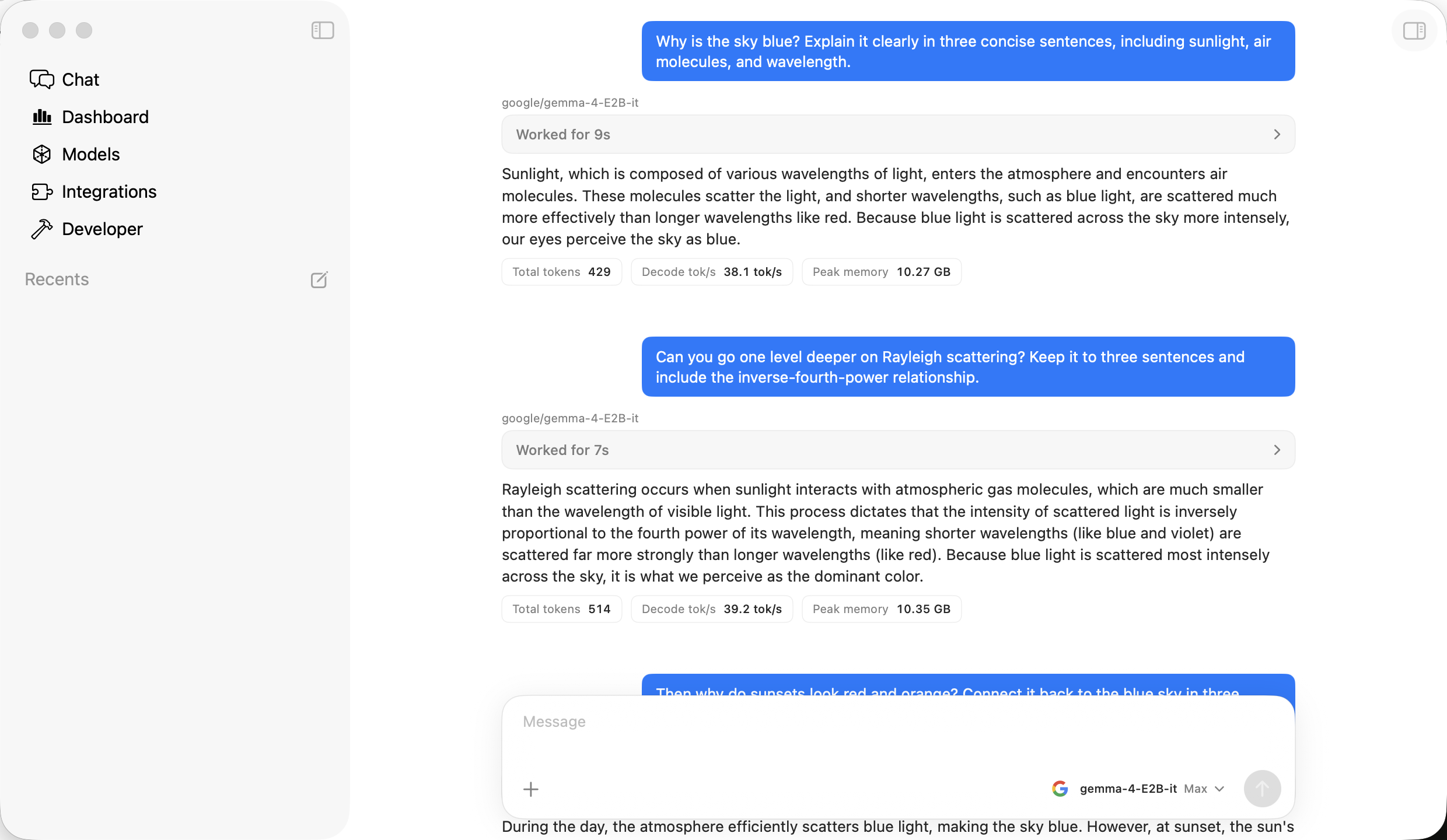
Nativ provides real-time telemetry, a feature usually reserved for backend engineering teams. Users can monitor:
- Tokens Per Second (TPS): Tracking the immediate throughput of the model.
- Memory Pressure: Visualizing how the model utilizes the unified memory architecture (UMA) of the M1/M2/M3/M4 chips.
- Thermal State: Providing feedback on how the workload affects the Mac’s cooling system.
- Time-to-First-Token (TTFT): A critical metric for latency-sensitive applications.
By eliminating translation layers and wrappers, Nativ ensures that the hardware is running the model as close to the silicon as possible. The result is a system that can handle complex language tasks, vision analysis, and even code generation with sub-second responsiveness, all without a single packet of data leaving the device.

The Six Pillars of the Nativ Experience
The application is structured around six core principles that distinguish it from the current SaaS-heavy market:
- Curated Library: Nativ doesn’t just dump raw files on the user. It identifies the optimal model for a user’s specific RAM configuration, recommending partners like Google (Gemma), Cohere, and Liquid AI based on the user’s hardware ceiling.
- Professional Chat Interface: The UI includes native support for markdown, syntax highlighting for code, and multi-modal image input.
- Real-Time Telemetry: The "under-the-hood" dashboard allows users to debug performance bottlenecks in real-time.
- Apple Silicon Optimization: Direct integration with MLX-VLM ensures maximum efficiency.
- Multi-Modality: The app is designed for more than just text. It handles vision, video, audio transcription, and code completion with equal ease.
- Absolute Ownership: By being MIT-licensed and devoid of accounts, Nativ guarantees that the user’s prompts remain on their machine, creating a secure environment for proprietary code and sensitive personal documents.
Integrations: The "One-Server" Workflow
One of the most compelling aspects of Nativ is its ability to act as a local endpoint for third-party development tools. Modern coding agents—such as Claude Code, Codex, and various Hermes-based utilities—often default to cloud APIs. Nativ allows developers to point these agents to their local Mac instance instead.
By hosting the model locally, a developer can continue using their preferred coding environment while ensuring that their codebase is never uploaded to a third-party server. This "local-first" workflow is rapidly becoming the standard for enterprise security-conscious developers who refuse to risk intellectual property leakage.
Official Manifesto: A Philosophical Departure
In their manifesto (Rev 1.0), the creators of Nativ are blunt about the industry’s trajectory. They argue that the "local AI" movement has been co-opted by entities that seek to replace the cloud with a "proprietary shell."
"The other apps you’ve heard of?" the manifesto asks. "They’re proprietary shells built on top of open-source engines they don’t own. They keep the UI closed, add a paywall, and hope you don’t look under the hood."
The Nativ team emphasizes that their project is built for "researchers and hackers." By keeping every line of the desktop app, model loader, and telemetry chart open, they are establishing a "source-of-truth" for local AI that is resistant to VC-driven roadmaps or "dark patterns" that monetize user prompts as training data.
Implications: The End of "Rented" Intelligence
The launch of Nativ has profound implications for both the individual user and the broader tech industry.
For the Individual
The shift toward local inference restores the concept of the "Personal Computer" in the literal sense. For years, the term PC has been a misnomer, as our most powerful computing tasks were actually being offloaded to remote data centers. Nativ proves that the hardware already in our backpacks is capable of running advanced intelligence, ending the necessity of "renting" access to these tools.
For the Industry
Nativ poses a significant threat to the SaaS-based AI business model. If a free, open-source tool can provide the same (or better) performance than a $20/month subscription, the incentive to stay in the cloud diminishes. This may force major AI providers to reconsider their data-hungry, centralized architectures.
For Privacy and Security
The most significant implication is the total removal of the "middleman." In the age of AI, the middleman is the primary vector for data breaches and privacy erosion. By keeping the model local, Nativ eliminates the possibility of prompts being used for model training or being exposed in the event of a cloud service provider’s security failure.
Conclusion
Nativ is not merely a piece of software; it is a declaration of independence from the cloud-centric AI monopoly. By providing a transparent, highly optimized, and genuinely local platform, it empowers users to explore the frontiers of artificial intelligence without sacrificing their privacy or their ownership of the tools they use.
As the project continues to evolve, its impact on the development community—and the way we think about the "intelligence" inside our machines—will likely be profound. The message from the Nativ team is clear: Your Mac is more capable than you think. It is time to stop renting intelligence and start running it.
 rifanmuazin
  Layla Zulfa
  Evan Lee Salim