
 By Lina Irawan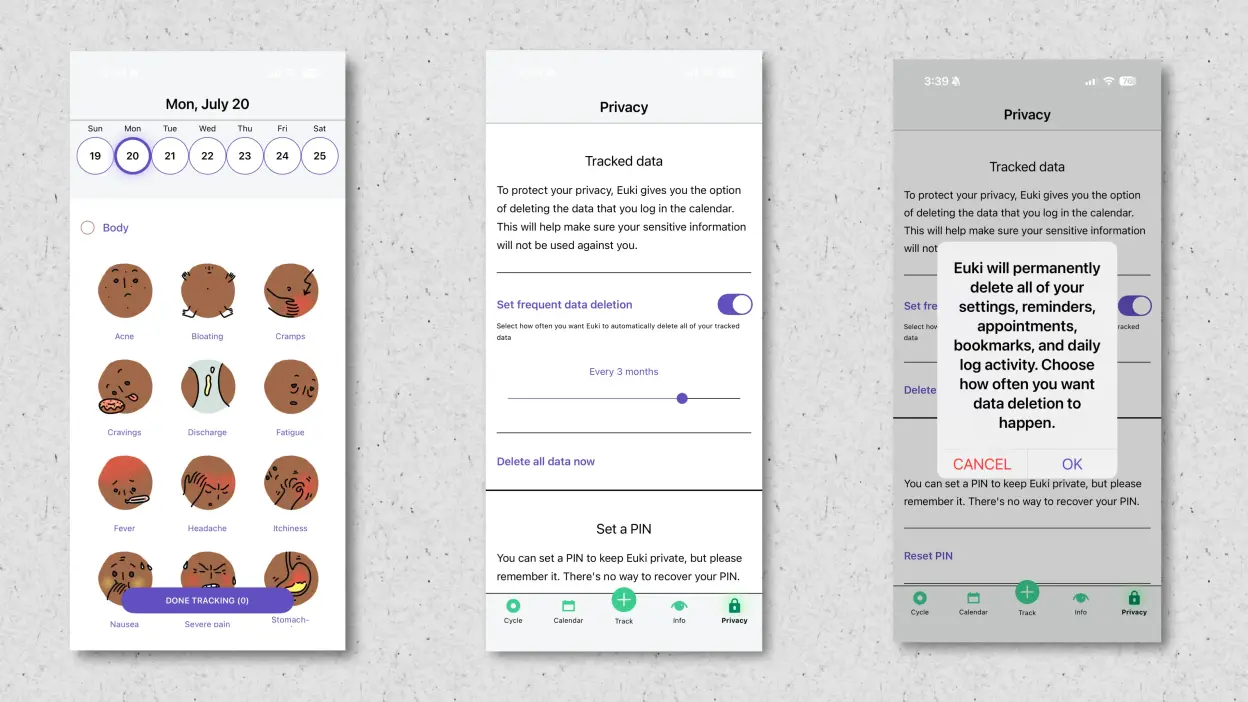
By Beth Skwarecki
Senior Health Editor
July 20, 2026
In the modern digital ecosystem, our personal health data has become one of the most valuable commodities on the market. From step counts and sleep cycles to complex reproductive health metrics, our smartphones have become intimate diaries of our physical lives. However, for those tracking their menstrual cycles, the convenience of digital logging has recently collided with a sobering reality: in an era of shifting reproductive laws, the data stored on commercial servers is no longer just a privacy concern—it is a legal liability.
While many popular period-tracking apps promise to "anonymize" or "encrypt" user data, a recent comprehensive privacy audit conducted by the Mozilla Foundation has exposed a systemic vulnerability. Among the industry leaders tested, the vast majority—including apps like Stardust, SpotOn, Period Calendar, Flo, and Clue—were found to harbor significant privacy flaws. In contrast, one application has emerged as the industry gold standard for security: Euki.
The Main Facts: Why Your Period Tracker Matters
The core issue is where your data lives. Most period-tracking applications operate on a cloud-based model. When you log your cycle, symptoms, or sexual history, that information is uploaded to a remote server owned by the app developer. Once the data leaves your device, it becomes subject to the company’s privacy policy, which often allows for the sharing of "anonymized" data with third-party advertisers or, in the event of a legal subpoena, disclosure to law enforcement.
In a post-Roe v. Wade landscape, where reproductive health records have been weaponized in legal proceedings, this architecture poses a significant risk. The Mozilla Foundation’s report, Nothing Personal, highlighted that while many companies claim they would fight subpoenas to protect their users, the only true way to guarantee privacy is to ensure the company never possesses the data in the first place. This is where Euki distinguishes itself: it does not store your information on a server, nor does it have the technical capability to access your entries.
A Chronology of Reproductive Privacy Concerns
The intersection of technology and reproductive rights has become increasingly fraught over the last several years.

- 2022: Following the overturning of federal protections for abortion access in the United States, digital privacy advocates sounded the alarm. Reports began circulating regarding the use of search history, location data, and private messaging as evidence in criminal investigations related to reproductive health.
- 2023: Legal experts and human rights organizations, including the Electronic Frontier Foundation (EFF), warned that period-tracking apps could be compelled to provide user data to state authorities, regardless of the company’s stated intent to protect privacy.
- 2024–2025: As trust in "Big Tech" health solutions plummeted, users began seeking alternatives. During this period, the Mozilla Foundation expanded its oversight of health apps, focusing on "data hunger"—the tendency of apps to collect more information than they need for their stated function.
- 2026: The current landscape confirms that local-storage models are the only viable path for users who prioritize total anonymity, cementing the status of apps like Euki as the preferred choice for privacy-conscious individuals.
Supporting Data: How Euki Outperforms the Competition
Euki’s architecture is built on the principle of "privacy by design." According to the Apple App Store, the developer collects zero data from the application. This is a stark departure from the industry standard, where even "private" apps often gather metadata, device identifiers, or usage patterns that can be traced back to an individual.
Key Privacy Features:
- Local-Only Storage: Your data exists solely on your device. If you lose your phone, your data is gone—but it is also inaccessible to hackers, advertisers, and government entities.
- PIN-Protected Access: The app requires a PIN to open, ensuring that even if someone gains physical access to your unlocked phone, they cannot view your health history.
- The "Fake PIN" Safeguard: Euki includes a sophisticated decoy feature. Users can set a "fake PIN" that opens the app to a blank or non-functional interface, providing a layer of deniability in high-pressure situations.
- Auto-Delete Protocols: Users can set the app to automatically scrub data after a certain timeframe, allowing for "disposable" tracking that doesn’t build a long-term profile of your health.
Official Responses and Independent Audits
The Mozilla Foundation’s audit did not mince words. In their assessment of the six leading period trackers, they noted that the majority of these apps were "privacy nightmares" that treated user health data as an asset to be harvested.
Regarding Euki, the Foundation stated: "We strongly recommend Euki for anyone who puts privacy first." The organization pointed to the fact that Euki is free, contains no in-app purchases (which often serve as the bridge for data-tracking SDKs), and requires no account creation. By removing the login requirement, the developers eliminated the need for email addresses or phone numbers, effectively severing the link between the user’s identity and their health data.
The Implications: What You Should Do Now
The shift toward private tracking is not just about avoiding advertisements; it is about reclaiming autonomy over your physical data. If you currently use a mainstream period-tracking app, the risks are clear: you are trusting a corporation to defend your privacy against potentially powerful legal entities.
How to transition to private tracking:
- Audit Your Current App: Check if your current app allows you to export your data and, more importantly, delete your account and all associated records from their servers.
- Download Euki: The app is available on both iOS and Android. Because it does not require an account, you can begin using it immediately upon installation.
- Adopt a "Zero-Trust" Mindset: Even with a secure app, be mindful of what you record. If you are in a jurisdiction where reproductive health is legally sensitive, consider whether certain notes (such as specific medical appointments or medications) should be kept in a dedicated, secure app rather than a general-purpose note-taking tool that might be backed up to the cloud.
- Explore Analog Alternatives: For those who want the ultimate privacy, the PCMag guide to tracking your period suggests that "offline" methods—such as using coded notes on a physical calendar or a simple local-storage note app that does not sync to the cloud—remain the safest methods of all.
Conclusion
The digital age has brought us incredible tools for health management, but it has also created new vulnerabilities. Euki represents a return to the fundamentals: a utility that provides a service without extracting a hidden cost in the form of your private information.
As we look toward the future, the standard for health apps must move away from data extraction and toward user-sovereignty. Until the industry at large adopts the privacy-first model championed by Euki, it is up to the individual to make informed choices. Protecting your reproductive data is not merely a technical preference; in the current political climate, it is a necessary act of personal safety. By choosing tools that keep your data on your phone—and nowhere else—you retain the power to decide who sees your most sensitive information.
 Layla Zulfa
  Asro
Asro  Reynand Wu