
 By Raul Delapena Setiawan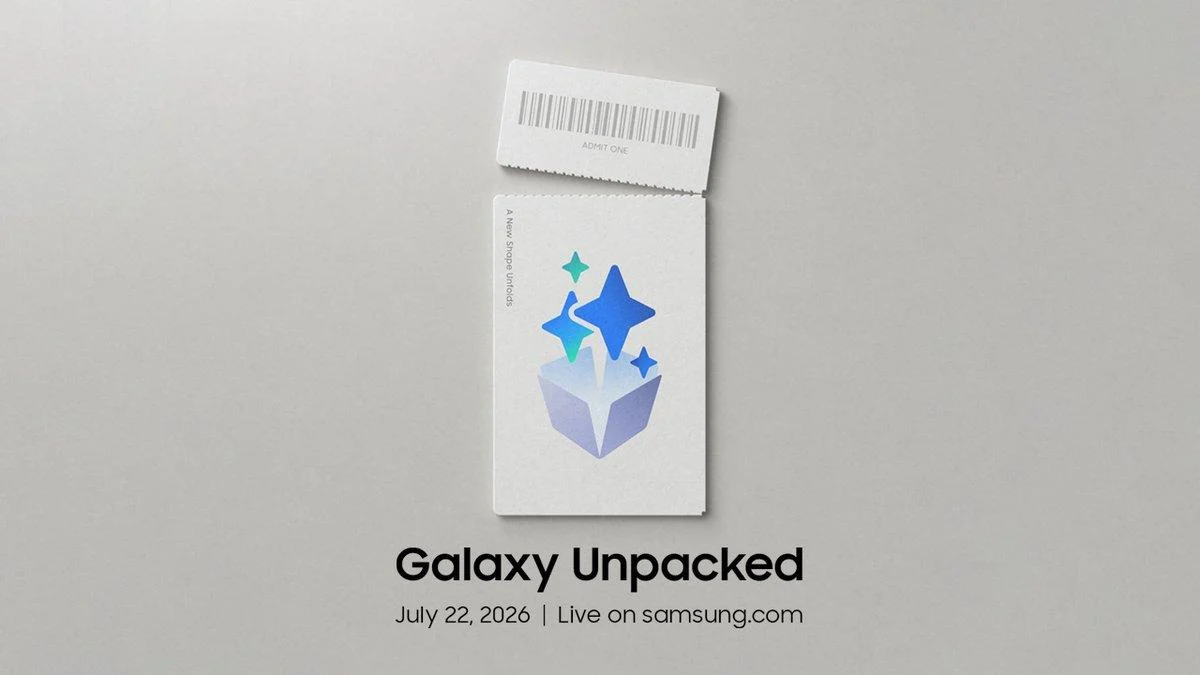
The tech industry’s eyes are firmly fixed on London this week as Samsung prepares to host its highly anticipated mid-year Galaxy Unpacked event. With the foldable market maturing and competition intensifying from both domestic and international rivals, Samsung is positioning its next generation of mobile devices to not only defend its market share but to redefine the standard for hardware performance and AI integration.
As the July 22nd event approaches, a convergence of high-profile leaks and strategic teasers has painted a vivid picture of what attendees and global viewers can expect. From a radical redesign of the flagship Z Fold series to a power-efficient overhaul of the wearable lineup, Samsung is looking to set a new benchmark for 2026.
When and Where to Tune In
For enthusiasts and industry analysts alike, the event is scheduled for July 22nd at 9:00 AM ET / 6:00 AM PT. While the physical stage is set in London for an exclusive, invite-only audience, the global launch will be accessible via a live broadcast.
Samsung has streamlined the viewing experience, offering the event via its official newsroom website and its official YouTube channel. The event promises to be a fast-paced showcase, with the company expected to condense its hardware announcements into a tightly choreographed presentation that emphasizes both utility and the "new shape" of its mobile future.
Chronology of the Foldable Evolution: From Z Fold 7 to 8
To understand the significance of this launch, one must look at the trajectory of the Galaxy Z series. For years, the Z Fold line was defined by a tall, narrow outer display that many critics argued lacked the ergonomics of a standard smartphone.
- The Early Fold Years: Initial iterations focused on durability and hinge integrity.
- The Refinement Phase: With the Z Fold 6 and 7, Samsung focused on under-display camera technology and water resistance.
- The "Wide" Shift (2026): Based on recent leaks, the Z Fold 8 represents the most significant departure in form factor since the series’ inception. By shifting to a "passport-like" wider design, Samsung is signaling a pivot toward a more natural, usable outer screen that bridges the gap between traditional flagships and tablet-like foldables.
Decoding the Hardware: Deep Dive into the Z Fold 8 and Ultra
The centerpiece of this Unpacked event is undoubtedly the Galaxy Z Fold 8. Thanks to comprehensive leaks from industry veteran Evan Blass, the device’s specifications have become a subject of intense speculation.
The Z Fold 8: A New Form Factor
The standard Z Fold 8 is expected to debut with a wider chassis, addressing the long-standing critique of its predecessors. Under the hood, the device is rumored to be powered by the Qualcomm Snapdragon 8 Elite for Galaxy processor. This chipset is expected to provide a significant boost in both computational power and energy efficiency, vital for the heavy multitasking requirements of a foldable.
Photography remains a pillar of the flagship experience. The Z Fold 8 is slated to include:
- Rear Camera System: Dual 50MP sensors (wide and ultra-wide).
- Selfie/Cover Cameras: A 10MP sensor on both the cover and the main inner screen.
- Battery Life: Optimization efforts are expected to yield up to 26 hours of video playback.
The Z Fold 8 Ultra
Samsung appears to be segmenting its premium foldable market by introducing an "Ultra" variant. Unlike the standard model, the Ultra is expected to retain the signature tall, slim design of the Z Fold 7, catering to users who prefer a narrower grip. However, it compensates for this with a massive 5,000mAh battery, pushing efficiency even further to 27 hours of video playback. This strategy mirrors Samsung’s successful S-series segmentation, providing power users with an alternative that prioritizes capacity over the new form factor.
The Galaxy Z Flip 8
The clamshell segment is also getting a refresh. Leaked data points to a 4,300mAh battery for the Flip 8, which would be a substantial upgrade for the compact device. The camera array is expected to hold steady with 50MP wide and 12MP ultra-wide lenses, suggesting that Samsung is confident in its current optical hardware and is choosing instead to focus on internal stability and battery longevity.
The Wearables: Advancing the Galaxy Watch Ecosystem
Hardware updates won’t be limited to smartphones. The Galaxy Watch Ultra 2 and the Galaxy Watch 9 are poised to take center stage, leveraging the new Snapdragon Wear Elite processor.
Galaxy Watch Ultra 2
The Watch Ultra 2 is shaping up to be a formidable fitness companion. Design-wise, it is rumored to be 12 percent thinner than its predecessor, a feat of engineering given the internal upgrades. With a massive 800mAh battery and a high-luminance display capable of reaching 5,000 nits, it is designed for extreme outdoor conditions and long-duration tracking.
Galaxy Watch 9
The standard Watch 9 will likely maintain the aesthetic language that made the series a consumer favorite, but with the performance leap provided by the new Snapdragon silicon. This ensures that the base model remains snappy and responsive, even with the increasingly complex health-monitoring features embedded in One UI Watch.
The AI Frontier: Beyond Mobile Hardware
While the foldable devices and watches are the "stars" of the show, the industry is watching closely for mentions of "Project Aura." Samsung’s foray into AI-powered smart glasses has been the subject of several whispers. While a full commercial launch is slated for the autumn, there is high anticipation that Samsung may provide a live demonstration or a "teaser" at Unpacked.
Collaborating with design-forward brands like Warby Parker and Gentle Monster, these glasses represent Samsung’s attempt to move AI from the screen to the user’s field of vision. If the company chooses to showcase these at the event, it would be a clear message that Samsung intends to lead the XR (Extended Reality) space, not just follow it.
Official Responses and Strategic Implications
Samsung has remained characteristically tight-lipped regarding the specifics of the leaks. In response to inquiries, a company spokesperson stated, "We look forward to sharing our latest innovations that push the boundaries of what a mobile device can do, keeping our users at the center of our design philosophy."
The strategic implications of this event are significant:
- Combating Market Saturation: By introducing a wider Z Fold 8, Samsung is attempting to revitalize interest in a category that has seen growth plateaus.
- The AI Race: With Google and Apple pushing hard into AI-integrated hardware, the Snapdragon 8 Elite and Wear Elite chips are Samsung’s way of ensuring its devices are "AI-first" by design.
- Ecosystem Lock-in: The combination of a new, more usable foldable and a thinner, more powerful watch encourages users to upgrade their entire peripheral stack simultaneously.
Final Analysis
As we approach July 22nd, it is clear that Samsung is not merely updating its hardware; it is iterating on the very concept of mobile utility. The transition from the "tall" foldables to the "wide" design is a tacit admission that user experience must dictate form factor.
Whether these devices can capture the imagination of a skeptical public remains to be seen. However, if the rumored battery life improvements and the integration of the Snapdragon Elite series hold true, Samsung is well-positioned to maintain its status as the king of the foldable hill. For the consumer, this year’s Unpacked promises to be a crucial turning point—not just for Samsung’s balance sheet, but for the trajectory of smartphone innovation for the remainder of the decade.
Stay tuned for our live coverage of the event, where we will provide real-time updates and expert analysis on every device unveiled on the stage in London.
 Siti Muinah
  Asro
Asro 