By Colleen Christison Enriched Industry Report & Analysis
Main Facts: The Evolution of Social Media Leadership
As corporate social media budgets continue to expand—surging past $121 billion in the U.S. market alone by 2026—the nature of overseeing digital teams has undergone a radical transformation. No longer confined to the tactical execution of publishing posts and chasing vanity metrics like raw follower counts, modern social media leadership has matured into a core executive function. Today’s social directors and heads of strategy are tasked with bridging the gap between brand reputation, crisis management, cross-functional collaboration, and real business revenue.
Recent enterprise studies underscore this shift. According to an IBM survey highlighting executive priorities, 69% of responding CEOs attribute their organization’s overall success directly to maintaining a robust bench of leaders equipped with deep strategic understanding and the executive authority to make critical, real-time decisions. Within this landscape, social media has emerged as a high-stakes arena where a single misstep can trigger global repercussions, making exceptional leadership indispensable.
Chronology: How Social Media Governance and Strategy Matured
To understand the current state of enterprise social leadership, it helps to examine how the discipline has evolved over the past decade:
The Tactical Era (Early 2010s): Social media was largely viewed as an extension of customer service or a digital bulletin board. Teams were small, goals were focused heavily on direct community engagement, and metrics were dominated by basic likes and shares.
The Growth & Paid Era (Mid-to-Late 2010s): As algorithms shifted and platforms introduced robust advertising tools, social media management became heavily specialized. Roles were broken down into dedicated copywriters, paid media buyers, and graphic designers, all reporting to mid-level managers focused primarily on quarterly campaigns.
The AI and Enterprise Scale Era (2025–2026): With the rapid integration of artificial intelligence, cross-border remote teams, and heightened demands for brand safety, the skills required to run these operations changed completely. Organizations realized that day-to-day tactical management (execution) could no longer substitute for high-level leadership (direction, governance, and systemic integration).
Supporting Data & Industry Insights
Industry benchmarks and expert commentary highlight the growing chasm between traditional management and modern enterprise leadership.
Four major shifts are driving this transformation in 2026:
AI-Driven Automation: According to Gartner projections, marketing leaders expect AI-driven marketing automation to double, reaching 36% of total marketing work by 2028. Leaders must govern these tools before shadow-IT usage creates compliance liabilities.
Decentralized Operations: Enterprise teams are increasingly distributed across multiple time zones, requiring asynchronous frameworks that empower local execution without sacrificing brand consistency.
The Death of Vanity Metrics: Executive boards no longer accept high impression counts as proof of return on investment. Leaders are forced to translate social sentiment into tangible pipeline contributions, customer retention signals, and risk mitigation metrics.
Cultural Fluency as Risk Management: Speaking on the realities of modern digital spaces, 4-time Shorty Award-winning Social Media Strategist Shakivla Todd emphasizes that leaders must be culturally aware not just to chase trends, but to guide their teams through sensitive moments. "You don’t need to be chronically online," Todd notes. "You do need to be acutely aware of what’s happening as it pertains to current events and cultural moments… Everyone hates a tone-deaf brand."
Official Responses and Expert Perspectives
Navigating the complexities of enterprise social requires leaders who understand the art of strategic refusal. When speaking on the overwhelming influx of internal requests, viral trends, and emerging platforms, Todd offers a defining philosophy for modern directors:
"My philosophy is that you don’t need to be everywhere, everything, all at once. That goes for viral trends and emerging social media platforms alike. You must know how to say no. Everyone will have an opinion, a request, an idea. There’s only so much a social media team can do."
This sentiment is echoed across high-growth brands. When companies scale rapidly, community engagement often explodes, creating a massive influx of direct messages and customer inquiries. Rather than inflating headcount during budget freezes, exceptional leaders innovate cross-departmentally. For example, by analyzing message patterns and partnering with Customer Experience (CX) directors, social leaders can route product-specific inquiries directly to customer support infrastructure while keeping creative partnerships and influencer outreach housed within the social unit.
Implications: Building the 2026 Social Enterprise
The transition from a tactical posting schedule to a sophisticated operating system carries profound implications for organizational design, compliance, and career development.
1. Management vs. Leadership: Understanding the Divide
While a social media manager focuses on daily content creation, publishing cadence, and immediate engagement rates, a social media leader sets long-term direction, oversees multi-market budgets, and establishes cross-functional systems. Leaders ask how an optimized engagement rate ladders up to brand health, pipeline contribution, and overall team efficiency.
2. Mastering AI Governance and Brand Safety
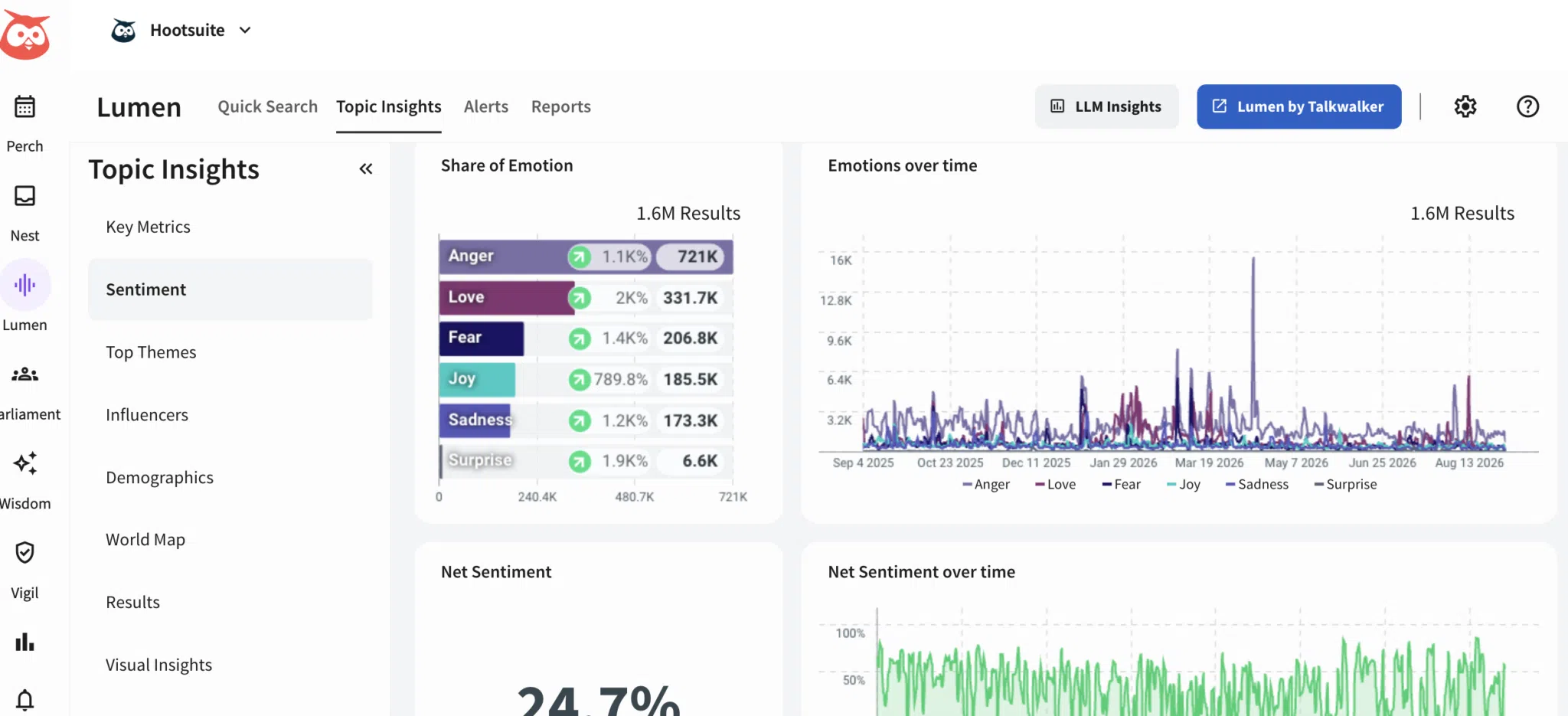
With the rapid influx of generative AI tools, enterprise social leaders must act as gatekeepers. Governance layers—such as those integrated into platforms like Hootsuite Social OS (utilizing features like Vigil for compliance and Lumen for sentiment listening)—allow leaders to monitor positive and negative brand perception at scale. Compliance no longer serves merely as the "fun police," but rather as the invisible framework that enables creative teams to produce content with confidence and security.
3. Redefining Success Through Actionable KPIs
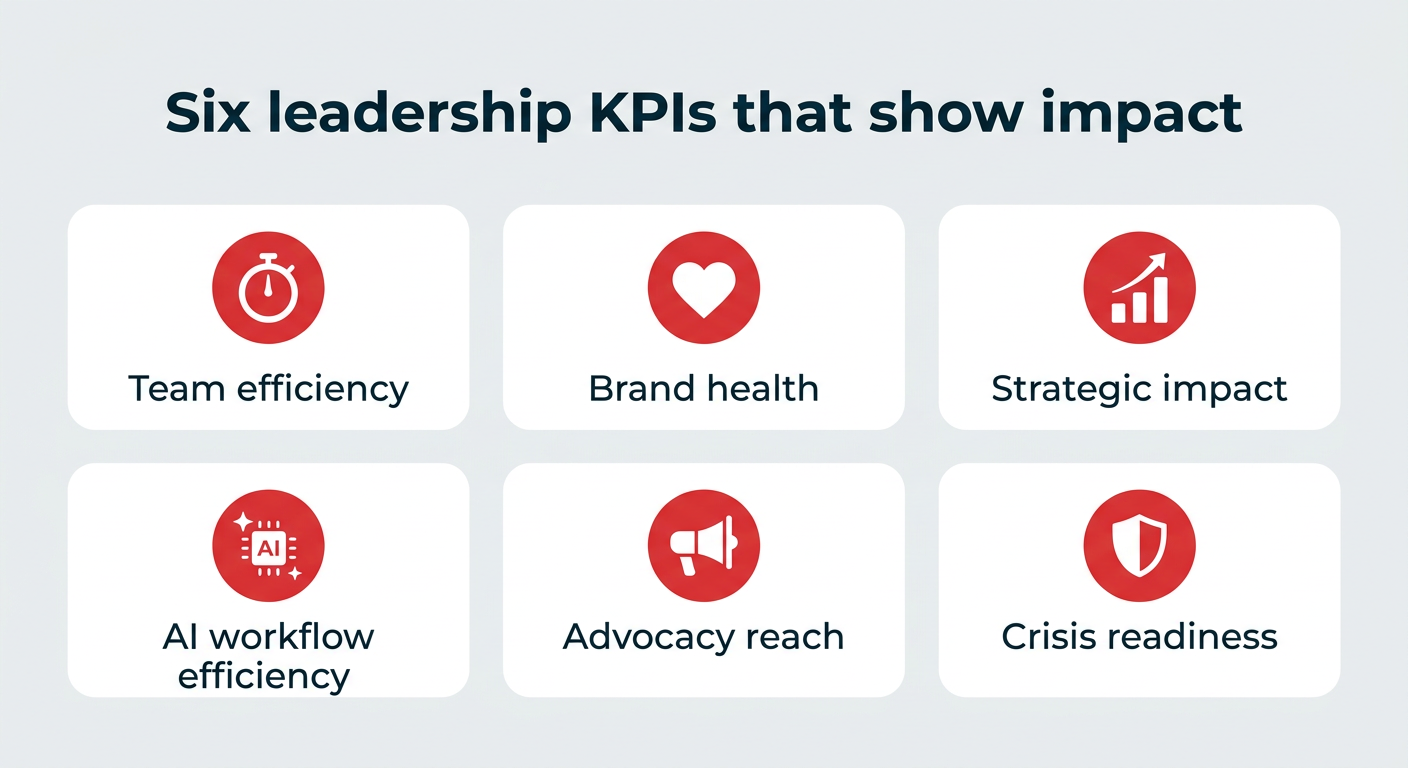
To secure executive buy-in, leaders must pivot away from raw follower counts and anchor their reporting to hard business outcomes. Essential metrics for the modern social leader include:
Brand Sentiment & Share of Voice: Measuring how the market perceives the brand relative to competitors.
Crisis Response Time: Tracking how efficiently protocols mitigate reputational risk.
Team Efficiency: Monitoring approval turnaround times and workflow velocity.
Social-Attributed Pipeline: Documenting direct commercial contributions to revenue and retention.
Frequently Asked Questions
What are social media leadership skills?
They are a blend of strategic foresight, emotional intelligence, cross-functional communication, and AI fluency that enable leaders to guide teams, protect brand reputation, and turn social media into a primary business growth engine.
How do leadership skills differ from management skills?
Management focuses on execution (posting, scheduling, reporting on tactical campaigns). Leadership focuses on direction, resource allocation, governance, and aligning social outcomes with broader corporate objectives.
How should enterprise leaders handle AI adoption?
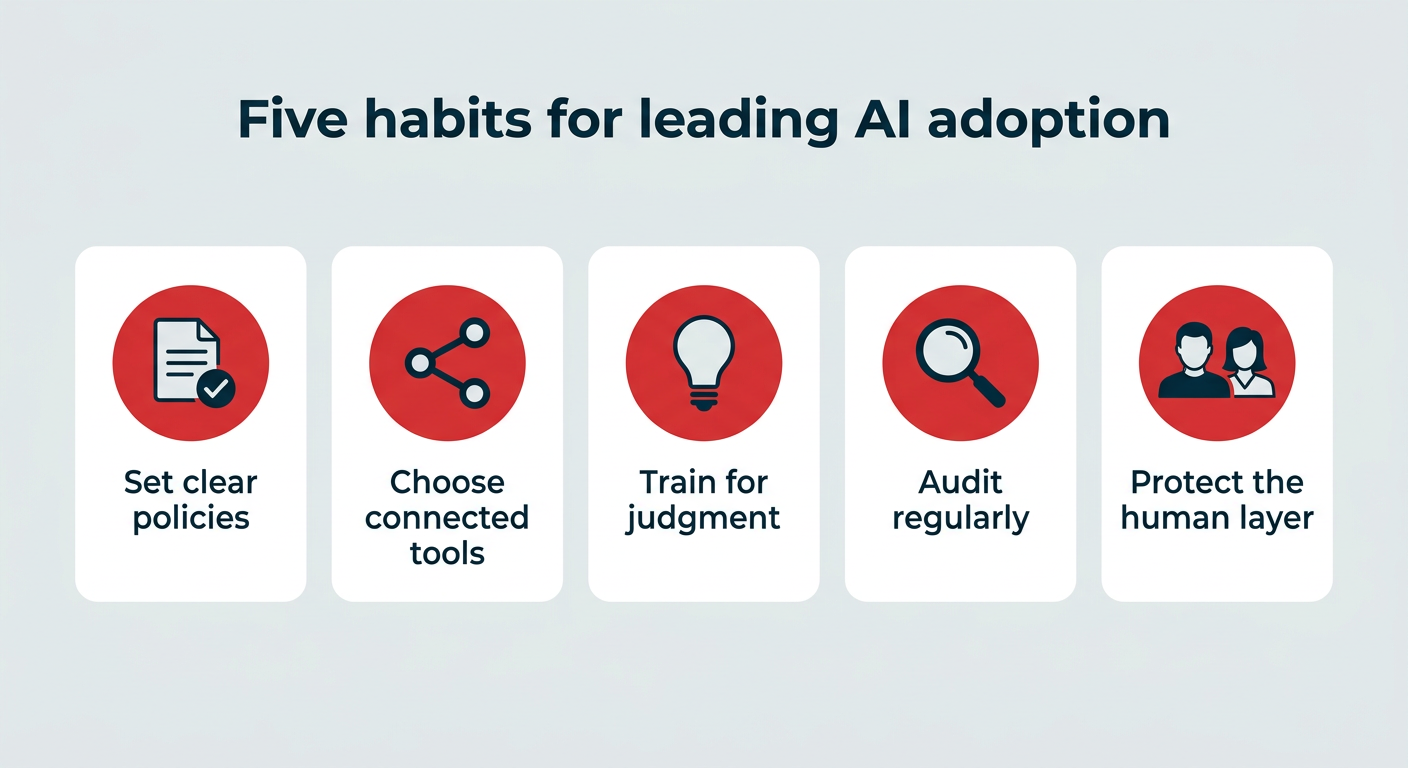
By establishing clear governance policies, implementing tool-based approval workflows, and training teams to leverage AI responsibly while preserving an authentic human brand voice.
What tools help social media leaders succeed?
Comprehensive operating systems like Hootsuite Social OS—which combine publishing, advanced listening, sentiment tracking, and compliance governance into a single dashboard—provide leaders with the visibility needed to steer enterprise operations successfully.

 By Neng Nana



 Ammar Sabilarrohman
 Jia Lissa
 Muslim
