
 By Neng Nana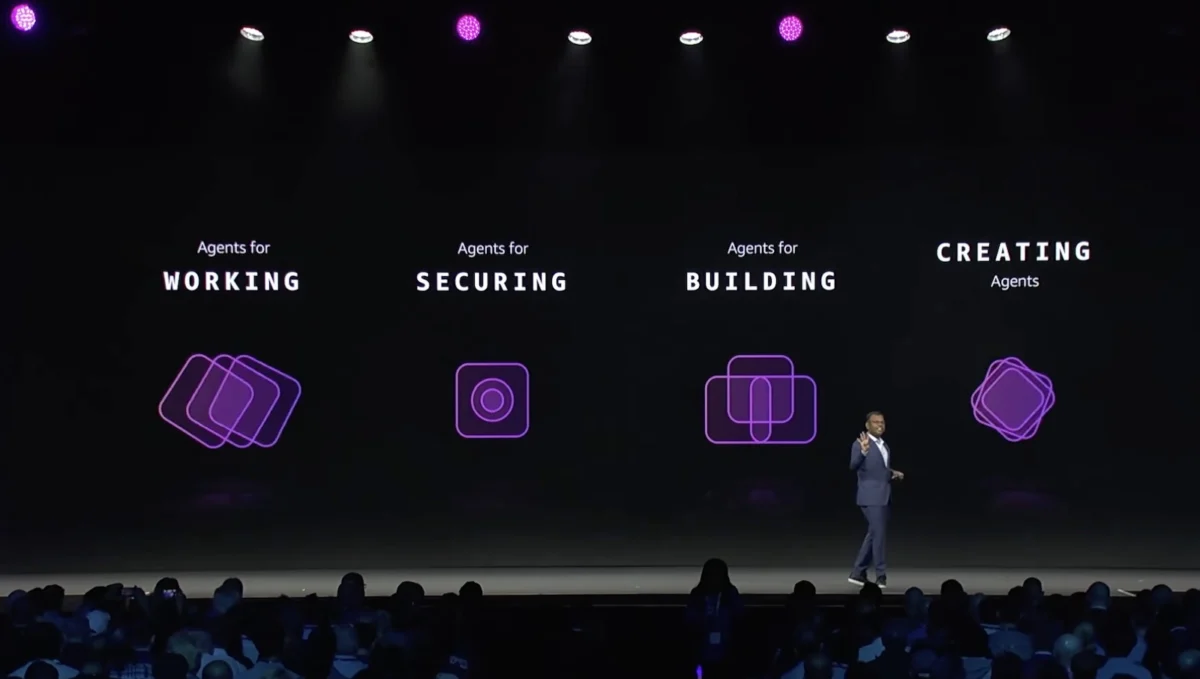
The cloud computing landscape witnessed a pivotal shift last week as thousands of developers, architects, and enterprise leaders converged in Manhattan for the AWS Summit New York City. The event served as a high-octane showcase for the latest innovations in generative AI, but more importantly, it marked a fundamental change in how Amazon Web Services (AWS) envisions the future of machine learning: the transition from static models to dynamic, agentic systems.
Dr. Swami Sivasubramanian, Vice President of Agentic AI at AWS, headlined the event, delivering a keynote that shifted the industry’s focus away from simple "chatbots" toward intelligent systems capable of autonomous, multi-step problem solving. This shift represents the core of the new AWS thesis: the creation of agents designed to compound value over time.
The Core Thesis: Why Agentic AI Matters
For the past two years, the industry has been obsessed with the "Chat" interface—large language models that answer questions. However, as organizations move beyond experimentation and into production-grade deployments, the limitations of simple prompting have become clear.
Dr. Sivasubramanian’s address clarified that the next wave of productivity is not found in a better chatbot, but in "Agentic AI." These are systems that possess the capability to plan, reason, and take action across enterprise environments. By integrating with existing software tools, databases, and APIs, these agents can execute complex workflows without human intervention at every step.
The "compounding value" thesis is simple yet transformative: an agent that learns from its previous iterations, integrates feedback from real-world execution, and builds upon its own past successes becomes exponentially more valuable to an organization the longer it operates. This marks a departure from the "black box" model approach, moving toward a "systemic integration" approach.
Chronology of the Summit
The summit was structured as a whirlwind of announcements, workshops, and technical deep dives. Here is a breakdown of the event’s progression:
- Morning Session: The keynote presentation established the framework for Agentic AI, emphasizing security, scalability, and the importance of data sovereignty in the age of autonomous agents.
- Mid-day Technical Tracks: Attendees pivoted to breakout sessions focusing on the practical application of the newly announced tools. Topics ranged from optimizing RAG (Retrieval-Augmented Generation) pipelines to the implementation of serverless architectures for AI workloads.
- Afternoon Networking and Collaboration: The AWS Builder Center became the hub for cross-industry collaboration. Developers engaged with AWS engineers to troubleshoot deployment architectures and discuss the shift toward agent-based microservices.
- Evening Wrap-up: The day concluded with a summary of the "What’s New" updates, where the focus shifted from pure AI to the infrastructure layer—storage, compute, and cost-optimization—that makes these massive AI projects financially sustainable.
Supporting Data: The Infrastructure of Innovation
AWS did not just announce "AI software"; they reinforced the underlying infrastructure that makes these developments possible. The event showcased several key initiatives aimed at increasing performance while simultaneously reducing costs.
For many enterprises, the barrier to entry for high-level AI is not just technical complexity, but operational expenditure. AWS’s continued commitment to price reductions for core services—such as object storage, compute instances, and data transfer—is a direct response to the market demand for cost-effective AI scaling. By lowering the "cost of compute," AWS is essentially subsidizing the experimentation phase for its clients, allowing them to iterate faster on agentic workflows without fear of budget overruns.
Furthermore, the integration of specialized silicon—the AWS Trainium and Inferentia chips—continues to be a focal point. These custom-built accelerators are allowing organizations to train and deploy models at a fraction of the cost associated with traditional general-purpose GPU clusters.
Official Responses and Strategic Direction
In discussions following the keynote, AWS leadership emphasized that the company’s primary objective is to move AI out of the "siloed innovation" stage and into the "integrated business" stage.
"Our goal is not just to provide the models, but to provide the environment where those models can actually get work done," stated a senior spokesperson during a roundtable. This response addresses a common critique in the tech industry: that generative AI is often "all talk and no action." By providing the guardrails, security protocols, and integration hooks, AWS is positioning itself as the enterprise-grade foundation for the agentic economy.
Industry analysts have noted that this strategy aligns with Amazon’s long-standing philosophy of being the "everything store" for cloud infrastructure. By controlling the stack—from the chips in the data center to the agents in the cloud—AWS creates a seamless experience that competitors relying solely on third-party API wrappers struggle to match.
Implications for the Industry
The shift toward Agentic AI has profound implications for every sector of the global economy.
1. The Death of Manual Workflow
Industries that rely on repetitive, rule-based processes—such as logistics, finance, and legal documentation—are poised for the most significant disruption. When agents can autonomously verify data, draft documents, and reconcile accounts, the traditional "human-in-the-loop" model changes to a "human-in-command" model.

2. The Demand for New Skills
The role of the software developer is evolving. As AWS pushes for more integrated, AI-driven development environments, the value of a developer who can orchestrate these agents will far outweigh the value of a developer who simply writes raw code. The focus is shifting toward systems architecture, data governance, and prompt engineering at the enterprise scale.
3. Economic Sustainability
The persistent focus on price reductions and performance enhancements is essential. If AI agents are to become the backbone of the enterprise, they must be cheaper to run than the human processes they replace. AWS’s aggressive push into hardware-software optimization is the only way to achieve this economic threshold.
Looking Forward: How to Engage
For those who missed the live event, the wealth of information provided by the AWS Summit remains accessible. The "What’s New with AWS" page is currently the primary repository for the technical documentation of last week’s launches.
However, technology is only one part of the equation. AWS has clearly signaled that community engagement is a top priority for the remainder of 2026. Developers are encouraged to participate in:
- AWS Community Days: Localized events that allow for deep-dive technical discussions with peers.
- The AWS Builder Center: A virtual space designed to facilitate the sharing of solutions and architectural patterns.
- Regional Summits: Continued opportunities to see the practical application of Agentic AI in various sectors.
As the industry moves into the second half of 2026, the challenge will be implementation. The excitement of the New York Summit provided the vision, but the coming months will test the resolve of organizations to build, deploy, and scale these agentic systems.
The thesis is clear: AI that compounds its value over time is the next great leap in the digital transformation journey. Whether this will lead to the total automation of the modern office or merely a massive boost in individual productivity remains to be seen. What is certain, however, is that the tools for that future are being built on AWS today.
For ongoing updates on these releases, be sure to keep an eye on the official AWS News Blog, where technical deep dives into each of last week’s announcements will be published throughout the month. The journey to the next generation of cloud computing has only just begun.
 Suro Senen
  Lina Hope