
 By Lina Hope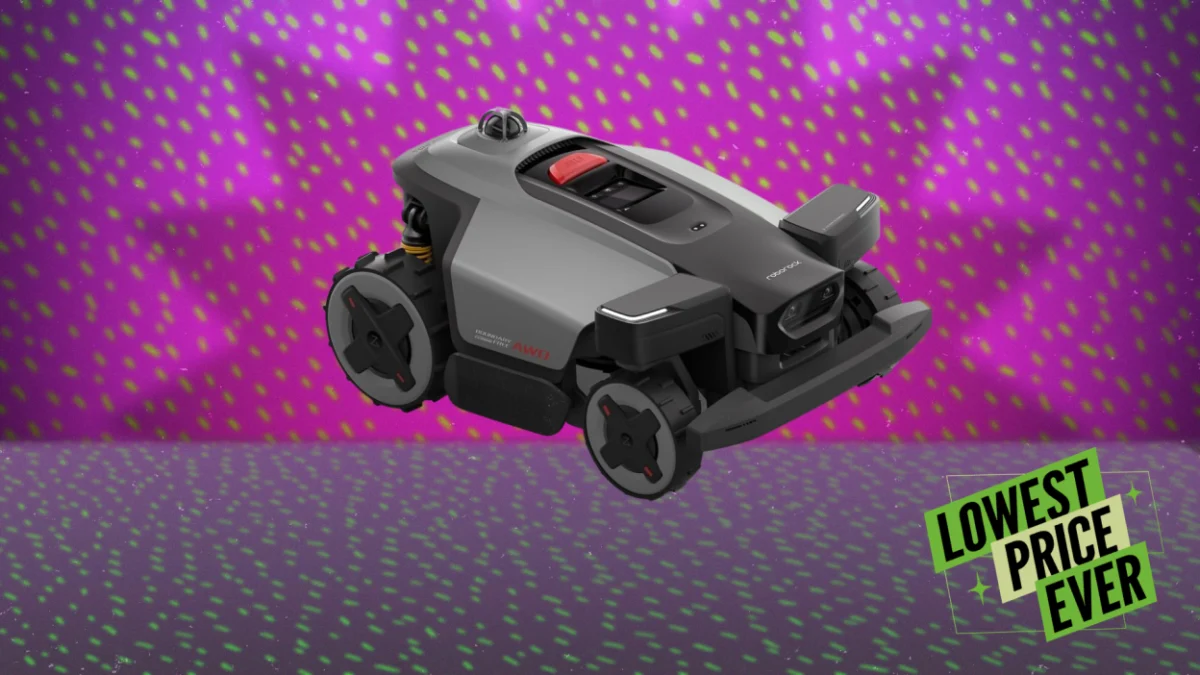
The chore of lawn maintenance has long been a staple of the weekend "to-do" list, often involving hours spent in the heat, battling uneven terrain and the limitations of traditional push mowers. This month, however, the landscape of home automation shifts significantly as Roborock—a brand synonymous with high-end indoor robotic vacuuming—officially enters the outdoor arena with the launch of the Roborock X120H.
Equipped with advanced LiDAR and AI-driven vision, the X120H represents a new generation of autonomous lawn care. To celebrate its market entry, the company has initiated a promotional launch period, offering the device for $2,499.99—a substantial $700 discount from its $3,199 retail price.
Main Facts: A Technical Overview
The Roborock X120H is designed to bridge the gap between heavy-duty landscaping tools and smart home convenience. Engineered to handle up to half an acre of property, the unit abandons the archaic requirement for perimeter wires or complex RTK (Real-Time Kinematic) antenna installations. Instead, it relies on a sophisticated 360-degree LiDAR scanner paired with binocular vision sensors.
Key Specifications:
- Navigation: 360-degree LiDAR and AI-vision navigation.
- Drive System: All-Wheel Drive (AWD) with active front-wheel steering.
- Terrain Capability: Can tackle slopes up to 38.7 degrees and navigate over obstacles as high as 3.1 inches.
- Cutting Performance: Six-blade system with an adjustable cutting height range of 1.57 to 3.54 inches.
- Durability: IPX6 waterproof rating, allowing for direct hosing down for easy maintenance.
- Connectivity: 4G-enabled for remote tracking and app-based control.
By integrating AI into its navigation, the X120H is uniquely suited for yards with complex layouts, overhanging trees, or low-light conditions where traditional GPS-dependent mowers often struggle to maintain a signal.
Chronology: The Evolution of Autonomous Mowing
To understand the significance of the X120H, one must look at the trajectory of the robotic mower industry over the last decade.
Early Era (2010–2015): The market was dominated by "random bounce" mowers. These machines relied on physical perimeter wires buried in the soil to keep them within the yard. They were inefficient, required significant manual labor for setup, and frequently got stuck.
The Rise of RTK (2016–2023): As satellite navigation improved, manufacturers moved toward RTK-GPS systems. These eliminated the need for wires but introduced a new bottleneck: they required a clear line of sight to the sky. Users with dense tree cover or narrow passages between buildings often found these mowers unreliable.
The LiDAR Revolution (2024–Present): With the introduction of the Roborock X120H, the industry is shifting toward "vision-first" navigation. Similar to how high-end indoor robots map a living room, the X120H maps the outdoors in real-time. This allows the mower to adapt to changing conditions—such as new garden furniture, seasonal growth, or varying light levels—without needing constant manual calibration.
Supporting Data: Why LiDAR Matters for Lawns
The inclusion of LiDAR (Light Detection and Ranging) technology is not merely a marketing buzzword; it addresses the fundamental failures of earlier robotic mowers.
Mapping and Obstacle Avoidance
Unlike cameras, which can be fooled by shadows or high-contrast glare, LiDAR bounces laser pulses off objects to create a precise 3D map. This is particularly critical in residential environments where pets, children, or garden decor are constantly shifting. The X120H’s ability to "see" obstacles up to 3.1 inches high allows it to navigate over roots and uneven patches that would cause a standard mower to trigger an error state.
Slope and Traction
Most entry-level mowers struggle with inclines exceeding 20 degrees. The Roborock X120H’s 38.7-degree capability is a testament to its "Dynamic Suspension System." By utilizing AWD and high-traction knobby tires, the mower maintains consistent contact with the ground even when the grass is damp or the terrain is slippery, ensuring an even cut across the entirety of the property.
Maintenance Efficiency
The IPX6 rating is a functional necessity for a machine that spends its life in the dirt. Being able to hose the unit down—combined with a rain sensor that automatically parks the mower when it detects precipitation—ensures that the machine remains in optimal working condition without requiring daily manual cleaning.

Official Responses and Strategic Positioning
Roborock’s transition into the lawn care space is a strategic move to capitalize on the "Smart Home" ecosystem. By leveraging the same app interface used for their popular S-series indoor vacuums, Roborock is attempting to create a unified user experience.
"The goal is to remove the human from the equation entirely," a company spokesperson suggested during the product announcement. "By eliminating perimeter wires and simplifying the anti-theft measures—such as GPS tracking and PIN protection—we are making high-end landscaping accessible to the average homeowner who values time over manual labor."
The three years of free 4G connectivity provided with the X120H is a significant value add. It ensures that the mower is not just a "set it and forget it" tool, but a connected device that provides real-time location data and status updates, directly addressing the common consumer anxiety regarding theft and malfunctions.
Implications: The Future of Residential Landscaping
The launch of the Roborock X120H signals a broader shift in how suburban households view their lawns.
1. The Death of the "Weekend Chore"
The primary implication of this technology is the reallocation of time. A homeowner with half an acre of land can spend upwards of two hours per week mowing. By automating this, the X120H returns nearly 100 hours of time to the user annually.
2. Ecological and Aesthetic Impact
Robot mowers use a "mulching" technique. Because they cut small amounts of grass frequently, the clippings act as a natural fertilizer, returning nutrients to the soil. This leads to healthier, denser lawns compared to the "cut once a week" method, which often stresses the grass and leads to brown patches.
3. The Shift in Market Accessibility
While the $2,499.99 price point remains a significant investment, it is increasingly competitive when compared to the long-term costs of professional landscaping services or the price of high-end commercial-grade residential mowers. As LiDAR technology scales, we can expect to see these features trickle down into more affordable models, potentially making the "robotic lawn" the new standard for suburban homes.
4. Safety and Regulatory Considerations
As these devices become more autonomous, the industry faces new regulatory scrutiny regarding safety. The X120H’s obstacle detection is a primary defense against injury. However, as these machines become more common, users are reminded that they remain heavy mechanical devices. The integration of sensors to detect pets and small animals is a critical benchmark that the X120H appears to have prioritized.
Conclusion
The Roborock X120H is more than just a new product; it is a demonstration of how far robotics have come. By moving beyond the limitations of wires and GPS, and embracing the precision of LiDAR and AI, Roborock has created a device that is genuinely capable of handling the unpredictability of the natural world.
For the homeowner tired of the sweltering heat and the weekly grind of manual mowing, the X120H offers a glimpse into a future where the lawn is no longer a burden, but a perfectly maintained feature of the home. As the smart home ecosystem continues to expand outdoors, devices like the X120H will likely become the cornerstone of a new, automated domestic lifestyle.
Disclaimer: Deal pricing and availability are subject to change. Lifehacker may earn a commission from affiliate links included in this article.
 Layla Zulfa
  Asro
Asro  Reynand Wu