
 By Lina Hope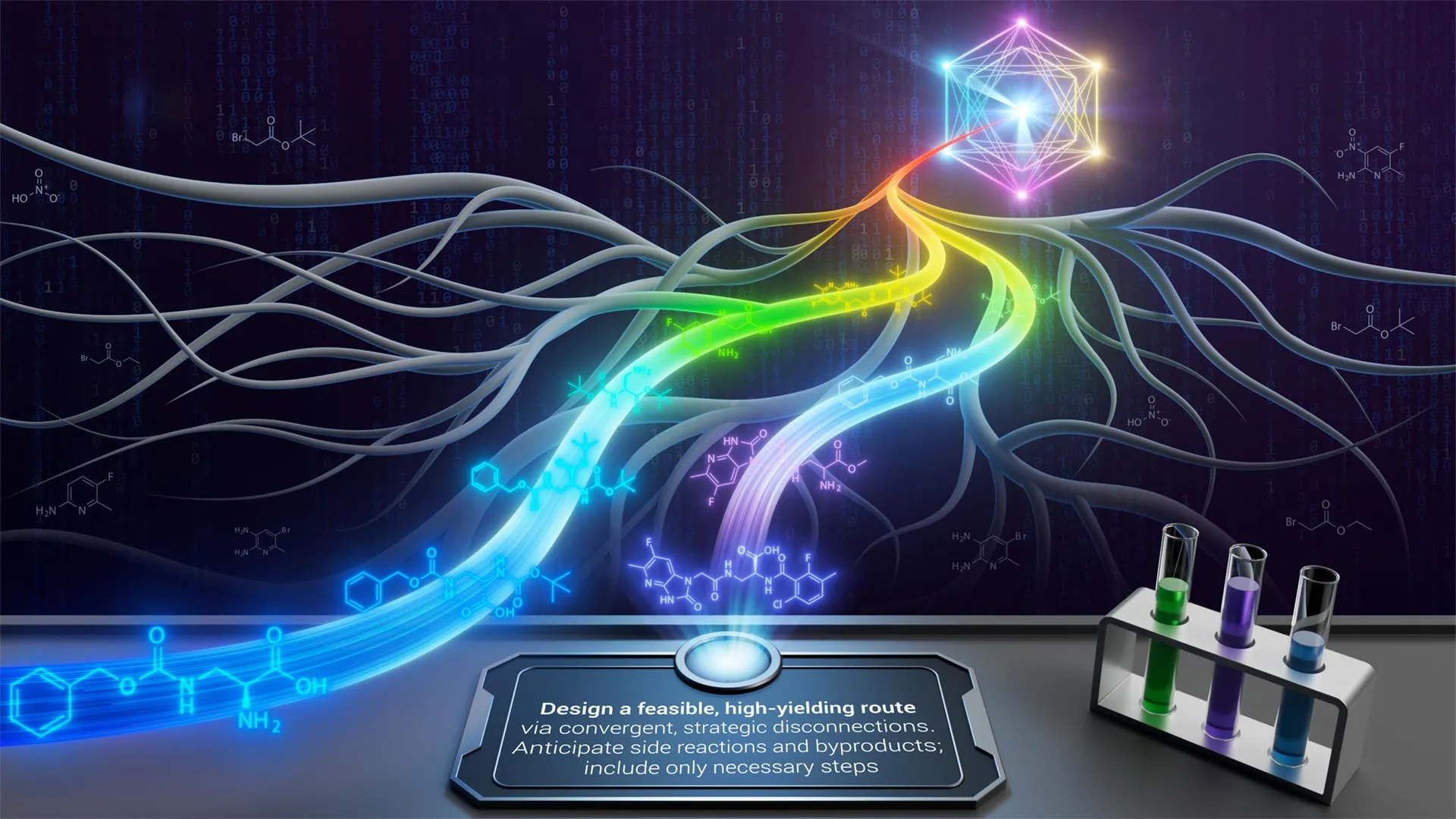
For centuries, the art of chemical synthesis has been described as a "gentleman’s science"—a pursuit demanding equal parts rigorous logic, intuitive genius, and an almost artistic flair for manipulating matter at the atomic scale. Creating a new molecule, whether a life-saving pharmaceutical compound or a high-performance polymer for clean energy, is akin to solving a multidimensional puzzle where the pieces are microscopic and the rules of engagement are dictated by the volatile movement of electrons.
Traditionally, this process has been a bottleneck in scientific innovation. Chemists often spend years, if not decades, mastering the ability to map out the "retrosynthesis" of a target molecule—a painstaking process of working backward from a complex structure to simple, commercially available starting materials. Today, a team of researchers at EPFL, led by Philippe Schwaller, is introducing a paradigm shift that could transform the laboratory from a place of slow, manual trial-and-error into a hub of high-speed, AI-augmented discovery. Their new framework, "Synthegy," leverages the reasoning capabilities of Large Language Models (LLMs) to act as a sophisticated partner in the design of chemical pathways.
The Bottleneck: The Complexity of Chemical Reasoning
To understand the magnitude of this advancement, one must first appreciate the obstacles inherent in synthetic chemistry. When a medicinal chemist sets out to design a drug, they are not merely looking for a way to build a molecule; they are looking for the best way. This involves navigating a "chemical space" so vast that it dwarfs the number of stars in the observable universe.
The Retrosynthetic Challenge
Retrosynthesis requires high-level strategic judgment. A chemist must decide: Which bonds should be formed first? How can we construct complex rings efficiently? Are there sensitive functional groups that require "protection"—a temporary chemical mask that prevents unwanted side reactions but adds unnecessary steps and waste to the process? While current computational tools can scan databases to suggest potential routes, they often lack the "strategic intuition" of a human expert. They may suggest a theoretically possible path that is chemically impractical, overly expensive, or environmentally hazardous.
The Mechanism Mystery
Beyond the blueprint of a molecule lies the mechanism of its creation. Reaction mechanisms detail the precise "dance" of electrons that allows one molecule to transform into another. Understanding these pathways is essential for predicting the outcome of novel reactions. Yet, predicting mechanisms remains a daunting task for AI, which often struggles to distinguish between a pathway that is mathematically consistent and one that is physically and chemically plausible.
Synthegy: A New Dawn in Computational Chemistry
The breakthrough introduced by Schwaller’s team, published in the journal Matter, represents a fundamental pivot in how AI is utilized in the lab. Instead of relying on rigid, rule-based software or black-box algorithms that directly output chemical structures, the Synthegy framework treats LLMs as high-level reasoning engines.
The Synthesis of Natural Language and Logic
Synthegy does not replace the chemist; it empowers them by translating their strategic intent into machine-executable logic. By combining traditional search algorithms with AI capable of interpreting natural language, the system allows researchers to communicate their preferences—such as "avoid protecting groups" or "prioritize a ring-closing reaction early"—directly to the computational model.
"When making tools for chemists, the user interface matters a lot, and previous tools relied on cumbersome filters and rules," explains Andres M. Bran, the lead author of the study. "With Synthegy, we’re giving chemists the power to just talk, allowing them to iterate much faster and navigate more complex synthetic ideas."
The Chronology of Innovation
The development of Synthegy is the culmination of years of research into the intersection of computational linguistics and molecular science.
- Foundational Research: The team began by analyzing the limitations of existing retrosynthesis software, noting that while search algorithms were becoming faster, their ability to filter for "human-like" strategy was stagnant.
- LLM Integration: Recognizing that LLMs possess an inherent ability to parse complex instructions, the team pivoted to using these models as evaluators. Instead of asking the AI to generate a route, they asked it to critique the routes generated by standard software.
- Synthegy Framework Design: The team built a bridge between natural language prompts and the search space, allowing for the iterative, conversational design of synthetic pathways.
- Validation and Benchmarking: The system was subjected to rigorous testing, including a double-blind study with 36 professional chemists, to ensure that the AI’s reasoning aligned with human expertise.
Supporting Data: Validating the Machine Mind
The efficacy of Synthegy was put to the test in a series of performance benchmarks. In the double-blind study, 36 chemists were presented with both human-devised evaluations and AI-generated critiques of various synthetic pathways. The participants provided 368 valid evaluations, and in 71.2% of cases, their expert assessment matched the system’s results.
This high degree of correlation suggests that the model has successfully "internalized" the heuristics used by experienced chemists. Furthermore, the researchers found that model performance scaled with size; larger language models demonstrated a superior ability to grasp the nuance of complex functional group interactions, while smaller models showed more limited, albeit functional, reasoning.
Beyond the numbers, the system demonstrated a remarkable capacity to:
- Flag redundant protecting steps that inflate the cost of synthesis.
- Prioritize pathways based on the feasibility of reaction conditions.
- Bridge the gap between synthetic planning and the underlying mechanistic theory.
Implications for the Future of Science
The implications of the Synthegy framework extend far beyond the walls of the EPFL laboratory. By standardizing the interface between human strategy and computational power, this technology could catalyze several sectors.
Accelerating Drug Discovery
The drug discovery pipeline is notoriously slow, often taking over a decade to bring a new molecule from concept to clinical trial. By allowing chemists to iterate through synthetic routes in minutes rather than days, Synthegy could significantly reduce the time spent in the "design-make-test" cycle.
democratizing Advanced Synthesis
Advanced chemical reasoning has historically been the province of those with decades of specialized training. While the human expert remains irreplaceable, tools like Synthegy make sophisticated synthetic strategies more accessible, allowing researchers in smaller labs or emerging fields to tackle more complex molecular architectures.
Bridging Theory and Practice
Perhaps the most exciting aspect of the research is the synthesis of two previously distinct computational domains: planning and mechanism. "The connection between synthesis planning and mechanisms is very exciting," notes Bran. "We usually use mechanisms to discover new reactions that enable us to synthesize new molecules. Our work is bridging that gap computationally through a unified natural language interface."
Official Perspectives: A Shift in Paradigm
The consensus among the research team is that the role of AI in chemistry must evolve. For too long, the industry has chased the "holy grail" of an AI that replaces the chemist. Synthegy suggests a different, more practical future: AI as a "Co-Pilot."
By positioning language models as interpreters of human intent, the EPFL team has created a system that feels natural to the scientist. The goal is no longer to eliminate human decision-making, but to augment it with the lightning-fast processing power of modern computing. This approach acknowledges that while computers are excellent at scanning vast libraries of reaction data, they currently lack the "gut feeling"—the deep, lived experience of chemical reactivity—that a seasoned chemist brings to the bench.
Conclusion
As the chemical industry stands on the precipice of a new era, tools like Synthegy are providing the bridge to a more efficient and innovative future. By teaching computers to speak the language of chemists, we are not just improving the speed of synthesis; we are changing the very way we conceptualize molecular architecture.
The path forward will involve further refining these models, increasing their capacity to understand exotic chemical environments, and integrating them into automated robotic laboratories. Yet, the foundational breakthrough is clear: chemistry is a language, and for the first time, we have a tool that truly understands the grammar of discovery. Whether it is solving the next global health crisis or synthesizing materials for a sustainable future, the synergy between human strategy and artificial intelligence is poised to become the most important catalyst in the modern laboratory.
 Sagoh
Sagoh  Asro
Asro  Siti Muinah