
 By Asep Darmawan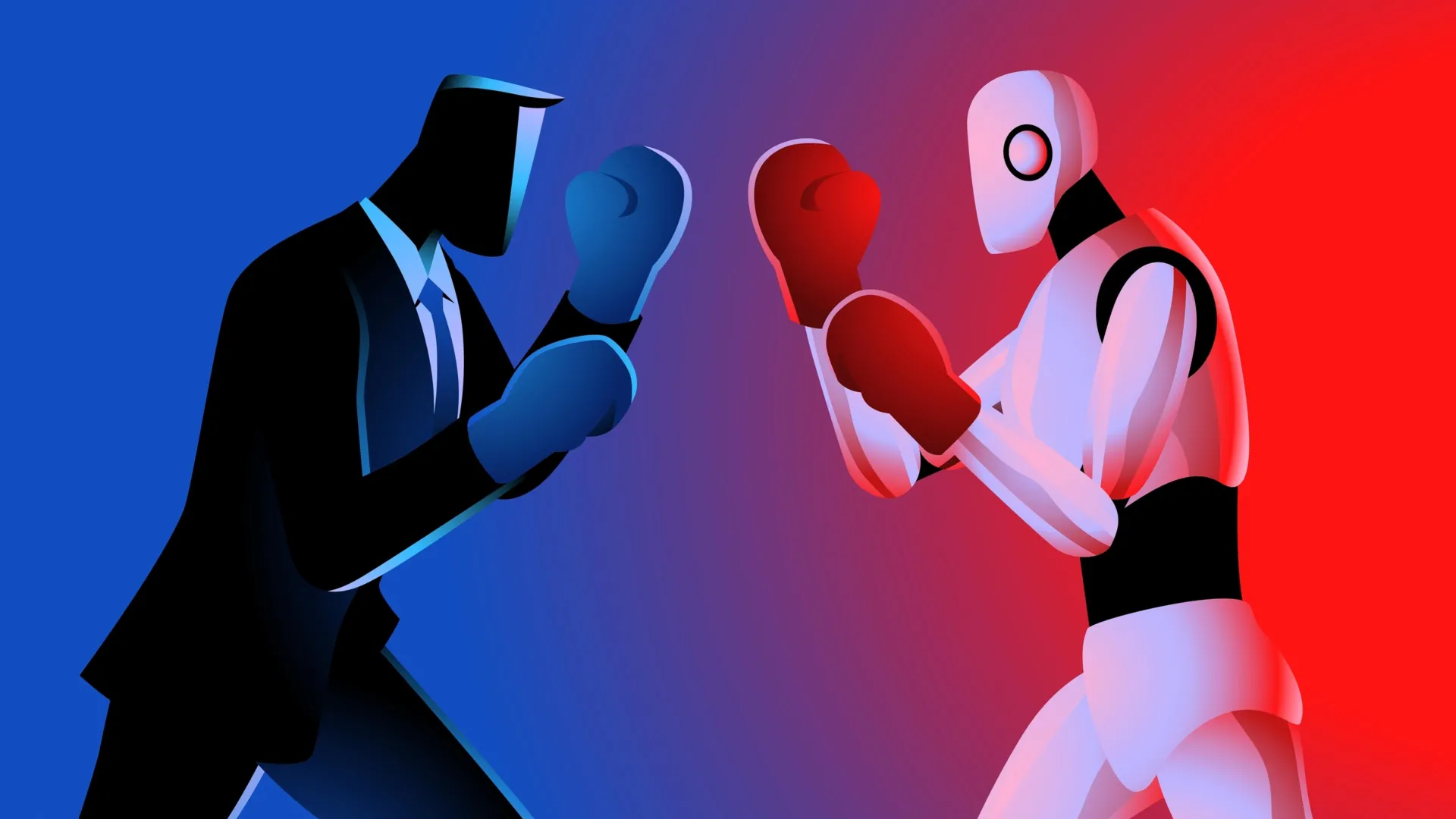
As artificial intelligence systems continue to shatter records on long-standing academic benchmarks, the global research community has reached an unexpected, yet profound, realization: the tests we designed to measure machine intelligence have become obsolete. Evaluations that once served as the gold standard for gauging progress—such as the Massive Multitask Language Understanding (MMLU) exam—are now being conquered by large language models with alarming speed.
This rapid acceleration has left researchers in a precarious position. If our primary tools for measuring AI capability no longer present a challenge, how can we accurately track progress, identify inherent risks, or distinguish between mere pattern recognition and genuine cognitive depth? The answer, according to a consortium of nearly 1,000 researchers from around the globe, is "Humanity’s Last Exam" (HLE)—a rigorous, multi-disciplinary assessment designed to push the boundaries of what current AI can achieve.
The Chronology of a Crisis: Why Old Benchmarks Failed
For years, the AI development cycle has been intrinsically tied to standardized testing. Researchers would feed models vast datasets, and success was measured by the model’s ability to correctly answer questions from datasets like MMLU or the Graduate-Level Google-Proof Q&A (GPQA). However, these benchmarks were never intended to be insurmountable. As models evolved, they began to perform with superhuman speed and accuracy, leading many to believe that AI was approaching human-level reasoning.
The problem, as experts soon realized, was "data contamination" and the limitations of static testing. AI models were increasingly being trained on the very internet data from which these tests were derived. The models were not necessarily "learning" in the human sense; they were effectively "remembering" the answers.
Recognizing this, a massive, collaborative effort was launched to create an exam that could not be "studied for" or memorized. The project, detailed in a recent paper published in the journal Nature, represents a pivot toward a more dynamic, expert-verified form of evaluation. Dr. Tung Nguyen, an instructional associate professor in the Department of Computer Science and Engineering at Texas A&M University and a key contributor to the HLE, notes that the shift was born out of necessity. "When AI systems start performing extremely well on human benchmarks, it’s tempting to think they’re approaching human-level understanding," Nguyen said. "But HLE reminds us that intelligence isn’t just about pattern recognition—it’s about depth, context, and specialized expertise."
The Anatomy of "Humanity’s Last Exam"
Humanity’s Last Exam is an ambitious, 2,500-question assessment that spans the breadth of human knowledge. From the complexities of ancient Palmyrene inscriptions and the minutiae of Biblical Hebrew pronunciation to advanced mathematics and specialized anatomical studies of avian species, the exam covers ground that current AI models frequently stumble over.
The selection process for the questions was rigorous and iterative. To ensure the exam remained a "moving target" for AI, the researchers implemented a "survival-of-the-fittest" protocol: every candidate question was tested against the most powerful AI models currently available. If a model was able to answer a question correctly, that question was discarded from the final, official exam set. This unique methodology ensures that the HLE is perpetually calibrated to remain just beyond the current capabilities of even the most sophisticated neural networks.
"Each problem was carefully designed so it has one clear, verifiable answer," the researchers noted. Furthermore, the questions were crafted to be resistant to the "Google effect." Unlike simple trivia, these questions require a synthesis of domain-specific knowledge that cannot be resolved through a quick keyword search or an automated retrieval-augmented generation (RAG) process.
Supporting Data: The AI Performance Gap
The early results from the HLE deployment confirm the researchers’ hypothesis: the gap between AI and human expertise remains significant. While AI models have achieved near-perfect scores on legacy benchmarks, they have struggled to break into even the double digits on many sections of the HLE.
Recent data shows a stark performance spread:
- GPT-4o: 2.7% accuracy.
- Claude 3.5 Sonnet: 4.1% accuracy.
- OpenAI o1: 8% accuracy.
- Top-tier models (Gemini 3.1 Pro / Claude Opus 4.6): 40% to 50% accuracy.
These scores are not necessarily an indictment of AI’s potential, but rather a wake-up call regarding the limitations of current architectures. They demonstrate that while these models are exceptional at summarizing text and writing code, they often lack the deep, nuanced understanding required to solve highly specialized academic problems. The data suggests that we have been conflating the ability to mimic human language with the capacity for intellectual reasoning.
Official Perspectives: The Role of Expert Contribution
The scale of the HLE project is perhaps its most remarkable feature. Nearly 1,000 experts from diverse fields—ranging from physics and medicine to linguistics and the humanities—contributed to the creation of the exam.
Dr. Tung Nguyen, who contributed 73 of the 2,500 questions, spearheaded much of the work related to mathematics and computer science. His perspective highlights a critical point for policymakers: the danger of misinterpreting AI progress. "Without accurate assessment tools, policymakers, developers, and users risk misinterpreting what AI systems can actually do," Nguyen explained. "Benchmarks provide the foundation for measuring progress and identifying risks. If we rely on outdated tests, we create a false sense of security."
The diversity of the contributors was intentional. By involving experts from almost every academic discipline, the team ensured that the exam could not be bypassed by a single type of reasoning or algorithmic shortcut. "What made this project extraordinary was the scale," Nguyen added. "It wasn’t just computer scientists; it was historians, physicists, linguists, medical researchers. That diversity is exactly what exposes the gaps in today’s AI systems—perhaps ironically, it’s humans working together."
Implications: The Path Toward Safer, More Reliable AI
The introduction of Humanity’s Last Exam has profound implications for the future of AI development. By establishing a durable, transparent, and difficult benchmark, the research community is shifting the focus from "who can get the highest score" to "who can solve the most complex problems."
1. Reframing the "AI Race"
Despite the alarmist title of the exam, the creators are quick to point out that this is not a competition between man and machine. It is a diagnostic tool. The goal is not to defeat AI, but to understand its failure modes. By identifying where these systems struggle, developers can work toward building more reliable, safer architectures that are less prone to hallucination or logical errors.
2. Guarding Against Over-Reliance
As AI is increasingly integrated into critical infrastructure—such as medical diagnostics, legal research, and climate modeling—the need for accurate assessment becomes paramount. The HLE serves as a "stress test" for these systems. If an AI cannot navigate the nuances of a specialized academic field, it may not be ready for autonomous decision-making in those same domains.
3. The Future of Benchmarking
The HLE is designed to be a long-term project. To prevent the models from "memorizing" the test, the majority of the questions remain hidden. This creates a sustainable environment for evaluation, where the test evolves alongside the technology. It acts as a mirror, reflecting the current state of artificial intelligence not as a finished product, but as a work in progress.
Conclusion: Why Human Expertise Still Matters
As we look toward a future defined by increasingly capable AI, the HLE project serves as a humbling reminder. Even in an era of rapid technological advancement, there remains a vast, unexplored landscape of human knowledge that machines have yet to master.
Dr. Nguyen’s sentiment resonates throughout the research community: "This isn’t a race against AI. It’s a method for understanding where these systems are strong and where they struggle. That understanding helps us build safer, more reliable technologies. And, importantly, it reminds us why human expertise still matters."
For those interested in the full scope of the project, including the methodology behind the question curation and the ongoing efforts to keep the benchmark secure, further details are available at lastexam.ai. In a world increasingly driven by synthetic intelligence, Humanity’s Last Exam provides a vital, human-centered baseline for the road ahead. It is not an ending, but a new beginning in how we measure, monitor, and ultimately direct the evolution of artificial intelligence.
 Sagoh
Sagoh  Asro
Asro  Siti Muinah