
 By Dwi Wanna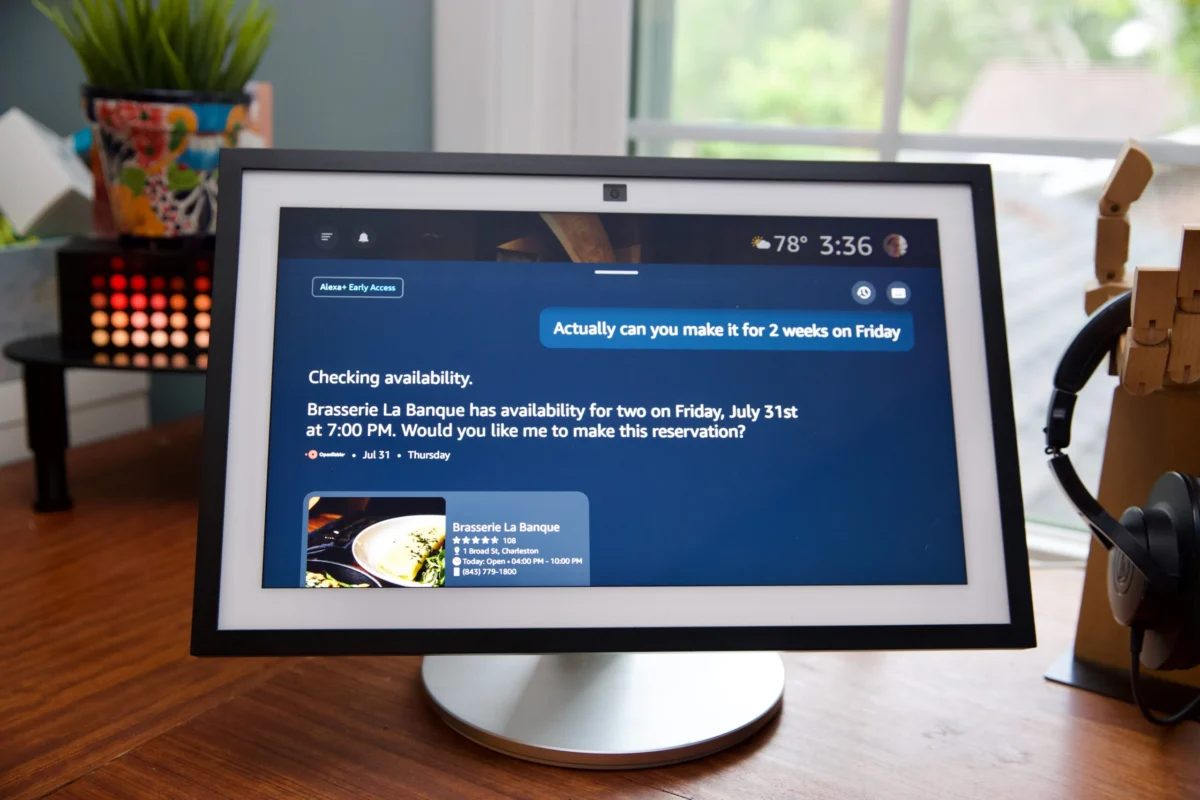
Amazon is doubling down on its vision of the “ambient home” with a significant upgrade to its flagship AI assistant, Alexa Plus. By introducing new developer tools and adopting open-source standards, the tech giant is moving beyond simple voice commands to create an ecosystem where AI doesn’t just listen—it understands, navigates, and executes complex tasks across a vast array of third-party hardware.
This latest evolution, currently in preview, marks a departure from the rigid, command-based interactions that have defined smart home assistants for the last decade. Instead, Amazon is positioning Alexa Plus as a central, intelligent orchestrator capable of managing appliances, logistics, and digital services with a level of autonomy previously reserved for high-end automation systems.
The Core Mechanics of the Update
At the heart of this update is a sophisticated AI developer toolkit designed to dismantle the silos that have historically hampered smart home interoperability. Previously, connecting a smart appliance to Alexa required static "skills" that often struggled with nuance. The new toolkit allows for dynamic, intent-based communication.
Real-World Utility: The Intelligent Appliance
To illustrate the power of this integration, Amazon provided a compelling use case: a user asking their washing machine to handle a specialized garment. When a user says, “Alexa, my kid’s soccer jersey could use a deep clean, but the tag says cold wash only,” the AI doesn’t just trigger a generic cycle.
Instead, Alexa Plus parses the intent, cross-references the requirements of the specific fabric, and navigates the washer’s internal settings to select the precise cycle that satisfies both the "deep clean" request and the "cold wash" constraint. This capability is made possible through direct API integration with manufacturers, including Bosch, Delta, Ecovacs, iRobot, Yale Home, Whirlpool, Tapo, and Eufy. By moving away from rigid, pre-programmed macros, Alexa Plus acts as an intelligent intermediary that understands the what and why behind a user’s request.
Chronology: The Evolution of Alexa Plus
The trajectory of Amazon’s AI strategy has been rapid and deliberate. To understand the significance of this expansion, one must look at the timeline of its development.
- February 2026 (The Launch): Amazon officially unveiled the revamped Alexa Plus. This version introduced advanced multi-step reasoning, allowing users to build routines through natural language rather than cumbersome app menus. At launch, the scope was limited to a select group of service providers, including Ticketmaster, OpenTable, Uber, and Yelp.
- Mid-2026 (The Expansion Phase): Following the initial launch, Amazon focused on stabilizing the core AI model. The realization that the assistant needed a more robust way to interact with "unique" device capabilities—features that didn’t fit into the standard "on/off" or "dim" categories—led to the development of the new AI toolkit.
- July 2026 (The Interoperability Pivot): Amazon announced the preview of the current update, shifting focus toward deep hardware integration and the adoption of the Model Context Protocol (MCP).
- Late 2026/Early 2027 (The Projected Roadmap): Amazon is slated to roll out support for major service-oriented brands like Canva, Headspace, and Virgin Atlantic, signaling a move toward a truly integrated "lifestyle" assistant.
Supporting Data: Expanding the Ecosystem
The effectiveness of an AI assistant is measured by its "surface area"—the number of systems it can reliably touch. Amazon’s strategy is two-fold: hardware integration (appliances) and digital services (travel, education, and commerce).
The Role of Model Context Protocol (MCP)
Perhaps the most significant technical shift is Amazon’s adoption of the Model Context Protocol (MCP). MCP is an open-source standard that acts as a universal translator between AI models and external systems. By standardizing the way Alexa Plus queries external databases, Amazon is lowering the barrier to entry for third-party developers.
This open approach is expected to catalyze a surge in integrations. Companies such as Priceline, Lyft, Cengage, and Weekend are already building toward a future where a single voice command can trigger a complex sequence of events: booking a flight, arranging a ride to the airport, and downloading relevant study materials for a trip.
Financial Integration
A critical component of this ecosystem is the seamless processing of payments. By integrating Amazon Wallet into the Alexa Plus interface, the friction of e-commerce is virtually eliminated. Users will soon be able to authorize payments for services provided by partners like Atom Tickets, Fandango, and Taskrabbit without leaving the conversational interface. This creates a "closed-loop" experience where the user moves from intent to action to payment entirely within the voice-activated domain.
Official Responses and Strategic Intent
In recent developer briefings, Amazon’s leadership has emphasized that the goal is not merely to sell more devices, but to become the "operating system of the home."
"Our objective is to move from ‘Voice-Enabled’ to ‘Intelligent-Actionable’," stated a spokesperson during the developer conference. "When we look at the limitations of existing assistants, the primary bottleneck has always been the translation layer between human intent and machine execution. By providing developers with the tools to expose the unique, complex capabilities of their hardware, we are enabling a level of automation that feels intuitive rather than programmed."
Amazon’s decision to embrace open standards like MCP suggests a pivot toward a more collaborative relationship with the tech industry. Rather than forcing developers to build exclusively for the Amazon environment, the company is positioning Alexa Plus as a standard-bearer for how AI should interact with the digital and physical world.
Implications: The Future of the "Ambient Home"
The transition of Alexa Plus from a command-and-control interface to an autonomous agent has profound implications for both consumers and the smart home industry.
1. The Death of the "App Fatigue"
For years, the smart home experience has been fragmented. A user might have a Whirlpool washer, a Yale smart lock, and an Ecovacs vacuum, each requiring a separate app and distinct interface. Alexa Plus aims to unify these disparate silos. By acting as the central intelligence, it eliminates the need for users to remember which app controls which device, or even how to navigate those apps.
2. Shifts in User Privacy and Data Security
As Alexa Plus gains the ability to "navigate" settings and execute payments, the stakes for privacy increase. Amazon faces the challenge of convincing users that an AI with this level of agency is secure. The adoption of MCP and the use of the Amazon Wallet infrastructure suggest that the company is leaning on existing, hardened security protocols to mitigate risks, but this remains a primary concern for privacy advocates.
3. The Economic Impact on Service Providers
For partners like Priceline or Taskrabbit, the integration represents a shift in how they acquire customers. If a user can book a hotel through Alexa without visiting a website or app, the "discovery" phase of the customer journey moves from search engines to the AI assistant. This creates a new battleground for digital marketing, where companies must optimize their services to be "discoverable" by AI models rather than just human eyes.
4. A New Standard for Hardware
Hardware manufacturers are now under pressure to provide more granular APIs. If a washer cannot report its cycle types or a vacuum cannot report its specific sensor status in a way the AI can understand, that product will be viewed as "dumb" compared to its competitors. We are likely to see a "smart-tiering" of appliances where the ability to interact seamlessly with Alexa Plus becomes a primary marketing feature.
Conclusion
The latest updates to Alexa Plus represent a significant leap forward in the maturity of consumer-facing AI. By blending deep hardware integration with the flexibility of open-source standards like the Model Context Protocol, Amazon is laying the groundwork for a future where the home is no longer a collection of connected gadgets, but a single, responsive entity.
While the technical hurdles—ensuring security, maintaining reliability, and managing complex user intent—remain substantial, the trajectory is clear. Amazon is betting that the winning AI assistant won’t be the one that is the smartest, but the one that is the most useful. By turning the "connected home" into an "active home," Amazon is setting a new benchmark for the industry, pushing the boundaries of what consumers can expect from their digital assistants.
As we look toward the remainder of 2026 and into 2027, the success of this initiative will be defined by the quality of these third-party integrations and the ability of Alexa Plus to deliver on its promise of making the complex, simple. For now, the preview is a clear signal: the era of the voice-commanded home is giving way to the era of the voice-managed life.
 Raul Delapena Setiawan
  Siti Muinah
  Asro
Asro 