
 By Dwi Wanna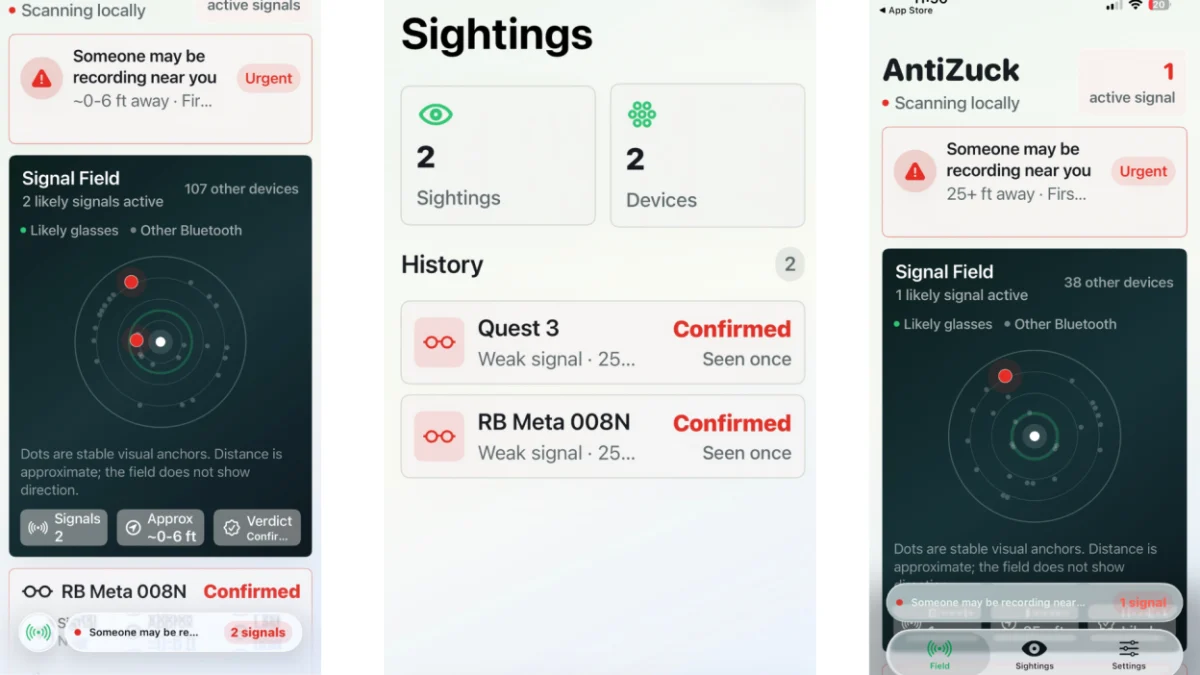
In an era where technology is increasingly woven into the fabric of our daily lives, the line between helpful innovation and invasive surveillance has become perilously thin. As smart glasses—led by Meta’s Ray-Ban collection—gain mainstream traction, a new digital "counter-measure" has emerged. The Antizuck Smart Glasses Scanner, an iPhone application developed by Albert Pariente Cohen, promises to alert users when devices capable of surreptitious recording are operating in their immediate vicinity.
But does this $3 utility represent a genuine breakthrough in personal privacy, or is it merely a symptom of the growing, often performative, anxiety surrounding wearable tech? As we weigh the convenience of AI-assisted eyewear against the desire for anonymity in public spaces, the emergence of detection software marks a significant escalation in the ongoing debate over the future of privacy.
The Core Functionality: How Antizuck Works
At its most fundamental level, the Antizuck app operates by scanning for specific Bluetooth signatures. Most modern smart glasses, including Meta’s Ray-Ban collection, Snap Spectacles, and various iterations of Meta Quest headsets, broadcast unique identifiers when they are active, pairing, or charging.
By utilizing the smartphone’s native Bluetooth capabilities, the app identifies these hardware handshakes. Upon detecting a match, the application notifies the user, providing information on the type of device found and the estimated distance. A primary selling point for the developer is the app’s commitment to privacy: it requires no account registration, demands no email address, and processes all detection data locally on the user’s iPhone, ensuring that the act of "scanning for spies" doesn’t inadvertently turn the user into a source of data collection.
A Chronology of the Smart Glasses Backlash
The release of Antizuck is the latest chapter in a long-standing narrative of resistance against "always-on" recording devices. To understand the current climate, one must look back at the trajectory of wearable camera technology:
- 2013: The Google Glass Era. When Google introduced its head-mounted display, the term "Glasshole" was coined. The device was widely perceived as an intrusive social artifact, leading to bans in bars, restaurants, and movie theaters long before it became a commercial product.
- 2021: The Rise of Stylish Wearables. Meta’s partnership with EssilorLuxottica changed the dynamic by making smart glasses look like—well, glasses. By prioritizing fashion, the stigma surrounding the technology began to fade, but the potential for covert recording remained a central concern.
- 2024–2025: Regulatory Pushback. As adoption rates climbed, institutions began to formalize their opposition. New York State courts, for example, implemented formal bans on smart glasses, citing the need to prevent unauthorized recordings during legal proceedings.
- 2026: The "Antizuck" Arrival. With the release of the Antizuck app, the conflict has transitioned from institutional bans to individual, consumer-level digital self-defense.
Supporting Data and Technical Reality Check
While the app is a clever piece of engineering, its effectiveness is subject to the limitations of Bluetooth technology. In real-world testing, the app proves to be a mixed bag of utility and frustration.
Detection Limitations
The app is highly proficient at identifying devices that are in a state of flux—specifically those that are powering on, pairing, or charging. However, once a pair of smart glasses is actively being worn and is already paired to a smartphone, the Bluetooth broadcast may become intermittent or silent, making them effectively invisible to the scanner.
The "False Positive" Problem
The application excels at mapping the digital landscape around you. It will routinely flag various Bluetooth-enabled devices, ranging from wireless headphones to smart home sensors. While it successfully distinguishes between a generic smart device and a camera-equipped wearable, the sheer volume of "noise" in a crowded urban environment can lead to a sense of digital overload. The utility lies in the app’s ability to alert a user to a specific brand of hardware, but users should be prepared for the fact that it is not a 100% foolproof "spy detector."
Examining the Privacy Implications
The existence of an app like Antizuck forces us to confront a difficult question: Is the "right to be left alone" compatible with the rapid advancement of consumer electronics?

The Case for Privacy
Proponents of such tools argue that we are entering a "post-privacy" world where the average citizen has no way of knowing if they are being filmed. For many, particularly women and vulnerable populations, the fear of being recorded without consent in private or semi-private spaces—such as locker rooms, restrooms, or intimate social gatherings—is a significant driver for this technology. The app serves as a digital watchdog, providing a sense of agency in a world where cameras are becoming invisible.
The "Good Actor" Perspective
Conversely, critics of the "anti-spy" movement point out that smart glasses serve a vast array of legitimate, and often transformative, purposes. For individuals with visual impairments, AI-powered glasses act as a digital guide, describing their surroundings and reading text aloud. For professionals, they provide a hands-free method for documenting tasks, conducting remote inspections, or simply capturing spontaneous moments without the need to fumble for a phone.
The danger, as some technology ethicists argue, is that by labeling all smart glass wearers as "creeps," we stigmatize a category of tools that are essentially neutral. A camera is a tool; its morality is determined by the user, not the hardware.
The Broader Social Contract
Ultimately, the Antizuck app highlights a failure in the current social contract between technology companies and the public. Meta and other manufacturers have focused heavily on the user experience—the "cool factor" of the glasses—while failing to address the anxiety of those around them.
The lack of a standardized, universal "recording indicator" that is visible to everyone within a 20-foot radius remains a significant oversight. If the industry wants to achieve widespread adoption, they may need to move toward more transparent signaling—perhaps a physical light or a standardized digital handshake that informs nearby devices of the recording status.
Conclusion: A Tool, Not a Panacea
The Antizuck app is a fascinating, if imperfect, response to the rapid pace of technological change. It is not the ultimate solution to the privacy challenges of the 21st century, nor should it be viewed as an impenetrable shield against surveillance. Instead, it represents the beginning of a conversation.
As we move forward, the "privacy arms race" will likely continue. We will see more sophisticated detection software, but we will also see more sophisticated (and harder to detect) wearable devices. The true resolution to this tension will not come from apps or hardware, but from a cultural shift. We must collectively decide on the etiquette of the "always-on" world, establishing norms that respect the wearer’s right to innovate and the bystander’s right to privacy.
Until then, for those who feel uncomfortable in the presence of modern tech, a $3 investment might buy a little peace of mind—even if it is only a partial solution to a much larger, more complex problem. As we navigate this digital frontier, remember that the most important tool for privacy remains, as it always has been, a healthy dose of awareness about the world around you.
 Layla Zulfa
  Asro
Asro  Reynand Wu