
 By Layla Zulfa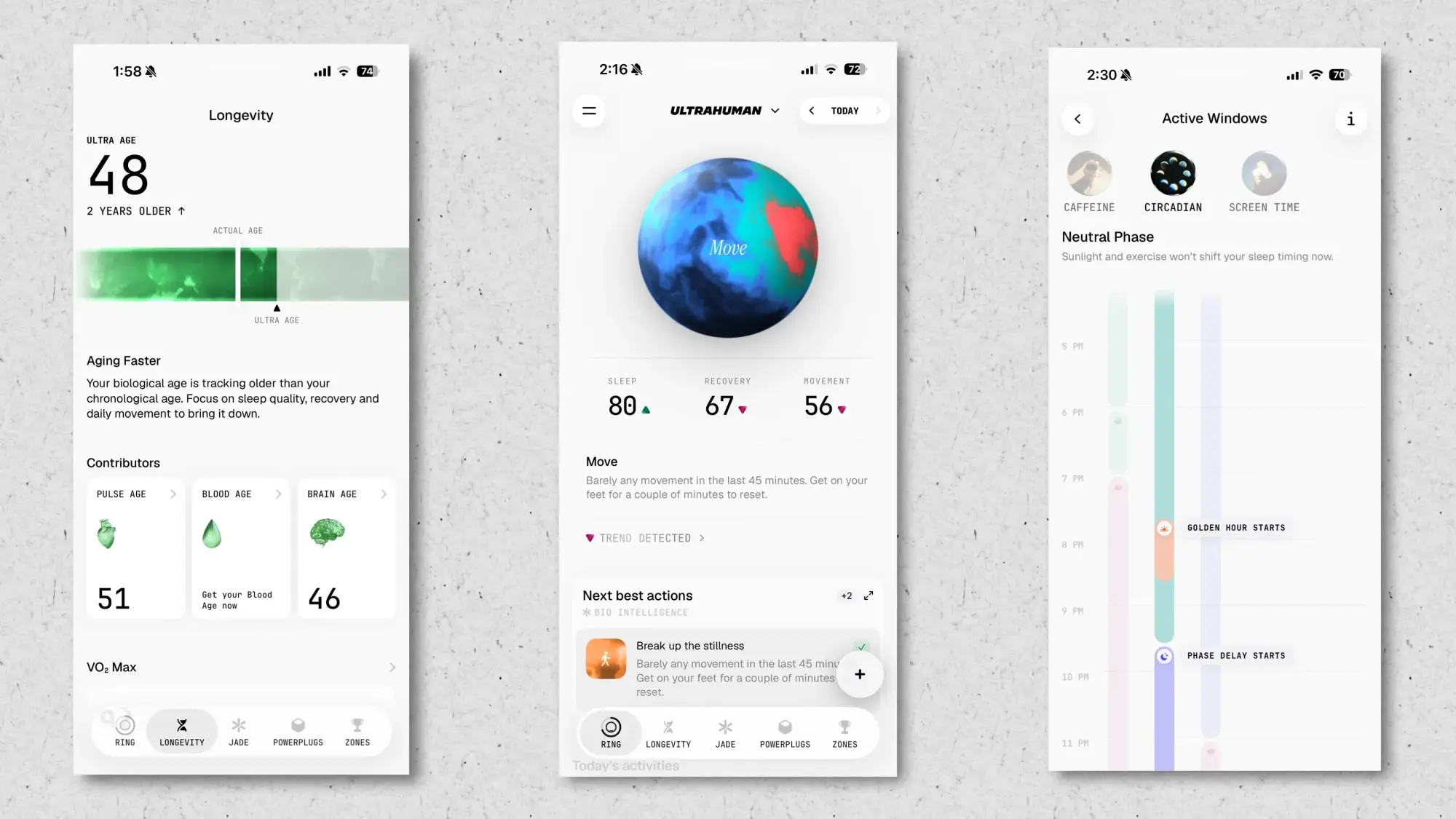
By Beth Skwarecki, Senior Health Editor
July 23, 2026
The wearable technology landscape is notoriously crowded, yet often plagued by a common shortcoming: the "data-dump" paradox. Many devices excel at harvesting millions of data points—from blood oxygen saturation to subtle shifts in skin temperature—but fail to synthesize that information into actionable, human-centric advice. When I first reviewed the Ultrahuman Ring Air last year, this was my primary point of contention. The app was an overbearing companion, bombarding me with cryptic metrics like “brain waste clearance”—a term that felt more like marketing fluff than physiological insight.
However, the landscape of health tracking has shifted significantly with the release of the "Emerald Update," a comprehensive redesign of the Ultrahuman application. Having spent extensive time testing this update alongside the forthcoming Ultrahuman Ring Pro, I have found that the developers have finally addressed the friction that previously defined the user experience. By prioritizing clarity over complexity, Ultrahuman is pivoting from being a mere tracker to a more intuitive health coach.
The Evolution of Data Presentation: Main Facts
The core philosophy behind the Emerald Update is simplicity. Upon opening the application, users are no longer greeted by a wall of dense charts. Instead, they are presented with a "daily summary" dashboard that highlights the most critical anomalies or successes of the previous 24 hours.
If your sleep duration was insufficient, or if your resting heart rate shows a slight deviation from your baseline, the app flags this immediately. This shift toward "triage-based" reporting means users can understand their physiological state in seconds rather than minutes.
Key improvements include:
- On-Device Processing: Data is now processed locally, removing the need for a constant internet connection to sync or receive insights.
- Contextual Actionability: The home screen now features "next best actions," such as reminders to move after sedentary periods or prompts to initiate a wind-down routine based on sleep consistency.
- Streamlined Navigation: The app has been condensed into five intuitive tabs, moving away from the cluttered interface that previously tried to force-sell unrelated hardware integrations.
Chronology: From Clutter to Clarity
The journey to the Emerald Update did not happen overnight. Since the launch of the Ring Air, the engineering team at Ultrahuman has faced consistent feedback from the fitness community. Users frequently noted that while the hardware was unobtrusive and aesthetically pleasing, the software often felt like a "beta" product that prioritized buzzwords over biology.
Phase 1: The Feedback Loop (Late 2025)
During the latter half of 2025, user sentiment analysis suggested that engagement dropped off after the first month of ownership. The primary culprit was "app fatigue"—the feeling that the data was too difficult to interpret for the average person.

Phase 2: The Beta Testing (Early 2026)
The development of the Ring Pro served as the catalyst for the software overhaul. Developers realized that to support the advanced sensors in the new hardware, the app needed a more robust backbone. I began testing the beta version of this interface in the spring of 2026, noting that the "noise" in the data streams was being filtered out in favor of clearer, trend-based visuals.
Phase 3: The Emerald Update Rollout (July 2026)
The official release, dubbed the "Emerald Update," marks the transition to a more modular architecture. By allowing users to toggle "PowerPlugs"—feature add-ons—the app now offers a bespoke experience, ensuring that if you aren’t interested in tracking your caffeine intake or blood glucose, those features aren’t cluttering your view.
Supporting Data and Technical Nuances
The effectiveness of a wearable is only as good as its algorithm, and the Emerald Update introduces several technical refinements that demand attention.
VO2max and Longevity Metrics
The new "Longevity" tab offers an estimation of VO2max—a gold-standard metric for cardiovascular fitness. While the app assigns an "Ultra Age" (a comparative marker for biological aging), it is important to treat this number with skepticism. It serves better as a directional trend indicator than a scientific absolute. The app’s strength here lies in its transparency; by providing notes on how algorithm updates affect these scores, Ultrahuman is fostering a level of trust that was previously missing.
The "Jade" AI Bottleneck
One of the most ambitious, yet currently imperfect, aspects of the update is "Jade," an integrated AI chatbot. While the concept of a conversational health assistant is revolutionary, its execution remains in its infancy. In my testing, when prompted to explain "blood flow smoothness," the AI occasionally hit a wall, admitting it lacked the specific definition. This suggests that while the front-end design has matured, the generative AI component requires further fine-tuning to provide accurate, context-aware explanations.
Official Perspectives and Industry Implications
Ultrahuman has positioned this update as a response to the "quantified self" movement’s need for maturity. In internal briefings, the company emphasized that the goal is to make the ring "invisible"—meaning it should work for you in the background without requiring active management.
The shift toward on-device processing is a significant move in the wearables industry. By removing the cloud dependency for daily metrics, Ultrahuman is addressing privacy concerns and latency issues, ensuring that the device remains functional even in remote areas or during connectivity outages.
Furthermore, the introduction of the "Zones" feature suggests that Ultrahuman is looking to build a social layer. Whether this will evolve into a meaningful community or simply become another social media feed remains to be seen, but it indicates a shift toward retention-focused features that encourage long-term use.

Implications: The Future of Wearable Coaching
What does this mean for the average consumer? It signals that the hardware arms race—where companies competed solely on who could cram the most sensors into a ring—is secondary to the "software-as-a-coach" model.
The Verdict on "PowerPlugs"
The PowerPlug system is perhaps the most consumer-friendly development. By allowing users to choose their experience, Ultrahuman is acknowledging that health is subjective. A professional athlete has different needs than a busy professional struggling with sleep debt. The ability to "train your ring" by cross-referencing data with other devices (like Garmin or Apple Health) is a massive step forward, allowing for a unified health profile rather than siloed data.
Is the Ring Pro Worth the Wait?
While I am still conducting deep-dive testing on the Ring Pro, the software integration suggests a bright future. The heart rate accuracy, when paired with the new algorithmic processing, appears to be significantly more stable than in previous generations.
The most important takeaway for current users is that the Emerald Update proves Ultrahuman is listening. They have successfully stripped away the unnecessary "brain waste" and focused on what actually matters: sleep quality, movement efficiency, and long-term health trends.
Final Thoughts
Change in the tech world is often iterative and messy, but in this case, it is undeniably positive. The Emerald Update turns the Ultrahuman experience from a chore into a tool. If the company continues to refine its AI capabilities and keeps the interface clean, they may well set the new standard for what a wearable companion should look like. For those who were frustrated by the previous, over-cluttered iteration, the current state of the app is a compelling reason to give the platform another look.
As I continue to test the device, I remain cautiously optimistic. We are moving away from the era of "data for data’s sake" and into an era of "insights for the sake of wellness." It is a welcome, necessary, and refreshing shift.
 Asro
Asro  Reynand Wu