
 By Neng Nana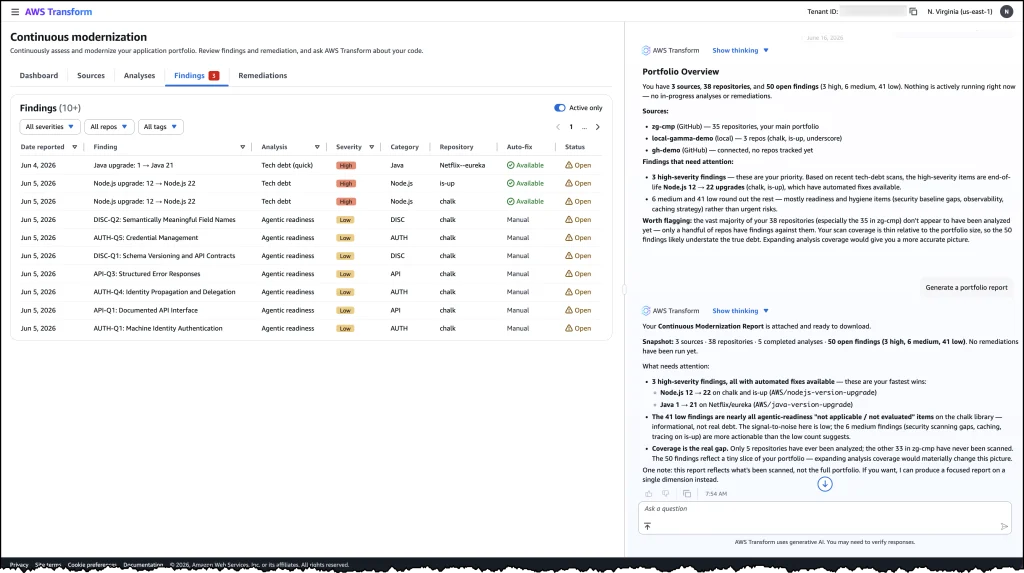
In an era where software development velocity is increasingly dictated by AI-assisted coding agents, the accumulation of technical debt has shifted from a manageable nuisance to a systemic bottleneck. Today, Amazon Web Services (AWS) announced the preview of AWS Transform – Continuous Modernization, a sophisticated, automated capability designed to overhaul how enterprises identify, prioritize, and remediate technical debt at an unprecedented scale.
By integrating directly into the source control lifecycle, this new tool aims to replace the fragmented, manual efforts that have long plagued platform engineering teams, offering a unified, autonomous approach to keeping massive codebases current and secure.
The Core Mandate: Ending the Manual Debt Cycle
For many global enterprises, engineering operations consume as much as 30% of total IT budgets. Traditionally, teams have attempted to control technical debt by stitching together an array of point solutions: separate tools for vulnerability scanning, dependency tracking, and static code quality analysis.
The result is rarely a clean codebase; rather, it is a disjointed, manual cycle of status reports and "fire-fighting." When a dependency reaches its end-of-life or a framework becomes deprecated, platform teams are forced to manually track down affected applications, coordinate with distributed development teams, and verify fixes—a process that often takes months and relies heavily on inaccurate self-reporting.
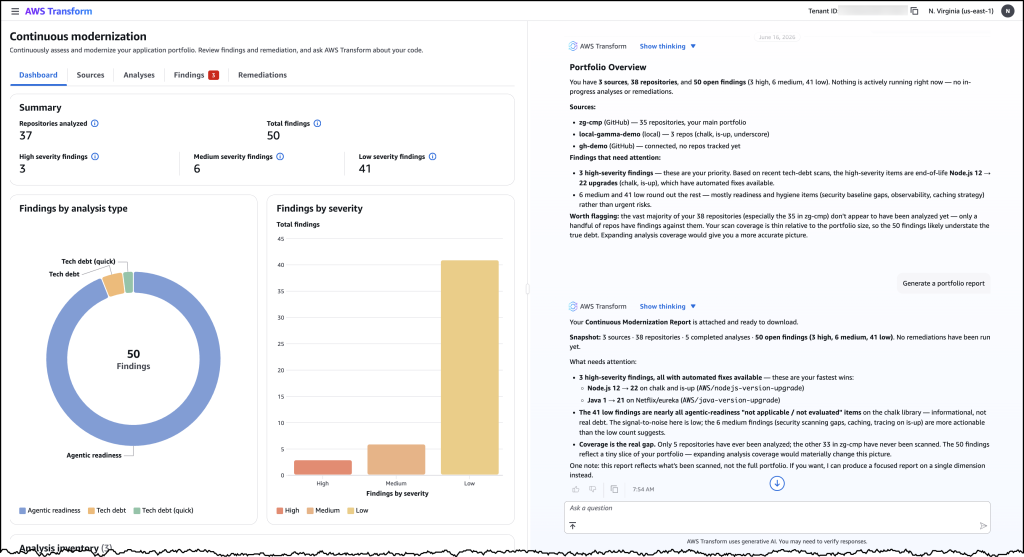
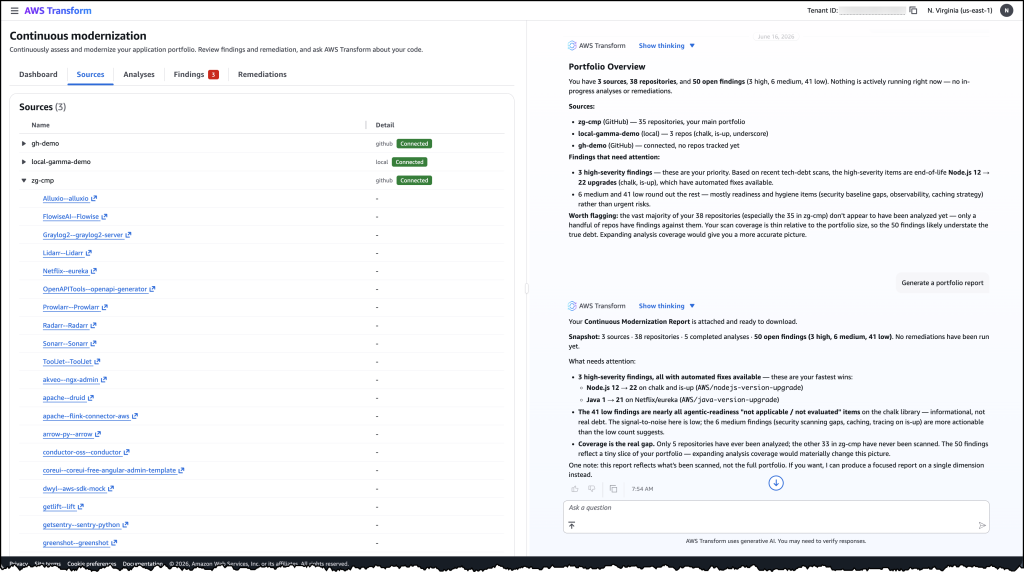
AWS Transform – Continuous Modernization fundamentally changes this dynamic. By providing a "single pane of glass" view into thousands of repositories, the service acts as a continuous audit mechanism, moving beyond periodic snapshots to offer real-time, ground-truth visibility into the health of an organization’s software portfolio.
Chronology of the Modernization Challenge
To understand the necessity of this new AWS service, one must look at the evolution of modern software development:
- The Era of Manual Maintenance: Historically, "modernization" was a project-based event. Organizations would initiate a "Java migration project" every few years, pausing feature development to address accumulated debt.
- The Rise of Distributed Complexity: As microservices architectures proliferated, the sheer number of repositories grew exponentially, rendering manual, spreadsheet-based tracking obsolete.
- The AI Acceleration: The recent explosion in AI-assisted coding has allowed developers to write code faster than ever. However, this has inadvertently accelerated the rate at which legacy patterns and outdated dependencies are introduced into production environments.
- The AWS Intervention: Recognizing that human-led manual remediation cannot keep pace with the speed of AI-assisted output, AWS has transitioned the responsibility of routine maintenance from developers to an autonomous, policy-driven engine.
Supporting Data: The Cost of Stagnation
The economic argument for continuous modernization is compelling. In large-scale enterprises, technical debt is not merely a "cleanliness" issue; it is a primary driver of security risk and operational overhead.
- Velocity Impact: Teams spending 30% of their time on maintenance are, by definition, spending 30% less time on customer-facing features. AWS estimates that automating these routine tasks can reclaim a significant portion of that capacity.
- Risk Exposure: Outdated runtimes and deprecated libraries are the low-hanging fruit for attackers. By automating the identification and patching of these components, organizations significantly reduce their "window of vulnerability."
- Compliance and Visibility: In regulated industries, manual compliance tracking is prone to human error. AWS Transform provides an immutable audit trail, showing exactly which repositories are compliant with internal standards at any given moment.
How It Works: Continuous Analysis and Autonomous Remediation
The architecture of AWS Transform – Continuous Modernization relies on two primary pillars: Continuous Analysis and Autonomous Remediation.

The Analysis Engine
The platform scans repositories against configurable baselines. Unlike traditional scanners that only flag issues, AWS Transform generates a prioritized list of findings within hours. Organizations can define their own "Gold Standards"—such as approved Java versions, specific internal logging libraries, or security policy requirements. If a team drifts from these standards, the platform immediately flags the delta, providing leadership with a high-fidelity view of exactly which components are outdated and by what degree.
The Remediation Workflow
Identification is only half the battle. Once findings are generated, AWS Transform can trigger autonomous remediation. The system generates Pull Requests (PRs) for affected repositories, complete with the necessary code changes.
Crucially, this is not an opaque "black box." The PRs are sent directly to the owning team, who retain the agency to review, modify, or merge the changes. Once the code is merged, the system automatically updates the status, providing "ground truth" verification without the need for follow-up meetings or status emails.
Implications for Platform Engineering Teams
The introduction of this tool marks a shift in the role of the platform engineer. Instead of being "librarians" of code quality, platform teams can now become "architects of policy." By defining the remediation patterns once, they can enforce these standards across thousands of repositories simultaneously.
Security Integration
A critical feature of this release is its integration with the AWS Security Agent. By collapsing security vulnerabilities into the same workflow as technical debt, AWS is effectively forcing a merger between the SecOps and DevOps pipelines. A vulnerability in an open-source library is no longer treated as a separate "security issue" requiring a unique ticket; it is handled as a standard modernization task, prioritized alongside routine version upgrades.
Two Modes of Operation
AWS has designed this tool to accommodate two distinct organizational needs:
- Continuous Mode: Designed for the "day-to-day" upkeep—keeping libraries current, applying patches, and ensuring ongoing compliance with coding standards.
- Campaign Mode: Targeted at large-scale, one-off initiatives, such as a company-wide migration from an aging framework to a modern alternative. This allows teams to deploy "campaigns" that target specific tech debt across the entire organization, providing real-time tracking of the migration’s progress.
Official Perspectives and Strategic Outlook
While AWS has not yet released specific customer case studies, industry analysts suggest that this tool is a direct response to the "scaling wall" that many cloud-native enterprises have hit.
"The problem isn’t that companies don’t want to modernize; it’s that the cognitive load of keeping thousands of repos up to date has become impossible for humans to manage alone," noted one industry observer. "By codifying remediation, AWS is effectively commoditizing the maintenance of software."
For organizations heavily invested in the AWS ecosystem, this service represents a significant step toward "self-healing" infrastructure. By lowering the cost of maintaining code, AWS is encouraging a culture where software is treated as a living entity rather than a static asset that degrades over time.
Getting Started: The Path Forward
AWS Transform – Continuous Modernization is available in preview starting today. Users can access the platform via the AWS Transform web application, the Kiro Power tool, or through integrations with existing coding agents via MCP (Model Context Protocol).
As AI continues to change the nature of software development, the gap between "modern" and "legacy" code is widening at an unprecedented rate. With this release, AWS is betting that the future of enterprise development will be defined not just by how fast we can write code, but by how effectively we can automate its evolution.
For CTOs and VPs of Engineering, the message is clear: the era of manual technical debt management is drawing to a close. The new standard is continuous, autonomous, and integrated—and it is available for deployment now.
 Suro Senen
  Lina Hope