
 By Azzam Bilal Chamdy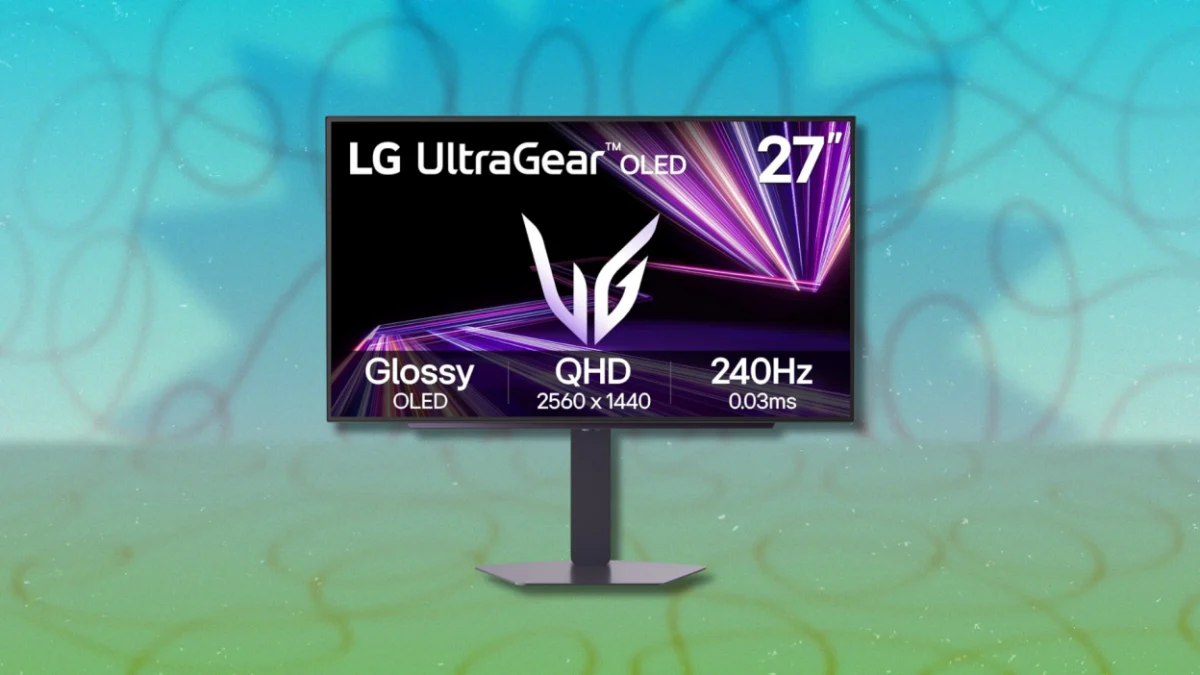
By Pradershika Sharma | July 24, 2026
For years, the promise of OLED technology in gaming monitors was locked behind a high financial barrier. Early adopters were expected to pay a "premium tax" that often climbed well north of $1,000. However, the market has reached a critical inflection point as of mid-2026. With prices for high-performance displays consistently dipping below the $500 threshold, the LG 27GX704A-B UltraGear OLED has emerged as a landmark deal, currently retailing at just $379 on Amazon—a staggering 50% reduction from its 2025 launch price of $799.
Main Facts: Why This Monitor Matters
The LG 27GX704A-B is not merely a "budget" monitor; it is a high-performance tool designed for a specific demographic: the competitive gamer. Featuring a 1440p resolution and a lightning-fast 240Hz refresh rate, it bridges the gap between mid-range IPS panels and high-end professional OLED displays.
The primary appeal of this monitor lies in its third-generation WOLED panel. Unlike traditional LED or even high-end IPS monitors that rely on a backlight, the LG 27GX704A-B utilizes per-pixel illumination. This results in "infinite" contrast ratios, where black levels are absolute and highlights pop with a vibrancy that LCD technology simply cannot replicate. For gamers, this means a competitive edge in dark-map environments, where enemy visibility is often obscured by the "glow" of a standard backlight.
The Chronology of the OLED Price Collapse
The journey to this $379 price point did not happen overnight. The evolution of the UltraGear line over the last 24 months tracks closely with the broader manufacturing trends in the display industry:
- Q1 2025 (The Launch): LG releases the 27GX704A-B with an MSRP of $799. At the time, it was positioned as an entry-level OLED, yet still commanded a price that limited its reach to enthusiasts and professional esports players.
- Q3 2025 (Market Saturation): As competitors like ASUS, MSI, and Dell began releasing their own 1440p/240Hz OLED variants, LG faced increased pressure to maintain market share. Prices began to fluctuate between $599 and $649 during promotional periods.
- Q1 2026 (Technological Maturation): Yields for WOLED panels improved significantly at the manufacturing level. With the transition to "Generation 3" panels, the cost of production dropped, allowing manufacturers to pass savings to the consumer.
- July 2026 (The Current Deal): The price finally breaks the $400 barrier, landing at $379. This move effectively forces traditional high-refresh-rate IPS monitors out of the value conversation, as the OLED alternative now costs roughly the same as a top-tier "fast" IPS display.
Supporting Data and Technical Performance
To understand why the 27GX704A-B is being hailed as a "must-buy" at its current price, one must look at the technical specifications that govern motion clarity. In competitive shooters like Valorant, Apex Legends, and Call of Duty, input lag and response time are the primary arbiters of success.
Response Time and Motion Clarity
Standard IPS monitors often advertise a "1ms response time," but this is frequently an "GtG" (gray-to-gray) figure that can be plagued by ghosting or overshoot artifacts. The LG 27GX704A-B, conversely, benefits from the near-instantaneous response times inherent to OLED pixels. Because the pixels switch states almost immediately, motion looks significantly sharper during high-speed camera flicks.
The Glossy Advantage
A controversial yet highly praised design choice by LG is the implementation of a glossy screen coating. While many gaming monitors utilize matte coatings to combat glare, they often introduce a "haze" that softens the image and reduces perceived sharpness. The 27GX704A-B’s glossy finish retains the punchy, vibrant nature of the OLED panel. While this requires a controlled environment—ideally away from direct sunlight—the visual clarity is objectively superior to most matte-finish alternatives.
Synchronization Standards
The monitor supports both AMD FreeSync Premium Pro and is G-SYNC compatible. This cross-platform support ensures that, regardless of whether a user is rocking an NVIDIA RTX 40-series card or an AMD Radeon RX 7000-series GPU, screen tearing is effectively eliminated without the need for proprietary hardware modules.

Official Manufacturer Stance and Market Positioning
LG has remained relatively quiet regarding the specific "end-of-life" status of this model, but industry analysts suggest that the price drop is a strategic move to clear inventory for upcoming 2027 revisions. In internal communications and press releases throughout the year, LG has emphasized the "democratization of display technology."
By positioning the 27GX704A-B at this price, LG is signaling to the market that the "premium" label for OLED is no longer a permanent fixture. When asked for comment regarding the sustainability of these price points, a spokesperson for the brand noted that the focus for 2026 and 2027 is to ensure that "every gamer, regardless of their budget, has access to the superior motion clarity and contrast that only OLED can provide."
The Implications: What This Means for You
The ripple effects of this deal are significant for the broader tech ecosystem.
1. The Death of the Mid-Range IPS
For years, the $300–$400 price bracket was dominated by high-end IPS gaming monitors. With the LG 27GX704A-B now competing directly in this space, the value proposition of a traditional LCD-based monitor has vanished. Unless a user requires a monitor specifically for high-brightness, sunlight-heavy office work, the IPS display is quickly becoming an obsolete technology for the gaming enthusiast.
2. The "Entry-Level" Caveats
Consumers must be aware of what is sacrificed to reach this $379 price point. The 27GX704A-B is, by all accounts, a "no-frills" experience. It lacks the modern DisplayPort 2.1 standard, which is becoming increasingly relevant for future-proofing. It also skips the built-in KVM switch and high-end USB-C power delivery hubs found on more expensive models. For those who need a workstation-grade monitor with extensive connectivity, this might not be the primary display of choice.
3. The Burn-in Question
As with all OLED technology, the risk of permanent image retention (burn-in) remains a factor for users who display static elements—such as taskbars or UI HUDs—for thousands of hours. While current LG OLED panels feature advanced pixel-shifting and cleaning algorithms to mitigate this, the long-term longevity compared to an IPS panel remains an open debate. However, at $379, the "cost per year" of the monitor becomes much easier to justify even if the panel has a shorter lifespan than a traditional monitor.
Final Thoughts: Should You Upgrade?
The LG 27GX704A-B is an outlier in the current market. It is a device that brings top-tier gaming performance to a price point previously reserved for compromise-heavy displays. If your setup is in a room where you can control the lighting, and your primary goal is competitive gaming, this is arguably the most significant hardware value of 2026.
As we look toward the remainder of the year, the success of this price adjustment will likely dictate the strategy for other manufacturers. If consumers flock to the $379 price point, expect to see a market-wide correction that makes OLED the new standard for the "mid-range" gamer, effectively ending the era of the high-refresh IPS monitor as the default choice for the masses.
Disclaimer: Deal pricing and availability are subject to change after the time of publication. We may earn a commission from links on this page.
 Layla Zulfa
  Asro
Asro  Reynand Wu