
 By Raul Delapena Setiawan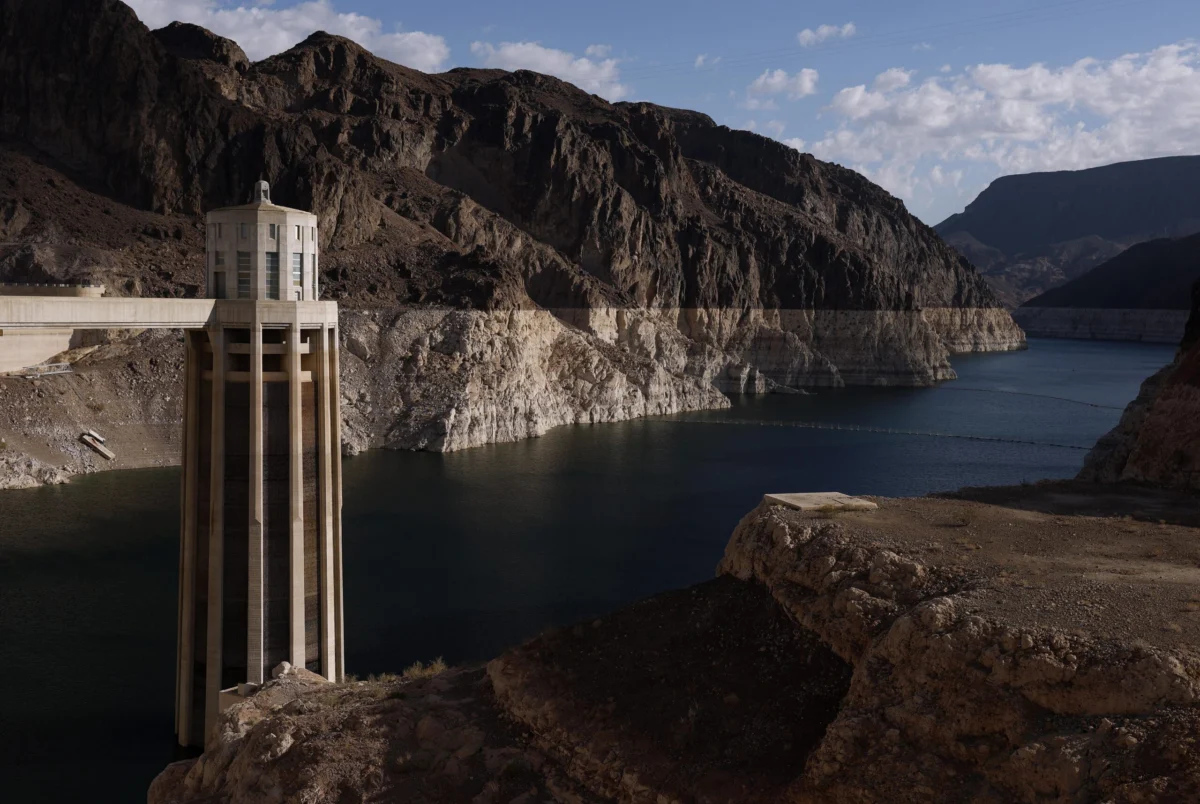
PHOENIX — For over a century, the 1,400-mile Colorado River has served as the lifeblood of the American Southwest, sustaining millions of lives, sprawling metropolitan areas, and a massive agricultural footprint across arid desert valleys. Today, however, this crucial waterway is buckling under the dual pressures of an unprecedented quarter-century megadrought and relentless overuse driven by climate change.
Nowhere are the stakes of this unfolding environmental emergency higher than in Arizona. A recent, highly consequential federal decision regarding how to manage the river’s rapidly dwindling flows has hit the Grand Canyon State especially hard, forcing local policymakers, agricultural giants, and high-tech corporate titans into a high-stakes reckoning.
Ironically, even as the state confronts severe reductions in its surface water supply, it is transforming into the epicenter of the global artificial intelligence revolution. Armed with billions of dollars in federal subsidies, corporate giants like Taiwan Semiconductor Manufacturing Company (TSMC) and Intel are rapidly expanding massive fabrication plants—known as "fabs"—across the scorching Phoenix suburbs. These facilities are designed to manufacture the advanced semiconductors powering the next generation of AI technology. Yet, chip manufacturing is famously water-intensive, creating a stark economic and existential paradox: Can a desert economy support the explosive demands of the artificial intelligence boom while its primary water source evaporates?
Main Facts: The Collision of AI and Arid Lands
The core of the crisis lies in a severe supply-and-demand mismatch. The Colorado River provides more than a third of Arizona’s total water supply, but the river basin has faced historic deficits for decades. Meanwhile, federal intervention has mandated steep cuts to downriver states beginning in 2027. Arizona stands to absorb the heaviest blow, losing at least 760,000 acre-feet of water annually. An acre-foot represents enough water to cover an acre of land a foot deep—roughly enough to supply three Phoenix-area homes for a year.
At the same time, Maricopa County—the primary hub for Intel and TSMC’s multi-billion-dollar investments—is experiencing an industrial construction boom unlike anything seen since the region’s early manufacturing days in the 1940s.
- The Scale of the Industry: While agriculture remains the state’s heaviest consumer, devouring over 70 percent of Arizona’s water, industrial uses account for a modest 6 percent. However, the semiconductor sector is scaling up at a breakneck pace.
- The "Ultra-Pure" Water Burden: Chip fabrication requires staggering volumes of high-purity water to etch and clean sensitive silicon wafers. Because of the intensive deionization and reverse osmosis processes required, a typical facility might pull up to 16 million gallons of municipal water daily to produce 10 million gallons of "ultra-pure" water.
- Corporate Footprint: In 2025 alone, Intel’s facilities in Chandler, Arizona, withdrew more than 2.7 billion gallons of freshwater. Meanwhile, TSMC’s initial Phoenix fab consumes approximately 4.75 million gallons daily—roughly equivalent to the daily water use of 14,000 households, or 2 percent of the city’s entire residential housing stock.
Chronology: A Crisis Decades in the Making
To understand how Arizona arrived at this precarious crossroads, it is necessary to examine the timeline of legal frameworks, climate shifts, and industrial investments that have shaped the modern Southwest.
- 1922: The historic Colorado River Compact is signed, dividing the river’s waters among seven Western states based on overly optimistic flow estimates that science would later prove unsustainable. This framework becomes the foundation of the modern "Law of the River."
- The 2000s–2020s: The Colorado River Basin enters an "unprecedented" megadrought. Climate change accelerates glacial melt, reduces snowpack, and desiccates soil, causing reservoirs like Lake Mead and Lake Powell to plummet to historic lows.
- August 2022: President Joe Biden signs the landmark CHIPS and Science Act into law, earmarking $52.7 billion to revitalize domestic semiconductor manufacturing and reduce America’s reliance on overseas supply chains. Arizona immediately becomes a primary beneficiary, attracting massive commitments from Intel and TSMC.
- 2024–2025: Intel secures a $7.86 billion direct government grant and maps out a $32 billion expansion in Arizona. Concurrently, TSMC finalizes plans for at least six advanced fabs in Phoenix, backed by up to $6.6 billion in federal CHIPS funding.
- August 2025: Following prolonged gridlock among Western states over how to voluntary share the burden of conservation, the U.S. Department of the Interior finalizes a binding federal plan outlining steep mandatory cuts for Arizona, Nevada, and California starting in 2027.
- Late 2025 to Present: Local municipalities work frantically to offset upcoming surface water losses by drawing from underground aquifers and expanding reclamation infrastructure, while public anxiety mounts over rising utility rates and the long-term sustainability of the state’s aquifers.
Supporting Data: Numbers Behind the Shortage
The friction between high-tech economic development and natural resource limits is best understood through hard metrics provided by state agencies, federal bureaus, and corporate sustainability reports:
- 760,000 Acre-Feet: The minimum annual volume of water Arizona stands to lose under the federal Department of the Interior’s downriver curtailment plan.
- 300,000 Acre-Feet: The approximate total volume of water consumed by the City of Phoenix in a single year, putting the scale of the state’s federal water cuts into sharp perspective.
- 65% to 90%: TSMC’s current water recycling rate at its Arizona operations, with corporate commitments to push reclamation past 90 percent once specialized water-recycling plants are fully operational.
- 40%: The proportion of Maricopa County’s water supply that still relies on surface flows from the Colorado and Salt rivers, even though the county leans heavily on local groundwater reserves compared to other parts of the state.
Official Responses and Political Tensions
The federal government’s heavy-handed intervention has triggered sharp rebukes from local leadership, even as municipal planners insist they are prepared for the immediate disruption.
Phoenix Mayor Kate Gallego issued a scathing public critique following the Department of the Interior’s August announcement, arguing that the federal framework "does not provide the fair, basin-wide leadership the Colorado River crisis demands." Nevertheless, Gallego emphasized that decades of aggressive municipal conservation and underground water storage have insulated the city from immediate tap water shutoffs. She has called for dedicated federal funding to help municipalities mitigate the infrastructure costs associated with the transition.
Experts note that Phoenix maintains a unique utility rate structure: unlike many industrial hubs that offer discounted water rates to attract major corporate investments, Phoenix charges uniform rates across the board.
"The cost of water will increase for TSMC," explains Kathryn Sorensen, research director at the Kyl Center for Water Policy at Arizona State University and former director of Phoenix Water Services. "Everyone pays the same rate for water in the city of Phoenix, whether you’re a mom-and-pop store, a family of eight, or TSMC."
Corporate actors have defended their presence by pointing to long-term collaborative planning. Nina Kao, a deputy spokesperson for TSMC, noted in an emailed statement that a stable water supply is fundamental to chip production. "One of the reasons the city of Phoenix was selected for our U.S. expansion is because of their long-term water plan, which includes varied water supply sources, as well as steps taken in preparation for reduced water supplies over the course of decades," Kao said. Both Intel and TSMC declined live interviews for this report but maintain strict public targets to minimize freshwater consumption per wafer produced.
Implications: Who Bears the Cost of the Silicon Desert?
As artificial intelligence demand continues to skyrocket, spawning an ecosystem of data centers, packaging facilities, and semiconductor plants across the desert, long-term anxieties are reaching a fever pitch.
Jennifer Martin-McLeod, a program manager for the Grand Canyon chapter of the Sierra Club, describes the current industrial rush as overwhelming. "It’s almost happening at a level that’s difficult to wrap your head around," she says. "To try to say ‘Everybody take a breath and think through what we’re doing’ is difficult when you have that steamroller of money coming at your state to try to make it all happen overnight."
While city officials insist that stored underground water reserves can bridge the gap in the near term, experts warn this strategy carries hidden costs. Compensating for lost Colorado River water by pumping heavily from local aquifers is a short-term fix that threatens the long-term health of Central Arizona’s groundwater tables—borrowing water security from future generations.
Furthermore, transitioning to alternative water sources requires massive capital investments in new wells, pipelines, and purification infrastructure. Sorensen cautions that these infrastructural costs will inevitably trickle down to everyday citizens through higher utility bills.
"Our economy is changing, and that’s really painful," Sorensen reflects. "When there’s a water scarcity issue, you have to start looking at what the uses of that water are that bring the most value to the community. There’s not enough water for everything we want to do with it. So what do we have enough water for? What are the uses we most value? Is it cotton or is it microchips?"
For ordinary residents, the coming era of scarcity threatens tangible lifestyle adjustments. As Martin-McLeod observes, conservation mandates will likely force daily sacrifices upon homeowners and families, whereas multi-billion-dollar tech conglomerates will simply absorb rising utility expenses as standard operating costs. Ultimately, the Silicon Desert faces a profound philosophical and economic trial: navigating a future where the most valuable commodity in the world may no longer be data, but the pristine water required to sustain it.
 Siti Muinah
  Asro
Asro  Suro Senen