
 By Sagoh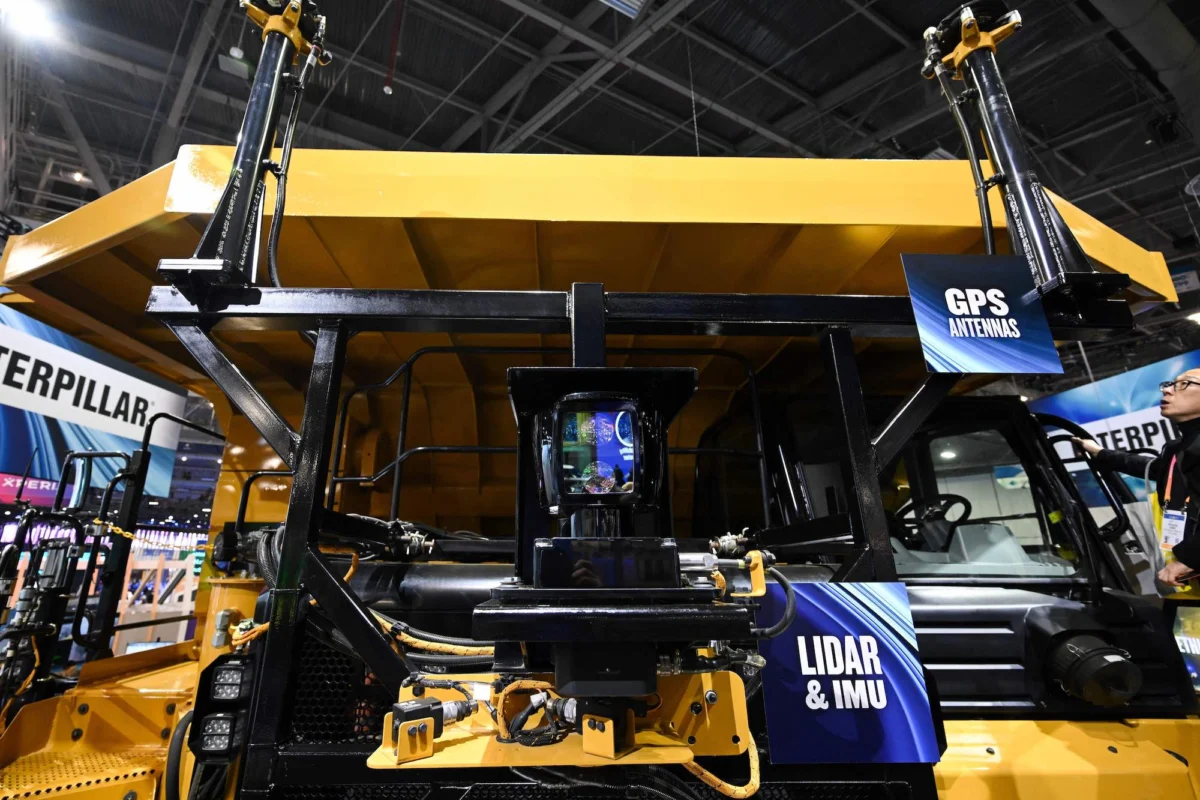
For decades, the global industrial sector has viewed artificial intelligence with a mixture of cautious optimism and skepticism. While tech giants in Silicon Valley have long perfected the art of training large language models on digital data, companies in the heavy equipment sector have faced a different, more daunting hurdle: the unpredictable, high-stakes physical world.
Caterpillar, the titan of construction and mining machinery, has spent the better part of its history mastering the physics of earth-moving. Now, the company is proving that it is uniquely positioned to solve the "last mile" problem of AI integration—moving the technology out of the server rack and into the quarry, the construction site, and the maintenance bay.
The Evolution of Autonomous Operations: From Mining to Mainstream
Caterpillar’s journey into the autonomous era was not born from a desire to chase market trends, but from necessity. Mining environments are among the most hazardous and logistically complex on Earth. With chronic labor shortages and the constant risk to human personnel in deep-pit operations, Caterpillar began deploying autonomous haul trucks and remote-controlled drilling systems.
These early successes provided the company with a massive, proprietary testing ground. By automating the most repetitive and dangerous tasks in mining, Caterpillar built a robust "autonomous toolkit" that includes remote command centers, sophisticated fleet management software, and real-time terrain intelligence.
"Now we’re in this super exciting time where we can take all of that learning from mining and bring it into much more dynamic environments, jobsites, quarries, and construction sites," said Jaime Mineart, Caterpillar’s Chief Technology Officer, during a fireside chat at the Ai4 conference in Las Vegas.
This transition marks a pivotal shift in the company’s strategy. Caterpillar is moving beyond simply selling iron and steel; it is becoming a software-defined industrial powerhouse that views its equipment as nodes in a vast, intelligent network.
Chronology of Innovation: A Decade of Industrial AI
To understand how a century-old manufacturer pivoted to AI, one must look at the progression of its technological integration:
- The Connected Foundation: Long before "generative AI" was a household term, Caterpillar focused on telematics. By outfitting machines with sensors, the company established a global network of 1.6 million connected assets. This massive repository of 16 petabytes of structured data serves as the "fuel" for their current AI initiatives.
- The Mining Milestone: Initial deployment of autonomous haulage systems (AHS) in Australia and North America proved that AI could operate in extreme weather and high-pressure production environments.
- The Expansion Phase: Building on the mining success, the company pivoted to construction-grade autonomy. This involved shrinking the tech footprint to make it viable for smaller, more fluid job sites.
- The Assistant Era: In recent years, Caterpillar shifted focus toward "Human-AI Teaming." The launch of the Cat AI Assistant represents a move to empower the individual technician, rather than just replacing the operator.
- The Enterprise Modernization: Most recently, the company has begun applying internal AI agents to its software development lifecycle, utilizing LLMs to modernize legacy codebases and accelerate the deployment of internal tools.
The Data Advantage: Leveraging 16 Petabytes of Industrial Intelligence
The true value of Caterpillar’s AI strategy lies in its data moat. While a startup building an AI model for construction might struggle to gain access to the granular telemetry of a bulldozer working in a clay pit, Caterpillar owns the entire stack.
The Cat AI Assistant is the most visible manifestation of this data advantage. When a field technician stands next to a massive piece of equipment, they no longer need to thumb through thousands of pages of paper manuals. Instead, they use voice commands to trigger an AI assistant that has been trained on the proprietary, specific repair procedures for that exact machine.
The system can troubleshoot potential failures, identify the specific parts required for a repair, and even pull up digital schematics—all before the technician turns a single wrench. This reduces downtime, a metric that translates directly into millions of dollars of savings for construction firms globally.
Furthermore, the company is using AI to power digital twin technology. By scanning a construction site, Caterpillar’s software creates a virtual replica that analyzes site efficiency, material movement, and potential safety bottlenecks, allowing project managers to optimize their operations in real-time.
Official Perspectives: The CTO’s View on Human-Machine Teaming
Jaime Mineart, serving as the company’s CTO, has been instrumental in framing the conversation around the "hard part" of AI. During her keynote at the Ai4 conference, she underscored a critical reality: the technology itself is often the easiest part of the equation.
"The hard part about autonomy and about physical AI is incorporating that technology into the customer jobsite and into the workflows," Mineart noted.
She argues that AI should not be viewed as an external tool, but as a partner in the workflow. For instance, as machines take on more autonomous tasks, the role of the operator is evolving. Instead of sitting in the cab of one machine for eight hours, operators are increasingly moving into command centers where they oversee fleets of machines. This requires a fundamental shift in how work is organized—moving from direct manipulation to supervisory control.
Implications for the Workforce: A $100 Million Commitment
The pivot toward autonomous systems and AI agents necessitates a massive cultural and educational shift. Recognizing that the biggest obstacle to digital transformation is the "human element," Caterpillar has committed to a $100 million investment over the next five years to train its 118,000 employees.
This is not merely about teaching people how to use a computer; it is about building a workforce capable of managing, maintaining, and improving the AI systems that now govern their equipment. This initiative is a blueprint for other industrial giants facing the "automation anxiety" that currently permeates the global labor market. By investing in its people, Caterpillar is ensuring that the transition to AI is inclusive rather than exclusionary.
Financial Momentum: The Infrastructure Boom
The strategic pivot to AI is yielding tangible financial results. Caterpillar’s second-quarter earnings report showcased a historic milestone: quarterly revenue hit an all-time high of $20.5 billion.
Much of this success is driven by a surprising sector: power-generation equipment. As the world rushes to build out data centers for generative AI and cloud computing, the demand for reliable, high-capacity power systems has skyrocketed. Caterpillar’s power-generation division saw a 72% spike in sales, reaching $3.10 billion.
CEO Joe Creed has signaled that this demand shows no signs of waning. "No one is slowing down," Creed remarked, highlighting the symbiotic relationship between Caterpillar’s physical hardware and the digital AI revolution. Caterpillar is not just helping build the future of AI; it is powering the very facilities that house it.
Conclusion: The Road Ahead
Caterpillar’s strategy offers a compelling case study for any legacy industrial player. By grounding its AI development in the reality of its proprietary, high-quality data and focusing heavily on the "soft" challenges of workforce training and workflow integration, the company has avoided the pitfalls of "AI theater."
As the lines between digital software and heavy machinery continue to blur, Caterpillar is proving that the most successful AI companies of the future may not be the ones that started in a garage in Palo Alto, but the ones that spent the last century mastering the earth. The integration of AI into the physical world is no longer a hypothetical future; it is being deployed, tested, and scaled today in the quiet corners of the world’s most demanding job sites.
 Iffa Jayyana
  Lina Hope
  Nana Muazin