
 By rifanmuazin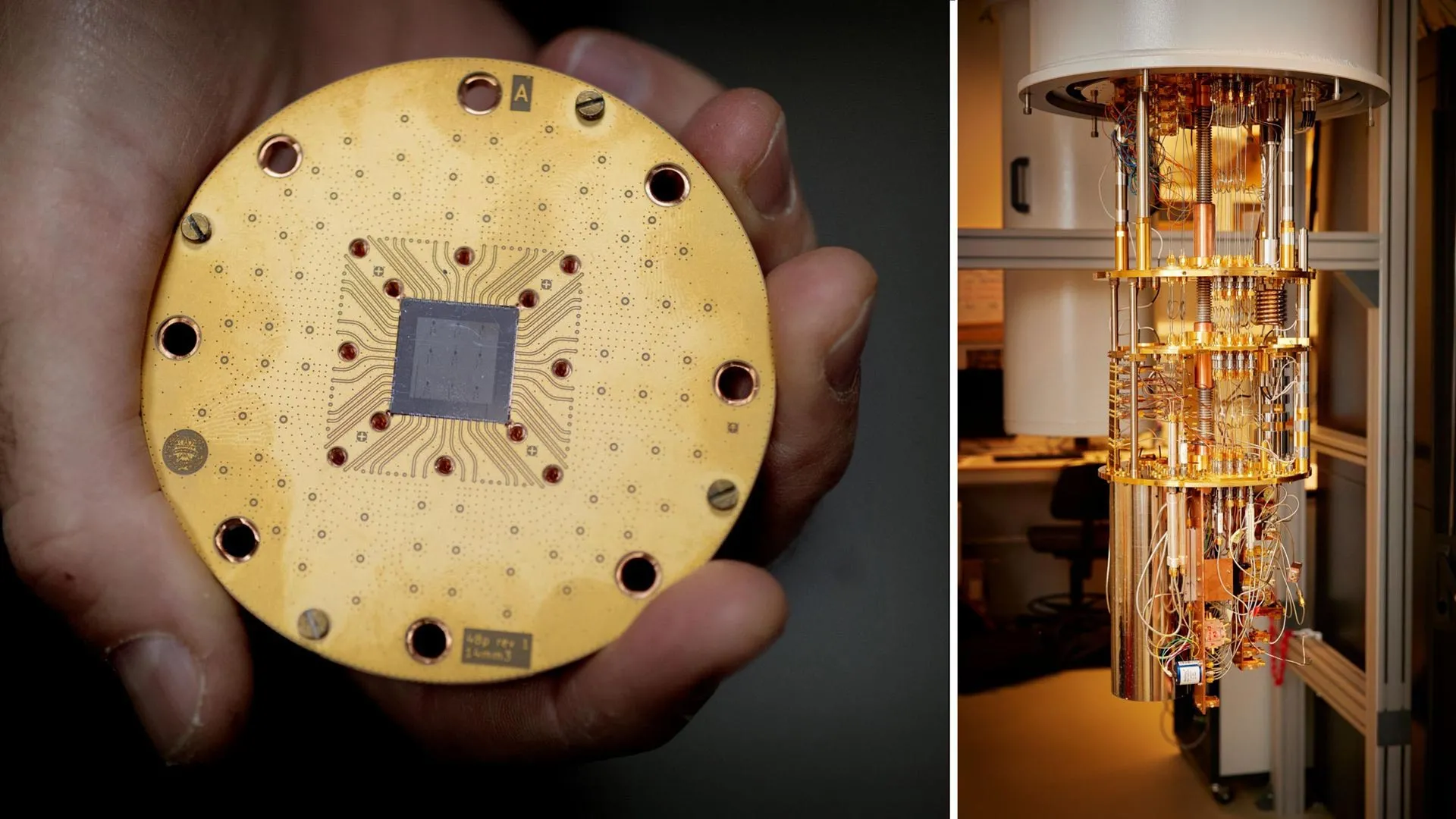
Quantum computing stands at the precipice of a revolution, promising to redefine the boundaries of human discovery. From simulating complex molecular interactions for next-generation drug design to optimizing global logistics and cracking the cryptographic codes that secure the internet, the potential applications are vast. However, the path toward a functional, large-scale quantum computer is currently blocked by a formidable barrier: the inherent fragility of quantum information.
Researchers at the Chalmers University of Technology in Sweden have recently unveiled a breakthrough that could clear this bottleneck. By developing a method to perform advanced quantum operations more than a thousand times faster than existing techniques, the team has provided a new blueprint for building error-tolerant quantum machines.
The Core Challenge: The War on Error
At the heart of the quantum computing dilemma is the "qubit." Unlike the binary bits of classical computers—which exist as either 0 or 1—qubits leverage the laws of quantum mechanics to exist in a superposition of states. This allows them to perform complex calculations at speeds impossible for traditional silicon-based machines.
However, this extraordinary power comes at a steep price: extreme sensitivity. Quantum states are notoriously fragile, susceptible to "decoherence" caused by the slightest environmental fluctuations. Electrical noise, cosmic radiation, and even minute changes in temperature can cause a qubit to lose its quantum information. In the industry, this is often described as the "ticking clock" problem; the longer a quantum operation takes to complete, the more time there is for the environment to corrupt the calculation.
"The fundamental building blocks of quantum computers, known as qubits, are so sensitive that even the smallest disturbance can cause the quantum state to deviate from the target, resulting in the loss of information," explains Lei Du, a researcher in Applied Quantum Physics at Chalmers and lead author of the study. "If too many errors accumulate before they can be corrected, the computation fails entirely."
While classical computers have long relied on sophisticated error-correction protocols to ensure stability, quantum systems have struggled to find a comparable mechanism. The Chalmers team’s latest research, published in Physical Review Letters, aims to bridge this reliability gap.
Chronology of the Breakthrough
The road to this discovery began with a shift in philosophy regarding how quantum information is stored and manipulated.
1. The Pivot to Bosonic Codes
Traditional quantum computing research has focused heavily on individual qubits as the primary units of information. Recognizing the limitations of this approach, the scientific community began exploring "bosonic quantum codes." Instead of relying on individual, volatile qubits, bosonic codes store information in the microwave fields within superconducting circuits. This method provides an intrinsic layer of protection, shielding information from specific types of external interference.
2. Identifying the Bottleneck
As researchers adopted bosonic codes, a new problem emerged: control. Creating and manipulating these bosonic states was historically an agonizingly slow process. Controlling the system required guiding it through thousands of repeated "driving cycles." Each cycle acted as a window of opportunity for environmental noise to leak into the system, effectively neutralizing the safety benefits of the bosonic code.
3. The Development of Quantum Lattice Gates
The Chalmers team, led by Lei Du, Tangyou Huang, and Lingzhen Guo, sought to eliminate the need for thousands of cycles. They developed a concept known as "Quantum Lattice Gates." By designing a universal set of quantum gates, they discovered they could effectively "shortcut" the control process. Instead of building a quantum state piece-by-piece, the lattice gates allow for the execution of complex operations in a single, streamlined cycle.
4. Experimental Validation and Publication
Following rigorous theoretical modeling and verification, the team finalized their findings in the paper, "Single-Period Floquet Control of Bosonic Codes with Quantum Lattice Gates." The research, which bridges the fields of superconducting circuit engineering and quantum control theory, was accepted for publication in Physical Review Letters, marking a significant milestone in the quest for fault-tolerant computing.
Supporting Data: The Power of Speed
The implications of this research are best understood through the magnitude of the improvement. By utilizing the Quantum Lattice Gate method, the team demonstrated that operations previously requiring several thousand cycles could be completed in just one.
| Metric | Previous Methods | Chalmers Breakthrough |
|---|---|---|
| Control Cycles Required | Thousands | One (Single-Period) |
| Exposure to Environmental Noise | High | Extremely Low |
| Error Accumulation Rate | Exponential | Significantly Reduced |
| Operational Efficiency | Low | High |
This 1,000x increase in speed is not merely a quantitative gain; it is a qualitative leap. Because the computation finishes before the environment has a chance to disrupt the quantum state, the system effectively "outruns" the decoherence that has plagued the field for years.
Official Perspectives: The Experts Speak
The researchers at Chalmers University view this development as a foundational shift in how quantum architecture is conceptualized.
Tangyou Huang, a researcher in Quantum Technology at Chalmers and co-author of the study, offers an intuitive analogy to describe the efficiency of the new gates. "You can think of it like building a large Lego castle," Huang explains. "Instead of assembling it brick by brick and risking mistakes along the way, quantum lattice gates act like pre-built Lego modules that can be connected quickly and efficiently."
This modular approach significantly reduces the overhead required for error correction. Lei Du adds that this is the primary bottleneck currently preventing the industry from scaling up. "Our results address one of the major bottlenecks in the field: how to quickly and reliably create and control the error-correcting quantum states that could play an important role in future quantum computers."
The team is already looking toward the next phase: physical implementation. Because the method is specifically designed for superconducting quantum circuits—a technology platform currently being used by major tech giants and universities alike—the path to lab-based testing is relatively clear. "We are already discussing possible experimental realizations with colleagues at Chalmers, and we hope to see a demonstration of the method in the near future," says Huang.
Implications for the Future of Computing
The Chalmers University breakthrough carries significant weight for several key areas of the quantum industry:
Accelerated Path to Fault-Tolerance
The "Holy Grail" of quantum computing is fault-tolerance—a state where a computer can run indefinitely without errors. By significantly reducing the susceptibility of the system to noise, the Chalmers method provides a more stable foundation for building larger, more complex quantum processors.
Enhancing Superconducting Platforms
Superconducting quantum computers are currently among the frontrunners in the race toward large-scale quantum utility. The fact that the Chalmers approach is optimized for these platforms makes it highly relevant for institutions currently developing 100-qubit (and larger) systems. It provides a software-level optimization that can be integrated into existing hardware pipelines.
Broadening the Reach of Quantum Applications
Once stability is no longer the primary hurdle, the focus of the field can shift entirely to scaling and algorithm development. Faster, error-resistant gates mean that researchers can tackle increasingly complex problems in artificial intelligence and logistics, where the ability to perform long, uninterrupted chains of calculation is essential.
International Collaboration
The research, funded by the Wallenberg Centre for Quantum Technology (WACQT) and the National Natural Science Foundation of China (NSFC), highlights the importance of global cooperation in tackling the "hard" problems of physics. As the field moves from theoretical research into practical, large-scale implementation, such international partnerships will likely remain vital.
Conclusion
The work of Lei Du, Tangyou Huang, and Lingzhen Guo represents more than just a speed increase; it represents a fundamental change in the relationship between time and quantum reliability. By proving that advanced operations can be performed in a single, high-speed cycle, the Chalmers team has opened a door that was previously thought to be firmly shut.
While a fully fault-tolerant quantum computer is still a work in progress, the "Lego-brick" efficiency of Quantum Lattice Gates suggests that the industry is finally moving past the era of fragile, experimental prototypes toward a future of robust, reliable quantum computation. As the team moves to experimental validation, the scientific community will be watching closely, waiting to see if this "shortcut" will finally lead us to the finish line of the quantum age.
 Sagoh
Sagoh  Asro
Asro  Siti Muinah