
 By Evan Lee Salim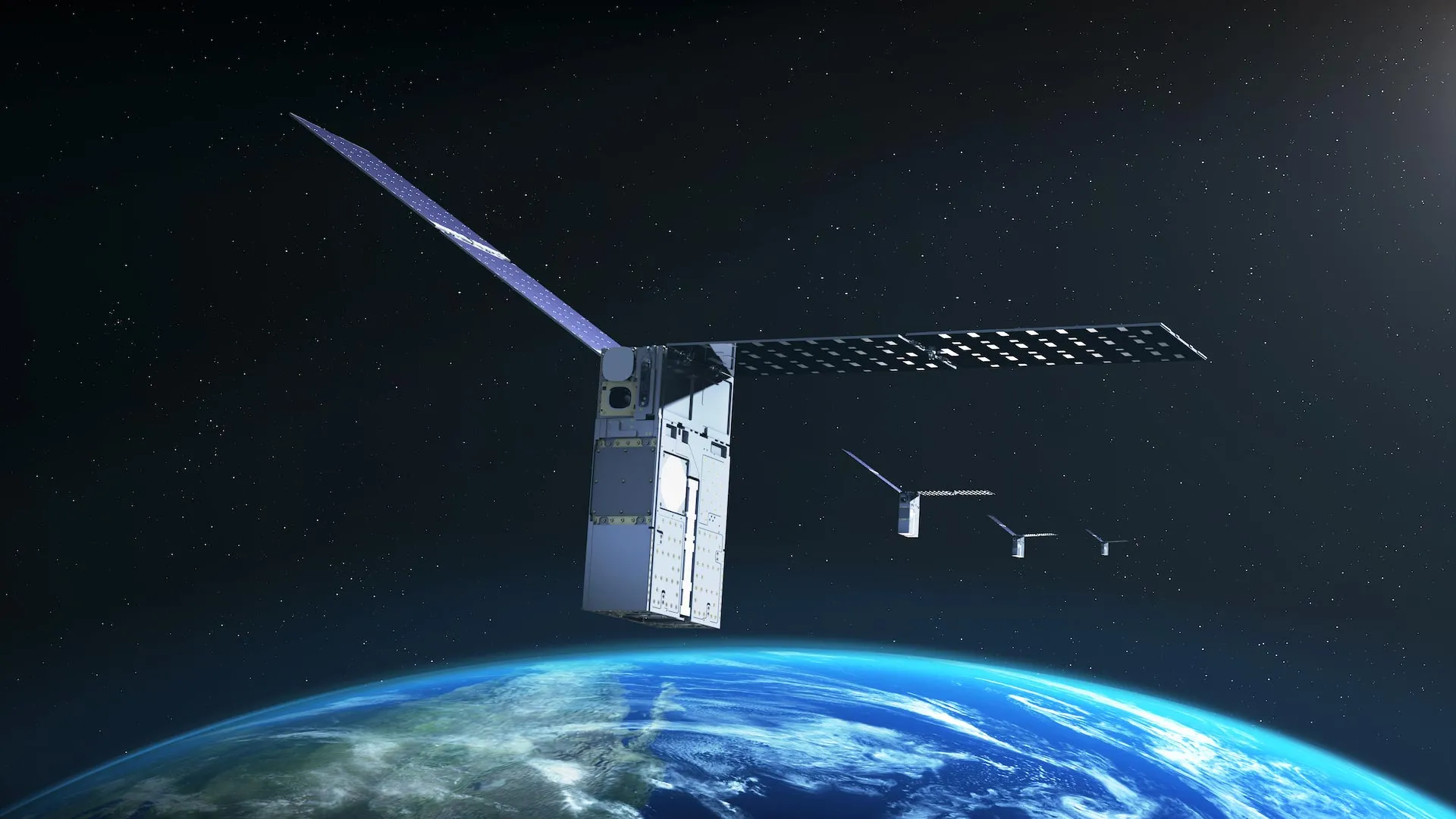
In a landmark achievement for autonomous space exploration, NASA’s Starling mission has successfully validated a groundbreaking navigation technology capable of determining a spacecraft’s precise orbital position without reliance on Earth-based Global Positioning System (GPS) signals. This advancement, known as FALCON (Fast Autonomous Lost-in-space Catalog-based Optical Navigation), marks a pivotal shift in how future missions will operate in the high-stakes environments of deep space, the lunar vicinity, and beyond.
By utilizing other satellites and orbital debris as celestial reference points, the FALCON system allows spacecraft to achieve a level of autonomy previously considered the realm of science fiction. As NASA sets its sights on the Artemis era and long-term human exploration of Mars, the ability for vessels to "self-navigate" is no longer just a luxury—it is an operational necessity.
The FALCON Breakthrough: Redefining Celestial Navigation
The core of the FALCON experiment lies in its ability to leverage existing space infrastructure to orient itself. Traditionally, spacecraft orbiting near Earth rely heavily on the GPS network. However, as missions venture into cislunar space or toward distant planetary bodies, these signals become increasingly attenuated, unreliable, or entirely unavailable.
FALCON solves this by turning the spacecraft’s "eyes"—its onboard star tracker cameras—toward the traffic already orbiting Earth. Developed as a joint flight experiment between NASA and EraDrive, a startup born from Stanford University’s research ecosystem, the system integrates Era-Core flight software with sophisticated embedded algorithms. By cross-referencing observations with a pre-loaded catalog of approximately 20,000 known space objects, the Starling spacecraft can triangulate its own position with remarkable precision.
Chronology: From Academic Concept to Orbital Reality
The journey of FALCON is a testament to the efficacy of NASA’s collaborative research model. The project’s timeline highlights the rapid transition from theoretical research to mission-critical hardware.
1. The Incubation Phase
The technology originated as a project under NASA’s University SmallSat Technology Partnerships. During this phase, researchers at Stanford University explored the mathematical feasibility of using optical sensors to track non-cooperative objects in space. The objective was to replace bulky, power-hungry traditional sensors with software-defined navigation solutions.
2. The EraDrive Spin-off
As the algorithms matured, the research transitioned into the commercial sector. EraDrive was formed to commercialize the Era-Core software, aiming to provide flight-ready navigation packages for the burgeoning small-satellite industry. This move allowed the technology to be refined for the harsh realities of vacuum, radiation, and thermal cycling in low-Earth orbit.
3. Launch and Integration (2023)
The Starling mission launched in 2023, carrying the FALCON payload as a core component. The mission’s objective was to demonstrate that a cluster of small spacecraft could operate as a swarm, maintaining formation and sharing data.
4. The Validation Window (The Three-Day Trial)
In a recent series of in-orbit tests, Starling spent 72 hours operating in a fully autonomous mode. During this period, the spacecraft identified orbital objects, compared them to its internal catalog, and successfully updated its own orbital state. Perhaps most significantly, the system independently refined the orbital data of over 200 objects, producing estimates more precise than the ground-based catalog provided by the U.S. Department of Defense.
Supporting Data: Precision Beyond the Ground Station
The performance of the FALCON system during its initial testing phase provided quantitative proof of its superiority in specific operational domains. While ground-based tracking stations—which rely on radar and optical sensors on Earth—provide a baseline for space object positions, they are subject to atmospheric interference, signal latency, and limited observation windows.
FALCON’s onboard processing eliminates the "ground-in-the-loop" latency. By observing objects from the unique vantage point of space, the system achieved:
- Catalog Augmentation: The spacecraft improved the predicted orbits of 200+ objects by identifying discrepancies between catalog data and real-time visual observations.
- Autonomous Recalibration: In tests comparing onboard predictions to ground-supplied data, the Starling spacecraft consistently generated more accurate positioning estimates.
- Zero-Intervention Operations: The entire three-day experiment was conducted without manual adjustments from mission control, demonstrating the robustness of the Era-Core software.
Official Perspectives: The "Firsts" Keep Growing
The success of the Starling mission has been a highlight for NASA’s Ames Research Center. Roger Hunter, the program manager for NASA’s Small Spacecraft and Distributed Systems program, emphasized the broader strategic importance of these results.
"FALCON is yet another success for the Starling demonstration mission," Hunter remarked. "The results from FALCON can have far-reaching implications for on-orbit space-traffic monitoring, collision avoidance, and alternative navigation. The number of ‘firsts’ from Starling just keeps growing."
For the engineers at NASA Ames, the success validates a new paradigm of distributed space systems. Rather than relying on a single, massive, and expensive satellite to do the work, a swarm of smaller, cheaper satellites—all capable of autonomous navigation—can provide higher-resolution data and greater mission redundancy.
Implications for Future Exploration
The implications of the FALCON experiment extend far beyond the immediate success of the Starling mission. As humanity prepares for a permanent presence on the Moon and eventual missions to Mars, the FALCON system will likely serve as the foundational architecture for several critical capabilities.
Space Traffic Management (STM)
As the number of satellites in orbit continues to climb, the risk of collisions becomes a major concern. Traditional STM relies on ground stations to track debris and warn operators. An autonomous system like FALCON, which can track debris and refine its own orbital path in real-time, could eventually be integrated into "smart" satellites that perform automated collision avoidance maneuvers, significantly reducing the administrative and operational burden on ground teams.
Distributed Science Missions
Future science missions will often require sensors to be placed at multiple points in space simultaneously to measure phenomenon like magnetic fields or solar radiation. For this data to be useful, the relative positions of all sensors must be known with extreme precision. FALCON’s ability to allow satellites to "see" and navigate relative to one another provides the necessary synchronization for these complex distributed experiments.
Deep Space Autonomy
In the deep reaches of the solar system, where communication delays make real-time control from Earth impossible, autonomy is a survival requirement. Whether it is a swarm of satellites orbiting a lunar station or a robotic fleet exploring the moons of Jupiter, these vessels must be able to orient themselves, avoid hazards, and maintain their trajectory without waiting for a signal to traverse the light-years back to Earth.
The Road Ahead: Swarm Intelligence
The Starling mission is not concluding with the current FALCON success. Later this year, the mission is scheduled to enter its next phase of evolution. The four spacecraft currently in orbit will begin to share their tracking information with one another, creating a "swarm intelligence" network.
By combining observations from four different vantage points, the satellites will refine their collective position with even greater accuracy. This "collaborative navigation" is the ultimate goal of the Starling mission, proving that a group of small, interconnected machines can outperform the rigid, centralized models of the past.
NASA’s investment in the FALCON technology serves as a bridge between university research and industrial application. By providing the environment for testing on-orbit, NASA has enabled EraDrive to move its technology from the lab to a proven commercial product. This cycle of innovation is exactly what is needed to sustain the next half-century of human spaceflight.
As the Starling satellites continue their dance through the heavens, they are doing more than just testing software; they are drafting the blueprint for how we will navigate the solar system in the decades to come. With FALCON, the "lost-in-space" scenario is becoming a relic of the past, replaced by a future where every satellite knows exactly where it is, what it is looking at, and how to get where it needs to go—all on its own.
 Sagoh
Sagoh  Asro
Asro  Siti Muinah