
 By Jia Lissa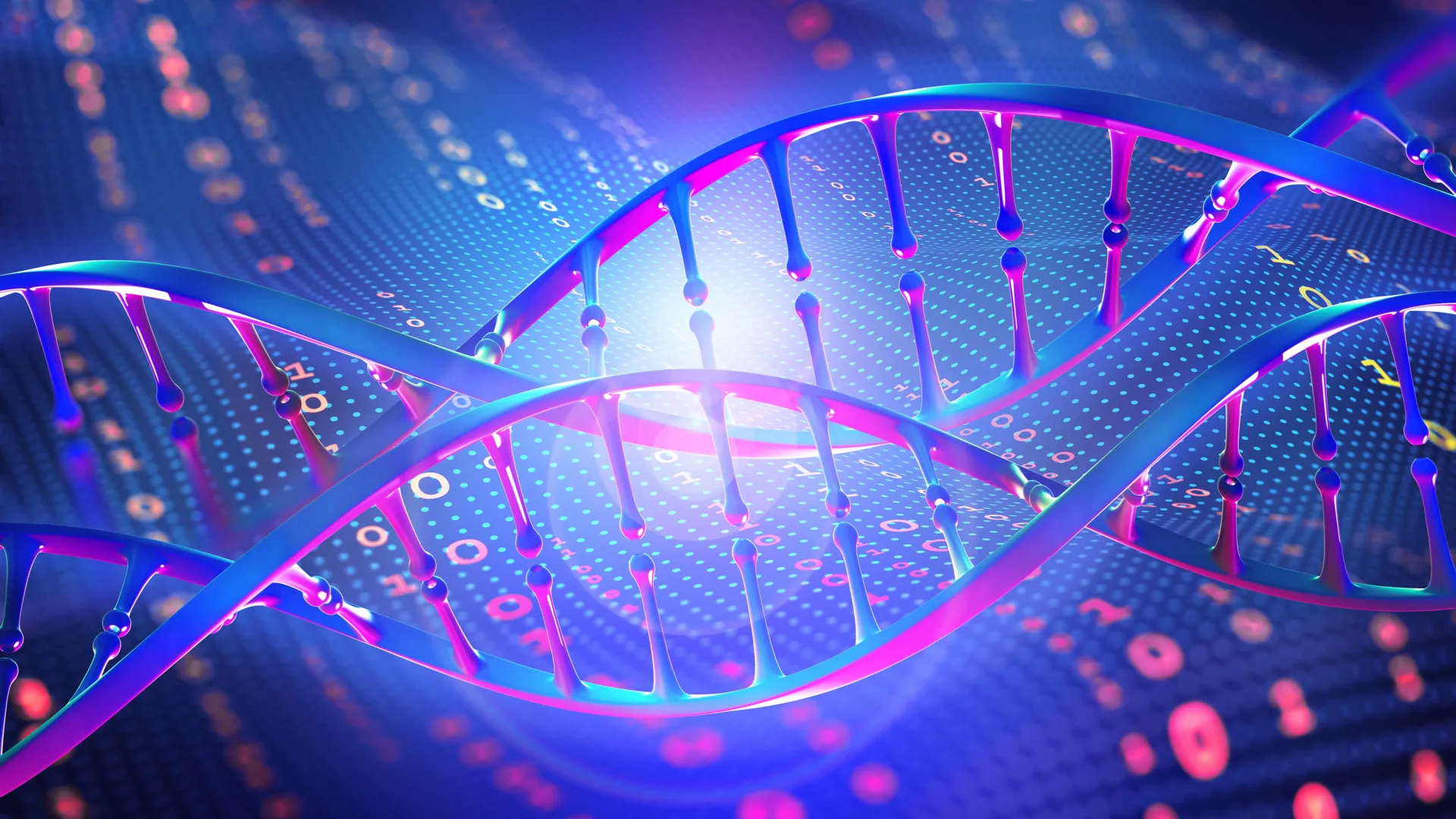
In the grand tapestry of life, DNA has served for billions of years as the ultimate archive, a dense, stable, and highly efficient blueprint for biological existence. Now, a groundbreaking development from Penn State University is poised to transition DNA from the realm of biology into the heart of our electronic devices. By successfully integrating synthetic DNA with crystalline perovskite semiconductors, researchers have engineered a "bio-hybrid" memory device that could fundamentally redefine the limits of energy efficiency, data storage, and artificial intelligence (AI) architecture.
The Convergence of Two Worlds
At the core of this technological leap lies a profound challenge: how to reconcile the wet, complex, and carbon-based world of biology with the rigid, high-speed, and silicon-centric world of modern electronics. For years, engineers have dreamed of leveraging DNA’s staggering storage capacity—a single gram of which can theoretically house 215 million gigabytes of data—but the incompatibility of these two domains has acted as an insurmountable barrier.
The research team at Penn State, led by a multidisciplinary group of scientists, has bridged this gap by creating a novel materials platform. Published in the journal Advanced Functional Materials, their work introduces a memory resistor, or "memristor," that operates at a fraction of the power consumption required by contemporary hardware. This innovation not only addresses the cooling and energy demands of massive data centers but also paves the way for neuromorphic computing—a paradigm that mimics the human brain’s ability to process and store information simultaneously.
Chronology of an Innovation
The development of this bio-hybrid system did not occur in a vacuum. It was the result of a systematic, multi-year effort to identify materials capable of working in concert.
The Foundational Phase: The team began by evaluating the properties of perovskites—crystalline semiconductors already widely recognized for their efficiency in solar cells, lasers, and high-density storage applications. While perovskites offered the necessary electronic mobility, they lacked the structural precision required for next-generation, high-density, low-power memory.
The Synthetic DNA Breakthrough: Recognizing the structural limitations of natural DNA—which tends to entangle into unpredictable, "spaghetti-like" strands—the team pivoted to synthetic DNA. By computationally designing specific genetic sequences, they created short, rigid molecules that could be engineered for precise electronic performance.
Integration and Doping: Once the synthetic DNA was synthesized, the researchers employed a process known as "doping." By integrating silver nanoparticles into the DNA-perovskite matrix, they achieved two critical milestones: the DNA became electrically conductive, and its molecular units aligned into a highly organized, crystalline-like structure.
Validation: Testing revealed that the device remained stable at temperatures as high as 250 degrees Fahrenheit and retained its functionality at room temperature for over six weeks—significantly outperforming traditional perovskite-based storage devices.
The Science of the "Memristor"
To understand the significance of this discovery, one must understand the function of a memristor. Standard resistors in conventional electronics maintain a static resistance; they regulate the flow of electricity but cannot "remember" how much current passed through them once the power is cut. If your laptop loses power, the volatile memory (RAM) is wiped clean.
In contrast, the team’s bio-hybrid memristor functions more like a synapse in the human brain. It preserves a history of electrical activity, remembering the direction and magnitude of previous current flows even after the power source is removed. By combining this non-volatile memory with the incredible density of DNA, the team created a system that is not only "smart" but remarkably energy-efficient.
The researchers reported that their device operates reliably at less than 0.1 volts—a negligible amount of power compared to the 120-volt standard of a typical household electrical outlet. Furthermore, the device achieves this performance while consuming one-tenth the power of comparable existing technologies.
Expert Perspectives: Bridging Biology and Physics
The project’s co-corresponding authors emphasize that this is not merely a biological experiment, but a complete rethinking of materials science.
"Biology and electronics are different domains," said Kavya S. Keremane, a postdoctoral researcher in materials science and engineering at Penn State. "Bridging these two fields required developing an entirely new materials platform that allows them to function seamlessly together. By combining the information storage capabilities of DNA with the exceptional electronic properties of perovskite semiconductors, we created a bio-hybrid system that fundamentally changes how low-power memory devices can be designed."
Neela H. Yennawar, research professor and director of the Huck Institutes of the Life Sciences’ Biomolecular Interactions Core Facility, highlighted the precision of the synthetic approach. "We can computationally determine exactly which sequences we need and how long they should be, and then we can rationally design them with synthetic DNA," Yennawar noted. "These structures can be systematically doped with silver and other ions and engineered to interface seamlessly with perovskites—transforming DNA from a biological macromolecule into a programmable, multifunctional nanomaterials platform."
Bed Poudel, a research professor of materials science and engineering at Penn State, underscored the urgency of this work in the context of the AI boom. "As the demand for artificial intelligence grows, we need a new strategy for low-power, high-storage devices," Poudel said. "Usually, it takes more power to store more information. Our device, however, consumes 100 times less power and the storage capacity is higher than traditional storage devices, like flash drives."
Implications for the Future of AI
The implications of this research extend far beyond the laboratory. As AI models become increasingly sophisticated, they require massive datasets and constant, high-energy processing. Currently, the "von Neumann bottleneck"—the physical separation of the processor and the memory in modern computers—creates a significant energy tax, as data must be constantly shuttled back and forth.
By creating a memristor that can perform memory and processing in the same location, the team is enabling the future of neuromorphic computing. This type of computing mimics the biological brain, which evaluates multiple inputs simultaneously and makes decisions based on past experiences—exactly what is needed to advance the next generation of AI.
The durability of the device is another critical factor. By achieving stability at high temperatures, the team has proven that this technology is not just a delicate laboratory curiosity, but a robust platform that could potentially survive the rigors of industrial, consumer, or even aerospace applications.
A Collaborative Endeavor
The research represents a massive collaborative effort involving diverse expertise from across the United States. In addition to Keremane, Yennawar, and Poudel, the project included contributions from Luyao Zheng, Haodong Wu, Jiamao Zheng, Shashank Priya, and Chiranth C. Ravi at Penn State. They were joined by Abhinav Gorthy and Rashmi Jha from the University of Minnesota.
The project received significant financial backing from the U.S. National Science Foundation, the National Institutes of Health, and internal funding from Penn State and the University of Minnesota, reflecting the high stakes and potential impact of integrating biotechnology into the semiconductor industry.
Looking Toward the Horizon
As the research team moves forward, their focus is shifting toward scaling the technology and exploring new applications for these bio-inspired systems. While the path from a lab-developed memristor to a commercial product is complex, the fundamental hurdle—that of integrating biological intelligence with silicon-based physics—has been cleared.
"Nature has the solution—we just have to find it and apply it," Poudel concluded. This sentiment serves as a guiding philosophy for the team’s ongoing work. By looking back to the most efficient storage medium in existence—DNA—and applying modern engineering to it, these researchers have opened a door to a future where electronics are not just faster and more powerful, but fundamentally more efficient, mimicking the very structures that allow for life itself. As the digital age approaches its physical limits, this bio-hybrid approach may provide the breakthrough necessary to sustain the next century of innovation.
 Sagoh
Sagoh  Asro
Asro  Siti Muinah