
 By Lina Hope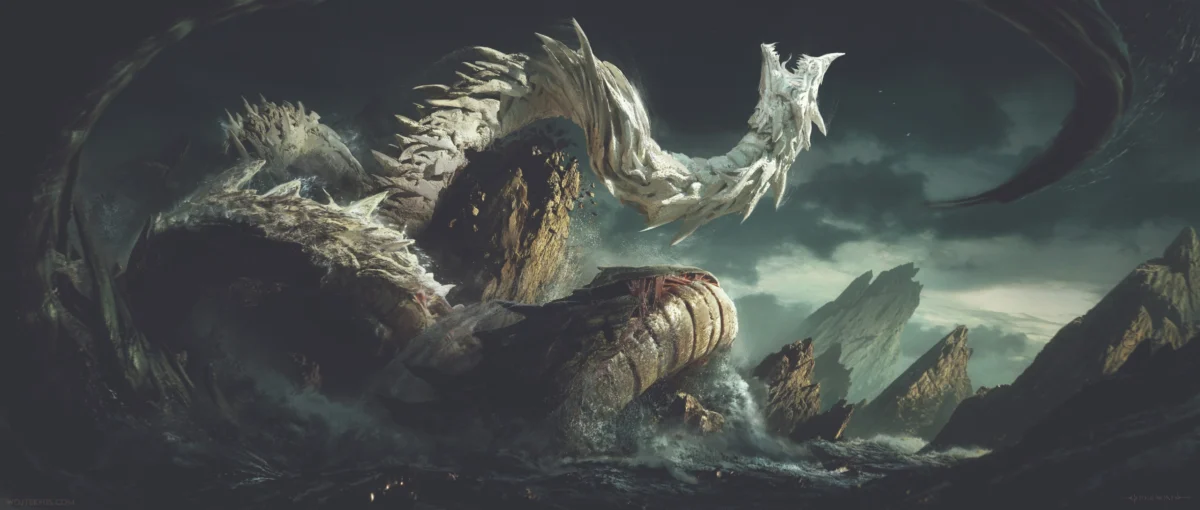
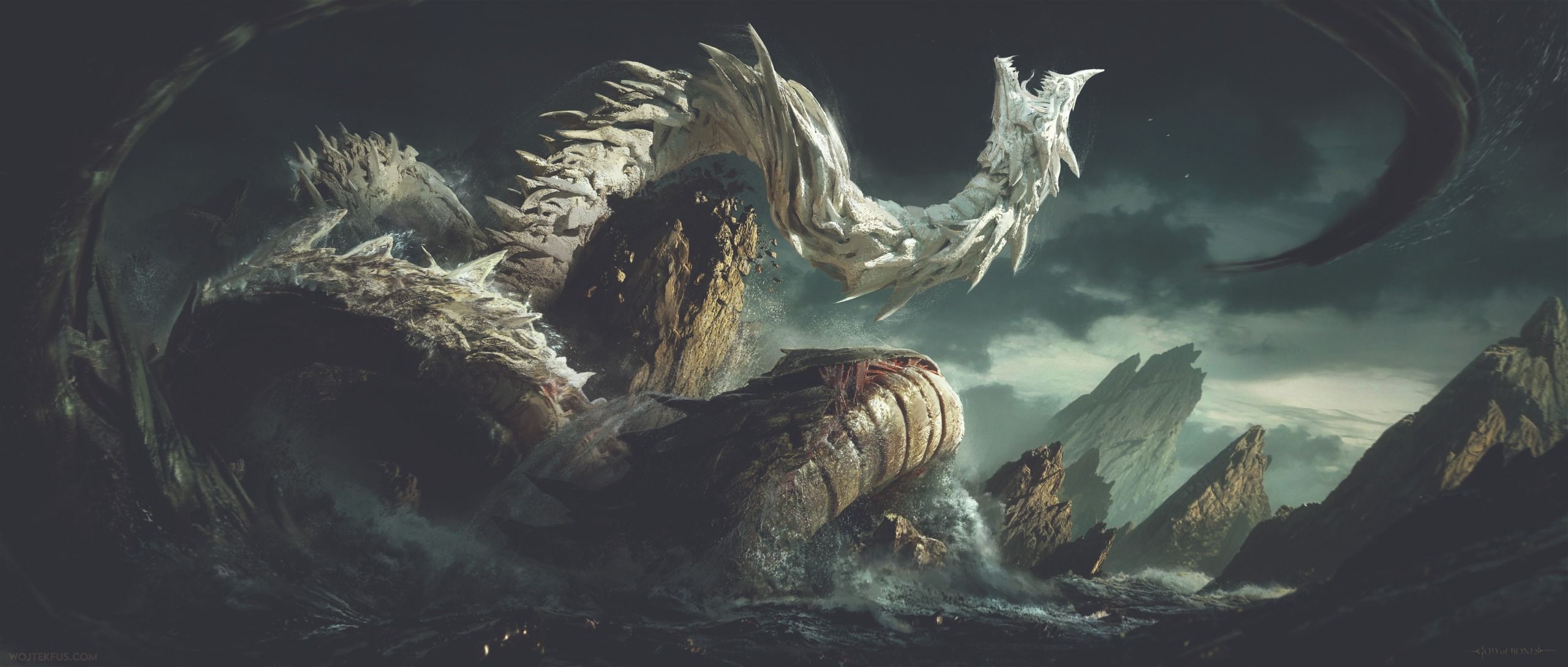
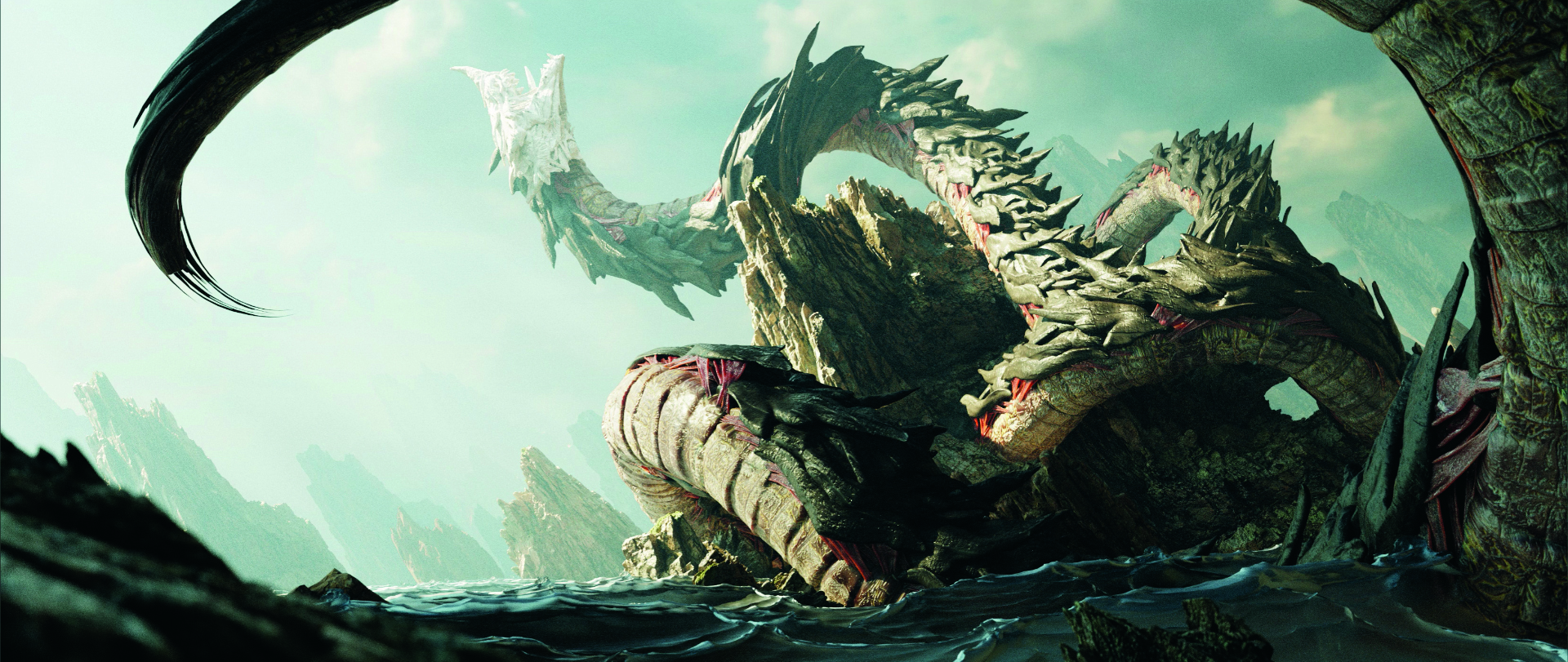
In the realm of cinematic concept art, few challenges are as daunting as capturing the intersection of scale, violence, and stillness. When director Paul Coulthard approached artist Wojtek Fus to contribute to his short film project, God of Bones, the objective was clear: create a singular, definitive vista shot that would anchor the film’s visual identity. The centerpiece of this shot—a gargantuan serpent frozen in the final, agonizing moments of its life, calcified into stone as it collapses—required a delicate balance of technical precision and artistic intuition.
This article explores the rigorous development process behind this iconic scene, detailing how a simple sketch evolved into a complex, multi-layered visual narrative, and the collaborative effort required to bring such a monumental creature to life.
The Genesis of the Concept: Translating Violence into Stone
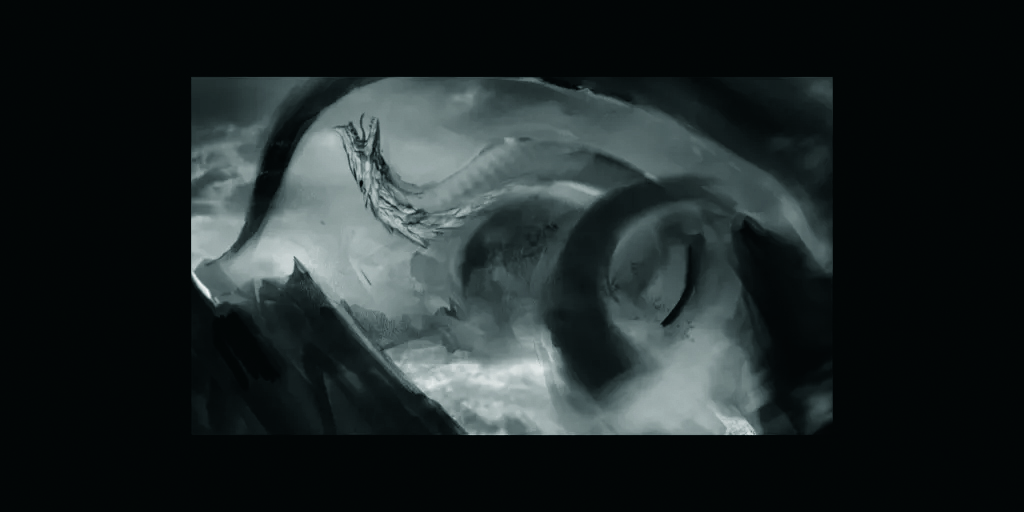
The project began not with complex geometry, but with a foundational vision. Paul Coulthard provided an initial sketch that served as the North Star for the entire production. The core challenge was to encapsulate a sense of "halted motion." The serpent could not simply look like a statue; it had to look like a living, breathing entity that had been violently interrupted by a petrifying force.
"The goal was to establish mood, violence, and vast scale in a single moment," explains the artist. "The sketch defined the rhythm of the collapse, dictating how the serpent’s massive, winding body should occupy the frame. It was about finding that precise second between life and geological permanence."
For a creature of this magnitude, the rhythm of the composition was paramount. If the curves were too smooth, the serpent looked graceful; if they were too jagged, it looked broken rather than calcified. By adhering to the narrative weight of the initial sketch, the team ensured that the final image conveyed the tragedy of the creature’s death, rather than just its physical form.
Chronology of Creation: From Wireframe to Final Render
The transformation of the serpent from a conceptual idea to a cinematic reality followed a structured three-phase pipeline.
Phase 1: The Blueprint of Scale
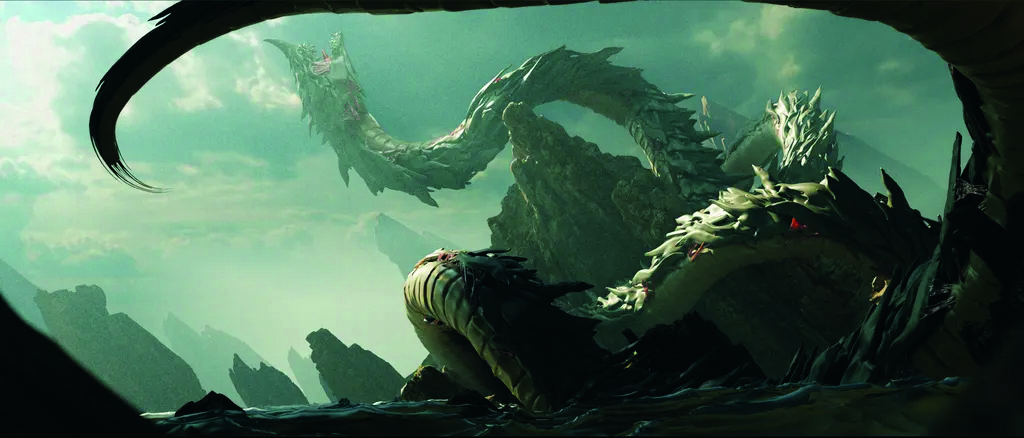
Before any high-fidelity modeling took place, the scene was blocked out in Blender. This stage was critical for establishing the "camera-eye" view. In a project defined by scale, the camera lens and framing are the most powerful tools available. The team experimented with various focal lengths and compositions to ensure the serpent felt truly colossal.
"We worked closely to balance readability and dynamism," notes the production team. "It is easy to lose the sense of size when dealing with large, organic shapes in 3D. By placing the serpent within a specific, claustrophobic rocky formation, we were able to contrast the creature’s immense girth against the environment, reinforcing its scale."
Phase 2: Design and Sculpting
While the environment was being established, the serpent’s physical design was being handled in parallel. Supervised by Christian Bull, the design phase focused on the anatomical requirements of a serpent that had to look plausible in both its living and calcified states.
The modeling duties fell to Laurens Rasti and Wilmar Ballespi of Shoot First. Their work was instrumental in creating the high-resolution meshes that allowed for the complex texture work required for calcification. The team had to consider how skin, muscle, and scales would react under the extreme pressure of a rapid transformation into stone. The result was a design that felt heavy, dense, and physically grounded.
Phase 3: The Final Polish and Integration
The final phase involved bringing the renders into a compositing workflow where photography and digital painting converged. This was the stage where the "magic" was added.
"I integrated photography to build up the environmental textures—ocean spray, crumbling rock, and atmospheric haze," the artist explains. "The hardest part was the head. Communicating the transition from flesh to mineral at such a granular level required careful masking and texture blending. We wanted the eyes to hold a final spark of life before being overtaken by the stone."
In a final, counter-intuitive move, the team decided to flip the entire composition. This pivot shifted the visual weight of the scene, providing a fresh perspective that emphasized the serpent’s descent and completed the narrative of its collapse.
Supporting Data: Technical Tools and Industry Standards
To achieve the level of detail seen in God of Bones, the production relied on a robust technological ecosystem. The industry standard for such work—often utilizing software like Blender, ZBrush for high-fidelity sculpting, and engines like Unreal or V-Ray for rendering—allows artists to manipulate millions of polygons without sacrificing performance.
For artists looking to emulate this workflow, the hardware requirements are non-trivial. A high-end workstation for 3D modeling typically requires:
- GPU: NVIDIA RTX 40-series or equivalent (for ray-traced rendering).
- RAM: 64GB minimum to handle large-scale geometry and complex textures.
- Tablet Input: Professional-grade pen displays (such as Wacom Cintiq) are considered essential for the precision required in the final paintover and mask painting stages.
The reliance on these tools has democratized high-end visual effects, allowing smaller, agile teams like the one behind God of Bones to produce work that rivals major studio output.
Official Perspectives: The Collaborative Philosophy
The success of the God of Bones vista is a testament to the importance of collaborative supervision. Paul Coulthard’s role as director was not merely to oversee, but to actively participate in the artistic decision-making process.
"Working with Paul was a process of constant iteration," the artist notes. "We weren’t just checking off a to-do list; we were interrogating the image. Every time we moved the camera or adjusted the lighting, we asked: ‘Does this make the creature feel more massive? Does this make the death feel more final?’"
This philosophy of "questioning the image" is what elevated the piece from a technical exercise in modeling to a piece of evocative storytelling. By fostering an environment where the vision could be refined through constant feedback, the team ensured that the final image remained true to the original, visceral intent of the project.
Implications for the Future of Cinematic Concept Art
The techniques used in the creation of the God of Bones serpent represent a growing trend in the industry: the hybrid approach of 3D modeling combined with traditional digital painting. This "paintover" method is increasingly vital for filmmakers who need to establish a specific look before entering full-scale production.
Furthermore, the emphasis on "narrative-first" design is becoming a hallmark of successful visual development. As AI and automated tools continue to proliferate, the human element—the ability to interpret a director’s intent and translate it into a composition that carries emotional weight—becomes the most valuable skill in the artist’s toolkit.
The God of Bones project serves as a masterclass in how modern workflows can be used to tell ancient stories. By leveraging the power of 3D to build a physical, tactile reality, and the finesse of 2D painting to inject atmosphere and mood, the team has created a vista that feels both mythic and tangibly real.
As we look toward the future of independent film, projects like God of Bones demonstrate that scale is not defined by the size of the production budget, but by the ambition of the vision and the technical discipline of the artists involved. Whether through the careful sculpting of a serpent’s scale or the strategic placement of atmospheric light, the pursuit of the "definitive shot" remains the beating heart of cinema.
This article originally appeared in ImagineFX. For more insights into the world of digital art, industry news, and expert tutorials, subscribe to ImagineFX and stay ahead of the curve in the evolving landscape of creative technology.
 Evan Lee Salim
  Nana
Nana  Ammar Sabilarrohman