
 By Siti Muinah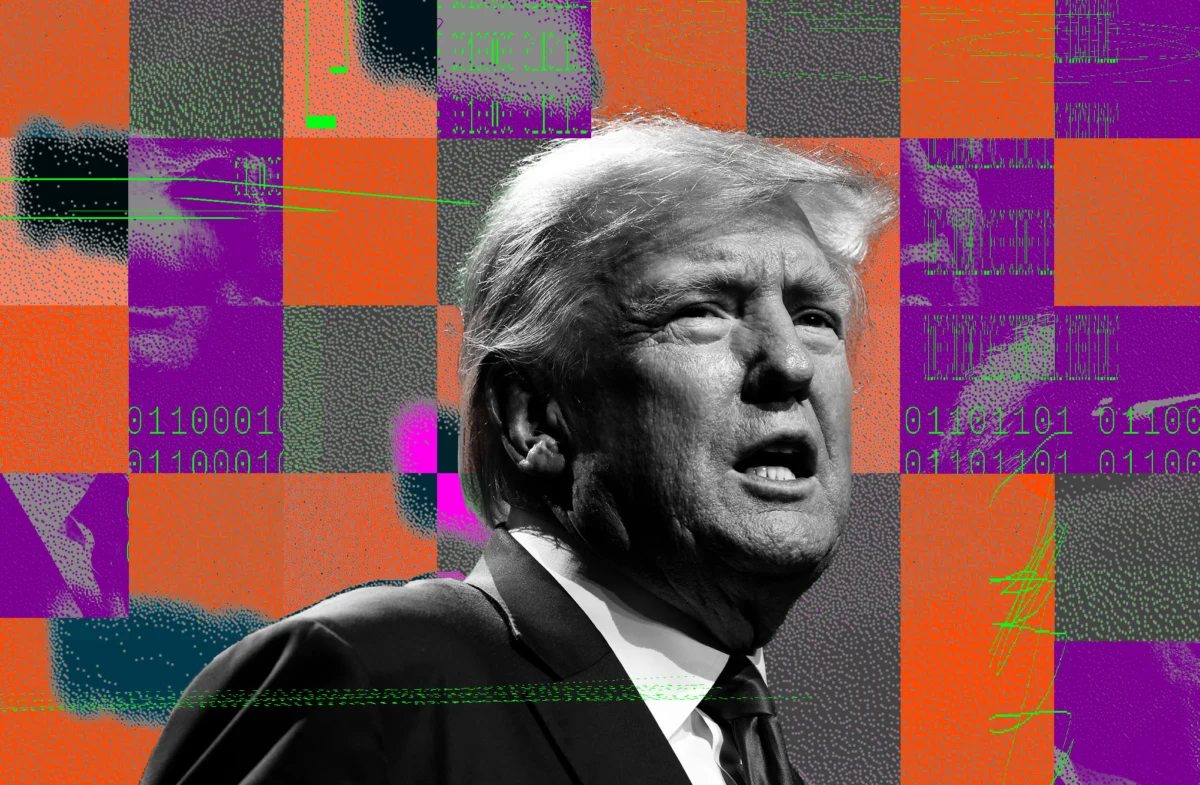
By Terrence O’Brien
Expanded and Updated Analysis
Main Facts
The global artificial intelligence landscape has reached a profound ideological and strategic fracture point. On one side, some of the most prominent architects of the AI revolution—including the chief executives of Anthropic, OpenAI, and xAI—are sounding alarm bells, advocating for a coordinated slowdown or "pacing" of frontier model development to mitigate existential and societal risks. On the other side, high-ranking American political figures, led by former President Donald Trump and House Speaker Mike Johnson, are vehemently pushing back. They argue that decelerating domestic innovation is a self-inflicted wound that risks handing technological and geopolitical supremacy to China.
This high-stakes policy debate erupted following an open letter published by Anthropic CEO Dario Amodei, in which he argued that the rapid, unchecked acceleration of artificial intelligence poses unforeseen hazards. Amodei’s call for "pacing the frontier" quickly drew public endorsements from OpenAI CEO Sam Altman, xAI founder Elon Musk, and, with some reservations, Google DeepMind chief Demis Hassabis.
However, Washington’s power brokers have viewed these warnings with profound skepticism. Rather than seeing a crisis of safety, figures like Trump and Johnson see an overreaction—or worse, an attempt by established market leaders to pull up the ladder behind them. Emphasizing the fierce great-power competition between Washington and Beijing, US political leadership insists that maintaining a "light-touch" regulatory environment is paramount to keeping the United States ahead in the definitive technological race of the 21st century.
Chronology of Events
The escalation of the debate over AI pacing and geopolitical rivalry unfolded across several key milestones:
- September 12, 2026: Anthropic CEO Dario Amodei publishes a comprehensive open letter arguing that the AI industry has reached a critical juncture where unchecked scaling could introduce severe, unmanageable risks. He calls on developers and policymakers to deliberately "pace the frontier" of AI research.
- September 12, 2026 (Later that day): High-profile industry leaders quickly weigh in. OpenAI CEO Sam Altman and xAI chief Elon Musk take to X (formerly Twitter) to publicly endorse Amodei’s perspective, signaling rare alignment among fierce commercial competitors. Alphabet’s Demis Hassabis follows suit shortly after, offering tentative, measured support for the concept of structured pacing.
- September 13, 2026: The political counteroffensive begins. Donald Trump, speaking to the press and defending a light-touch regulatory framework, makes it clear that the United States must maintain its dominant position, famously stating, "Look, we’re leading China in AI… and, frankly, I want to keep it that way, because whoever wins AI, wins."
- September 13, 2026: House Speaker Mike Johnson appears on CNN’s The State of the Union with Jake Tapper. Johnson doubles down on the administration’s stance, warning that legislative panic and emergency restrictions would create a national security vacuum, effectively handing the AI crown to Beijing.
- September 13, 2026 (Evening): Tech and policy analysts worldwide begin dissecting the widening chasm between Silicon Valley’s ethical anxieties and Washington’s geopolitical imperatives, setting the stage for what promises to be a defining legislative battle over future technology policy.
Supporting Data and Context
To understand the intensity of the debate, one must examine the baseline metrics defining the global AI race between the United States and China:
- Compute Infrastructure and Capital Investment: American tech giants—including Microsoft, Google, Meta, and Amazon—are pouring tens of billions of dollars into capital expenditures, constructing massive data centers powered by hundreds of thousands of specialized accelerators (GPUs and TPUs). While Chinese firms like Baidu, Alibaba, Tencent, and Huawei face severe restrictions due to US export controls on advanced semiconductors, they continue to innovate through domestic chip production, algorithmic efficiencies, and massive state-backed funding initiatives.
- Talent and Research Output: Historically, the United States has served as the global magnet for top-tier artificial intelligence research talent. However, recent bibliometric studies and talent retention data indicate that China has significantly closed the gap, producing a vast majority of the world’s applied AI research papers and aggressively fostering domestic talent pools.
- The Regulatory Landscape: While the European Union has implemented the comprehensive EU AI Act, the United States has largely relied on voluntary commitments from major tech firms and executive orders aimed at safety testing. The emerging debate centers on whether the US should introduce binding statutory limits—a move tech executives claim to want for safety, but which critics argue would entrench monopolies and stall progress.
Official Responses and Perspectives
The Silicon Valley View: Pacing the Frontier
Dario Amodei’s open letter acted as a catalyst for a growing faction within the AI research community that fears the societal implications of runaway scaling. Proponents of slowing down argue that as models approach or exceed human-level cognitive capabilities in various domains, the risks associated with autonomous cyberweapons, sophisticated biological threats, mass disinformation, and economic disruption scale exponentially.

The public support from Sam Altman and Elon Musk underscores an unusual consensus: even bitter rivals recognize that the current trajectory lacks sufficient guardrails. By calling for a managed slowdown, these executives argue that society needs time to build institutional, technical, and legal frameworks to safely absorb transformative technologies. Demis Hassabis’s tentative support further highlights that even companies deeply committed to winning the commercial race are increasingly anxious about the uncontrolled velocity of their own research.
The Washington View: National Security and the China Threat
Conversely, political leadership in Washington views Silicon Valley’s sudden crisis of conscience through a lens of stark realpolitik. For Donald Trump, Mike Johnson, and other national security hawks, artificial intelligence is not merely a commercial product or an ethical challenge; it is the ultimate arbiter of future global hegemony.
House Speaker Mike Johnson’s comments on CNN encapsulate the prevailing congressional anxiety. Warning that emergency regulatory sessions would cripple American innovation, Johnson framed premature oversight as a direct threat to national security. In the eyes of US lawmakers, any self-imposed slowdown by American firms would immediately be capitalized upon by Chinese state-directed enterprises, which may not feel constrained by Western ethical debates or voluntary safety pacts.
Trump’s assertion—"whoever wins AI, wins"—strips the debate down to its barest geopolitical components, leaving little room for corporate-led moratoria that could shift the balance of global power.
Implications for the Future
The ideological collision between Silicon Valley’s safety advocates and Washington’s national security strategists carries profound implications for the trajectory of human civilization:
- The Geopolitical Arms Race: If American political leaders successfully block any domestic attempts to throttle AI development, the global race will likely intensify into an unconstrained sprint. This could lead to faster technological breakthroughs, but it also increases the likelihood of catastrophic accidents, security breaches, and unmitigated societal harms.
- Regulatory Paralysis in Congress: The deep division between those who fear AI’s capabilities and those who fear losing to China threatens to paralyze US policymaking. Lawmakers caught in the middle face an impossible dilemma: regulate too heavily and lose to Beijing, or regulate too lightly and invite domestic disaster.
- The Dynamics of Corporate Power: Critics of the tech executives’ calls for a slowdown point out a cynical reality: established giants like OpenAI, Anthropic, and Google already possess immense computing power and vast datasets. Implementing regulatory pauses or high compliance hurdles could effectively pull up the drawbridge, locking out smaller startups and open-source developers who lack the resources to navigate complex new compliance regimes.
- Global Standards and Fragmentation: As the US prioritizes speed and dominance, other global actors—such as the European Union with its strict legal frameworks, and China with its state-controlled deployment models—will continue to forge their own paths. This fragmentation could result in a balkanized technological world where AI systems operate under radically different safety, privacy, and ideological paradigms depending on their geographic origin.
As the debate intensifies, one reality remains indisputable: artificial intelligence has transitioned from a computer science curiosity into the central pillar of geopolitical strategy, economic policy, and national survival. How the United States navigates this tension between caution and competition will dictate the balance of power for generations to come.
 Asro
Asro  Suro Senen
  Dwi Wanna