
 By Nana Wu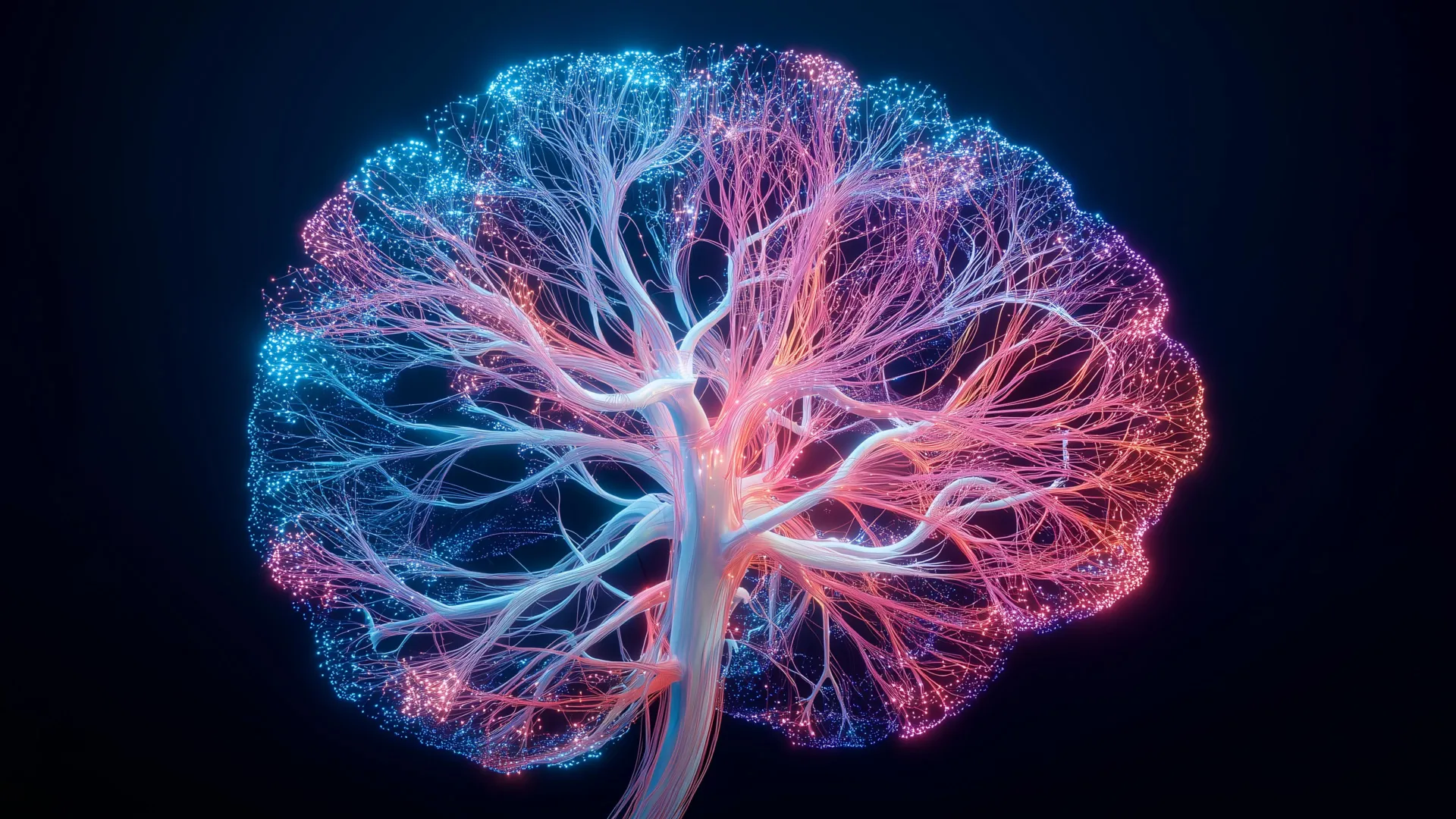
For decades, the field of artificial intelligence has been built upon a fundamental, albeit potentially flawed, assumption: that intelligence operates like an assembly line. In this traditional view—often mirrored in the architecture of convolutional neural networks (CNNs)—information enters the system, passes through a rigid, hierarchical sequence of layers, and finally arrives at a "decision-making" center.
However, a groundbreaking study from the University of Illinois Urbana-Champaign (UIUC) suggests that this model may be fundamentally misaligned with how biological intelligence actually functions. By uncovering evidence that decision-making begins in the brain’s earliest sensory processing regions, researchers are challenging the status quo of neuroscience and providing a new roadmap for the future of AI.
The Traditional Hierarchy Under Scrutiny
For most of the 21st century, the prevailing dogma in both neuroscience and computer science has been the "feed-forward" model. In this framework, sensory data—such as visual input or tactile feedback—travels upward through a series of increasingly complex cortical regions. The assumption has always been that the "heavy lifting" of decision-making is reserved for the prefrontal cortex, the seat of high-level cognition.
"The human brain is widely regarded as the most complex structure in the known universe," notes Yurii Vlasov, a professor of electrical and computer engineering at The Grainger College of Engineering. Because of this complexity, the National Academy of Engineering listed "reverse-engineering the brain" as one of the 14 Grand Challenges for the 21st century in 2008. Yet, as Vlasov and his colleagues suggest, we have been trying to reverse-engineer a machine we fundamentally misunderstood.
The UIUC team’s research, published in the Proceedings of the National Academy of Science (PNAS), argues that the "strict hierarchy" model is an oversimplification. By relying on a one-way flow of information, current AI systems are inherently less efficient and less adaptive than their biological counterparts.
Chronology of Discovery: Tracking the Neural Spark
The research team, led by Vlasov, sought to determine exactly when the brain begins to "decide." To do this, they turned to a mouse model. By monitoring neural activity while the subjects navigated a virtual reality (VR) corridor, the team was able to observe the brain in a state of active, goal-oriented decision-making.
The Experimental Setup
The mice were trained to perform perceptual tasks within the VR environment. As the subjects moved through the corridor, researchers recorded high-resolution neural data. The objective was to see if the primary somatosensory cortex (S1)—an area typically associated with the raw processing of sensory input—was merely a relay station, or if it played a more active, cognitive role.
The Unexpected Findings
The data provided a shock to the research team. They observed decision-related neural activity in the S1 cortex, occurring long before the information had supposedly "reached" the higher-order areas responsible for complex cognition.
This activity indicated that the S1 was not just passing information forward; it was receiving "top-down" feedback from higher brain regions. This confirmed that the brain operates via interconnected feedback loops. Rather than a linear sequence, the brain functions as a dynamic, bidirectional network where every level of the hierarchy is constantly communicating, adjusting, and refining its interpretation of the world in real-time.
Supporting Data: The Efficiency Gap
The implications of this discovery are best understood when comparing the biological brain to current AI architectures.
- Energy Consumption: A human brain operates on approximately 20 watts of power—roughly the amount required to light a dim bulb. In contrast, training and running large-scale AI models, such as Large Language Models (LLMs), requires the energy equivalent of a small city.
- Architectural Efficiency: AI systems typically require massive, energy-intensive hardware to perform tasks that a biological entity executes with ease. The S1 study suggests that because biological systems distribute decision-making across the entire neural hierarchy, they avoid the "bottleneck" of centralized processing.
- Temporal Dynamics: The study highlighted that the "neural code" is not just about what is processed, but when it is processed. The rapid engagement of feedback loops allows the brain to make decisions in milliseconds, an agility that current deep-learning architectures struggle to emulate.
Official Responses and Expert Perspectives
Yurii Vlasov, the lead investigator, emphasizes that this research is not a "how-to" manual for building an artificial brain, but rather a profound shift in perspective.
"We want to learn from a billion years of evolution," Vlasov stated. "How is that biological intelligence organized architecturally? Can we learn from the architectural side of the brain and emulate that to make AI more effective, less power-hungry, and more intelligent than it currently is?"
Vlasov acknowledges that the neural code is still largely an "unknown language," but he views this systems-level discovery as a foundational shift in how engineers should approach neural network design. "At the level of decision-making, that’s where current AI is lacking," he noted. By moving away from purely feed-forward architectures and toward systems that integrate feedback loops, researchers may finally be able to bridge the gap between machine performance and biological efficiency.
Implications for the Future of Artificial Intelligence
The potential impact of this work on the tech industry cannot be overstated. If AI developers can successfully replicate the bidirectional, hierarchical feedback loops observed in the S1 cortex, the next generation of AI could be fundamentally different.
1. From "Static" to "Dynamic" Models
Current AI models are largely static; once trained, their parameters are fixed. A brain-inspired architecture, however, would be inherently dynamic, capable of re-evaluating and refining its own "perceptions" through constant feedback, much like the human brain corrects its own errors in real-time.
2. Radical Energy Efficiency
By distributing decision-making across the entire architecture rather than relying on massive central processing units, future AI systems could potentially reduce their energy footprint by orders of magnitude. This is crucial for the deployment of AI in edge computing, robotics, and mobile devices, where battery life and heat dissipation are critical constraints.
3. Improving "Common Sense" Reasoning
One of the most persistent failures of current AI is a lack of "common sense"—the ability to navigate the nuances of the physical world. If decisions are made at the sensory-processing level, as the UIUC study suggests, then AI that processes data in a similar, multi-layered, bidirectional way may become far more adept at contextual understanding and physical interaction.
Future Research: Decoding the Timing
The UIUC team is not stopping here. Their next phase of research focuses on the "fast temporal dynamics" of neural activity. Understanding the specific timing of these feedback loops is the key to unlocking the "hidden mechanisms" of the brain.
Vlasov’s team intends to develop new, highly sensitive technologies to measure these signals with even greater precision. They aim to observe how these loops form and dissolve in response to changing environments, providing a "dynamic map" of cognitive processing.
"Maybe that’s the approach that potentially uncovers these currently unknown mechanisms," Vlasov said. "Maybe that can be implemented in new architectures for AI."
Conclusion: A New Era of Engineering
The findings from the University of Illinois Urbana-Champaign act as a bridge between the biological sciences and computer engineering. For years, the two fields have been working in parallel, often missing the nuances of the other. By proving that the brain is a highly integrated, bidirectional, and distributed decision-making machine, Vlasov and his team have provided a new target for the next generation of engineers.
As we look toward the future, the goal is no longer to build a larger, more powerful version of the current AI architecture. Instead, the challenge is to build a smarter one—one that understands the value of a billion years of evolutionary refinement. By shifting our focus from simple input-output models to the complex, feedback-driven reality of the brain, we may finally be on the path to creating truly intelligent, energy-efficient, and capable artificial systems.
The "language of the brain" may still be largely unknown, but with this study, we have finally learned how to listen to the right signals.
 Siti Muinah
  Sagoh
Sagoh  Asro
Asro 