
 By Nana Muazin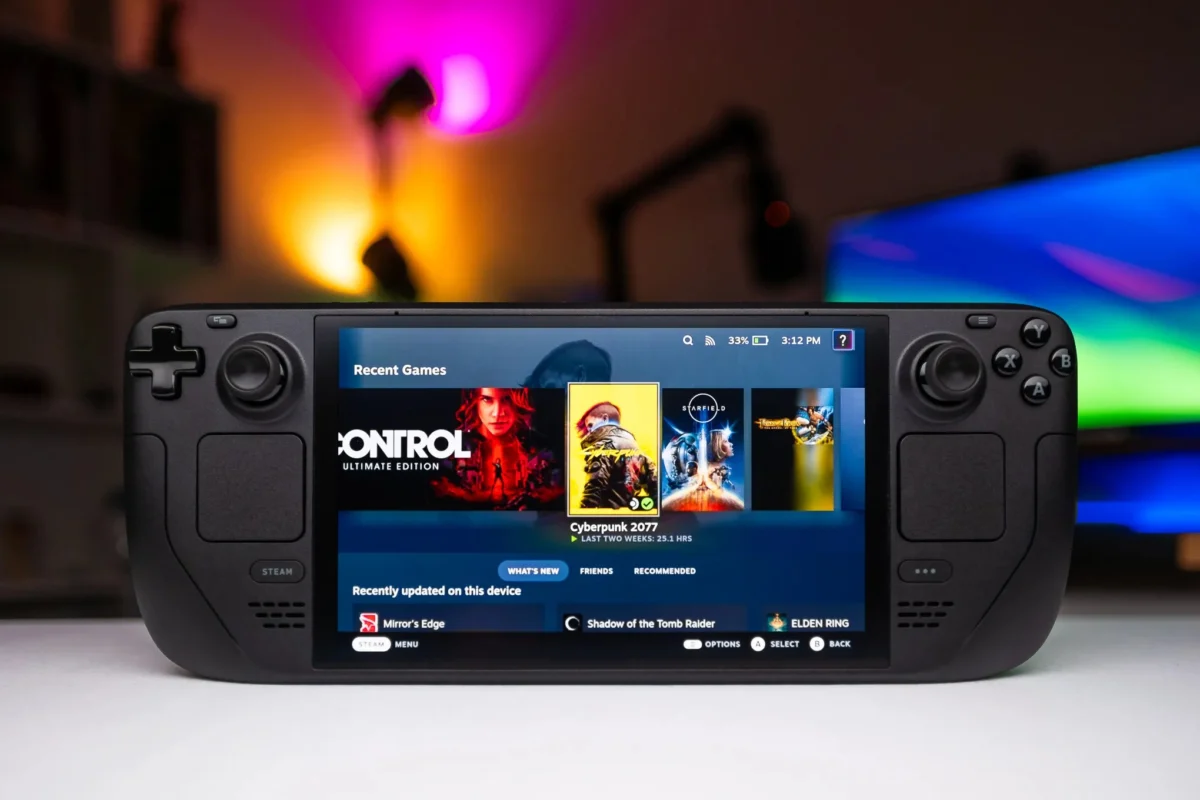
With the rollout of Valve’s complete 2026 hardware ecosystem now finalized—marked by the releases of the redesigned Steam Controller, the living-room-focused Steam Machine, and the newly launched Steam Frame VR/XR headset—attention across the PC gaming community has naturally snapped back to the holy grail of portable gaming: the Steam Deck 2.
Yet, despite completing its current hardware roadmap, Valve remains tight-lipped about a concrete release window. Behind the scenes, the company’s hardware architects are grappling with a complex matrix of silicon availability, manufacturing constraints, and the industry-wide memory crisis colloquially dubbed "RAMageddon."
While Valve has firmly committed to bringing a true next-generation handheld to market eventually, the timeline depends heavily on the arrival of a technological leap that doesn’t compromise the foundational pillars of the original device: accessible pricing, robust performance, and efficient battery life.
Main Facts
The current state of the Steam Deck 2 can be understood through a few core, immutable facts established by Valve’s leadership and recent industry developments:
- Confirmation of a Successor: Valve has repeatedly and unequivocally stated that a Steam Deck 2 is in development. It is not a matter of if, but when.
- The Silicon Bottleneck: The primary barrier to the Steam Deck 2 is the availability of a specific type of silicon. Valve is waiting for a mobile chip that delivers a generational leap in performance without sacrificing power efficiency or escalating battery drain.
- The Hardware Ecosystem is Complete (for Now): With the Steam Controller, Steam Machine, and Steam Frame all released in 2026, Valve’s engineering bandwidth is theoretically freer to concentrate more deeply on portable hardware, though memory market volatility complicates this.
- Unaffected by Shortages (For Now): According to Valve designer Pierre-Loup Griffais, the current global hardware and memory shortages have not fundamentally altered Valve’s long-term conceptual planning for the next-generation handheld, though it has deeply impacted pricing and delivery for other product lines like the Steam Frame.
- Working Backwards: Valve’s development philosophy relies on identifying the ideal APU (Accelerated Processing Unit) first, and then designing the physical chassis, cooling systems, and battery parameters around that specific silicon.
Chronology: The Road to the Steam Deck 2
To understand why the Steam Deck 2 is taking years to materialize, it is necessary to trace Valve’s public statements and the shifting macroeconomic landscape of semiconductor manufacturing over the past several years.
2022–2023: The Original Vision and the Quest for a "Leap"
When the original Steam Deck launched, it struck a rare chord in the gaming industry by offering console-like accessibility at a PC-gaming price point, all while maintaining playable framerates on a modest battery. Shortly after launch, Valve made it clear that a sequel would not arrive immediately.
In late 2023, Pierre-Loup Griffais told industry reporters that Valve wanted a true "generational leap" for a hypothetical Steam Deck 2. He emphasized that the company refused to push performance metrics upward if it meant heavily penalizing battery life or driving the retail cost into prohibitive territory. At the time, Griffais estimated that such a technological leap in mobile silicon might not be physically or commercially viable for a couple of years.
Early 2026: "Hard at Work" and the Memory Crisis
Earlier this year, optimism spiked across the gaming community when Griffais revealed in an interview that the design team was officially "hard at work" on the next-generation handheld. However, he declined to offer a release window.
This caution was well-founded. Concurrently, the tech sector was struck by "RAMageddon"—a severe global memory shortage and component crisis that upended hardware pricing across the board. The memory crisis forced Valve to scramble, resulting in delayed launches, major repricings, and difficult cost-negotiation hurdles for the Steam Machine and the Steam Frame headset, the latter of which ultimately launched with a steep $1,059 price tag after initial goals targeted a far more affordable consumer tier.
Mid-to-Late 2026: The Ecosystem Completes
With the Steam Controller, Steam Machine, and Steam Frame finally hitting the market, Valve has cleared out its immediate hardware pipeline. Yet, when pressed by IGN regarding whether the current hardware and RAM shortages have fundamentally shifted how Valve approaches the Steam Deck 2, Griffais offered a calm, measured response: "Not really."
Whether this indicates that Valve plans to weather the worst of RAMageddon before engaging suppliers, or simply means their long-term R&D timeline was already built with cushion for market volatility, remains to be seen.
Supporting Data & Market Realities
The development of a handheld gaming PC does not happen in a vacuum. It relies heavily on the roadmap of major silicon vendors such as AMD, Intel, and Qualcomm.
The Silicon Landscape
The original Steam Deck relied on a custom AMD Zen 2/RDNA 2 APU that was custom-built for efficiency at a 15W envelope. To justify a "Steam Deck 2," the industry needs an architecture that can deliver significantly higher graphical fidelity (such as modern ray-tracing capabilities or robust upscaling frameworks) at a similar or superior watt-to-performance ratio.
Recent entries into the PC handheld market—such as devices powered by Intel’s Panther Lake architecture (seen in hardware like the MSI Claw 8 EX AI Plus)—have begun to brush against the kind of generational leap Griffais described. These chips showcase impressive leaps in integrated graphics and AI processing. However, they come with substantial caveats:
- Cost: Panther Lake and equivalent high-end mobile chips are remarkably expensive to procure.
- Thermal Design Power (TDP): While powerful, squeezing these architectures into a fan-cooled, handheld form factor without melting the chassis or draining a 40Wh battery in under 45 minutes remains a monumental engineering challenge.
The Shadow of RAMageddon
The broader memory crisis of 2026 has fundamentally changed consumer hardware economics. High-bandwidth LPDDR5X and emerging memory standards have seen volatile pricing due to supply chain bottlenecks, AI data center demands, and smartphone manufacturing priorities.
Valve’s experience with the Steam Frame—where brutal RAM component negotiations forced a price point well north of $1,000—serves as a cautionary tale. The original Steam Deck’s success was anchored in its aggressive $399 entry price. If component costs prevent Valve from hitting an accessible price point, the entire commercial rationale of the Steam Deck ecosystem could be compromised.
Official Responses and Engineering Philosophy
Valve’s corporate philosophy regarding hardware has always been distinct from traditional console manufacturers like Sony, Nintendo, or Microsoft. Valve treats hardware as an open platform catalyst rather than a high-margin loss leader or a traditional closed box.
When discussing the Steam Deck 2, Griffais and other Valve engineers continually return to a few core tenets:
- No Compromise on Efficiency: Valve views battery life as a critical feature, not an afterthought. A Steam Deck that only lasts 90 minutes playing modern AAA titles is viewed internally as a failure of design.
- Backward Compatibility and Ecosystem Synergy: Valve’s software engineers design SteamOS to scale dynamically. Any future hardware must seamlessly run the vast existing library of verified Steam Deck titles while opening the door to heavier, next-generation experiences.
- Patience Over Pacing: Unlike smartphone manufacturers locked into an annual refresh cycle, Valve has demonstrated a willingness to wait years for the right technological components to mature. If a chip does not exist that meets their strict price-to-performance ratio, they simply will not build the device.
Implications for the Handheld Gaming Market
The cautious, deliberate approach Valve is taking toward the Steam Deck 2 carries profound implications for the wider portable PC gaming market, which has exploded into a multi-company battleground featuring ASUS, Lenovo, MSI, and numerous localized competitors.
1. The Threat of Market Oversaturation vs. Stagnation
While competitors are churning out iterative updates every 12 to 18 months—often swapping in slightly faster chips while inflating prices—Valve’s long silence preserves the Steam Deck’s status as the stable baseline of portable PC gaming. Developers optimize their games specifically for the Steam Deck’s spec sheet. A premature Steam Deck 2 could fracture this verified ecosystem.
2. The Affordability Crisis
The golden age of handheld gaming, kicked off in large part by the original Steam Deck, relied heavily on democratization. If component crises and inflation push the Steam Deck 2 into the $700–$900 bracket for its base model, it risks pricing out the exact mainstream audience that made the first generation a cultural phenomenon.
3. The Path Forward
Valve’s strategy remains clear: they will wait. Whether the necessary silicon arrives by late 2027 or stretches into 2028, the company is willing to let the market churn while its engineers patiently watch the roadmaps of Intel, AMD, and Qualcomm. For gamers eager to see what a true next-gen Steam Deck can do, the wait will be agonizing—but if Valve’s history is any indication, the final product will be built on terms that prioritize the player experience over a rushed product cycle.
 Suro Senen
  Dwi Wanna
  Raul Delapena Setiawan