
 By Azzam Bilal Chamdy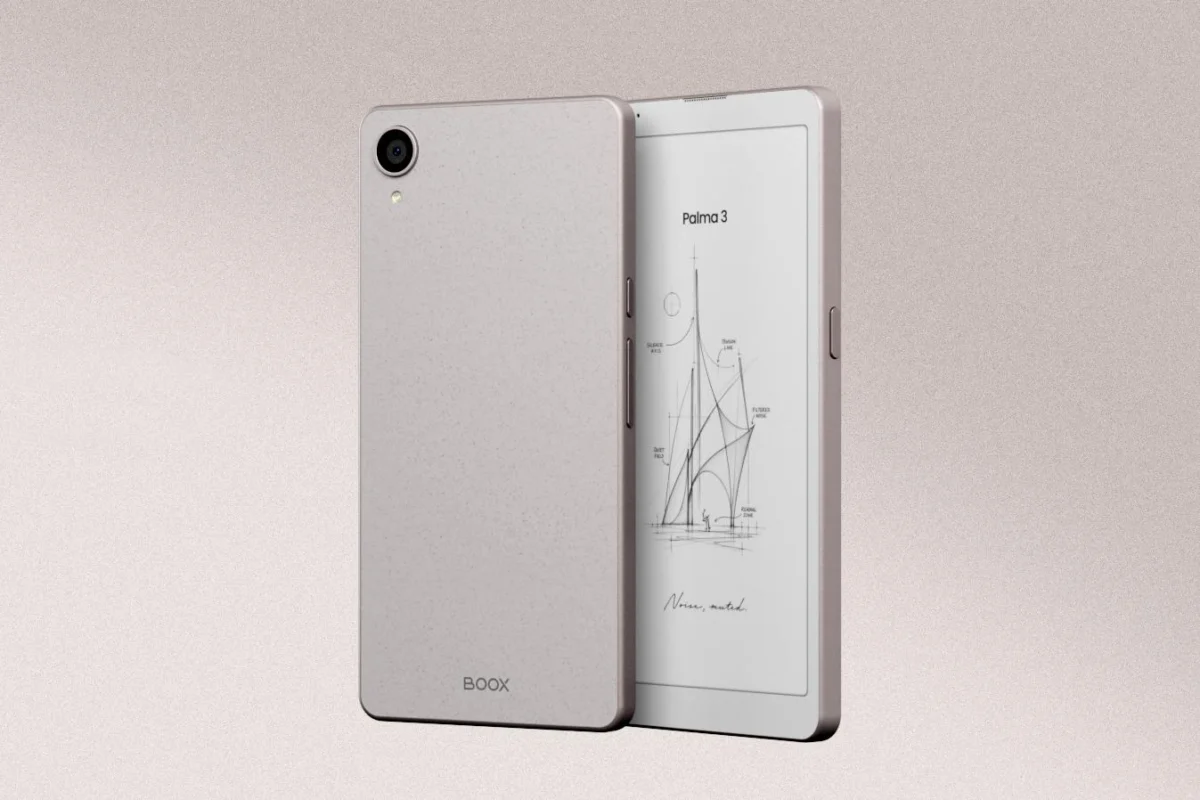
By Andrew Liszewski
Senior Technology Reporter
Nearly two years after the debut of its predecessor, Onyx Boox has officially announced the upcoming release of the Boox Palma 3. As the latest iteration in the company’s popular line of smartphone-formatted, black-and-white e-readers, the Palma 3 introduces a sleek architectural redesign, upgraded internal specifications, modern software support, and expanded functionality.
However, these refinements come with a notable financial caveat. While the Palma 2 launched in late 2024 at $279.99, the Palma 3 arrives with a significant price bump, carrying a retail tag of $339.99. For prospective buyers, whether this $60 increase—and the potential added cost of optional accessories—is justified will depend heavily on individual workflows, daily reading habits, and the demand for a pocketable, distraction-free digital companion.
Main Facts
The Boox Palma 3 represents a strategic evolution for the niche category of pocket-sized E Ink devices. Retaining the unique form factor that made the original Palma and Palma 2 cult favorites among minimalists, digital detoxers, and avid readers, the Palma 3 bridges the gap between traditional e-readers and modern smartphones.
Key highlights of the announcement include:
- Pricing and Availability: The Boox Palma 3 will retail for $339.99 and is expected to become available for purchase through official channels "soon."
- Build and Design: Moving away from the plastic chassis of previous generations, the Palma 3 features a premium anodized aluminum frame paired with a tactile, paperlike fiberglass backplate.
- Display Technology: The device utilizes the same 6.13-inch, 300ppi E Ink Carta screen found in earlier models, retaining sharp typography and high contrast for reading text.
- Performance and Storage: Under the hood, the device is powered by a Qualcomm Q-6690 octa-core processor, backed by 6GB of RAM and 128GB of internal storage, which remains expandable via a microSD card slot.
- Software: The Palma 3 ships running Android 16, putting it just one generation behind the absolute latest version of Google’s mobile operating system and ensuring broad app compatibility.
- Productivity Upgrades: Borrowing features from the color-screen Palma 2 Pro, the Palma 3 introduces support for the Boox InkSense Plus active stylus, transforming the compact reader into a portable digital notepad (though the stylus is sold separately for $46).
- Additional Hardware: Features a 3,950mAh rechargeable battery, an integrated 16-megapixel rear-facing camera, and a fingerprint reader embedded directly into the power button for biometric security.
Chronology of the Boox Palma Line
To understand the positioning of the Palma 3, it is helpful to look back at how Onyx Boox cultivated this unique product category. The evolution of the smartphone-sized E Ink reader highlights a rapid pace of hardware and software iteration designed to satisfy a passionate, niche consumer base.
The Genesis: The Original Boox Palma (2023)
When Boox first introduced the original Palma, it caught the tech world by surprise. Traditional e-readers like the Amazon Kindle or Kobo devices generally favor larger, square-ish footprints optimized for holding with two hands or resting on a table. The Palma, however, adopted the elongated, narrow aspect ratio of a modern smartphone.
Running on Android 11, it allowed users to download mainstream reading and audio apps—such as Kindle, Libby, Kobo, Audible, and RSS readers—onto a pocketable E Ink screen. It was marketed not as a replacement for a phone, but as a dedicated content-consumption device that allowed users to escape the glowing, notification-heavy distractions of OLED and LCD displays.
The Iterative Update: Boox Palma 2 (Late 2024)
Roughly a year and a half after the original model, Boox released the Palma 2 at a price point of $279.99. While keeping the overall silhouette largely intact, the Palma 2 introduced crucial under-the-hood performance improvements, upgraded security with a built-in fingerprint scanner, and an updated software foundation running Android 13. It solidified the form factor as a viable product category rather than a temporary novelty, capturing the attention of commuters, travelers, and digital minimalists alike.
The Modernized Successor: Boox Palma 3 (Present)
Now, less than two years after the Palma 2’s launch, the Palma 3 arrives. By leapfrogging several Android versions to land on Android 16, incorporating premium materials like anodized aluminum and fiberglass, and adding active stylus support, Boox is attempting to position the Palma series away from budget-conscious gadget experimentation and firmly into the territory of premium daily-driver productivity tools.
Supporting Data and Technical Specifications
A closer examination of the hardware specifications reveals where Boox has invested its engineering resources, as well as where it chose to maintain continuity.
| Specification | Boox Palma (Original) | Boox Palma 2 | Boox Palma 3 |
|---|---|---|---|
| Launch Price | ~$269.99 | $279.99 | $339.99 |
| Display | 6.13-inch E Ink Carta (300ppi) | 6.13-inch E Ink Carta (300ppi) | 6.13-inch E Ink Carta (300ppi) |
| Chassis Material | Plastic | Plastic | Anodized Aluminum / Fiberglass |
| Processor | Qualcomm Octa-core | Qualcomm Octa-core | Qualcomm Q-6690 Octa-core |
| RAM | 6GB | 6GB | 6GB |
| Storage | 128GB + microSD | 128GB + microSD | 128GB + microSD |
| Operating System | Android 11 | Android 13 | Android 16 |
| Battery Capacity | 3,950mAh | 3,950mAh | 3,950mAh |
| Biometrics | None / PIN | Fingerprint Reader | Fingerprint Reader |
| Stylus Support | No | No (Yes on Pro) | Yes (InkSense Plus, Optional) |
| Rear Camera | 16MP | 16MP | 16MP |
Display Considerations
While some consumer feedback loops might question why Boox has not yet transitioned the Palma line to newer color E Ink technology (like Kaleido 3) or higher-refresh-rate monochrome panels, sticking with the tried-and-true 300ppi E Ink Carta screen makes practical sense. Monochrome E Ink offers the highest possible contrast, the sharpest text rendering, and the lowest power consumption. For an e-reader designed primarily for reading text-heavy articles, books, and documents, maintaining crisp black-and-white clarity remains the gold standard.

Build Quality and Ergonomics
The most striking physical upgrade is the shift to an anodized aluminum frame and a paperlike fiberglass backplate. Previous iterations of the Palma were frequently praised for their utility, but their all-plastic construction occasionally invited criticism regarding perceived value relative to high-end smartphones. By introducing metal and fiberglass, Boox is elevating the tactile experience of the device, making it feel more durable, sophisticated, and comfortable to grip during extended reading sessions.
Official Perspectives and Market Positioning
While Onyx Boox has traditionally relied on grassroots tech communities, specialized forums, and early-adopter review channels rather than massive mainstream advertising campaigns, the company’s product trajectory speaks volumes about its market strategy.
In promotional materials and early announcements, Boox continues to market the Palma series as the ultimate tool for "mindful consumption." The underlying philosophy addresses a growing cultural fatigue with traditional smartphones—devices plagued by algorithmic feeds, constant push notifications, and eye-straining blue light.
By upgrading the software environment to Android 16, Boox is directly addressing one of the primary criticisms leveled against specialized e-readers: software obsolescence. Many consumers hesitate to purchase Android-powered E Ink devices out of concern that older operating systems will quickly lose support from third-party app developers. With Android 16, the Palma 3 ensures that users can securely and smoothly run modern applications, ranging from cloud storage solutions and note-taking apps to productivity suites and modern e-reading platforms, for years to come.
Furthermore, the integration of the Boox InkSense Plus active stylus hints at an intentional blurring of lines between e-readers and e-note devices. Though the stylus is sold separately as a $46 add-on, its inclusion in the device’s feature set transforms the Palma 3 from a passive consumption tool into an active creation device. Users can quickly jot down margin notes, sketch ideas, or maintain to-do lists on a screen small enough to slide into a shirt pocket.
Implications for the Industry and Consumers
The launch of the Boox Palma 3 carries several broad implications for both the portable technology market and individual consumers looking to curate their digital lives.
1. The Rising Cost of Niche Electronics
The most immediate talking point surrounding the Palma 3 is its $339.99 price tag. When factored alongside the optional $46 InkSense Plus stylus, the total investment climbs to nearly $390. At this price point, the Palma 3 approaches or exceeds the cost of full-sized, dedicated e-readers and even budget-tier conventional tablets and smartphones.
Consumers will increasingly have to weigh whether the unique pocket-sized, distraction-free E Ink form factor is worth a premium price, or if they are better served by traditional tablets or standard smartphones with grayscale accessibility filters enabled.
2. E Ink as a Viable Secondary Daily Driver
As E Ink processors grow faster and operating systems become more contemporary (such as the jump to Android 16), these devices are inching closer to functioning as legitimate secondary "smart" devices. For professionals, students, and writers looking to escape digital burnout, a device like the Palma 3 offers the connectivity of an Android ecosystem without the psychological trap of endless doom-scrolling.
3. Increased Competition in Pocket Formats
For years, Onyx Boox held a near-monopoly on the smartphone-sized Android e-reader market. However, as consumer interest in digital minimalism and eye health grows, competing brands are taking notice. The aggressive pricing and feature enhancements of the Palma 3 may pressure rival manufacturers to accelerate their own compact E Ink developments, potentially leading to increased market competition and technological innovation in the years ahead.
Conclusion
The Boox Palma 3 is not a revolutionary reinvention of the wheel, but rather a polished, mature refinement of a proven concept. By combining a luxurious aluminum and fiberglass redesign, modern Android 16 software support, and optional active stylus productivity, Boox has crafted the most capable pocket-sized E Ink reader to date.
Whether the $339.99 price point—and the additional cost for stylus functionality—proves to be a barrier or a worthwhile investment will ultimately rest in the hands of consumers. For those seeking an uncompromising, distraction-free reading and note-taking companion that fits effortlessly into the palm of a hand, the Palma 3 stands ready to redefine what a pocket device can achieve.
 Nana Muazin
  Raul Delapena Setiawan
  Nana Wu