
 By Suro Senen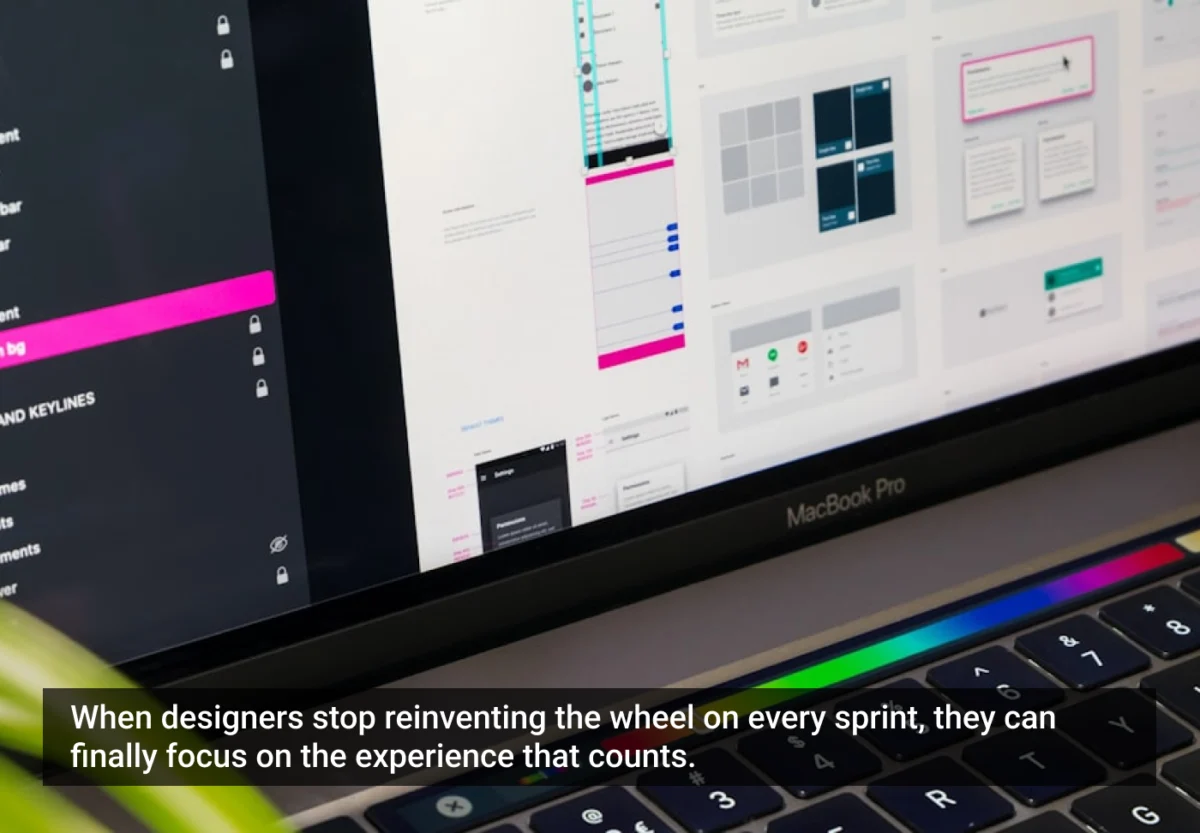
By Industry Insights Desk
Published: October 2023
(Originally adapted from perspectives published on Substack by Paivi Salminen)
Main Facts: The Modern UX Dilemma in Fast-Paced Frameworks
For product designers working within contemporary software development environments, the daily reality is often defined by a relentless cadence. The sprint begins, a ticket enters the queue, a feature is conceptualized, and before the ink is dry on the release notes, the cycle repeats. Far from concluding when code is shipped, the modern product lifecycle demands continuous observation, real-time feedback ingestion, and rapid iteration. The engine never turns off.
Yet, amidst this perpetual motion, a profound paradox has emerged. While Agile methodologies were explicitly designed to liberate teams from rigid, bureaucratic planning and waterfall inefficiencies, they have inadvertently birthed a new psychological and operational burden for user experience (UX) professionals. Designers frequently report feeling trapped in a "feature factory"—a state of perpetual urgency where the pressure to output high-fidelity mockups consistently outpaces the time available for genuine strategic thinking.
Recent analyses into high-performing cross-functional teams, however, point toward an unexpected antidote. Industry experts, including product strategist Laura Klein, argue that the key to surviving and thriving in an Agile ecosystem lies in a mechanism that, on the surface, appears antithetical to the fluid, experimental nature of Agile itself: the design system.
Far from being restrictive component libraries, design systems are proving to be the operational backbone that rescues designers from repetitive visual labor, repairs fractured engineer-designer workflows, and restores user-centric problem-solving to the heart of product development.
Chronology: The Evolution of the Design-Development Workflow
To understand why design systems have become the critical linchpin for modern product teams, it is helpful to trace the evolution of how design and engineering have historically intersected within software organizations.
Phase 1: The Waterfall Silo (Pre-2010s)
In traditional development environments, the timeline was strictly sequential. Product managers wrote comprehensive requirements documents, designers spent weeks or months crafting pixel-perfect prototypes in total isolation, and the resulting visual assets were handed off to developers in a monolithic block. While this model allowed for deep visual exploration, it was notoriously slow and ill-equipped to handle changing market demands or user feedback discovered post-launch.
Phase 2: The Agile Disruption and the "Mini-Waterfall" Trap (2010s–Early 2020s)
As companies rushed to adopt Agile and Scrum methodologies, the development process compressed. Sprints shrank to two-week intervals. While engineers thrived under this iterative approach, designers often found themselves caught in a high-stress predicament.
To keep pace with rapid engineering sprints, designers adopted a compressed version of the old workflow: frantically producing localized mockups just one sprint ahead of the developers. This created a recurring friction point known as the "agile handoff gap." Designers felt pressured to rush visual assets, while engineers waited idly for input, inadvertently recreating the rigid silos Agile was meant to eradicate.
Phase 3: The Rise of Scaled Design Systems (Present Day)
Recognizing that visual design was becoming a bottleneck, progressive organizations began investing heavily in centralized design systems. By codifying buttons, typography, grid systems, and complex navigation modules into reusable, shared component libraries, organizations transformed the workflow.
Designers stopped reinventing foundational elements for every new feature ticket. Instead, they began operating more like architects—assembling existing components to test hypotheses quickly, collaborating with engineers on day one, and reserving their deep creative energy for complex user flows, edge cases, and high-value strategic problems.
Supporting Data: The Hidden Costs of Fragmented Interfaces
The operational drag of reinventing the UI wheel on every sprint is not merely an anecdotal inconvenience; it carries measurable costs in productivity, team morale, and product cohesion.
- The Visual Design Tax: Studies on design team efficiency indicate that up to 40% of a designer’s time in unstructured environments is consumed by repetitive visual decisions—such as determining padding, micro-alignments, button states, and color token applications.
- The Consistency Drift: In companies building products incrementally without a unified system, interface fragmentation increases exponentially over time. A quantitative audit of multi-team software products often reveals dozens of distinct button styles and conflicting input fields, directly degrading cognitive load for the end user.
- Collaboration Delays: Teams operating without codified design components report significantly higher rates of handoff friction. According to agile workflow observations, projects utilizing mature design systems reduce design-to-development translation time by an estimated 30% to 50%, largely because both disciplines share a unified vocabulary.
By neutralizing these friction points, design systems shift organizational metrics away from output (how many screens were delivered this sprint) toward outcomes (how effectively the product solves user problems).
Official Perspectives and Expert Insights
The intersection of Agile pace and design discipline has sparked intense debate among product leadership and usability authorities.
Industry veterans emphasize that the core misunderstanding of Agile within design communities stems from conflating speed with haste. Laura Klein, a prominent voice in product management and design strategy, frequently stresses that design systems act as cognitive force multipliers. By automating the visual baseline of a product, they free teams to focus on empirical learning.
"Design is not just what it looks like and feels like. Design is how it works."
— A foundational design principle frequently attributed to Steve Jobs
UX researchers echo this sentiment, pointing out that agile methodologies are fundamentally predicated on the scientific method: build, measure, learn. When designers are bogged down in the minutiae of pixel placement, the "learn" phase suffers.
"When you have a robust design system in place, your deliverables change," notes one veteran agile product designer. "Instead of spending three days pushing pixels on a dropdown menu, you reference an existing component in a Jira ticket and spend those three days mapping out complex error states and user onboarding bottlenecks."
Engineering leaders have similarly embraced the shift. Front-end developers report that working alongside a synchronized design system dramatically reduces the cognitive overhead required to interpret ambiguous design mockups. Codebases become cleaner, technical debt decreases, and accessibility standards (such as WCAG compliance) are baked directly into the core components rather than treated as an afterthought.
Implications: What This Means for the Future of Product Design
As the software industry continues to mature, the integration of design systems into Agile frameworks carries profound implications for the professional identity and day-to-day survival of UX practitioners.
1. The Shift from Visual Artist to System Thinker
The era of the solitary visual artist crafting bespoke screens in a vacuum is rapidly drawing to a close. In Agile environments, the most successful designers are those who view themselves as systems thinkers. Their value is no longer measured solely by the aesthetic flair of an isolated mockup, but by their ability to scale interaction patterns, maintain cross-platform consistency, and build extensible frameworks that empower entire cross-functional squads.
2. Redefining Collaboration and Trust
When foundational interface elements are standardized, the traditional barrier between design and engineering dissolves. Designers and developers can huddle over a shared component library at the inception of a sprint, sketching rough wireframes using production-ready elements. This early alignment builds mutual trust and ensures that technical constraints are identified before development begins, rather than discovered mid-sprint.
3. Mitigating Designer Burnout
Perhaps the most immediate implication is human. Designer burnout is a pervasive issue in fast-moving tech companies, driven largely by the Sisyphean task of maintaining quality across endless, overlapping product loops. By alleviating the burden of repetitive visual production, design systems offer a viable path toward sustainable creativity. They allow designers to reclaim their time, redirecting their intellect toward deep user research, empathy mapping, and solving the genuinely difficult problems that automation and component libraries can never touch.
Conclusion
Agile development was built to champion rapid adaptation, continuous feedback, and iterative progress. For designers willing to embrace the structural support of a design system, those very tenets cease to feel like a trap. Instead, they transform into an empowering framework—one where teams can move fast without breaking their users’ trust, and where design finally fulfills its ultimate promise: making complex systems work seamlessly for real people.
 Muslim
  Laily UPN