
 By Lina Irawan
By Michelle Martin
Enriched & Expanded Editorial Report
Main Facts: The Anatomy of Modern Social Media Algorithms
In an era where humanity spends an average of 141 minutes every day scrolling, tapping, and engaging with digital platforms, social media algorithms have quietly become the ultimate arbiters of modern communication. Far from being random collections of code, a social media algorithm is an intricate suite of rules, ranking signals, and mathematical calculations designed to determine the content priority and display order for every individual user.
Rather than asking the straightforward chronological question—"What was posted most recently?"—modern algorithms driven by machine learning ask a much more complex predictive question: "What is this specific person most likely to engage with, watch, or share right now?"
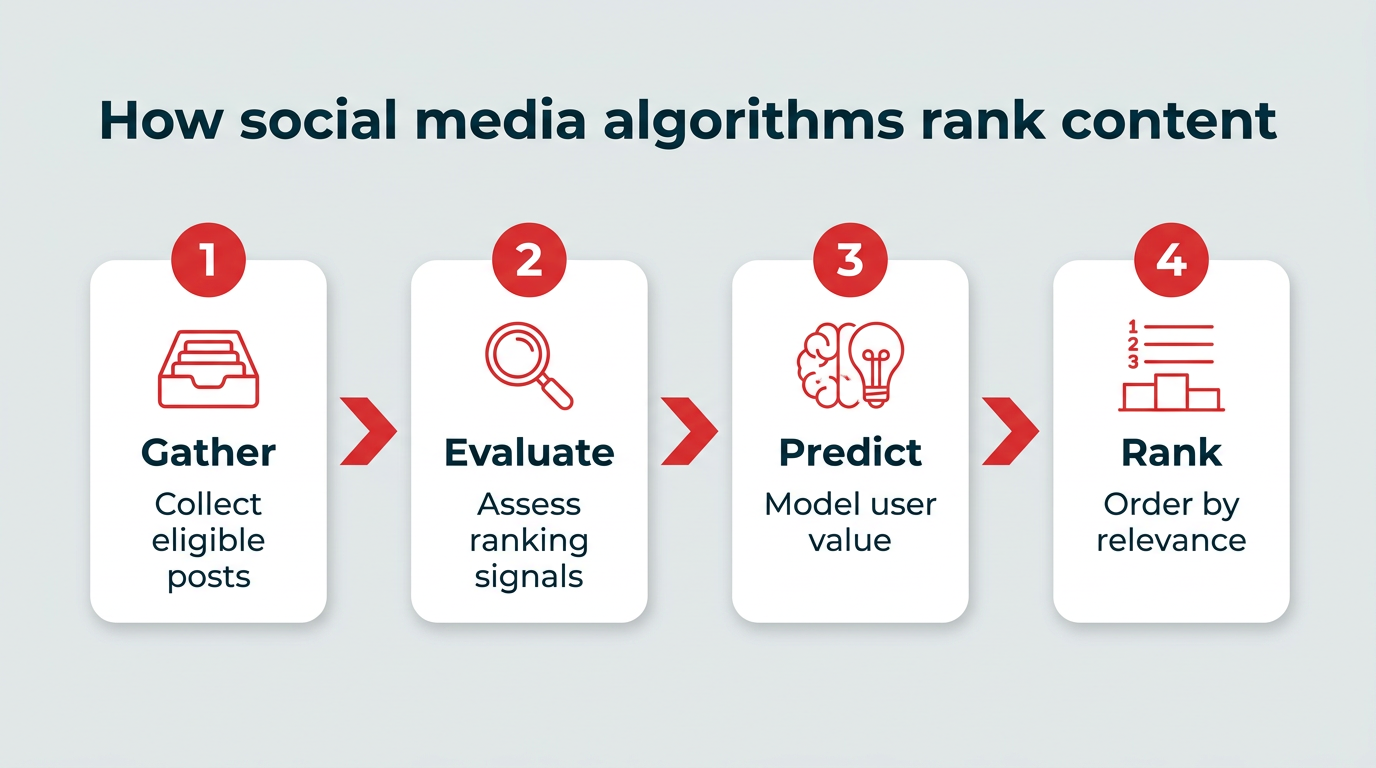
Because these systems continuously evolve based on localized user behavior, no two people experience the exact same feed. Whether a user is browsing Instagram, TikTok, LinkedIn, or YouTube, the underlying operational workflow remains remarkably consistent across platforms:
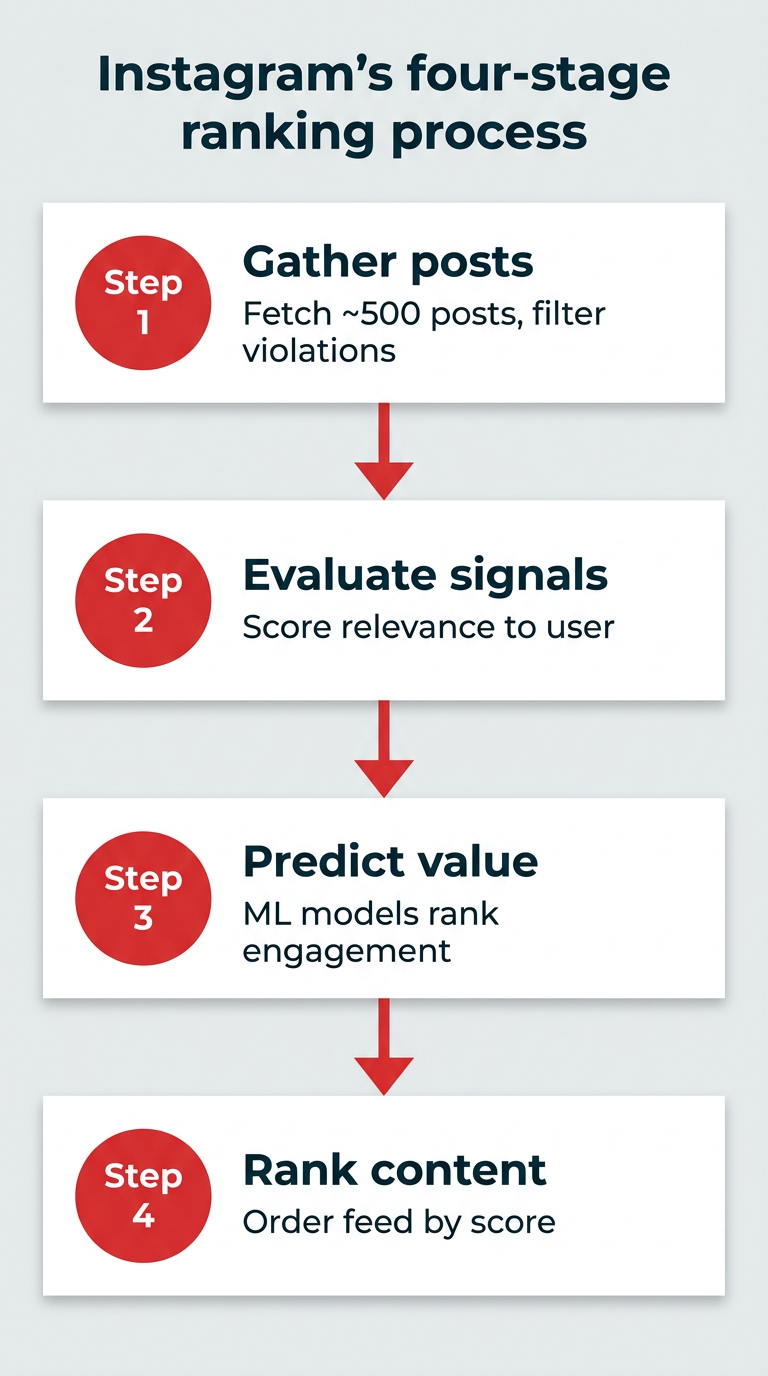
- Gathering: The system pulls a large pool of eligible content (such as recent posts from followed accounts or trending recommendations).
- Scoring: It filters out policy violations and evaluates the content against dozens of ranking signals.
- Predicting: Machine learning models calculate the probability of specific user interactions (like a 10-second watch duration or a direct message share).
- Ranking: The final feed is ordered from most to least relevant, rendering personalized results in mere milliseconds.
For digital marketers, creators, and enterprise brands, understanding these mechanisms is no longer optional. Algorithms act as the gatekeepers between published content and the intended audience, governing organic reach, brand awareness, and bottom-line business impact.
Chronology: The Four Eras of Social Media Algorithm Evolution
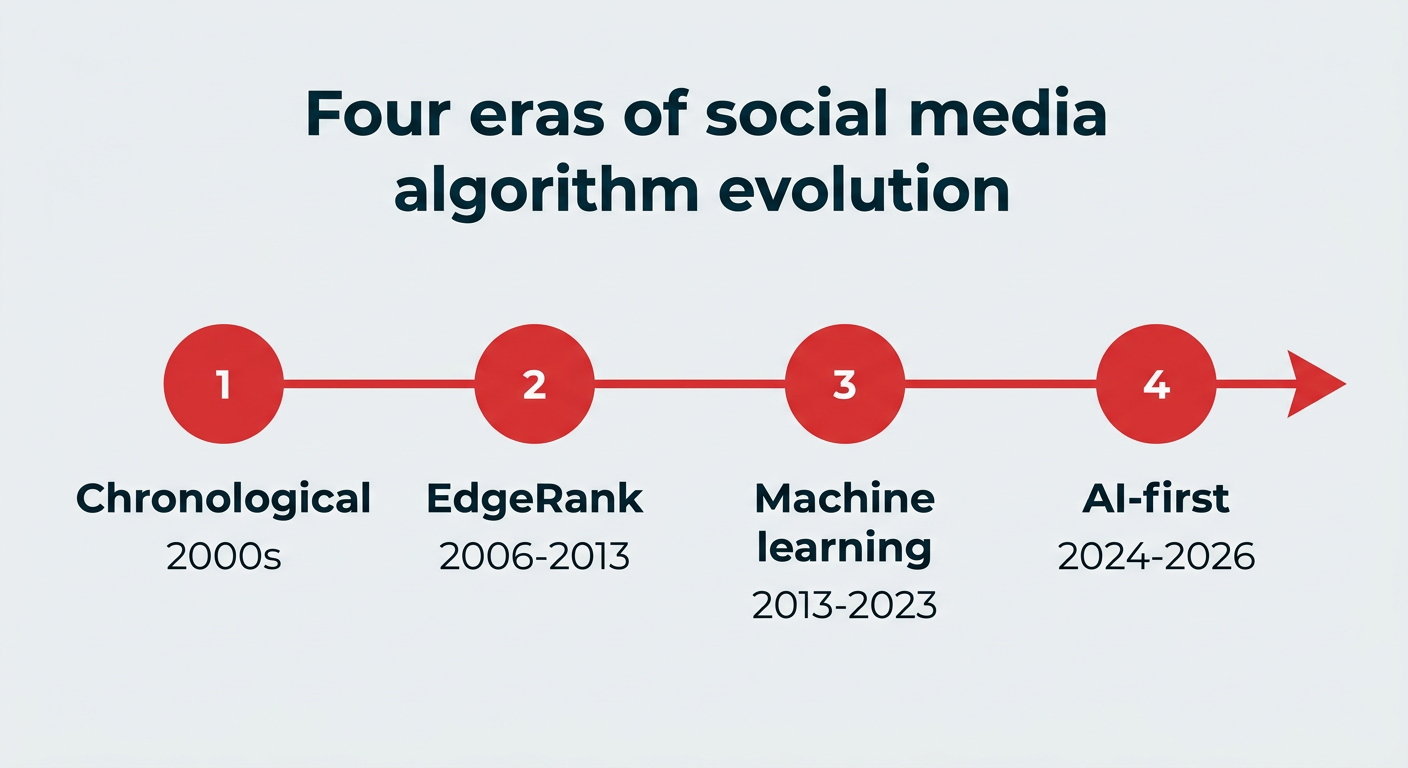
To understand how today’s hyper-personalized recommendation engines operate, it helps to examine how social media distribution has transformed over the past two decades. The evolution of the algorithm can be broken down into four distinct eras:
1. The Purely Chronological Era (Late 2000s – Early 2010s)
In the early days of platforms like Facebook, Twitter (now X), and Instagram, feeds were wonderfully straightforward. Content appeared in a strict reverse-chronological order. If you followed an account and they posted at 2:00 PM, their update sat at the very top of your feed until the next post arrived. While transparent, this system quickly became overwhelmed as user adoption skyrocketed, leading to endless content fatigue and missed posts.
2. The Engagement-Metric Era (Mid 2010s)
As platform volume exploded, pure chronology became untenable. Platforms introduced basic algorithmic sorting governed by crude engagement metrics. Content was prioritized based on aggregate popularity—primarily raw counts of likes, comments, and clicks. While this surfaced popular content, it heavily favored sensationalism and clickbait, prompting platforms to look for smarter ways to measure true user value.
3. The Personalization and Machine Learning Era (Late 2010s – Early 2020s)
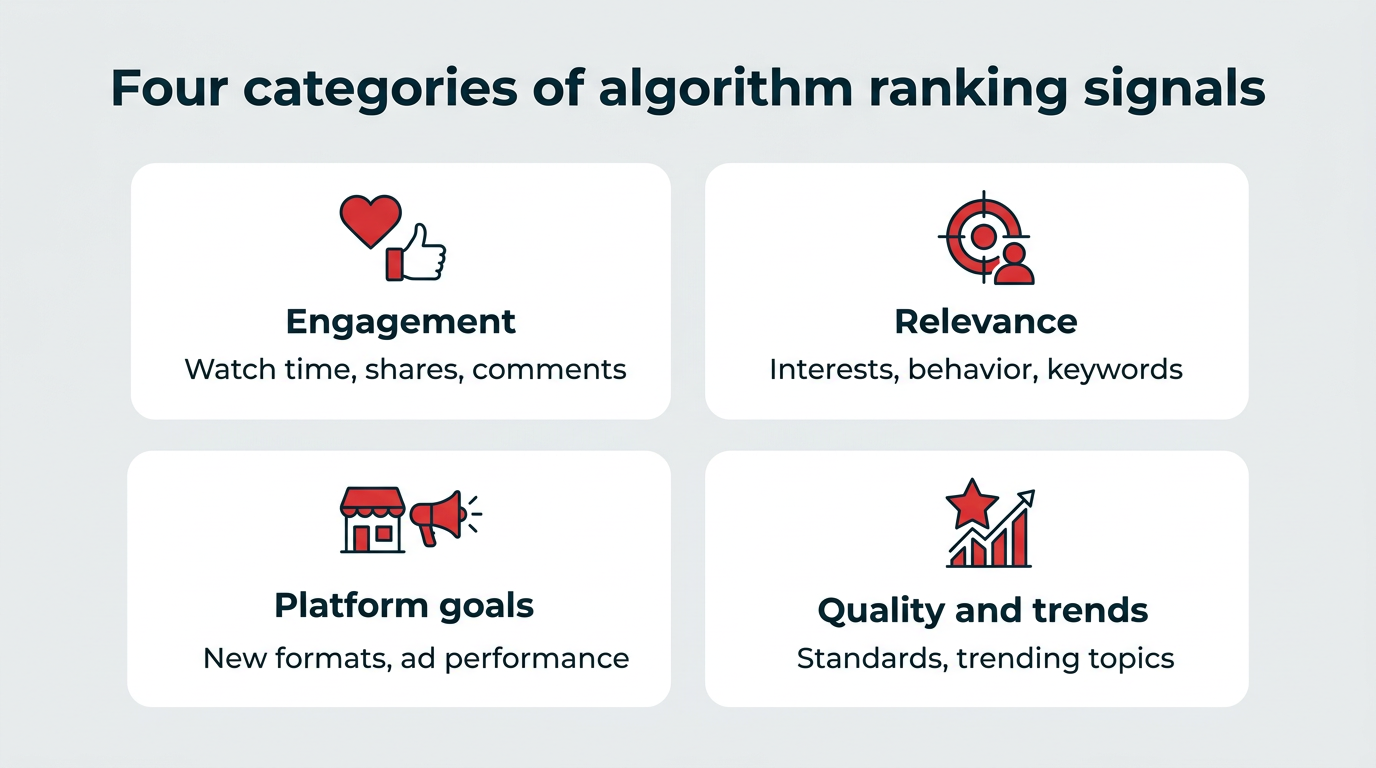
With the advent of advanced machine learning models, algorithms shifted away from simple popularity toward deep personalization. Platforms began evaluating individual user behavior—tracking watch times, click-through rates, profile visits, and past interactions. Feeds transformed from uniform public broadcasts into highly customized windows tailored to individual preferences, habits, and psychological triggers.
4. The Discovery and AI-Driven Era (Mid-2020s to Present)
Today, social media feeds are defined by the dominance of AI-powered recommendation engines. Platforms like TikTok, Instagram Reels, and YouTube Shorts have fundamentally altered user behavior by shifting feeds from "social graphs" (content strictly from friends and followed accounts) to "interest graphs" (content recommended from total strangers based on predicted affinity). Artificial intelligence now powers predictive neural networks that can analyze video frames, audio tracks, and textual sentiment in real time to curate hyper-relevant discovery experiences.
Supporting Data: Platform-by-Platform Algorithm Breakdown
Every major network weighs ranking signals differently. A strategy that wins on LinkedIn will routinely fail on TikTok. Below is a comprehensive breakdown of top ranking signals, preferred formats, and chronological options across the digital landscape in 2026.
| Platform | Top Ranking Signals | Preferred Format | Chronological Option? | Top Tip for Marketers |
|---|---|---|---|---|
| Watch time, likes, sends | Reels, carousels | Yes | Create content people want to send directly to friends. | |
| Predicted engagement, connections | Video, photos | Yes | Publish content that earns time spent, not just empty clicks. | |
| TikTok | Watch time, user activity | Short-form video | No | Hook viewers aggressively within the first three seconds. |
| Content quality, early engagement | Text, documents, video | No | Reply to comments during the vital first hour after posting. | |
| YouTube | Watch time, relevance | Long & short video | No | Optimize titles/thumbnails for CTR, then focus on retention. |
| X | Connections, recency | Text, images | Yes (Following tab) | Post frequently and join live conversations rapidly. |
| Threads | Predicted engagement, view time | Text | Yes (Following tab) | Ask probing questions that invite conversational replies. |
| Visual relevance, saves | Images, Pins | No | Design Pins optimized for saves and search intent, not likes. | |
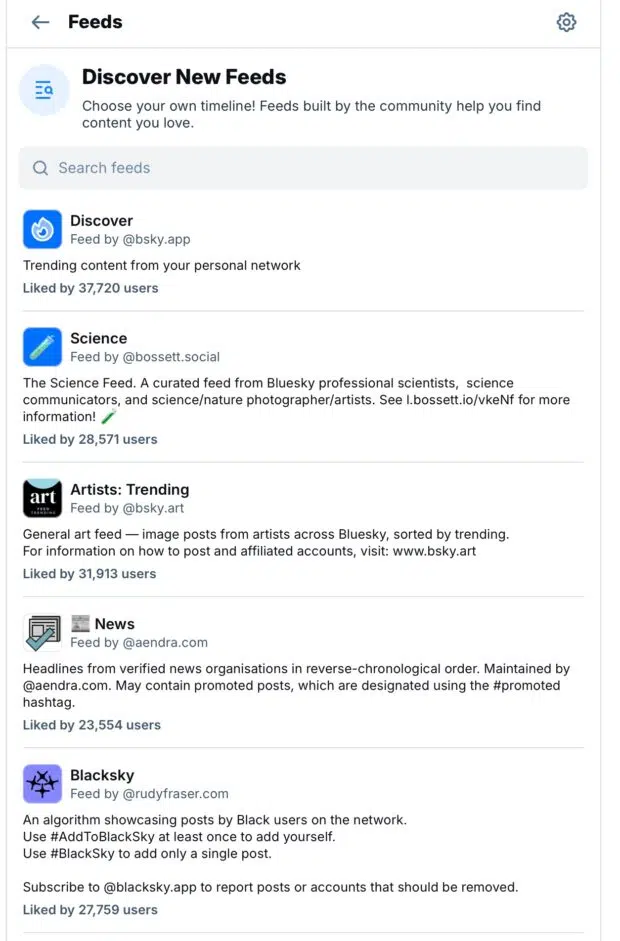
| Bluesky | User-controlled, community | Text | Yes (default) | Build presence inside niche, custom algorithmic feeds. |
| Upvotes, recency, moderation | Text, links, images | Yes (New sort) | Read individual subreddit rules before posting promotional content. |
Deep Dive: Instagram’s Multi-Tiered Architecture
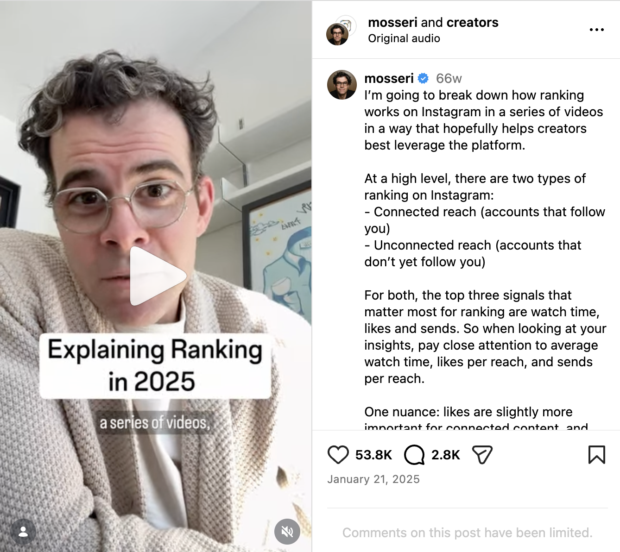
According to Adam Mosseri, Head of Instagram, the top three ranking signals on the platform are watch time, likes, and sends. Instagram separates its ranking logic into two distinct buckets: connected reach (followers) and unconnected reach (explore/recommendations). Likes carry more weight for connected reach, whereas direct sends (shares) are the primary currency for expanding into unconnected reach.
Furthermore, Instagram breaks content delivery down into four distinct spaces, each utilizing unique models:
- Feed: Balances posts from followed accounts with carefully calculated recommendations based on past user interactions.
- Stories: Prioritizes view history, reply rates, and close-friend proximity to ensure users see updates from accounts they care about most.
- Reels: Heavily emphasizes audio tracks, complete watch-through rates, and video rewatches.
- Explore: Looks at aggregate visual and topical signals to introduce users to brand-new creators.
Official Responses and Industry Insights
As algorithms grow more opaque and complex, platform executives and industry analysts frequently comment on the delicate balance between commercial interests, user privacy, and organic distribution.
Meta’s transparency documentation emphasizes that ranking signals are designed primarily to foster meaningful social interactions and authentic discovery rather than simply maximizing ad revenue. By filtering out "content noise," Meta aims to keep user retention high.
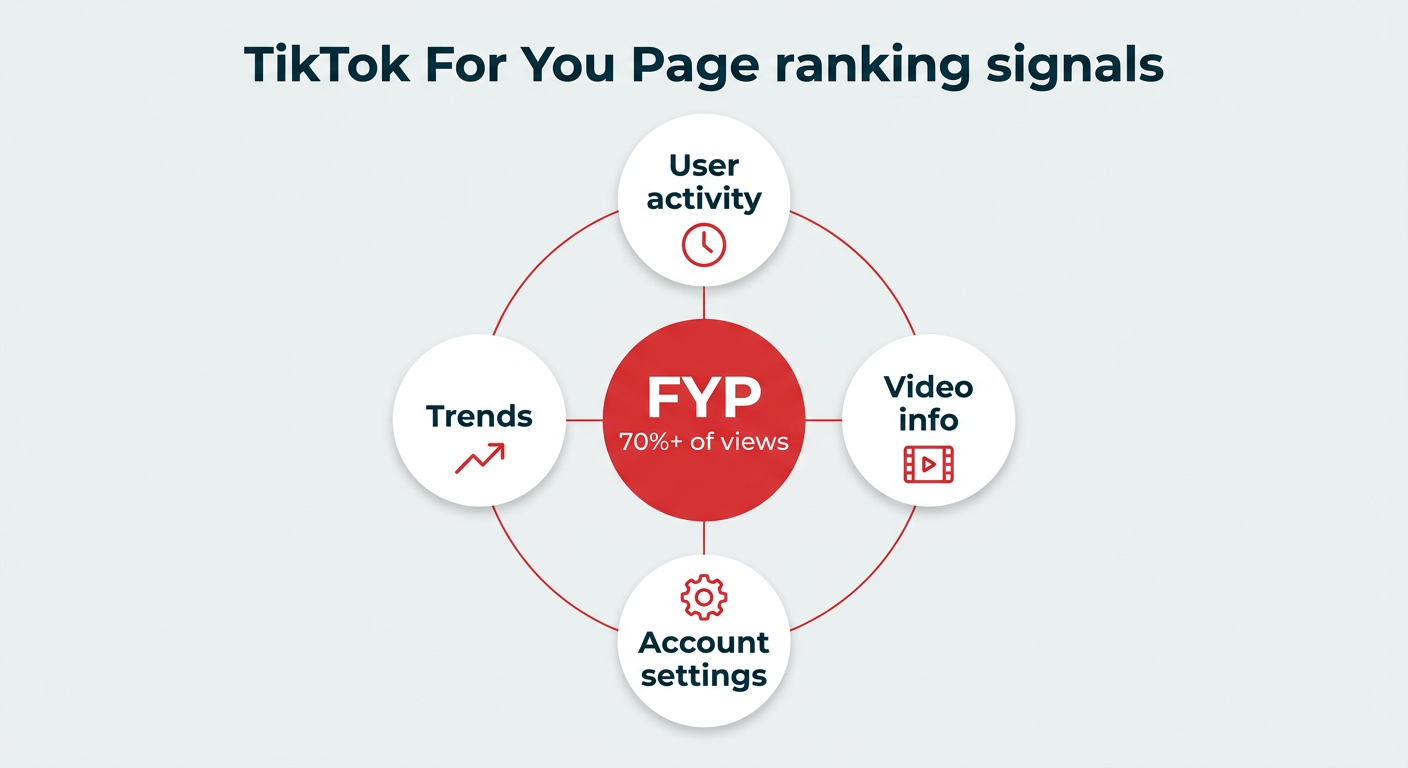
Similarly, public statements from TikTok’s leadership highlight that the For You Page (FYP) deliberately decouples content distribution from follower counts. On TikTok, a creator with zero followers can achieve millions of views overnight if their video successfully passes early watch-time thresholds and viewer retention checks. This democratization of reach has forced legacy platforms like Instagram and YouTube to adapt their own recommendation architectures to compete for creator loyalty.
Implications: Strategic Takeaways for Marketers and Brands
The shift toward AI-driven recommendation algorithms carries profound implications for digital marketing strategies:
1. Quality and Relevance Trump Posting Frequency
Because your content is not just competing against direct industry competitors, but against every single piece of media a user might find captivating in that exact microsecond, volume is no substitute for resonance. Posting five mediocre updates a day will actively hurt your standing; publishing one deeply engaging, high-retention piece will trigger positive algorithmic feedback loops.
2. Organic Reach Drives Paid Efficiency
Organic performance and paid advertising are deeply intertwined. Social media platforms use remarkably similar machine learning signals to evaluate both organic posts and paid ad creatives. Content that naturally captures high organic watch times, meaningful comments, and frequent shares almost universally translates into high-performing, cost-effective paid ad creative.
3. Tailor, Don’t Template
Attempting to deploy a single, generic piece of content across six different social networks guarantees sub-par performance. Enterprise marketing teams must adapt their creative hooks, video pacing, aspect ratios, and narrative formats to match the specific algorithmic priorities of each individual channel.
Frequently Asked Questions (FAQ)
Q: How can enterprise brands optimize content for multiple social media algorithms at scale?
A: Build your content framework around universal core signals—such as watch time, active engagement, and contextual relevance—and then tailor the creative format, length, and hooks to fit each platform’s distinct preferences.
Q: What metrics should marketing teams track to measure algorithm performance?
A: Monitor five foundational metrics: unconnected reach, engagement rate, average watch time, share/send rate, and net follower growth. Sudden drops across these metrics often signal an unannounced algorithmic update.
Q: What role does AI play in how social media algorithms rank content?
A: Artificial intelligence powers the sophisticated machine learning models that predict user behavior, personalize feeds in real-time, analyze video/audio content, and instantly detect emerging cultural trends.
Q: How often do social media algorithms change?
A: Platforms tweak their ranking models constantly—sometimes hundreds of times a year through minor machine learning adjustments, alongside major periodic structural overhauls. Brands must keep their strategies flexible and monitor analytics dashboards weekly to spot sudden shifts.
 Nila Kartika Wati
  Suro Senen
  Jia Lissa