
 By Ammar Sabilarrohman
In the modern digital economy, the "checkout" is the final frontier of the customer journey. It is the moment where intent meets action, and it is here that many small businesses either secure a loyal customer or lose a sale to friction. As we move deeper into 2025, the landscape for payment processing has evolved from a simple convenience into a sophisticated strategic asset. Choosing the right payment system is no longer just about accepting credit cards; it is about optimizing cash flow, building consumer trust, and ensuring technical resilience.
With an overwhelming array of choices—from global giants to niche, developer-focused platforms—identifying the right partner for your business is a daunting task. This guide examines the top six payment systems for 2025, evaluating them based on the criteria that matter most to modern entrepreneurs.
What Defines a Modern Payment System?
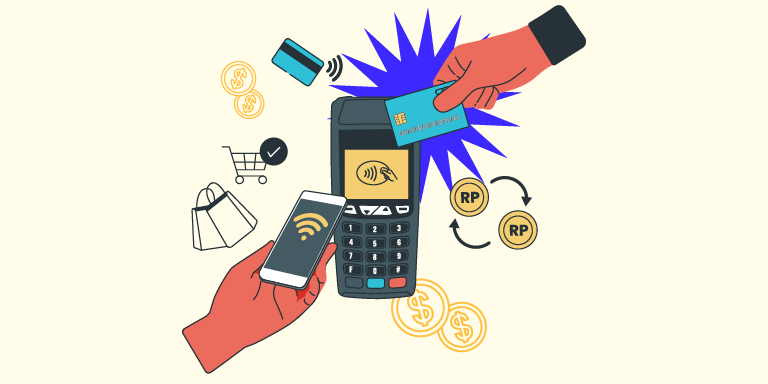
Before diving into the options, it is vital to define the infrastructure. A payment system is the comprehensive network, platform, or technology stack that facilitates the secure transfer of funds between a buyer and a seller.
In today’s ecosystem, these systems go beyond basic credit card processing. They encompass online payment gateways, sophisticated API-driven hooks for subscription models, mobile digital wallets (like Apple Pay and Google Pay), and automated clearing house (ACH) bank transfer networks. A truly robust system ensures that these disparate methods move funds securely, efficiently, and in compliance with global financial regulations.
Crucially, it is important to distinguish what these systems are not. They are not accounting software, although many integrate with it. They are not banking institutions, even though they manage the flow of money. They are the essential "plumbing" of the internet economy.
Strategic Criteria: How to Evaluate Your Provider
In my research to narrow down the top choices for 2025, I focused on five foundational pillars that determine the success of a payment integration:
1. Payout Velocity
For small businesses and bootstrapped startups, cash flow is the lifeblood of operations. Some providers hold funds for several business days, while others offer near-instant settlement. When margins are tight, the time between a customer’s click and your ability to use those funds is critical.
2. Frictionless User Experience
High bounce rates at the checkout page are often the result of poor UI/UX. If a customer has to leave your site to finalize a payment, or if the interface is clunky and non-responsive on mobile devices, you are leaving money on the table.

3. Global Accessibility
Is your customer base purely domestic, or do you have global ambitions? Some platforms excel in local currency support, while others restrict operations to specific jurisdictions. Your choice must align with your growth trajectory.
4. Pricing Transparency and Structure
The industry is notorious for "hidden" costs—tiered pricing, monthly maintenance fees, and complex interchange-plus models. Founders must look for a structure that scales with their volume rather than one that punishes them for growth.
5. Security and Compliance
PCI-DSS (Payment Card Industry Data Security Standard) compliance is non-negotiable. Beyond that, the platform must offer advanced fraud detection, such as machine learning-based risk scoring, to protect you from chargebacks and fraudulent transactions.
Top 6 Payment Systems to Consider in 2025
1. Stripe: The Developer’s Choice
Stripe has arguably set the gold standard for modern online payments. Its primary strength lies in its modularity and seamless integration.
- Pros: Exceptional API documentation, highly customizable checkout flows, and a "keep-the-user-on-site" design that drastically reduces bounce rates.
- Potential Drawback: The sheer depth of features can be overwhelming. To leverage the most advanced configurations, you may eventually need to hire a developer.
- Best For: E-commerce businesses and SaaS startups that prioritize a premium, branded checkout experience.
2. PayPal: The Trusted Household Name
PayPal remains a staple for small businesses, primarily because of the instant trust factor. Customers who are wary of entering card details on a new website will often complete a transaction if they see the familiar "PayPal" button.
- Pros: High consumer trust, excellent global currency support, and a very low barrier to entry.
- Potential Drawback: Fees can be higher than competitors for certain transaction types, and the redirect process to PayPal’s own environment can sometimes break the user journey.
- Best For: Businesses targeting older demographics or those operating in international markets where PayPal is a preferred payment method.
3. Authorize.net: The Versatile Veteran
Owned by Visa, Authorize.net is one of the oldest and most reliable gateways on the market. It is highly favored by businesses that require complex payment handling.
- Pros: Advanced fraud protection suites, robust recurring billing features, and highly reliable infrastructure.
- Potential Drawback: The interface feels somewhat dated compared to the sleek, modern dashboards of Stripe or Square.
- Best For: Established businesses that need heavy-duty security and high-volume transaction reliability.
4. Amazon Pay: Leveraging the Giant
Amazon Pay allows your customers to use the payment and shipping information already stored in their Amazon accounts. It is essentially bringing the "Amazon experience" to your own storefront.
- Pros: High conversion rates due to familiarity and speed; integrates easily with most major e-commerce platforms like Shopify or WooCommerce.
- Potential Drawback: It is essentially a "guest" checkout experience; you don’t always get the same level of customer data ownership as you would with a proprietary Stripe implementation.
- Best For: Retailers looking to increase conversion rates by reducing the time it takes to input shipping and billing addresses.
5. Square: The Brick-and-Mortar King
If your business has a physical footprint—a pop-up shop, a cafe, or a retail store—Square is almost impossible to beat. Its point-of-sale (POS) hardware is industry-leading.
- Pros: The virtual terminal is a game-changer for phone orders, and the hardware ecosystem is incredibly easy to set up.
- Potential Drawback: Their online-only features, while improving, still trail behind dedicated online gateways like Stripe.
- Best For: Businesses that operate primarily in-person or have a hybrid "omnichannel" model.
6. SecurePay: The Accessible Alternative
SecurePay is an often-overlooked solution that provides a balanced, middle-ground approach for startups.
- Pros: Excellent for businesses that don’t fit into the mainstream platforms; offers a very user-friendly setup for non-technical founders.
- Potential Drawback: Brand recognition is lower, which can occasionally lead to hesitation from first-time customers.
- Best For: Niche startups that need a reliable, "out-of-the-box" solution with solid API support.
Chronology of Payment Evolution
The shift from cash to card to digital wallet has been rapid. In the early 2000s, payment systems were dominated by clunky merchant accounts and bank-issued hardware. By 2010, the emergence of Stripe and Square decentralized the market, allowing a developer or a coffee shop owner to start accepting credit cards in minutes.
Today, we are in the era of "invisible payments," where biometric authentication and one-click checkouts are the expected norm. Businesses that fail to keep pace with these expectations—specifically regarding mobile optimization and speed—are seeing their cart abandonment rates climb steadily.
Supporting Data and Market Implications
Recent industry analysis suggests that businesses offering three or more payment methods see a 30% increase in checkout completion rates compared to those offering only one. Furthermore, the cost of fraud is rising; small businesses lost an estimated $20 billion to payment fraud in 2024 alone. This underscores the necessity of choosing a provider that prioritizes security.
When choosing your system, calculate the "All-in Cost." While a provider may offer a low 2.5% transaction fee, they might charge a $30 monthly gateway fee. For a business processing $5,000 a month, this difference is negligible; for a business processing $50,000, that monthly fee represents a significant chunk of your margins.
Final Recommendations for the Year Ahead
As you look to scale in 2025, do not view payment processing as a "set it and forget it" task. Audit your checkout flow quarterly. Look at your bounce rates: do they spike at the payment page? If so, test a different gateway.
For the vast majority of small businesses, Stripe offers the best balance of growth potential and ease of use. If your business is heavily focused on in-person retail, Square is the industry standard. For those needing global reach and trust, PayPal remains an essential secondary option.
The technology behind these payments is complex, but your goal should be simple: make it as easy as possible for your customer to pay you. When you remove the friction, you remove the barriers to your own success.
Disclaimer: Pricing and features cited are based on standard 2025 market data. Payment processors frequently update their fee structures based on volume and regulatory changes. Always consult the provider’s official documentation before finalizing your integration.
 Nana Muazin
  Lina Irawan
  Neng Nana