
 By Ammar Sabilarrohman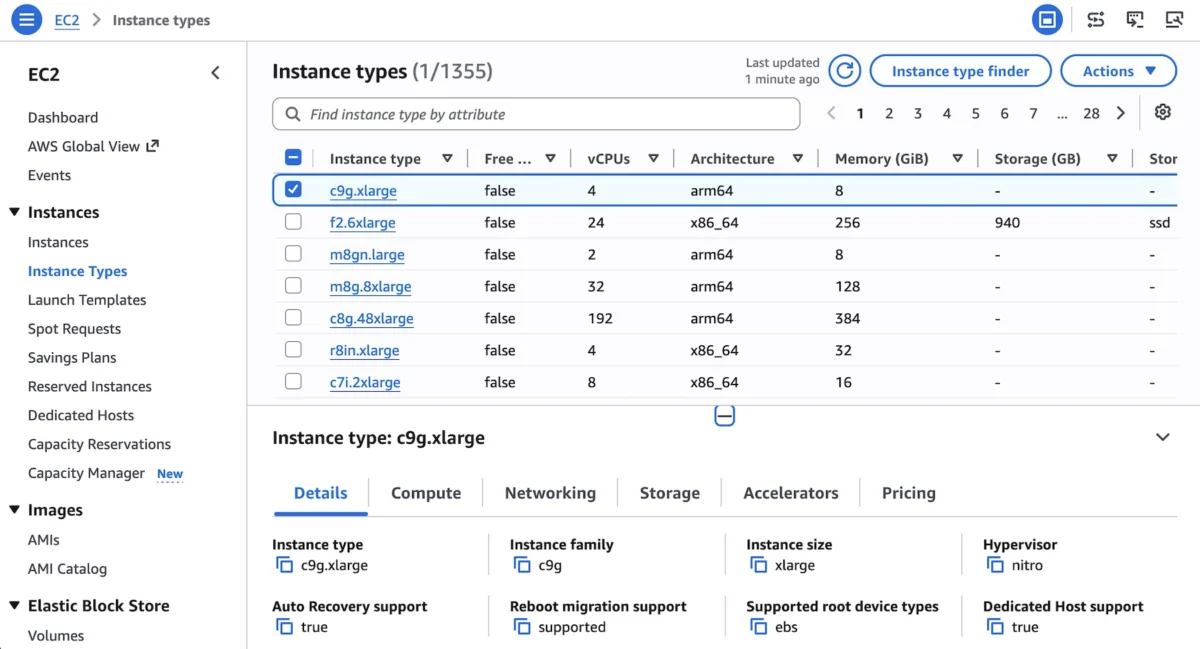
SEATTLE — Twenty years ago, a modest blog post penned by Jeff Barr introduced a quiet revolution to the technology sector. Published under the banner of the Amazon EC2 Beta, that single announcement changed how humanity thinks about, builds, and consumes computing infrastructure. What began as a rudimentary offering of resizable Linux virtual servers—billed by the hour, limited to a single instance type (m1.small), and restricted to one geographic region (US East)—has metastasized into the invisible engine powering a significant portion of the global digital economy.
As Amazon Web Services (AWS) marks the twentieth anniversary of Amazon Elastic Compute Cloud (EC2), the service stands as more than just a pioneer of cloud computing. It represents the bedrock upon which modern software architecture, enterprise scalability, and the contemporary artificial intelligence boom were constructed.
Main Facts: The Evolution of a Paradigm Shift
To understand the scale of Amazon EC2 today is to comprehend a staggering transformation in technical capability. Launched in 2006 to solve a relatively straightforward problem—allowing developers to spin up compute capacity without purchasing physical hardware—EC2 has evolved into a hyper-scale utility.
- From One to Over 1,200: The service has expanded from a solitary instance type (
m1.small) to an expansive catalog of more than 1,200 specialized instance types. These range from general-purpose and compute-optimized configurations to memory-intensive, storage-optimized, accelerated computing, and high-performance computing (HPC) nodes. - Global Footprint: Initially restricted to a single data center region, EC2 now spans 39 geographic regions worldwide, augmented by edge services like AWS Outposts, Local Zones, and 5G-integrated AWS Wavelength networks.
- The Invisible Foundation: While consumer-facing AWS tools have diversified immensely, EC2 remains the foundational compute layer for nearly every higher-level service. Container orchestration platforms like Amazon ECS and Amazon EKS, serverless architectures like AWS Lambda and AWS Fargate, data processing frameworks like Amazon EMR, and cutting-edge generative AI platforms like Amazon SageMaker AI and Amazon Bedrock ultimately derive their raw compute power from EC2 infrastructure.
Despite two decades of relentless feature creep and architectural refinement, the core value proposition of EC2 remains stubbornly identical to its day-one pitch: secure, resizable compute capacity delivered in minutes, billed strictly by consumption, and capable of scaling on demand without long-term hardware commitments.
Chronology: Two Decades of Defining Milestones
The history of Amazon EC2 is a masterclass in foundational architecture. By starting with a minimal-yet-useful product and layering on capabilities dictated by customer feedback, AWS engineered a roadmap that mirrors the maturation of the internet itself.
The Formative Years (2006–2009)
- August 2006: Jeff Barr publishes the blog post launching the Amazon EC2 Beta, introducing hourly-billed virtual Linux servers in US East.
- 2008: The introduction of Amazon Elastic Block Store (EBS) solves a critical early limitation by providing persistent, low-latency block storage volumes detachably linked to EC2 instances.
- 2009: A banner year for enterprise readiness. AWS launches Elastic Load Balancing (ELB), Auto Scaling, and Amazon CloudWatch, granting developers the tools to build self-healing, highly available web applications. That same year, Amazon Virtual Private Cloud (VPC) introduces logically isolated networks, bridging the trust gap for risk-averse enterprise IT departments.
The Engineering and Custom Silicon Era (2010–2018)
- 2017: AWS introduces the AWS Nitro System, a revolutionary combination of dedicated hardware and lightweight hypervisor software that offloads virtualization functions, driving unprecedented performance, enhanced security, and rapid innovation cycles.
- 2018: The launch of AWS Graviton processors marks a pivotal shift toward custom silicon. Designed specifically by AWS for cost-sensitive, scale-out workloads, Graviton chips challenge the x86 duopoly and reset price-performance expectations in the cloud.
- 2018: Recognizing that cloud boundaries must extend to physical corporate datacenters, AWS announces AWS Outposts, bringing native EC2 infrastructure on-premises.
The Edge, Hyperscale, and AI Age (2019–Present)
- 2019: AWS deploys AWS Local Zones to place compute power closer to major population centers and AWS Wavelength to embed EC2 deep inside 5G telecommunications carrier networks for ultra-low-latency applications.
- 2021: Celebrating its 15th anniversary, EC2 solidifies its role as the dominant enterprise cloud standard.
- 2026: At its 20-year milestone, EC2 has quietly pivoted to handle the crushing computational demands of trillion-parameter foundation models, powering the infrastructure behind modern generative AI.
Supporting Data: By the Numbers
The growth metrics of Amazon EC2 tell a story of exponential scaling that outpaced even the most optimistic projections of early cloud evangelists.
| Metric | 2006 (Launch) | 2026 (20th Anniversary) |
|---|---|---|
| Available Regions | 1 Region (US East) | 39 Global Regions |
| Instance Types | 1 (m1.small) |
1,200+ specialized types |
| Storage Options | Ephemeral storage | EBS, NVMe SSDs, file & object integrations |
| Deployment Edge | Cloud-only datacenters | Regions, Local Zones, Wavelength, On-Premises (Outposts) |
| Processor Diversity | Standard x86 | Intel, AMD, Custom Graviton (ARM), Accelerators (GPUs/TPUs) |
Crucially, the economic model introduced in 2006—shifting capital expenditure (CapEx) on physical servers to operational expenditure (OpEx) driven by utility billing—unlocked a wave of global entrepreneurship. Entire industries, from streaming media to modern fintech and consumer SaaS, were built on the premise that a two-person startup could command the computational firepower of a Fortune 500 enterprise within minutes using a credit card.
Official Responses and Perspectives
Reflecting on the milestone, long-time AWS evangelists and leadership emphasize that the early philosophy of the platform remains its guiding light.

"We made strong foundational decisions in 2006, and we left room for the service to grow," noted Channy Yun, principal developer advocate at AWS, in a retrospective post marking the anniversary. "Twenty years later, that strategy of creating services that are minimal-yet-useful, launching quickly, and iterating rapidly in response to your feedback continues to guide how we build."
Jeff Barr, whose original blog post set the wheels in motion, has frequently underscored that the democratization of computing was the primary victory of the era. What once required weeks of procurement, rack-and-stack data center labor, and capital-intensive provisioning was reduced to an API call.
Industry analysts echo this sentiment, pointing out that while competing hyperscalers—such as Microsoft Azure and Google Cloud—eventually entered the market with formidable offerings, Amazon’s first-mover advantage and relentless vertical integration via custom silicon (like Nitro and Graviton) allowed EC2 to maintain a structural cost and performance advantage over two decades.
Implications: The Next Twenty Years of Cloud Infrastructure
As Amazon EC2 enters its third decade, the computing landscape looks fundamentally different from the Linux-virtual-server environment of 2006. Yet, the strategic implications of EC2’s design continue to shape the future of technology.
1. The Compute Layer for the Artificial Intelligence Revolution
The immediate horizon for EC2 is dominated by artificial intelligence. Training and running trillion-parameter foundational models require clusters of accelerated computing instances connected by ultra-low-latency networking fabrics. In 2006, running an AI model of modern proportions on cloud infrastructure was a theoretical impossibility. Today, specialized EC2 instances paired with custom accelerators form the physical backbone of the global AI race, supporting workloads for companies ranging from generative AI startups to pharmaceutical giants.
2. The Persistence of Custom Silicon
The success of the Nitro System and Graviton processors has permanently altered how cloud providers view hardware. Rather than relying entirely on merchant silicon from traditional chipmakers, AWS has proven that designing custom processors tailored specifically for hyper-scale cloud virtualization yields superior performance, energy efficiency, and cost savings. This trend will likely dictate the hardware strategies of the entire technology sector for the foreseeable future.
3. Ubiquitous Compute and the Edge
The traditional model of centralized cloud data centers is giving way to a decentralized fabric. Through Local Zones, Wavelength, and Outposts, EC2 has demonstrated that the "cloud" is no longer just a distant warehouse of servers, but an omnipresent utility that can exist wherever data is generated—whether that is a factory floor, a cellular tower, or an autonomous vehicle.
Conclusion
When Jeff Barr pressed "publish" on his blog post twenty years ago, few outside of Amazon understood the seismic shift that had just occurred. Today, every architectural pattern engineered over the past two decades—from basic stateless web applications to complex, multi-region distributed systems and massive AI training pipelines—begins with the exact same fundamental action: launching an EC2 instance. As technology marches toward an unpredictable future defined by quantum computing, ambient intelligence, and edge proliferation, Amazon EC2 remains the indispensable engine driving the digital world forward.
 rifanmuazin
  Nana Muazin
  Pevita Pearce