
 By Nana Wu
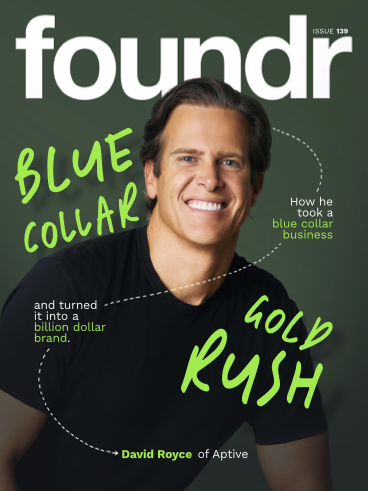
In the high-stakes world of modern entrepreneurship, success is often framed through the lens of Silicon Valley unicorns, flashy SaaS platforms, and disruptive AI startups. Yet, David Royce, the founder and chairman of Aptive Environmental, has quietly built a billion-dollar empire in a sector that most finance graduates wouldn’t touch with a ten-foot pole: residential pest control.
Royce’s journey is not one of ivy-league pedigree or venture capital funding. It is a masterclass in the power of "doing the thing nobody else wants to do." By mastering the art of the door-to-door sale and applying rigorous financial discipline to an "unsexy" blue-collar industry, Royce has transformed himself into one of America’s most effective wealth builders.
The Formative Years: From Self-Doubt to Superpower
David Royce’s narrative begins with a paradox. As a young student, he frequently struggled to focus, internalizing his academic challenges as a personal lack of intelligence. It wasn’t until adulthood that he realized he was living with undiagnosed ADHD.
"I struggled in school because I couldn’t focus unless I cared deeply," Royce explains. The turning point arrived in the sixth grade, courtesy of a teacher named Mrs. Luft. Her belief in his potential served as the catalyst for a radical shift in his work ethic. "She believed in me before I believed in myself," Royce recalls.

This validation became his internal compass. Later, as an adult, Royce learned to channel his ADHD into his professional life. He discovered that in stagnant or uninspiring environments, his condition was a liability, but in the fast-paced, high-stakes world of sales and entrepreneurship, it functioned as a "superpower." This transition from feeling like an outlier to viewing his cognitive style as an asset was the first step in his rise.
Chronology of a Billion-Dollar Climb
The Door-to-Door Crucible
Royce’s entry into the pest control industry was entirely accidental. While in college, he learned of a peer who had earned $25,000 in a single summer selling pest control services door-to-door. Seeking to replicate this success, Royce headed to Sacramento.
His start was disastrous. For the first week, he failed to close a single sale, earning zero commissions. While his colleagues were thriving, Royce was essentially performing "free cardio." Instead of returning home, he spent his weekends in bookstores, devouring sales literature and committing to 90 minutes of daily study. By the end of the summer, he was the top-performing rookie out of 200 representatives. He had learned his first great lesson: "Persistence is genius in disguise."
From Employee to Founder
While on the path toward a career in investment banking, a mentor suggested he launch his own pest control venture rather than working 100-hour weeks for others. Despite his initial hesitation—believing that success had to "wear a suit and have a skyline"—Royce chose the opportunity over the image.

He invested $300,000—savings he had earmarked for an MBA—into his first startup. He utilized his finance degree to identify gaps in the industry, asking his mentor to list 30 pain points in the business model. He spent the next several years methodically addressing those inefficiencies.
The Aptive Era and Strategic Exits
Royce’s strategy involved building companies, selling the customer base and technical staff to a strategic buyer, and then repeating the process with a refined team and increased capital. By keeping his core leadership team intact through multiple exits, he effectively turned his business model into a repeatable machine. Aptive Environmental, his fourth venture, eventually scaled to over $500 million in annual revenue.
Supporting Data: Why Blue-Collar is the New Gold
Royce emphasizes that the "unsexy" nature of blue-collar industries is precisely why they are so lucrative.
- Stealth Wealth: According to data cited by Royce, among the top 0.1% of income earners in the U.S.—those making upwards of $2.3 million annually—approximately 43% operate in traditional, blue-collar service industries.
- Recession Resistance: While tech trends fluctuate, essential services remain constant. "Bugs don’t read The Wall Street Journal," Royce quips.
- The Generational Opportunity: Millions of baby-boomer business owners are approaching retirement without clear succession plans. This creates an opening for entrepreneurs to acquire or innovate within these essential service sectors.
Official Insights: The Philosophy of Growth
Cash Flow is Reality
Royce’s most harrowing moment occurred during his first year of operation in Los Angeles. Despite rapid growth—7,500 new customers against a projection of 5,000—the company nearly collapsed. The issue was a timing mismatch: the business model required paying commissions upfront, while revenue arrived on a subscription basis.

"Revenues are vanity. Profits are sanity. But cash flow is reality," Royce notes. This crisis forced him to restructure his financing, a move that became the blueprint for his future success.
Culture as Design
Royce’s approach to company culture is strictly anti-superficial. While Aptive HQ features basketball courts, golf simulators, and luxury retreats, Royce argues that perks are merely "sugar," not "protein." The true foundation of his culture is his training program.
The most significant driver of retention and performance was his decision to distribute 25% of the company’s equity to his employees. "Turns out ownership is a far better retention tool than ping-pong tables," he says. This move resulted in life-changing financial outcomes for his team, with many employees using their exit bonuses to pay off mortgages and student loans.
Letting Go: The Architect, Not the Hero
A critical stage in Royce’s evolution was stepping down as CEO of Aptive. For ten years, he had been grooming a protégé to take his place. He realized that if he remained the "hero" who solved every problem, he was merely building a dependency, not a company.
"Leadership at that level means letting someone else win, even if they’d do it differently," he explains. He transitioned into an architectural role, focusing on the systemic health of the organization rather than day-to-day firefighting.
Implications: Lessons for the Next Generation
Royce’s story carries profound implications for aspiring entrepreneurs, particularly those who feel out of place in traditional corporate environments.
- Trust, But Verify: Even with seasoned executives, oversight is non-negotiable. Royce recounts a painful lesson involving a CFO hire who, despite a stellar resume, failed to grasp the nuances of the company’s cost structure, leading to a botched sale process.
- The Value of Discomfort: Royce’s early years at a fast-food restaurant taught him the value of standardized best practices—a lesson he applied to the pest control industry. Embracing "embarrassing" work often builds the foundation for future success.
- The Summit vs. The Climb: When asked about the "number"—the amount of money required for fulfillment—Royce dismisses the premise. He argues that entrepreneurship is not about the exit, but about the character, discipline, and expertise developed during the journey.
"If you don’t enjoy the climb, the summit is going to disappoint you," Royce asserts.
Ultimately, David Royce’s career proves that there is no such thing as an "unimportant" industry. By applying the rigor of high finance to the reality of the service sector, and by prioritizing the development of other leaders over his own ego, Royce has carved out a legacy that transcends his net worth. His journey remains a powerful reminder: the most lucrative opportunities are often hiding in plain sight, disguised as the work nobody else wants to do.
 Ammar Sabilarrohman
  Nana Muazin
  Lina Irawan