
 By Asro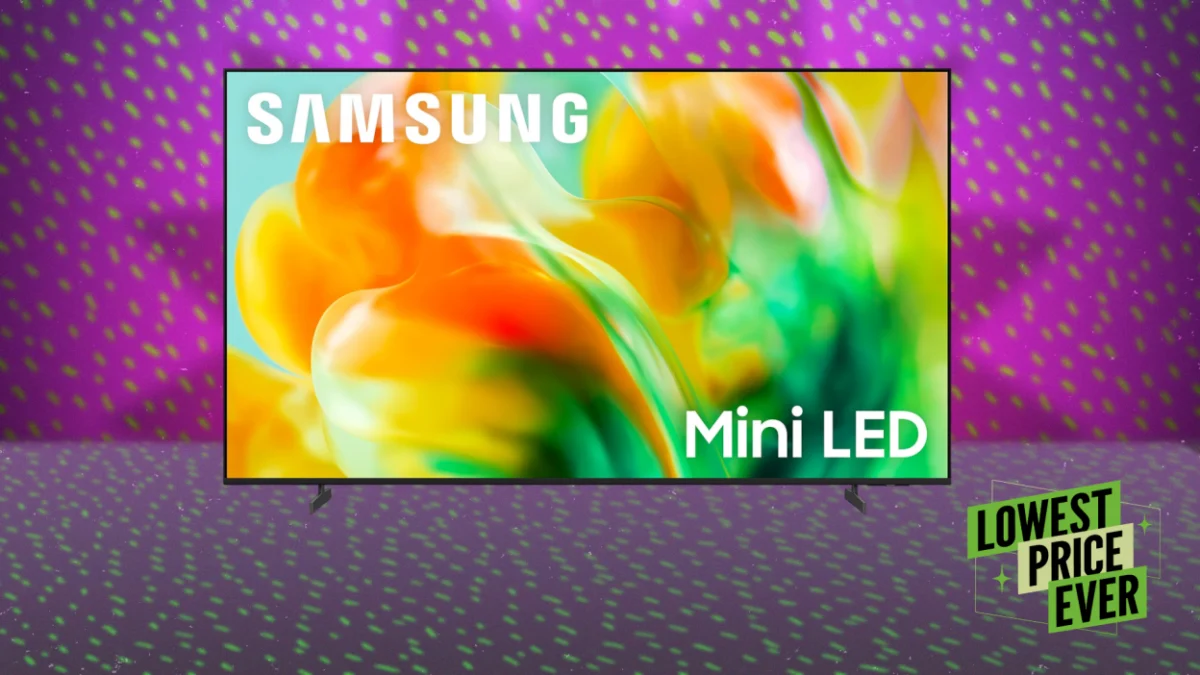
Main Facts
The consumer electronics market has long struggled with a distinct divide: buyers must often choose between prohibitively expensive, high-end home theater displays or budget-friendly panels that cut critical corners on performance, color accuracy, and processing power. Samsung’s entry into the 2026 television lineup aims to bridge this gap.
Currently, the 65-inch Samsung M80H TV is seeing a notable price drop, falling to $647.99 from its original list price of $797.99. For consumers seeking to upgrade from a smaller screen without dominating their living space, the 65-inch tier has traditionally represented the "sweet zone." It delivers a cinematic scale for movies and modern gaming rigs while remaining manageable on standard media consoles. Furthermore, for shoppers with more expansive entertainment rooms, the 75-inch model is also experiencing a steep promotion, currently discounted by 33%.
Despite its branding, the M80H occupies a unique entry-level space in the 4K smart TV ecosystem. It relies on a Mini LED backlight system, incorporates Samsung’s Tizen smart platform, and features an array of proprietary Vision AI capabilities. However, a closer look at its hardware specs reveals a nuanced product—one that trades certain advanced panel technologies, such as local dimming, in exchange for an aggressive price point, a robust refresh rate, and advanced AI-driven upscaling.
Chronology
To understand where the Samsung M80H fits within the modern home entertainment landscape, it is helpful to trace the evolution of display technology leading up to its release:
- The Transition to Mini LED (2021–2024): In previous years, Mini LED technology was strictly reserved for flagship television tiers. Manufacturers used thousands of tiny LEDs to dramatically improve contrast and peak brightness, closing the gap between traditional LCDs and organic light-emitting diode (OLED) panels.
- The Rise of AI Processors (2024–2025): As streaming media diversified in resolution—ranging from legacy standard-definition broadcasts to native 4K HDR streams—television manufacturers began integrating dedicated neural processing units (NPUs) directly into mid-range and entry-level sets. Samsung’s development of the NQ4 AI processor line represents this era, automating upscaling and color correction on the fly.
- Early 2026 Product Launch: Samsung officially introduced the M80H series as a versatile, accessible 4K smart TV meant to capture mainstream consumers looking for modern gaming and streaming integrations without crossing into thousand-dollar territory.
- September 2026 Price Correction: Following its initial rollout, retail channels implemented significant discounts ahead of the late-year shopping season, dropping the 65-inch iteration to under $650 and offering deep discounts on the larger 75-inch configuration.
Supporting Data and Hardware Specifications
When evaluating the Samsung M80H through an analytical lens, its spec sheet reveals a mix of high-end software features and budget-conscious hardware limitations.
Performance and Processing
At the heart of the M80H is the NQ4 AI Gen2 processor. This chip is tasked with managing the display’s upscaling algorithms, ensuring that lower-resolution content—such as standard 1080p cable broadcasts or compressed web videos—is mapped cleanly onto the native 4K panel.
The television also supports HDR10+ alongside Auto HDR Remastering, a tool designed to dynamically inject high dynamic range characteristics into older standard dynamic range (SDR) content. Colors are managed via Samsung’s Pure Spectrum Color technology, which aims to keep palettes looking natural rather than oversaturated.

Gaming Capabilities
For console and PC gamers, the M80H offers several features typically found on more expensive monitors:
- Native 144Hz Refresh Rate: Capable of handling high-framerate gameplay from modern consoles and gaming PCs.
- Samsung Gaming Hub: A centralized portal that grants access to cloud gaming services without requiring a dedicated console.
- HDMI 2.1 and Variable Refresh Rate (VRR): Includes support for AMD FreeSync Premium to minimize screen tearing and input lag during fast-paced sequences.
Connectivity and Smart Ecosystem
The television runs on the latest iteration of the Tizen interface, providing access to a vast catalog of mainstream streaming applications, web browsing tools, and smart home dashboards. Built-in voice control via Alexa and native Apple AirPlay support come standard.
However, physical connectivity reveals some cost-cutting measures:
- The M80H features only three HDMI ports, which may limit users with multiple consoles, soundbars, and streaming devices.
- Despite utilizing a Mini LED backlight structure, the panel does not include local dimming zones.
Implications and Industry Reactions
The release and subsequent discounting of the Samsung M80H highlight a broader shift in how manufacturers market entry-to-mid-range displays. By slapping "Mini LED" and "AI" onto the spec sheet, brands can attract consumers looking for cutting-edge terminology. However, tech analysts and consumer advocates advise buyers to look past the buzzwords.
The Contrast Trade-Off
The omission of local dimming is arguably the M80H’s most significant technical compromise. Without local dimming zones to individually dim sections of the backlight, dark movie scenes can appear washed out or gray, particularly when viewed in a dark room. Furthermore, peak HDR brightness is inherently limited compared to true high-end Mini LED displays, meaning the TV may struggle in exceptionally bright living spaces with heavy ambient sunlight.
Gaming Performance Nuances
While the 144Hz refresh rate and AMD FreeSync support make it an appealing option for budget-conscious gamers, display experts note that response times and pixel transitions can still introduce minor motion blur during ultra-fast tracking shots. It represents a substantial upgrade over basic 60Hz budget televisions, but competitive esports players or cinematic purists may find the motion handling short of perfection.
Market Position: Who is This For?
Ultimately, the implications of the M80H’s current sub-$650 pricing strategy point to a clear target demographic:
- The Casual Consumer: For everyday cable viewing, standard streaming apps, and casual background viewing, the combination of a sharp 4K panel, reliable upscaling, and a clean Tizen interface makes it an exceptional value.
- The Space-Conscious Upgrader: Stepping up to 65 inches provides a dramatic theater-like increase in screen real estate over legacy 50-inch or 55-inch models without overwhelming a standard room layout.
- The Bargain Hunter: At nearly $150 off its original MSRP—with an even steeper discount on the 75-inch model—buyers willing to overlook the lack of local dimming and limited HDMI port selection will find a feature-rich, modern smart TV that punches above its price class for everyday tasks.
 Nana Wu
  Azzam Bilal Chamdy
  Muslim