
 By Dwi Wanna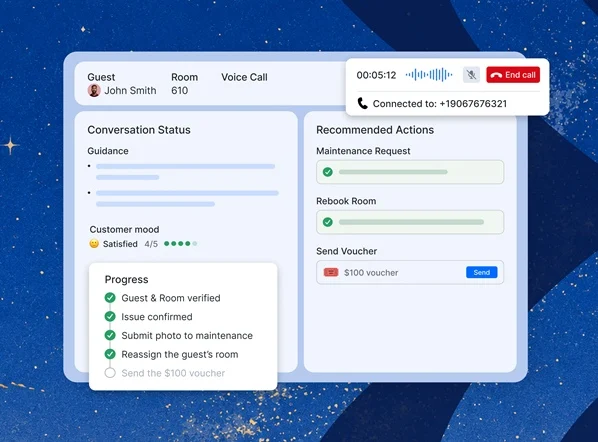
In the rapidly evolving landscape of customer experience (CX) technology, the divide between digital engagement and voice support has long been a source of operational friction. While digital channels like SMS, chat, and email have increasingly benefited from sophisticated, agentic AI—systems capable of autonomous reasoning and execution—live voice interactions have largely remained trapped in a cycle of passive, reactive coaching.
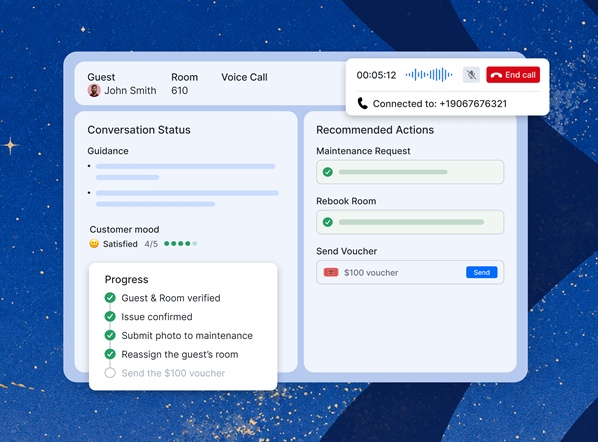
Quiq, a leader in the agentic AI platform space, is looking to dismantle this divide with the launch of "Voice Assist." By extending its proven digital AI infrastructure to live telephony, Quiq is moving beyond the "whisper-barge" tools that have dominated the market, introducing a system that not only guides human agents in real time but actively performs tasks on their behalf without forcing them to toggle between applications.
Main Facts: A New Paradigm for Voice Support
The core innovation of Quiq’s Voice Assist lies in its departure from the rigid, script-based legacy systems that have plagued contact centers for decades. Traditional "agent assist" tools operate on static, predefined decision trees. If a customer deviates from the expected script, these systems often break, leaving the human agent to fumble through manual processes.
Voice Assist operates on the same "agentic" principles that govern Quiq’s digital AI. It is designed to be context-aware, adapting dynamically to the shifting nuances of a live conversation. More importantly, it bridges the gap between suggestion and execution. While typical tools might prompt an agent to send a tracking link, Quiq’s Voice Assist can autonomously trigger the dispatch of that link, order details, or even a promotional gift voucher directly into the customer’s active interaction thread while the agent remains focused on the voice conversation.
This platform unification ensures that every AI-driven action is subject to the same "Verified Intelligence" guardrails that secure Quiq’s chat and email channels. By centralizing knowledge sources and process guides, Quiq eliminates the need for IT teams to manage parallel AI environments, ensuring consistency across every touchpoint of the customer journey.
Chronology of Development: From Digital to Voice
The trajectory of Quiq’s development reflects the broader maturation of the AI industry.
- Foundation Phase: Quiq established its reputation by mastering asynchronous digital channels. By building a robust platform that handles SMS, web chat, and email, the company focused on creating AI that could maintain context, understand sentiment, and execute complex backend workflows.
- The Governance Milestone: As organizations scaled their use of AI, the need for "Verified Intelligence"—a layer of governance that prevents hallucinations and ensures compliance—became paramount. Quiq integrated these guardrails early, setting the stage for high-stakes, enterprise-grade deployments.
- Expansion Phase: With a proven track record in digital, the company identified a critical bottleneck: the disparity in quality between digital and voice support. Agents were performing at high levels in chat, empowered by AI, yet were reverting to manual, cumbersome processes as soon as a customer called in.
- Integration (Current): Today’s launch of Voice Assist represents the culmination of this strategy. Rather than building a "voice-only" point solution, Quiq has ported its existing AI engine to the telephony environment, effectively treating voice as just another channel within a unified, governed ecosystem.
Supporting Data: Why Agentic AI Matters
The business case for integrating agentic AI into voice support is underscored by significant performance gains observed in Quiq’s digital deployments. Organizations currently utilizing Quiq’s AI for chat and email report a 20% reduction in handle time. This is not merely an efficiency metric; it translates directly into cost savings and increased throughput.
Perhaps more importantly, the "human-in-the-loop" satisfaction rates are telling. Quiq’s internal data shows an associate satisfaction rate of 4.82 out of 5. In an industry notorious for high agent turnover and burnout, these numbers suggest that AI is not displacing the human worker but, rather, removing the "drudge work" that makes contact center roles stressful.
By automating the mundane—such as searching for order numbers, updating CRM records, or drafting follow-up emails—Voice Assist allows agents to focus on the high-value emotional labor of customer service: empathy, complex problem solving, and building rapport.
Official Responses and Strategic Vision
Mike Myer, CEO and founder of Quiq, views the launch as a decisive answer to the industry’s "suggestion-only" problem. During the unveiling of Voice Assist, Myer highlighted the critical distinction between passive coaching and active collaboration.
"Suggesting the right answer to the human agent is easy," Myer noted. "Any vendor can do that. What we built is an AI that can also act on it, like sending a real message to the customer during the call on the same thread, while the agent stays on the phone. That’s the gap we closed for our customers."
For Myer, the goal is to transform the agent from a data-entry clerk into a conversation manager. By centralizing the action-taking capability, Quiq is positioning itself as a strategic partner for enterprises that cannot afford the risks associated with siloed, unverified AI deployments.
Implications: The Future of the Contact Center
The introduction of Voice Assist carries profound implications for the future of enterprise customer service.
1. The Death of the "Point Solution"
For years, contact centers have been stitched together by a "Frankenstein" architecture: a CRM from one vendor, a telephony system from another, and an AI overlay from a third. Quiq’s strategy suggests that the future belongs to unified, agentic platforms. By providing a single governance layer across all channels, companies can now ensure that a customer’s experience is consistent, whether they are typing a message or speaking on a phone.
2. Redefining "Agentic"
The term "agentic" has become a buzzword, but Quiq is refining the definition. A system that only suggests is an assistant; a system that executes is an agent. By moving the threshold of AI utility from "suggesting" to "doing," Quiq is effectively raising the bar for what enterprise customers will demand from their software providers in the coming fiscal years.
3. Operational Resilience
The reliance on "Verified Intelligence" is a critical differentiator. In an era where AI hallucinations can lead to brand damage, legal liability, and customer churn, the ability to wrap AI in a controlled, governed environment is no longer optional. Because Voice Assist leverages the same guardrails as the company’s digital tools, enterprises can roll out voice-based AI with the confidence that the system won’t "go rogue" or provide inaccurate, unverified information.
4. The Human-AI Partnership
The industry has long feared that AI would eventually render human agents obsolete. Quiq’s model suggests a different outcome: the augmentation of the human agent. By offloading the mechanical, administrative tasks to an AI that operates in the background, the human agent is freed to deliver the uniquely human touch that customers crave during complex interactions.
Conclusion: A New Standard for Enterprise CX
As organizations like Roku, Staples, Brinks Home, Terminix, and Panasonic continue to navigate the complexities of digital transformation, the need for reliable, action-oriented AI has never been greater. Quiq’s entry into the voice space with a fully "agentic" capability is not just a product update; it is a signal that the era of passive AI is coming to an end.
The capability is available immediately, providing a turnkey solution for enterprises looking to unify their customer experience strategy. For those evaluating their current stack, the message is clear: if your AI can only talk but cannot act, you are paying for only half the value. By closing the loop between advice and action, Quiq is setting a new standard for what it means to truly provide "customer service" in the age of intelligence.
For more information on how to transition from legacy voice tools to an agentic AI architecture, stakeholders and prospects can visit www.quiq.com/demo to begin a consultation. As the market continues to shift toward autonomous, governed AI, Quiq’s unified platform remains a bellwether for the future of the modern, efficient, and empathetic contact center.
 Lina Irawan
  Laily UPN