
 By Ali Ikhwan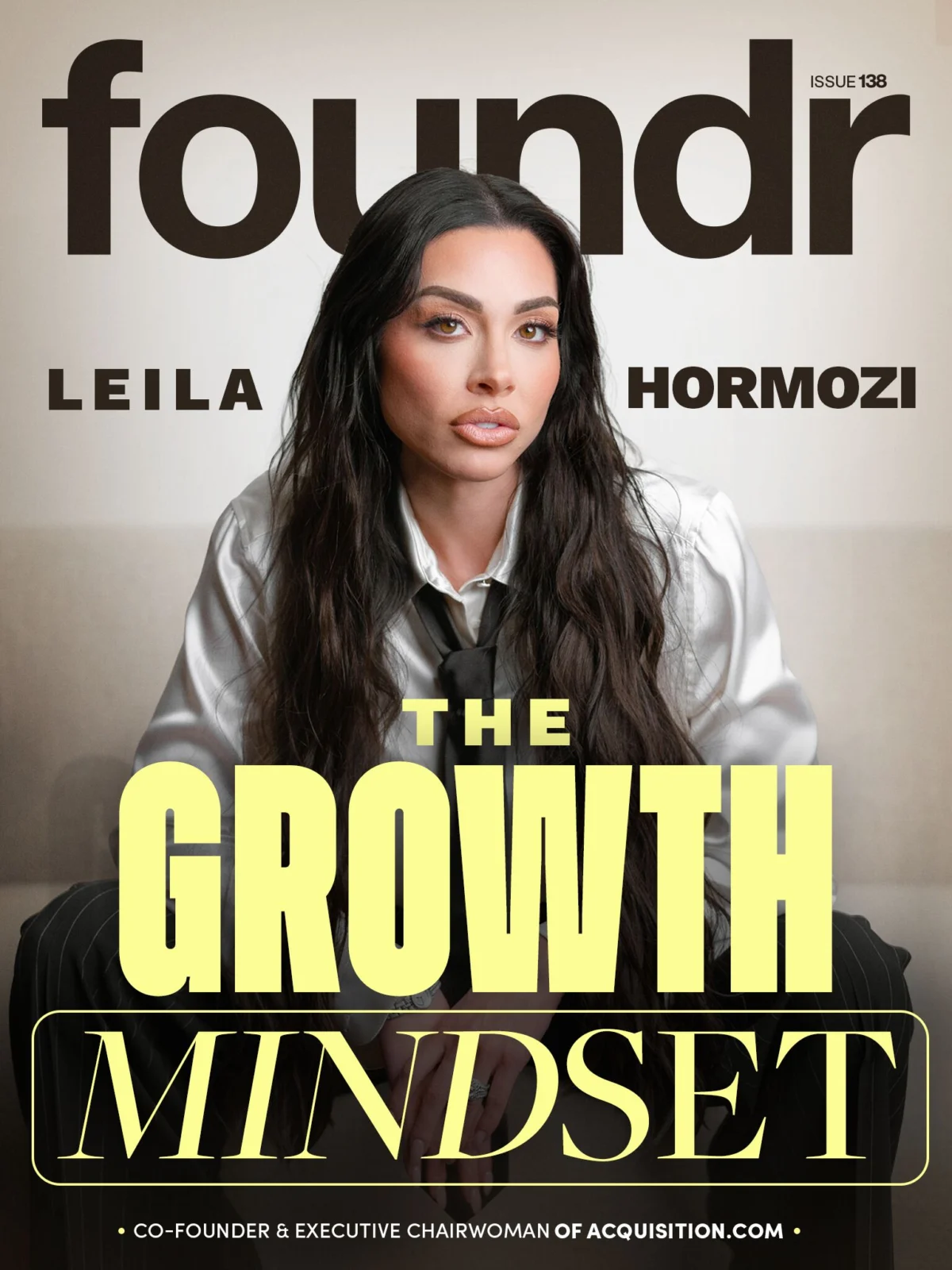
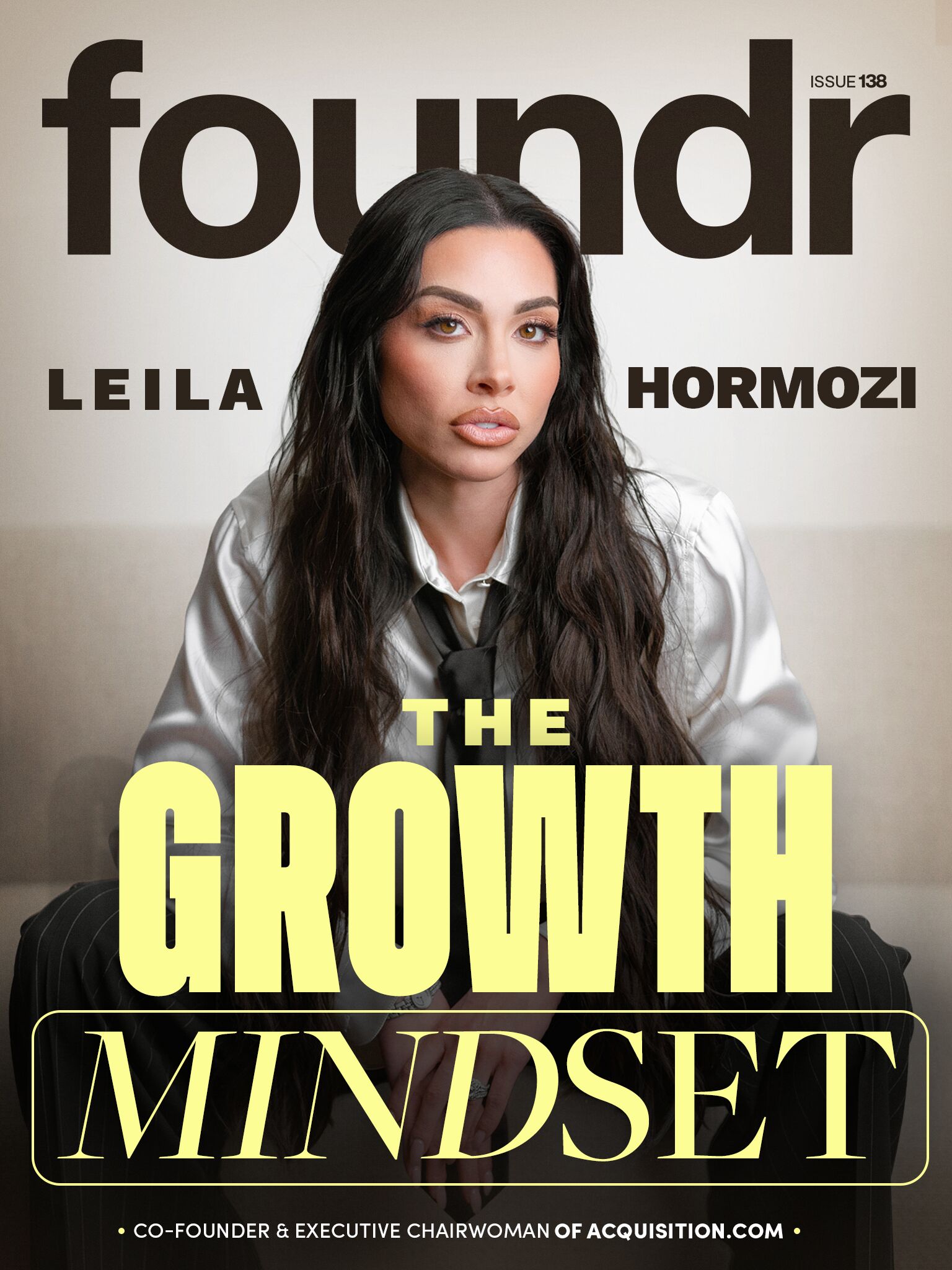
Leila Hormozi does not sugarcoat her past. In an era of curated, polished entrepreneurial success stories, the co-founder of Acquisition.com stands out for her brutal honesty. She speaks openly about her history of addiction, six arrests in eighteen months, and a period of her life defined by chaos. For Hormozi, these aren’t just anecdotes—they are the foundational elements of the grit and self-awareness that helped her scale a business empire to over $250 million in annual revenue before her 30th birthday.
In a recent, expansive interview with Foundr CEO Nathan Chan, Hormozi detailed her transition from a struggling personal trainer with $5,000 in her bank account to one of the most respected operators in the digital business landscape. Her story is a masterclass in the necessity of radical self-leadership, the mechanics of scaling companies, and the painful truth that growth is impossible without the willingness to change.
The Turning Point: When Pain Becomes Catalyst
The chronology of Hormozi’s life is marked by a stark division: the era of destruction and the era of construction. Reflecting on her youth, she admits she was "being a victim of her life" rather than taking accountability.
"I think at that point I was being a victim of my life rather than taking responsibility for things in my life," Hormozi explains. "A lot of things had happened with my family. I was just really angry. And so I drank, I did drugs."
The cycle of self-destruction culminated in her sixth arrest. She recalls waking up at her father’s house with no memory of the previous night’s events. Instead of the expected confrontation, her father offered a sobering, quiet intervention. He told her plainly that she was going to kill herself if she continued on her current path.
That moment was the catalyst. It wasn’t a sudden burst of motivation or a divine epiphany; it was the realization that she was no longer a child and that her actions carried real-world, irreversible consequences. She returned to her own home, looked at herself in the mirror, and made a singular, desperate vow: she refused to be that person anymore.

When asked why this specific moment succeeded where others had failed, Hormozi’s answer is characteristically pragmatic. "It was at the point where the pain of change was less than the pain of remaining the same," she notes. "That’s when humans tend to make a change. I didn’t know what was going to happen, but I just said nothing is worse than how I feel right now."
From Survival Mode to Scaling Empire
Following her realization, Hormozi didn’t just pivot; she completely dismantled her life. She cleared her apartment of unhealthy influences, abandoned her old habits, and immersed herself in the works of personal development figures like Tony Robbins and Jim Rohn.
She moved across the country to start over, finding work as a personal trainer. This period of her life, characterized by extreme scarcity, provided the "combat training" necessary for her future role as an executive. With $5,000 in savings and $1,500 in monthly rent, there was no room for error. She walked to local gyms to secure a job, focusing on minimizing overhead and maximizing effort.
This phase taught her the core tenets of business survival: selling, client acquisition, and fiscal discipline. It also solidified her philosophy on leadership: "I am such a fanatic about leadership, starting with self-leadership, because you cannot lead others unless you can lead yourself. And that’s what kicked me off on that journey."
The Partnership and the Peril of Growth
When she met her husband, Alex Hormozi, on Bumble, the professional spark was immediate. He pitched her on his business, Gym Launch, on their first date. She accepted, viewing it through a lens of calculated risk: "The worst-case scenario is I end up right back where I am now, needing to build up my client rosters again. I can accept that."
The early days of Gym Launch were far from the polished success story often presented in business media. The company faced a gauntlet of crises: a fraudulent business partner who drained their funds, merchant processors that locked their accounts on Christmas Eve, and the constant pressure of supporting staff with limited resources.
"I had burner phones with different accounts on them because that worked at the time," Hormozi admits. "We scrounged everything possible."
Despite the chaos, they scaled Gym Launch from zero to $50 million in just twenty months. However, this explosive growth brought its own set of internal fractures. Hormozi points to her management of the company’s internal culture—specifically the hiring process—as a major learning curve.
"We had a 4.9 Glassdoor rating up until I learned a very hard lesson, which is that you cannot let inexperienced managers make hiring projections," she explains. In a misguided attempt to staff up, they hired 35 people when they only needed five. The resulting layoffs were handled poorly, and the company’s reputation plummeted. "My Glassdoor went from a 4.9 to a 2.2," she recounts.
The Philosophy of the Coach
Hormozi’s evolution as a leader has been defined by her transition from wanting to be "liked" to wanting to be "effective." She realized that her desire for empathy often masked a failure to provide honest, critical feedback.
"I realized it’s really not better to be nice in that way, because the two personalities have the same effect on people long term," she says. "Whether I’m yelling at my team, or I’m being so nice I don’t tell them the truth, the same result occurs. That person doesn’t know what they need to do better."
She began to model her leadership style after basketball coach John Wooden. She adopted the mindset that her role as a leader is to act as a coach: identifying where a team member is, where they need to be, and providing the roadmap to close the gap. "I was being deceptive to spare my own feelings of being uncomfortable," she reflects.
Supporting Data: The Pillars of Capacity
Hormozi’s approach to business scaling is systematic, focusing on four distinct pillars of capacity:
- Financial Capacity: Having the resources to weather storms.
- Personnel Capacity: Hiring the right talent to execute the vision.
- Systems Capacity: Building the processes that allow for growth without chaos.
- Thinking Capacity: Ensuring the leadership team has the mental bandwidth to solve complex problems.
She argues that most business failures are not the result of poor strategy, but of poor execution. "Most businesses don’t fail because of a bad strategy. They fail because they have poor execution, and they have nobody to tell them what good execution looks like," she asserts.
Implications for Future Entrepreneurs
Hormozi’s story holds profound implications for the next generation of founders. She emphasizes that culture is not something a company "has," but something a founder "is."
"You are the culture. The CEO, the founder is the heartbeat of the business," she says. "It was not until I realized that every single thing I did was heard through a megaphone and seen through a microscope by my team [that I understood the responsibility]."
For those without significant capital or brand recognition, Hormozi suggests that the "offer" is the key to talent acquisition. For her, that offer is growth. By creating an environment where employees are pushed to their limits and leave better than they arrived, she has managed to attract top-tier talent despite the unconventional origins of her businesses.
Conclusion
Leila Hormozi’s journey from a life of legal and personal turmoil to the heights of the business world is a testament to the power of radical accountability. Her story serves as a reminder that the same intensity and "capacity for excess" that can lead to destruction can, if redirected, fuel massive, world-class success.

"Do you think we would have had the massive success without the massive failures? No," Hormozi concludes. "The same muscle that allows you to succeed at that level and take those risks also means you’re gonna fall on your face. It’s a rite of passage."
Ultimately, Hormozi’s message is one of transformation. By accepting that her past was a direct result of her own choices, she gained the power to choose a different future. Whether it is through her portfolio companies or her public insights, she continues to advocate for a brand of leadership that is as rigorous as it is honest—proving that the most effective way to lead others is to first master the art of leading oneself.
 Neng Nana
  Siti Muinah
  Asro
Asro 