
 By rifanmuazin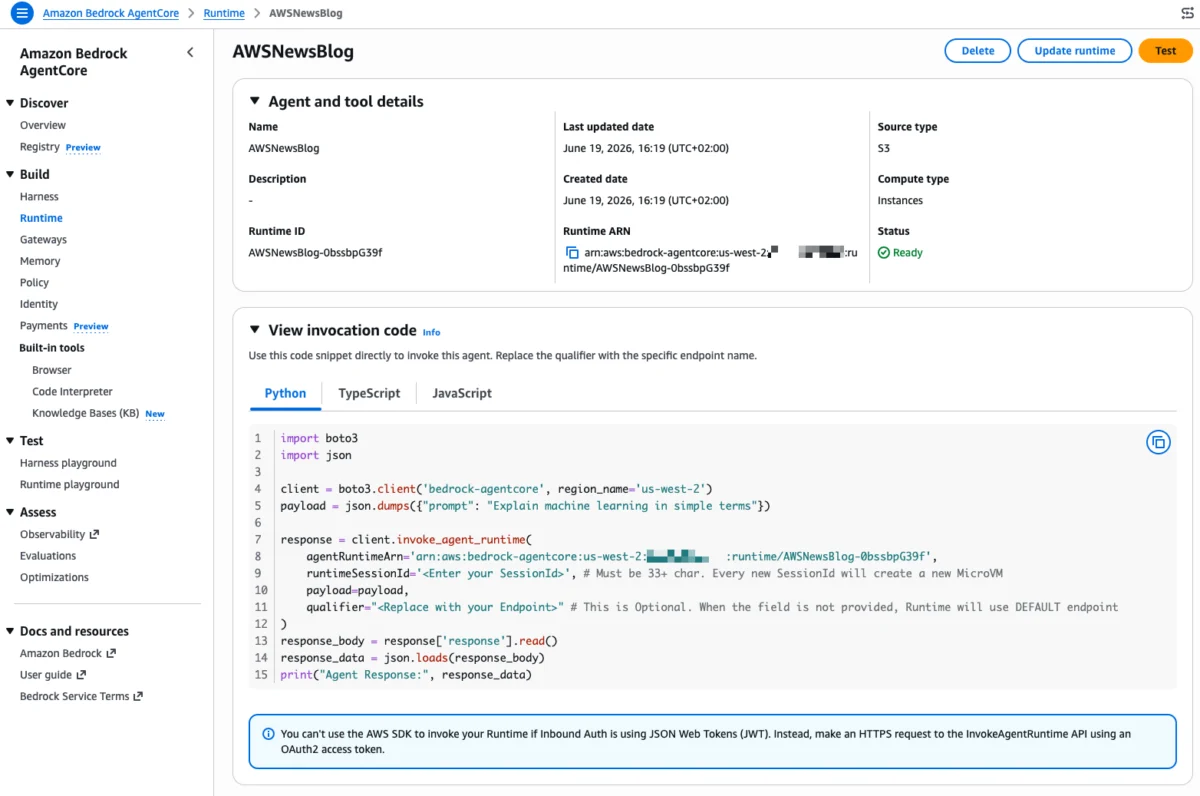
SEATTLE — As enterprise artificial intelligence initiatives transition rapidly from experimental sandboxes to mission-critical production environments, the underlying infrastructure requirements have shifted dramatically. Building intelligent agents that operate reliably outside of controlled demonstrations requires solving complex engineering problems: maintaining state across workflows that span hours or days, coordinating disparate systems, managing secure multi-agent communication, and provisioning heavy compute resources like Graphics Processing Units (GPUs) for specialized workloads.
Addressing these enterprise-grade demands, Amazon Web Services (AWS) has officially announced the launch of runtime instances for Amazon Bedrock AgentCore Runtime. This new, complementary compute capability is engineered to provide persistent, fully managed infrastructure purpose-built for complex, long-running, and multi-agent AI architectures.
Main Facts: What Are Bedrock AgentCore Runtime Instances?
The introduction of runtime instances marks a significant evolution in how developers can deploy generative AI agents on AWS. Previously, developers leveraging Amazon Bedrock AgentCore relied primarily on runtime microVMs—lightweight, fully managed environments designed for invocations running up to 8 hours with session storage. While microVMs excel at fast-scaling, shorter-duration tasks, more intensive agent workloads demand deeper resource control.
Runtime instances deliver AWS-managed Amazon Elastic Compute Cloud (Amazon EC2) infrastructure designed specifically to overcome these bottlenecks. Key technical capabilities include:

- Multi-Agent Host Sharing: Organizations can deploy multiple autonomous agents within a single runtime environment on the same host. Each agent maintains its own unique dependencies and artifact types while collaborating seamlessly.
- Extended Session Persistence: Agent collaboration sessions can now persist for up to 14 days, allowing workflows to run continuously, hibernate overnight, and resume operations seamlessly.
- GPU Acceleration: The service natively supports GPU-enabled instance types, unlocking high-performance compute capacity for demanding tasks such as machine learning model fine-tuning, complex data processing, code compilation, and computer vision or GUI automation.
- Cost-Optimized Lifecycle Management: Teams can stop and restart sessions on demand to conserve financial resources during idle periods.
- Long-Term Memory Integration: Runtime instances integrate natively with Amazon Elastic Block Store (Amazon EBS) and AgentCore Memory, giving agents persistent recall across individual sessions and distinct computational environments.
Chronology: The Evolution of Agentic Infrastructure on AWS
The release of runtime instances is the latest milestone in AWS’s ongoing strategy to streamline the deployment lifecycle for autonomous AI systems.
- The Prototype Era: Historically, engineering teams building multi-agent systems faced the heavy burden of "infrastructure plumbing." Deploying agents that required multi-day operational windows or specialized GPU acceleration forced developers to manually provision EC2 instances, configure complex networking topologies, implement bespoke session management layers, and stitch together custom monitoring scripts.
- The MicroVM Phase: AWS initially introduced Amazon Bedrock AgentCore Runtime microVMs to offer a managed, serverless approach for short-to-medium-length agent tasks, drastically lowering the barrier to entry for production deployments.
- The Enterprise Integration Phase (Today): Recognizing that advanced AI use cases—such as automated software engineering pipelines, continuous compliance auditing, and multi-step enterprise research—require persistent hardware and shared state environments, AWS has rolled out runtime instances. This fills the gap between serverless execution and dedicated enterprise infrastructure, bringing managed convenience to heavy-duty agentic workflows.
Supporting Data: Flexible Architecture and Compatibility
One of the most notable aspects of the new runtime instances is its framework-agnostic design. AWS has engineered the service to avoid vendor lock-in regarding agent orchestration software or underlying foundation models.
Framework and Model Agnosticism
Developers are free to build using any popular agent framework—including CrewAI, LangGraph, LlamaIndex, and Strands—and interface with any preferred model, such as Anthropic’s Claude series. Packaging an agent requires minimal overhead: developers simply implement an @app.entrypoint decorator and package their application into a standard zip file or container image.
A Complementary Dual-Compute Model
AWS has structured AgentCore Runtime to support two distinct compute options that can operate independently or in tandem:
- Runtime MicroVMs: Ideal for lightweight orchestrator agents that handle API routing, task dispatching, and result aggregation due to their rapid scaling characteristics.
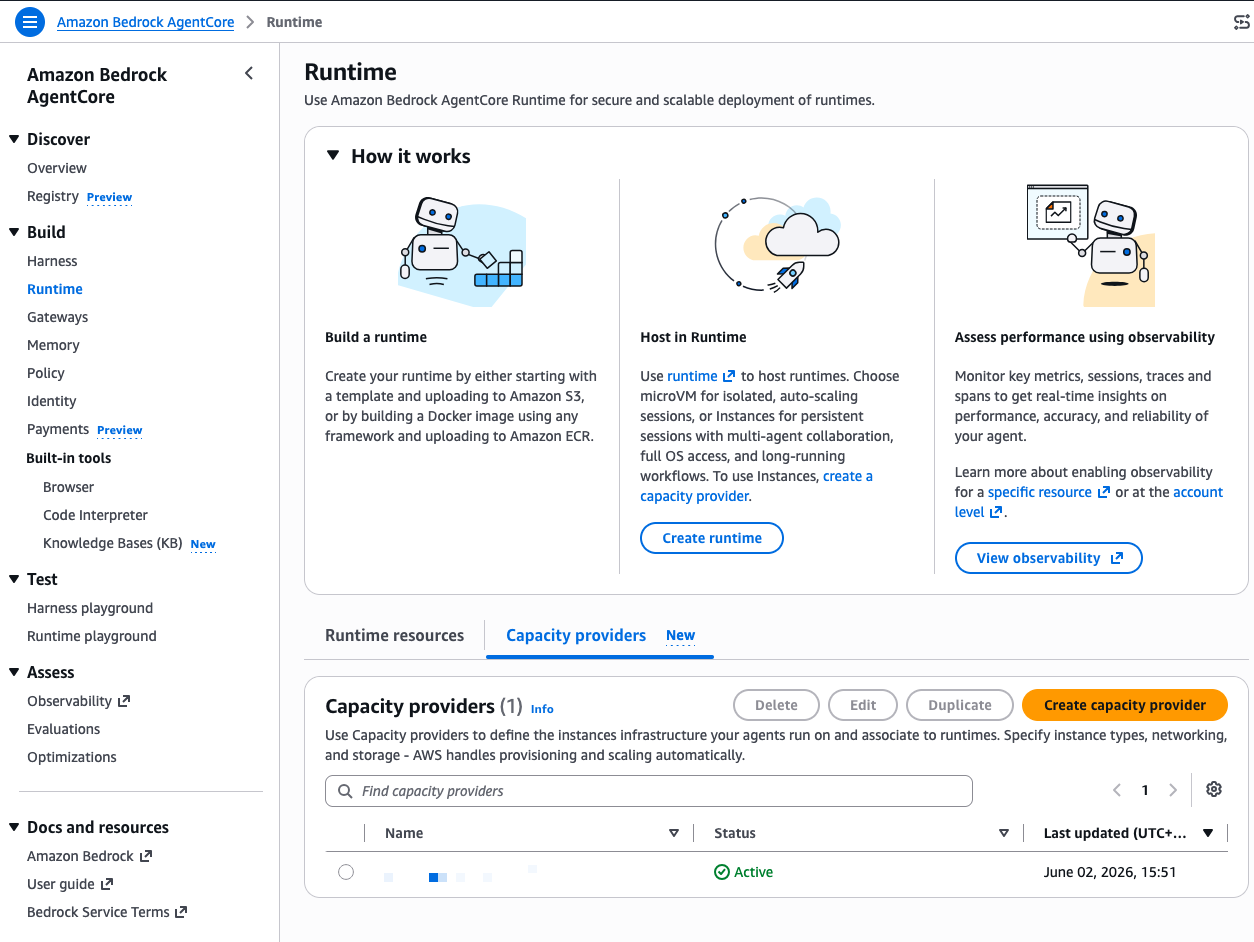
- Runtime Instances: Ideal for specialized worker agents that require direct operating system access, persistent local storage, and heavy computation (e.g., security scanning, code execution environments).
By combining these options, an orchestrator running on a microVM can dynamically distribute tasks to specialized worker agents running on dedicated runtime instances, creating a balanced, highly efficient enterprise AI architecture.
Official Implementation Demonstration: A Two-Agent Code Review Pipeline
To demonstrate the practical application of runtime instances, AWS showcased a collaborative architecture featuring two distinct agents: a Code Writer Agent and a Code Reviewer Agent.
Rather than exchanging messages via network APIs or passing large data payloads back and forth, both agents operate on the same host and share a localized file system tied to a specific session ID.
1. The Code Writer Agent
Powered by Anthropic’s Claude Sonnet via the Strands framework, the code writer accepts natural language prompts, generates Python code, and writes it directly to a shared session directory:
writer = Agent(
    model="us.anthropic.claude-sonnet-4-5-20250929-v1:0",
    system_prompt=(
        "You are a senior Python engineer. "
        "Given a task, return ONLY a single Python code block — no prose."
    ),
)

@app.entrypoint
def handler(event, context):
    task = event.get("task") or event.get("prompt")
    session_id = getattr(context, "session_id", None) or event.get("session_id")
    session_dir = SHARED_DIR / session_id
    session_dir.mkdir(parents=True, exist_ok=True)

    code = str(writer(task))
    (session_dir / "code.py").write_text(code)

    return "agent": "writer", "wrote": str(session_dir / "code.py"), "code": code
2. The Code Reviewer Agent
Operating within the exact same session environment, the code reviewer accesses the file path written by its partner agent, conducts an analysis, and outputs structured feedback:
reviewer = Agent(
    model="us.anthropic.claude-sonnet-4-5-20250929-v1:0",
    system_prompt=(
        "You are a strict Python code reviewer. "
        "Given code, return 3 bullet points: bugs, style, suggestions."
    ),
)

@app.entrypoint
def handler(event, context):
    session_id = getattr(context, "session_id", None) or event.get("session_id")
    code_path = SHARED_DIR / session_id / "code.py"
    code = code_path.read_text()
    review = str(reviewer(f"Review this code:nncode"))

    return "agent": "reviewer", "read": str(code_path), "review": review
Step-by-Step Deployment Workflow
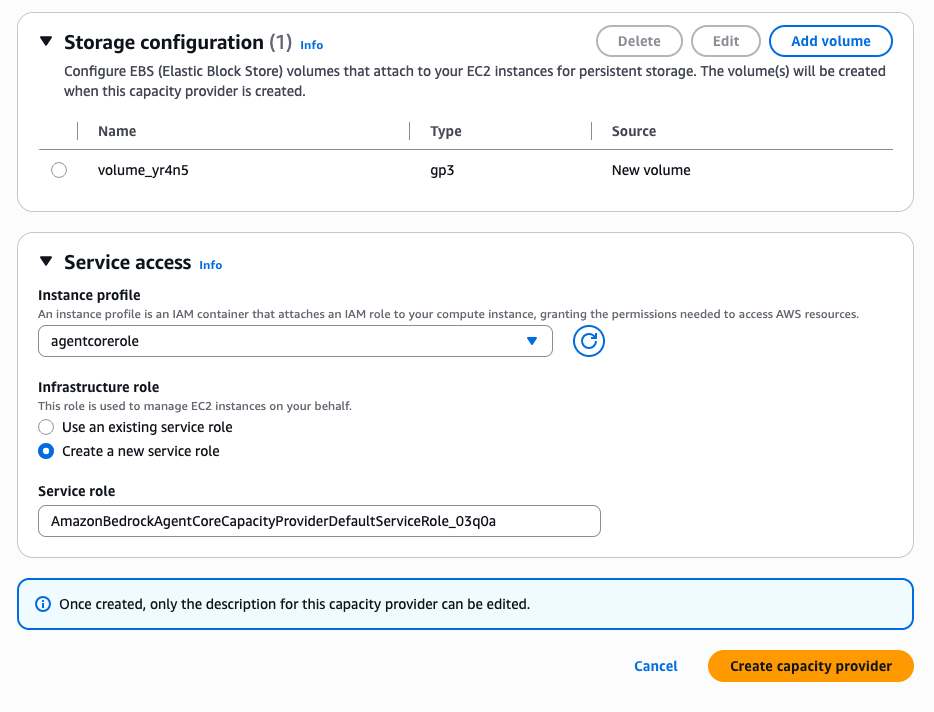
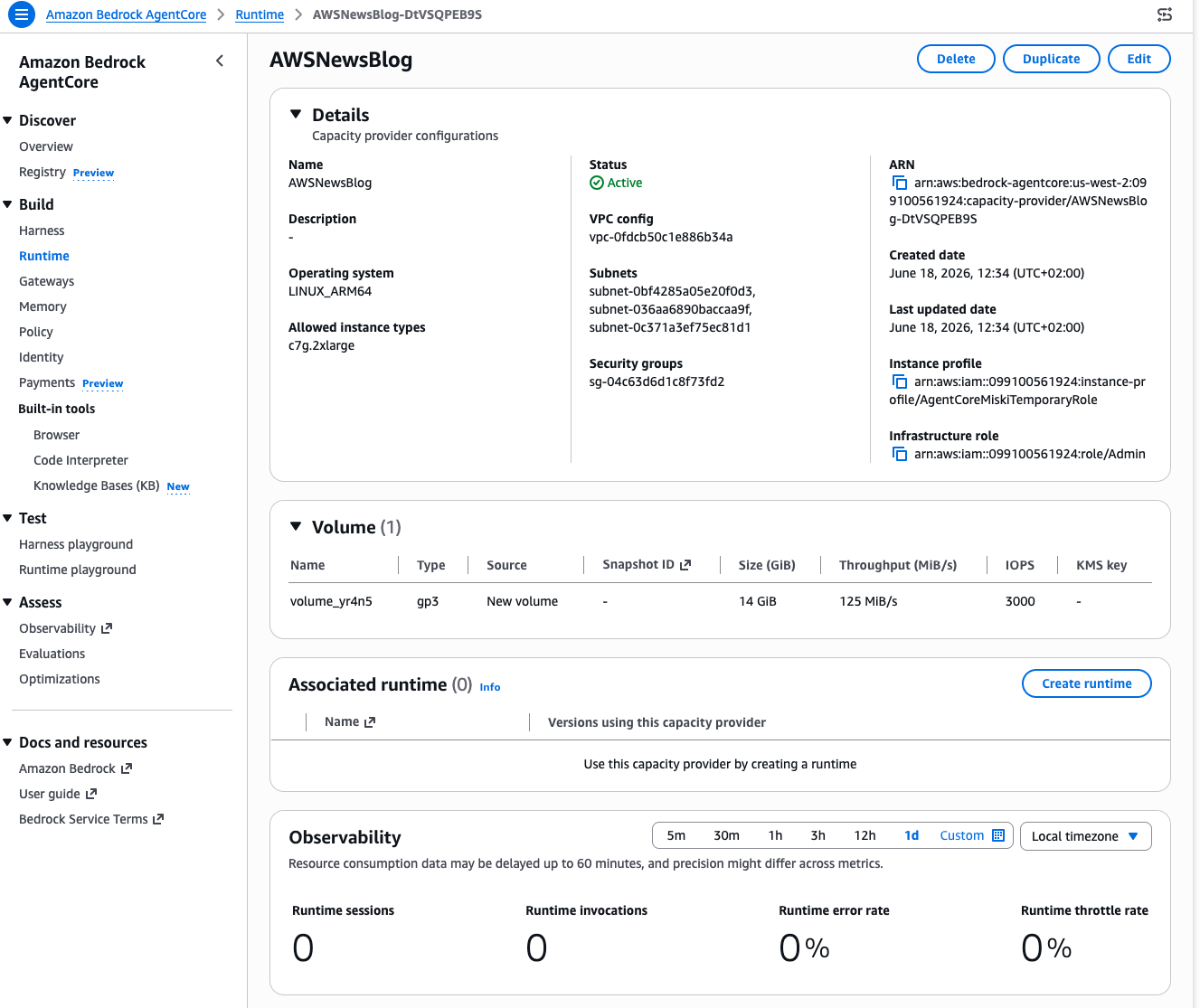
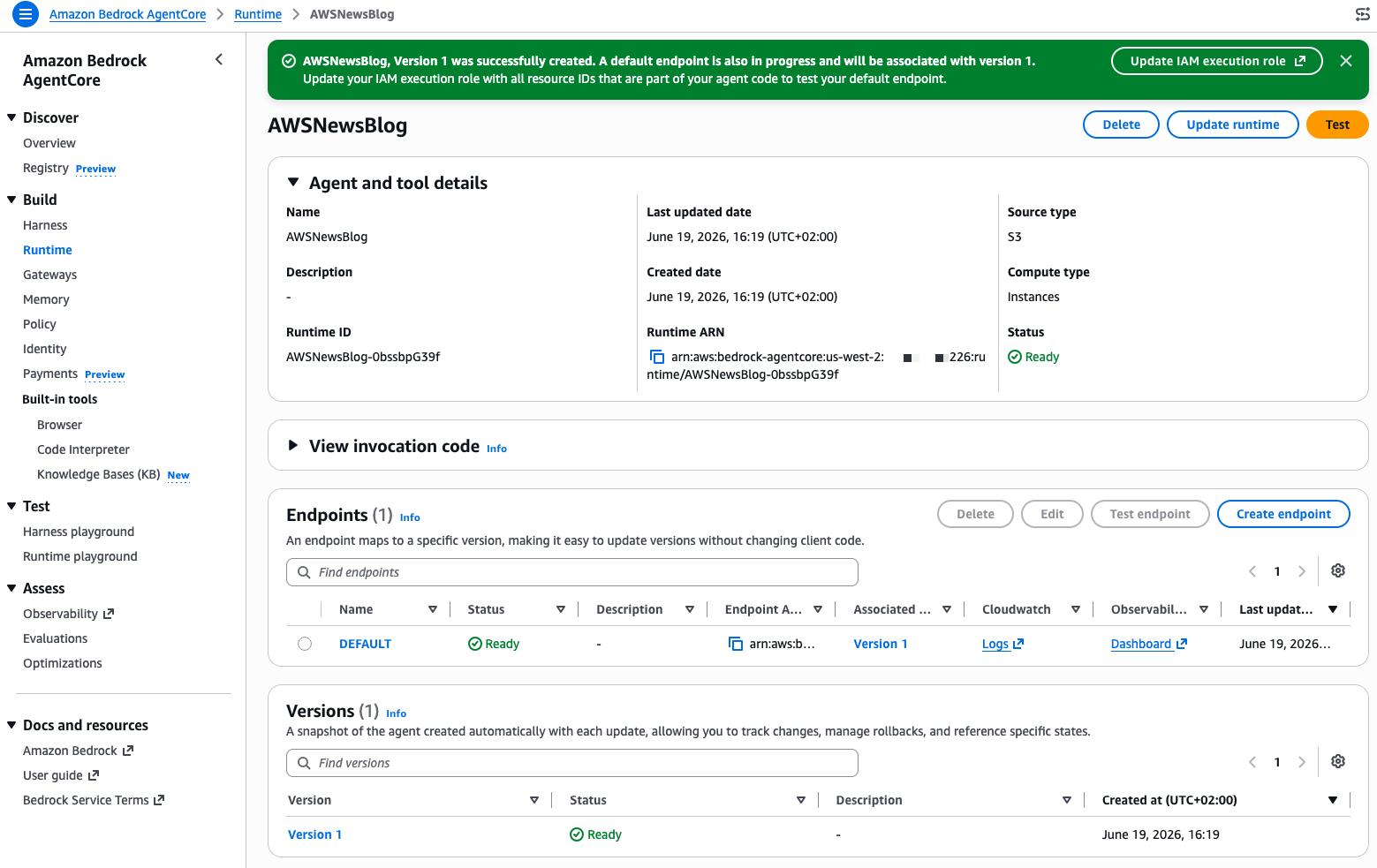
Deploying this architecture via the AWS Management Console involves a straightforward, three-step process:
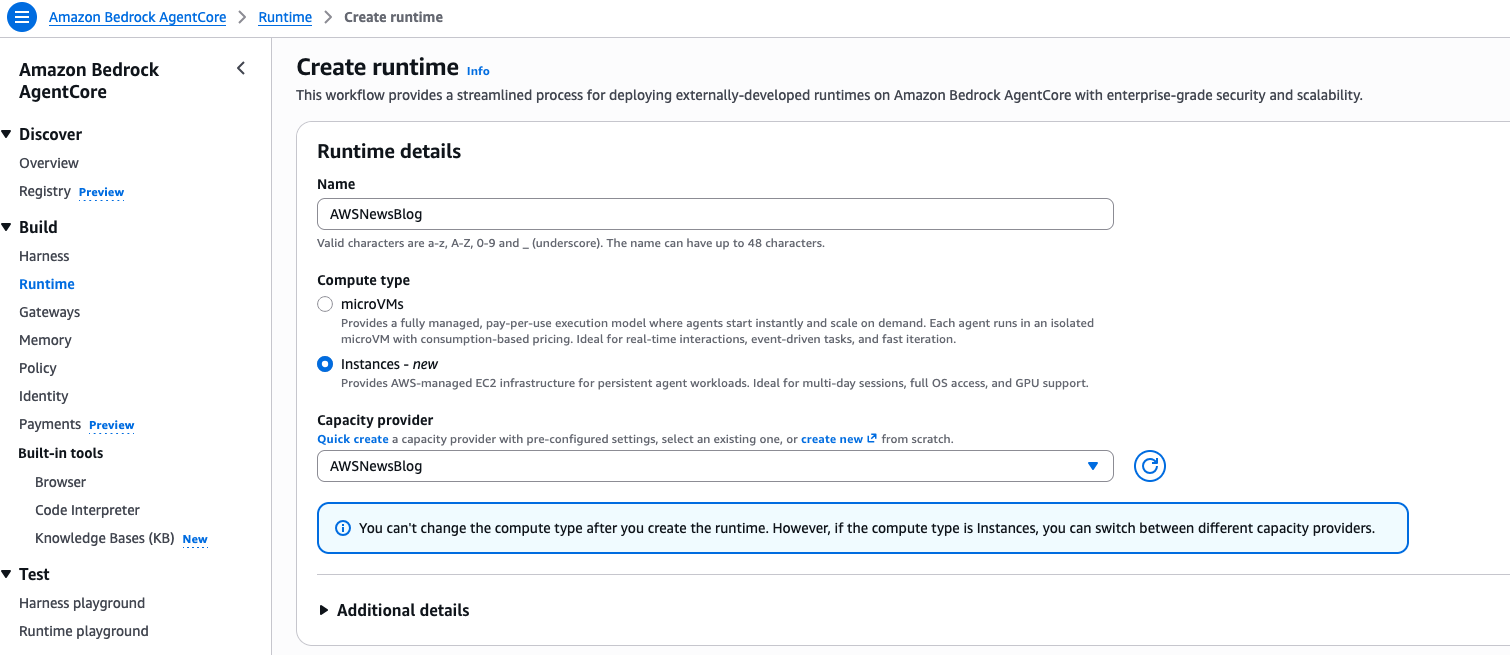
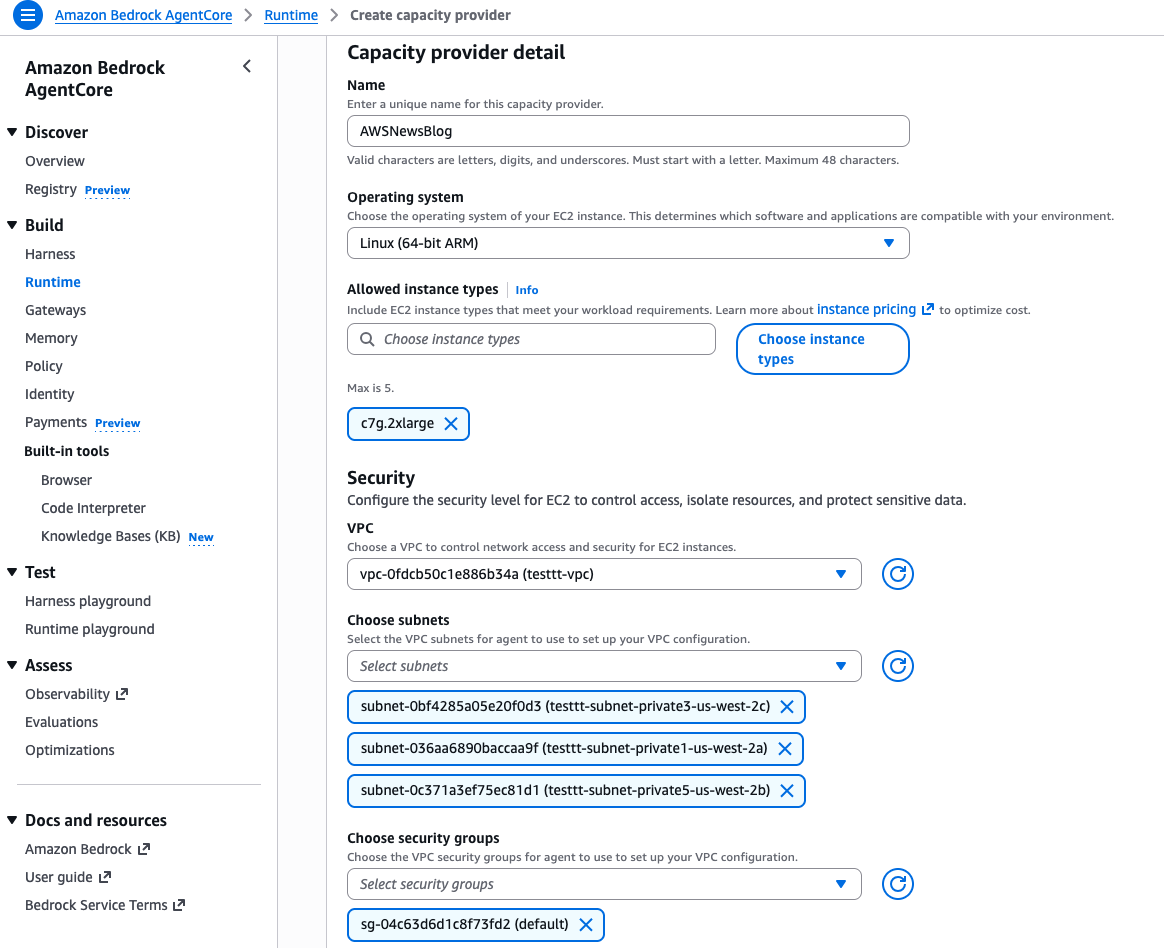
- Step 1: Create a Capacity Provider: The developer defines the underlying EC2 infrastructure. By selecting Linux (64-bit ARM) and an instance type such as
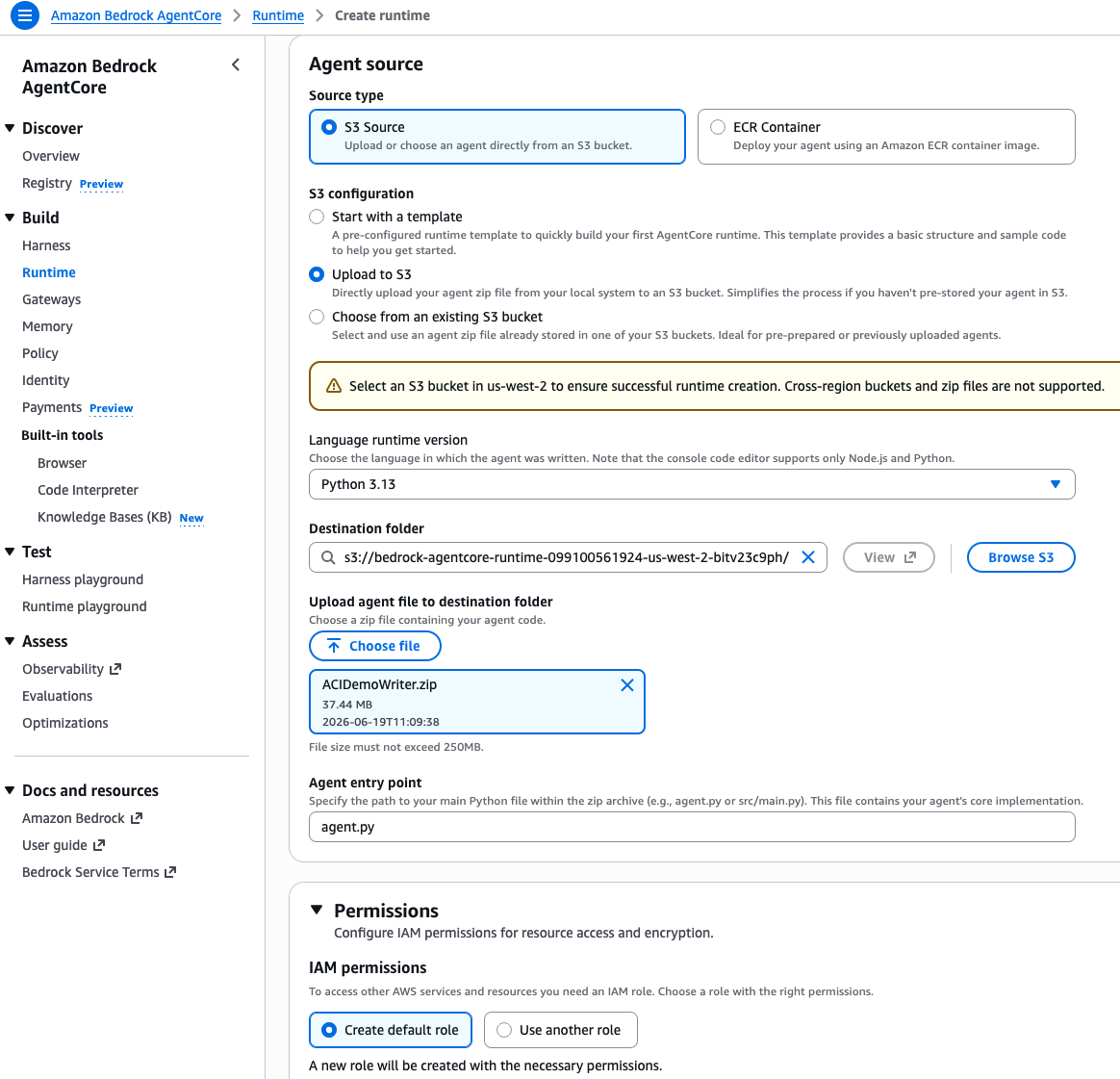
c7g.2xlarge(providing 8 vCPUs and 16 GiB of memory), the environment ensures sufficient capacity for both agents to operate side by side. Network configurations, VPC subnets, security groups, and automated service IAM roles are provisioned at this stage. - Step 2: Create Runtimes and Deploy Agents: The developer creates individual runtimes linked to the capacity provider, uploading zipped deployment packages (
.zip) for each agent, specifying the Python language runtime, and designating the designated script entry point. - Step 3: Invoke and Observe Collaboration: Using the AgentCore Runtime playground, the developer initiates a session with a prompt (e.g.,
"prompt": "write a fibonacci suite"). The writer agent processes the request and saves the artifact to the session directory. Switching the active agent dropdown to the reviewer while retaining the identical Session ID allows the reviewer to instantly read, analyze, and critique the shared file without traditional inter-service communication overhead.
Implications: What This Means for Enterprise AI Development
The release of Amazon Bedrock AgentCore runtime instances carries substantial strategic implications for software engineering teams and enterprise technology leaders.
1. Elimination of Infrastructure Overhead
By absorbing the complexities of EC2 provisioning, instance scaling, container orchestration, and multi-day session persistence into a managed service, AWS significantly reduces the engineering hours required to take complex AI architectures live. Development teams can redirect their focus toward prompt engineering, model tuning, and business logic rather than network administration.
2. Advanced Multi-Agent Collaboration
The ability to safely collocate multiple independent agents on a single host with shared, secure file systems opens the door for sophisticated, autonomous workflows. Enterprises can now deploy sprawling, specialized agent swarms—combining documentation generators, security scanners, automated test runners, and code writers—that operate synchronously over extended periods.
3. Cost-Effective Scaling for Intensive Workloads
Features such as session hibernation (allowing workflows to pause overnight and resume the following morning with complete state preservation) coupled with GPU instance support ensure that organizations do not over-provision financial resources. Companies pay precisely for the compute power required during active processing while retaining state fidelity across extended pauses.
Outlook
As autonomous agents mature from conversational novelties into proactive, task-executing workforce partners, infrastructure platforms must adapt to support their unique operational realities. With the introduction of runtime instances for Amazon Bedrock AgentCore, AWS has provided enterprise developers with a robust, scalable foundation designed to bridge the gap between experimental AI prototypes and production-grade reliability.
 Raul Delapena Setiawan
  Iffa Jayyana
  Siti Muinah