
 By Nana Wu
In an era where digital influence is a recognized currency, the question of whether a blog can function as a legitimate financial enterprise remains a subject of intense debate. For over two decades, the internet has been flooded with success stories of "laptop lifestyle" entrepreneurs claiming to have achieved million-dollar revenues from a simple website, often juxtaposed against cynical assertions that blogging is dead, saturated, or nothing more than a front for predatory marketing schemes.
To separate the signal from the noise, one must look beyond the hype. While the dream of turning a personal passion into a full-time income is achievable, it is rarely the overnight success story often peddled in online advertisements. Success in the blogging space is a marathon, not a sprint—a venture that demands strategic planning, creative resilience, and a realistic understanding of the digital marketplace.
Main Facts: The Reality of Blog Monetization
The fundamental truth about blogging as a business is that it exists in the middle ground between "get-rich-quick" fantasies and claims of total impossibility. Blogging is a professional endeavor that requires the same rigor as any small business.
One of the most persistent myths is that only those who teach others "how to blog" can actually turn a profit. Data from successful industry professionals consistently contradicts this. Bloggers thriving in niches as diverse as woodworking, travel, health, and photography are generating substantial income streams without ever selling a course on "how to make money online."
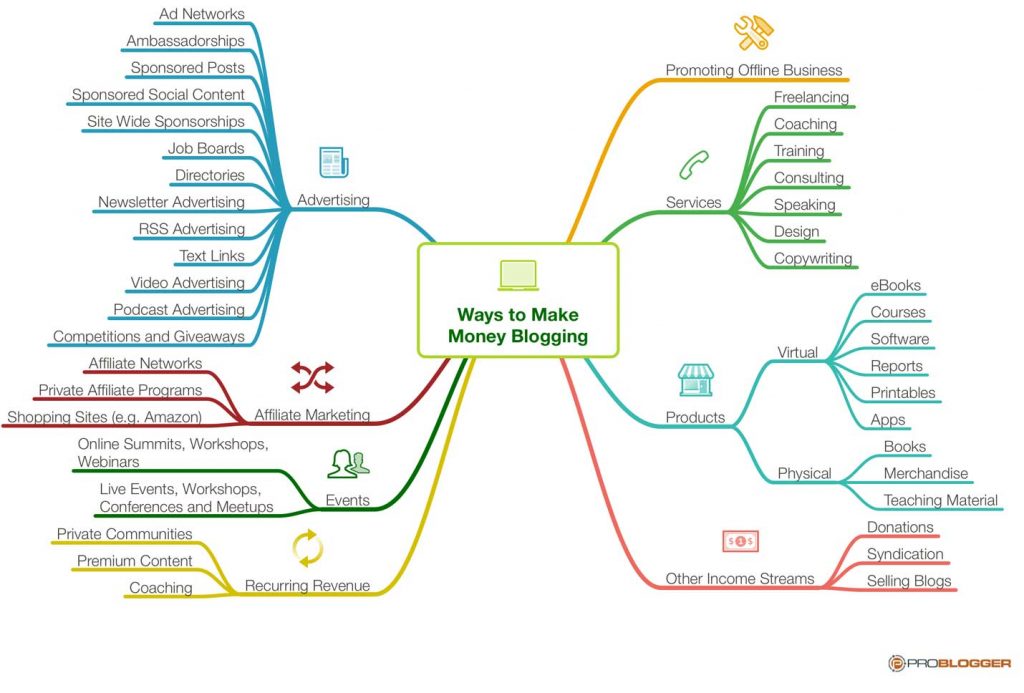
Monetization is not a one-size-fits-all model. The modern professional blogger typically utilizes a diversified portfolio of revenue streams. These include:
- Affiliate Marketing: Earning commissions by promoting products or services relevant to the niche.
- Advertising Networks: Utilizing programmatic display ads to generate passive revenue based on traffic volume.
- Digital Products: Creating and selling ebooks, templates, or exclusive guides.
- Membership Communities: Offering gated, high-value content for a subscription fee.
- Professional Services: Leveraging the blog as a portfolio to secure speaking engagements, consulting roles, or book deals.
Chronology: The Evolution of a Professional Blogger
A critical examination of the industry reveals a clear timeline for those who successfully transition from hobbyist to professional.
Phase 1: The Incubation Period (Years 0–1)
For the vast majority of successful bloggers, the first year is characterized by investment rather than return. This is the period of building foundational content, establishing a voice, and experimenting with SEO (Search Engine Optimization) and social media promotion. Income during this stage is typically non-existent or negligible.

Phase 2: The Traction Phase (Years 2–3)
During this window, bloggers who remain consistent often begin to see the first signs of financial viability. Earnings might cover basic hosting costs or provide a modest supplemental income. This is where many drop off; the effort-to-reward ratio is often discouraging, and only those with a long-term vision continue to invest the necessary labor.
Phase 3: The Scale and Authority Phase (Year 4 and beyond)
Data suggests that significant, full-time, or "high-earning" status is almost exclusively reserved for those who have sustained their output for at least four years. The "overnight success" stories are, in almost every instance, the result of years of quiet, consistent work that finally reached a tipping point where audience trust and search engine authority converged.
Supporting Data: The Statistics of Success
When analyzing survey data from thousands of bloggers, a stark hierarchy emerges. While the ceiling for potential income is remarkably high—with elite bloggers earning six or seven figures annually—the base of the pyramid is wide and thin.
Recent surveys indicate that approximately 10% of those attempting to monetize their blogs earn nothing, while nearly two-thirds earn less than $3.50 per day. These figures are often cited by critics to argue against the viability of blogging. However, when these statistics are filtered by "longevity of effort," the narrative changes.
Among the top-tier earners—those making over $10,000 per month—85% have been active in their niche for at least four years. The data suggests that the low success rate is not necessarily a reflection of the industry’s viability, but rather a reflection of the high attrition rate among beginners. The vast majority of blogs are abandoned before they have the chance to build the search engine authority or audience trust required to monetize effectively.
Official Perspectives: Navigating the Industry
Industry veterans, such as Darren Rowse of ProBlogger, have long advocated for a shift in perspective. The official stance among experienced professionals is that blogging is not a "passive income" scheme. It is an active, labor-intensive business model.
"I’ve worked harder on my business over the last ten years than I’ve worked on anything in my life before this," says Rowse. This sentiment is echoed across the industry. The most successful bloggers treat their platforms like media companies. They focus on four core pillars:
- Content Excellence: Creating material that provides genuine utility or entertainment.
- Audience Acquisition: Mastering the art of SEO and organic reach.
- Community Engagement: Fostering a loyal reader base that trusts the brand.
- Strategic Monetization: Implementing systems that allow the blog to be self-sustaining.
The professional consensus is that while the barrier to entry is low, the barrier to success is high. It requires a commitment to constant learning, adapting to search engine algorithm updates, and maintaining a high standard of quality that sets a creator apart in an increasingly crowded digital landscape.
Implications: The Future of Blogging
The implications for aspiring creators are clear: the "Wild West" era of easy blogging money is over, but the era of the professional niche content creator is just beginning. As AI and automated content tools saturate the web with generic information, the value of human-centric, experience-backed, and trustworthy content is rising.
1. Quality Over Quantity:
The future of professional blogging lies in depth. Search engines are increasingly prioritizing "E-E-A-T" (Experience, Expertise, Authoritativeness, and Trustworthiness). Bloggers who attempt to game the system with thin, AI-generated content are seeing diminished returns, while those who build authentic brands are finding more opportunities than ever.
2. The Shift to Diversification:
The most resilient bloggers are no longer relying on a single income stream. They are building brands that span across platforms—newsletters, podcasts, and social channels—that funnel back to their "digital home base," the blog. This diversification protects them from sudden shifts in advertising revenue or social media algorithm changes.
3. The Persistence Factor:
The most significant implication of the data is that patience is a competitive advantage. Because so many people quit within the first 24 months, those who have the grit to push through the "trough of sorrow" find themselves with significantly less competition once they reach the four-year mark.
Conclusion
Can you really make money blogging? The answer is a definitive yes, but with a major caveat: it is not a shortcut to wealth. It is a legitimate, scalable business model that rewards those who are willing to trade short-term gratification for long-term brand building.
The dream of the "laptop lifestyle" is possible, but it is built on the foundation of consistent, high-value labor. For the creator who is willing to treat their blog as a professional asset, who is prepared to weather the initial years of low returns, and who is dedicated to providing genuine value to a specific audience, the potential for financial independence remains robust. The market for human insight is not shrinking; it is evolving, and those who adapt will be the ones to define the next generation of digital media.
 Raul Delapena Setiawan
  Reynand Wu
  Azzam Bilal Chamdy