
 By Layla Zulfa
When a high-stakes branding initiative fails, the autopsy rarely points to the final logo or the color palette. The fatal breakdown almost invariably occurs much earlier—deep within the strategy phase.
It happens when executive teams and creative agencies rely on buzzwords like "modern," "trustworthy," "premium," "friendly," and "disruptive" without ever anchoring them to a shared reality. Left undefined, these adjectives create a chasm between what a brand intends to communicate and what a designer is ultimately tasked to build. This foundational stage—the critical zone that bridges raw strategy and visual execution—is what industry professionals call the "pre-concept" phase.
Main Facts: The Anatomy of a Brand Misalignment
At the inception of any identity project, creative teams are inundated with inputs: a creative brief, stakeholder transcripts, competitor benchmarks, and assorted mood boards. Designers are then expected to synthesize these elements into visual concepts that "just feel right."
However, "right" is an impossible metric to judge when a cross-functional team has never agreed on the core communicative goals of the brand.

- The Semantic Trap: Words sound universally aligned until they are probed. "Premium" might mean editorial and refined to a founder, exclusive and expensive to a marketer, and clean, quiet, and minimal to a product manager.
- Context Over Definition: A word like "disruptive" means entirely different things depending on the vertical. In a consumer streetwear brand, it demands neon palettes and rule-breaking typography. In a health-tech enterprise selling to conservative government medical institutions, "disruption" must be communicated through clinical efficiency, absolute clarity, and institutional confidence.
- The Cost of Ambiguity: Without a robust pre-concept phase, design becomes a guessing game. Stakeholders retreat to subjective personal preferences during reviews, leading to stalled timelines, frustrated creatives, and diluted brand architectures.
Chronology: The Journey from Brief to Visual Foundation
Navigating a brand identity project requires a disciplined, chronological progression. Moving straight from a kickoff meeting to Figma is a recipe for disaster. Instead, studios must guide stakeholders through a structured, three-stage evolutionary timeline.
[Kickoff Meeting]
       │
       ▼
[Stage 1: Research Brand Context & Perception] ──► (Workshops, Perception Mapping, Brand Drivers)
       │
       ▼
[Stage 2: Translating Strategy to Design Code] ──► (Look & Feel, Design Principles, Metaphors)
       │
       ▼
[Stage 3: Establishing Brand Assets] ──────► (Typography, Color, Layout Boundaries)
       │
       ▼
[The First Concept Phase] ───────────────► (Informed, Context-Driven Design Work)
       │
       ▼
[Review & Implementation]
Stage 1: Researching the Brand Context
Beyond standard business discovery (goals, products, audience), designers must interrogate perception. As legendary designer Marty Neumeier notes in The Brand Gap, "A brand is a person’s gut feeling about a product, service, or company." Because a brand lives entirely in the mind of the audience, the discovery workshop must decode what precise perception the team wants to instill.

To move past surface-level agreement, facilitators utilize targeted exercises:
- Competitor Perception Mapping: Stakeholders plot competitors across two custom axes (e.g., understated vs. bold and accessible vs. exclusive). This exposes deep internal disagreements about how the market is perceived and where white space exists.
- The Visual Brand Driver Exercise: Participants select metaphors from unrelated categories—such as transportation, furniture, architecture, or animals—that represent the company. For example, if the company were a vehicle, is it a high-speed bullet train, a quiet electric car, or a heavy-duty freight truck? Adjectives tied to these choices reveal underlying assumptions about structure, speed, and reliability.
Stage 2: Constructing the Visual Foundation
With hidden assumptions unearthed, the next milestone is a collaborative working session where strategy transitions into design boundaries. This layer is divided into three interconnected checkpoints:

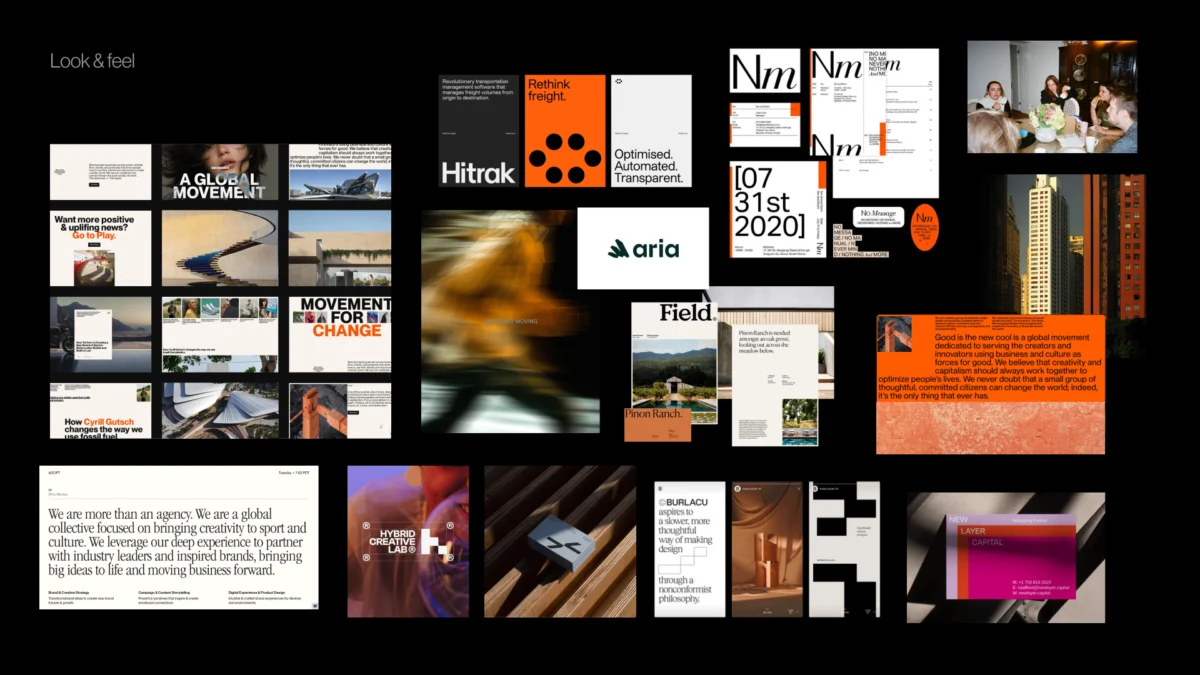
- Look and Feel Boards: Curated perception boards that allow clients to react to mood, tone, and character long before any typography or logo marks are designed.
- Design Code: Translating core brand attributes into conceptual visual principles (e.g., turning "research-backed support for real life" into clean data snapshots, clinical confidence, and structured editorial layouts).
- Early Brand Asset Direction: Discussing high-level boundaries for color, typography style, and photographic treatment.
Supporting Data: Mitigating Risk Through Active Participation
Data from collaborative design frameworks (such as GV’s famed Three-Hour Brand Sprint methodology pioneered by Jake Knapp) consistently demonstrates that passive stakeholders are the primary bottleneck in brand development.
- Active vs. Passive Engagement: When clients receive a finished strategy presentation passively, they nod along without recognizing their own internal contradictions. When they are forced to actively position competitors on a map or defend a metaphorical image choice, their biases become visible before they can derail a design review.
- Reduction of Subjective Bias: Studies in design management show that projects utilizing structured pre-concept alignment phases experience up to a 40% reduction in revision cycles. By pre-defining what the brand must avoid (e.g., "too loud," "too cold," or "too generic"), teams spend less time debating personal tastes ("I like this blue") and more time evaluating strategic alignment ("Does this visual direction express our core promise?").
Official Responses and Industry Insights
Design directors and brand strategists emphasize that the primary goal of the pre-concept phase is not to make the final identity predictable, but to empower the creative team with a sharper problem to solve.

"The point of these exercises is to make the abstract idea of ‘our brand’ into something concrete," explains design strategist Jake Knapp. By transforming abstract linguistic aspirations into tangible visual anchors, agencies can eliminate the anxiety of the "big reveal."
Industry leaders point out that when clients participate in shaping the design code and look-and-feel parameters, the traditional friction between business stakeholders and creative teams evaporates. The first concept is no longer a blind guess by the designer, but the logical, anticipated next step of a shared journey.

Implications for Digital Products and Brand Strategy
The implications of a robust pre-concept phase extend far beyond marketing assets; they are foundational for digital product ecosystems, user interfaces, and long-term brand equity.
- Scalability in Digital Products: For modern tech companies, apps, and platforms, a brand identity must translate seamlessly across responsive web interfaces, design systems, and marketing channels. A disciplined pre-concept phase ensures that the underlying design principles (the "design code") can scale naturally into UI components and interactive states.
- Operational Efficiency: Engineering and product teams benefit immensely from clear brand parameters. When the visual foundation is rooted in strategic context rather than arbitrary aesthetic choices, product teams can build UI assets consistently without constantly second-guessing brand alignment.
- Elevating the Critique Process: Ultimately, the pre-concept methodology changes the linguistic culture of design reviews. Conversations pivot away from unhelpful expressions like "I don’t like it" toward rigorous, objective inquiries: "Does this visual direction accurately express the brand we agreed to build?"
By treating the pre-concept phase as an indispensable engineering step for brand identity, organizations can replace ambiguity with clarity, ensuring that the strongest visual concepts are built on a rock-solid strategic foundation.
 Iffa Jayyana
 Azzam Bilal Chamdy
 Nila Kartika Wati
