
 By Evan Lee Salim
Most businesses are trapped in a "first-sale" obsession. They pour their budgets into acquisition, social media ads, and influencer partnerships, all in the hope of securing that elusive first transaction. Yet, once the sale is made, the conversation often goes cold. This "post-purchase silence" is where brands lose the opportunity to build a lifetime of loyalty.
The secret to scaling isn’t found in a higher frequency of blasts or more aggressive, discount-heavy campaigns. Instead, it lies in the precision of timing. In the modern ecommerce landscape, retention is defined by the ability to show up in a customer’s inbox exactly when they are ready to re-engage.
The Paradigm Shift: Timing Over Frequency
For years, the industry standard for email marketing was "more is better." If sales dipped, the reflexive response was to increase the cadence of newsletters and promotional broadcasts. However, data suggests that this strategy is often counterproductive. Customers rarely disengage because they receive too few emails; they tune out because they receive the wrong emails at the wrong time.
The Psychology of Relevance
When an email arrives in context—perhaps shortly after a product has been unboxed or just as a customer is likely running low on a consumable—it stops being an intrusion and becomes a service.
Psychologically, consumers are driven by momentum. After a purchase, there is a natural window of high engagement. By failing to follow up with relevant, helpful content during this period, brands allow that momentum to dissipate. Conversely, a perfectly timed email leverages the "recency effect," reminding the customer of the value they just gained and gently guiding them toward the next logical step in their journey.
The Statistical Evidence
The effectiveness of behavior-triggered automation is no longer anecdotal. According to 2025 ecommerce data from Omnisend, the power of automation is staggering. While automated flows represent a mere fraction of the total email volume sent by retailers, they account for a disproportionately massive share of total revenue. Specifically, these behavior-triggered emails generated approximately 37% of email-driven sales despite representing only 2% of total email volume. This massive efficiency gap underscores a critical truth: generic, bulk campaigns are becoming obsolete in the face of hyper-personalized, timely automation.
Chronology of the Customer Journey: Where Timing Matters
To master retention, businesses must map their communications to the actual lifecycle of the customer. Rather than adhering to an arbitrary marketing calendar, successful brands synchronize their emails with the customer’s psychological state.
Phase 1: The Confirmation and Confidence Window
Immediately following the first purchase, the customer is in a state of transition. They have parted with their money and are now waiting for validation that they made the right choice. This is the "Buyer’s Remorse" buffer zone.
An effective retention strategy at this stage isn’t about selling the next product—it’s about reinforcing the value of the current one. Emails sent within the first 24 to 48 hours should focus on confidence: providing tracking updates, usage tips, or a warm welcome that underscores the brand’s commitment to their satisfaction. By reducing anxiety, you build the trust required for a future transaction.
Phase 2: The "Quiet Period" and Value Add
The period between the first purchase and the need for a second is often ignored. This is the "danger zone" where a brand risks fading from memory. However, this is also the perfect time to provide non-promotional value.
Brands that win are those that treat this period as an educational opportunity. If you sell skincare, send a guide on how to integrate the product into a daily routine. If you sell electronics, send a "did you know" tip about an underutilized feature. By helping the customer get more out of their initial purchase, you solidify your position as a partner rather than just a vendor.
Phase 3: The Re-Entry Moment
Every product has a natural lifecycle. Whether it’s a consumable that needs replenishing or a durable good that has complementary accessories, there is a moment when the customer is logically ready to return.
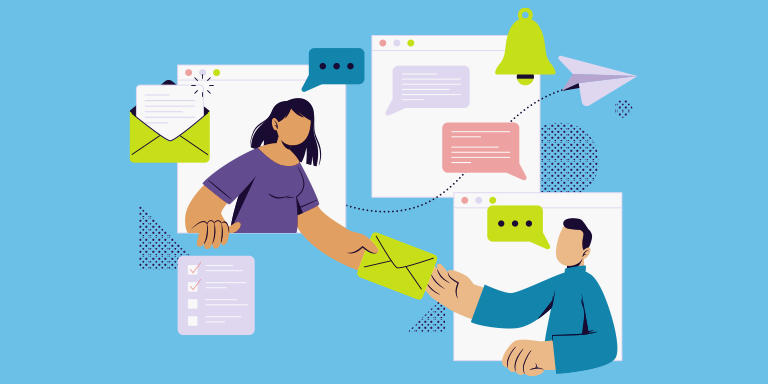
When your communication hits this window, it feels intuitive. It solves a problem before the customer has even fully articulated it to themselves. This is the pinnacle of retention marketing: turning a sales message into a helpful reminder that feels like an extension of the customer’s own needs.
The Mechanics of Effective Automation
Transitioning from manual, blast-style marketing to behavior-based automation requires a shift in infrastructure. Founders often fear that "personalization" means "more work," but the reality is the opposite. Modern email platforms utilize dynamic triggers to handle the heavy lifting.
Reducing Decision Fatigue
One of the most significant barriers to a second sale is decision fatigue. When a customer is presented with an endless catalog of items, they often choose to do nothing. Timely emails solve this by narrowing the focus. By recommending products that directly relate to their previous purchase history, the brand effectively curates the experience. The customer doesn’t have to think about what to buy next; the path of least resistance is clearly laid out for them.
The Anatomy of a High-Retention Email
To achieve this, the modern retention email should adhere to a specific structure:
- Contextual Subject Line: Reference the customer’s previous interaction without using high-pressure tactics.
- Supportive Opening: Acknowledge their recent purchase and express value-driven interest in their experience.
- Educational Core: Provide one actionable insight or tip that enhances their current usage of the product.
- Low-Friction Call to Action (CTA): Invite the customer to engage in a way that feels natural, such as a "reorder" button for consumables or a "complementary products" suggestion for hard goods.
Implications for Modern Founders
The shift toward timely, behavior-based email has profound implications for the future of digital business. It suggests that the "arms race" of acquisition costs is unsustainable for companies that cannot retain their users.
Building Equity Through Trust
When a brand respects a customer’s time by only reaching out when it matters, they build brand equity. Customers are increasingly wary of "inbox clutter." By being the brand that adds value rather than noise, you differentiate yourself in a crowded market. Over time, this builds a "default choice" status. When the customer needs a product in your category, your brand is the first one they trust.
Operational Efficiency
Automated, timely emails also protect the most valuable resource of any founder: time. By setting up sophisticated flows once, a business owner can ensure that every customer receives a bespoke experience that scales perfectly. This creates a revenue engine that functions while the business owner focuses on product innovation and strategic growth, rather than drafting daily newsletters.
Expert Perspectives and Strategic Recommendations
Industry analysts suggest that the next frontier of email marketing will involve deeper integration with AI-driven analytics. By analyzing purchasing patterns, AI can predict the "re-entry" window with incredible accuracy, allowing brands to trigger emails precisely when a customer is likely to run out of product.
However, technology is only half the battle. The content within these emails must remain human-centric. Even with the best software, if the tone is robotic or overly promotional, the retention strategy will fail. The goal is to create an email that feels like a concierge service—helpful, timely, and deeply aware of the customer’s needs.
Conclusion: The Path Forward
The evidence is clear: the most successful brands of the next decade will be those that master the art of the "right moment." By moving away from aggressive, volume-based campaigns and toward thoughtful, context-aware automation, founders can transform their email lists from dormant databases into active, loyal communities.
As the ecommerce landscape becomes more competitive, the brands that win will not necessarily be those with the biggest marketing budgets. They will be the brands that understand their customers best—the ones that know when to offer help, when to offer a suggestion, and when to simply be present.
For those looking to implement this strategy, tools like Omnisend have become essential. By leveraging behavior-based automations and built-in social proof, businesses can convert the chaos of digital commerce into a structured, reliable, and highly profitable retention engine. In a world of noise, timing is the ultimate signal.
 Basiran
 Azzam Bilal Chamdy
 Asep Darmawan
