
 By Asep Darmawan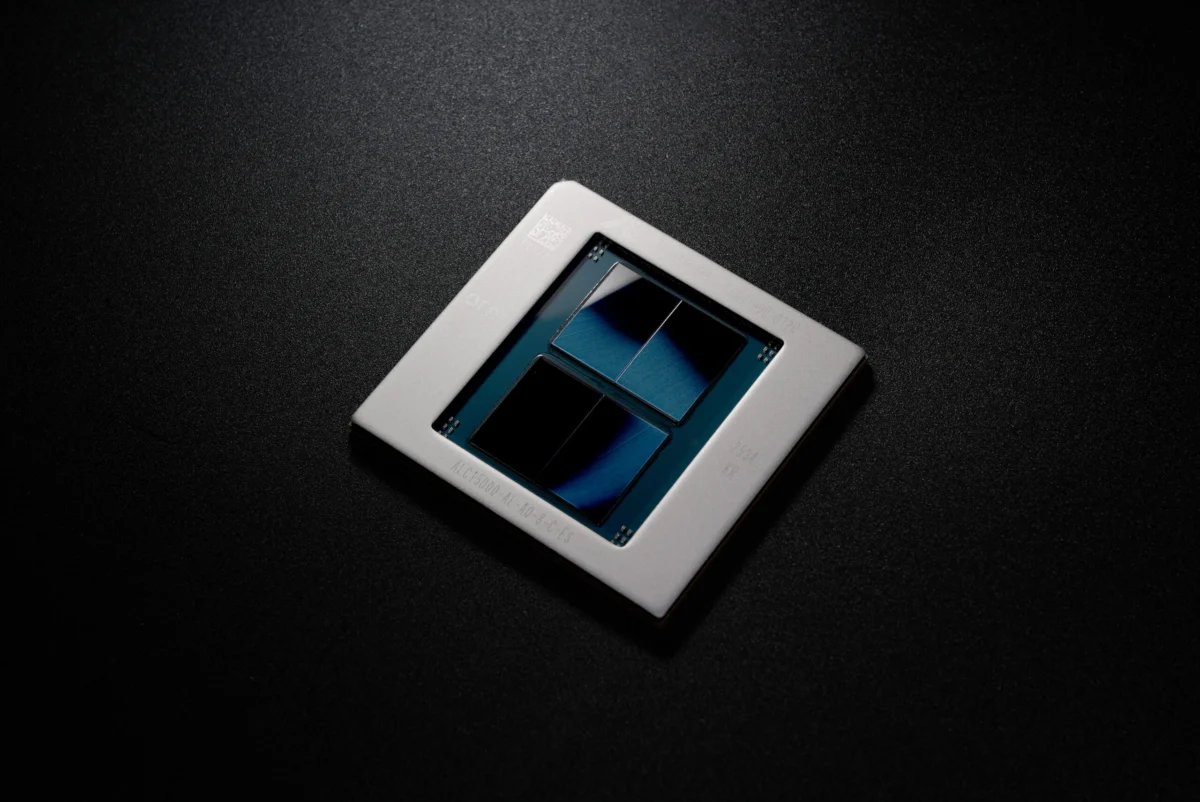
The landscape of cloud computing underwent a seismic shift this week as Amazon Web Services (AWS) officially announced the general availability of its M9g and M9gd instances. Powered by the fifth-generation Graviton5 processor, these new instances represent the pinnacle of AWS’s eight-year journey into custom silicon design. As the industry grapples with the surging demands of agentic AI and high-performance computing, the arrival of Graviton5 promises not just incremental gains, but a fundamental leap in energy efficiency, computational density, and, for the first time, mathematically verifiable cloud security.
The Evolution of Custom Silicon: A Chronology of Graviton
To understand the significance of the M9g launch, one must look at the trajectory of the Graviton program. Launched in 2018, the original Graviton processor was a bold experiment to see if Arm-based architecture could compete with the entrenched x86 hegemony in the data center.
- 2018 (Graviton1): AWS introduced the first custom-built processor, focusing on simple, scale-out cloud workloads.
- 2019 (Graviton2): The second generation marked a turning point, delivering a massive jump in performance-per-watt that caught the attention of enterprise customers.
- 2021 (Graviton3): AWS introduced DDR5 memory and accelerated floating-point performance, solidifying Graviton’s place as a mainstream contender.
- 2023 (Graviton4): The focus shifted to higher core counts and improved branch prediction, optimized for large-scale microservices.
- 2025 (Graviton5): Announced at re:Invent 2025 and now generally available, Graviton5 introduces 192 cores and a 5x increase in L3 cache, explicitly designed to handle the multi-step, reasoning-heavy nature of modern agentic AI.
This relentless pace of innovation—a new generation roughly every 18 to 24 months—has allowed AWS to maintain a competitive moat that few cloud providers can bridge. Today, Graviton powers over 350 distinct instance types across the global AWS infrastructure, serving more than 120,000 customers ranging from scrappy startups to global conglomerates.
Performance Benchmarks: The Data Behind the Speed
The transition to M9g is not merely a hardware upgrade; it is a catalyst for software optimization. Early adopters who tested the M9g instances during the preview phase have reported staggering efficiency gains.
ClickHouse, the high-performance analytics database, reported a 36% performance boost compared to the previous M8g generation without requiring a single line of code changes. Similarly, Honeycomb, an observability platform, conducted a six-month A/B test on production workloads, concluding that the M9g provided 36% better throughput per core than Graviton4. Perhaps most notably, HubSpot saw its MySQL database query durations plummet by 60% after migrating to the M9g platform.
These gains are driven by a significant overhaul of the chip architecture:

- Massive L3 Cache: A 5x increase in L3 cache helps reduce memory stalls, allowing CPU cores to process data more fluidly.
- DDR5-8800 Memory: The inclusion of the fastest memory currently available in the cloud ecosystem allows for high-bandwidth data movement.
- PCIe Gen6 Support: As the first CPU in the AWS fleet to support PCIe Gen6, Graviton5 ensures that I/O bottlenecks are a thing of the past.
- Core Density: With 192 cores, the M9g allows for unprecedented consolidation, enabling users to run more concurrent environments on fewer physical servers, further driving down the carbon footprint of their operations.
The Agentic AI Shift
The modern cloud workload is changing. Whereas previous generations of compute were defined by request-response patterns, the current era is defined by "Agentic AI." These systems do not just answer questions; they plan, execute, iterate, and orchestrate complex tasks.
"As AI shifts from answering questions to taking actions, running code, and orchestrating multi-step tasks, the demand for CPU compute is growing rapidly," AWS representatives noted during the launch.
Graviton5 is purpose-built for this shift. By providing 192 cores and a 33% reduction in inter-core latency, the processor ensures that the "reasoning" part of an AI agent—which is often CPU-bound—doesn’t throttle the performance of the underlying model. Meta, one of the world’s largest consumers of compute, has already committed to deploying Graviton at scale, utilizing tens of millions of cores to fuel its next generation of agentic AI initiatives.
Security: The Introduction of the Nitro Isolation Engine
Beyond raw speed, the M9g and M9gd instances introduce a paradigm shift in cloud security: the Nitro Isolation Engine. While the AWS Nitro System has long been the industry gold standard for hardware-level virtualization and isolation, the new engine raises the bar.
The Nitro Isolation Engine utilizes "formal verification," a rigorous mathematical technique used to prove that the software behaves exactly as intended. By applying this to the hypervisor, AWS can now mathematically guarantee the isolation of virtual machines. This means that access to memory, CPU registers, and I/O devices is mediated by a minimal, formally verified API. In an era of increasing supply-chain and side-channel security threats, this provides an unprecedented level of assurance to enterprise and government customers who require ironclad data protection.
Operational Flexibility: M9g vs. M9gd
The launch includes two distinct instance families to cater to varying storage needs:

- M9g: Designed for general-purpose computing where storage is decoupled via Amazon EBS. These are ideal for application servers, microservices, and large-scale Java deployments.
- M9gd: These instances include high-speed, low-latency local NVMe SSD storage. They are designed for workloads that require heavy temporary storage, such as log processing, media transcoding, and cache-heavy applications.
Both instances support Instance Bandwidth Configuration (IBC), a granular feature that allows administrators to dynamically reallocate bandwidth between EBS and VPC networking. This allows teams to fine-tune performance based on the specific bottleneck of their application, whether it is network throughput or disk I/O.
Strategic Implications
The general availability of Graviton5 instances marks a critical juncture for the cloud industry. As organizations face mounting pressure to reduce both operational costs and environmental impact, the M9g instances offer a clear path forward. By delivering better performance per watt, AWS is helping companies hit their sustainability targets while simultaneously reducing their AWS bill.
Furthermore, the maturity of the Graviton ecosystem—complemented by tools like the AWS Graviton Getting Started Guide, the Graviton Savings Dashboard, and the AI-powered AWS Transform service for Java migrations—removes the final barriers to adoption. The era of "x86 by default" is effectively over. In its place, a more efficient, high-density, and secure paradigm has emerged, fueled by the silicon innovations of AWS.
For CTOs and architects, the message is clear: the hardware foundation for the next decade of AI and cloud-native development has arrived. The question is no longer whether to migrate to Graviton, but how quickly an organization can harness its power to gain a competitive advantage in an increasingly compute-hungry world.
 Neng Nana
  Suro Senen
  Lina Hope