
 By Evan Lee Salim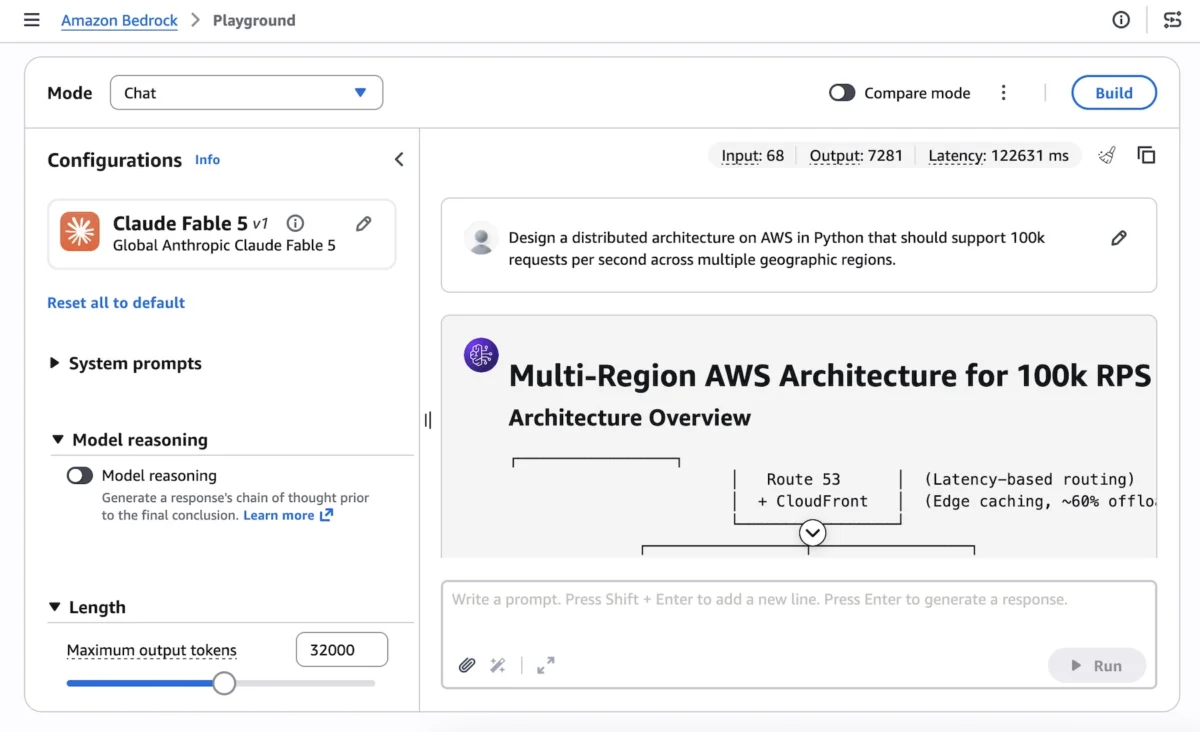
Updated June 12, 2026
In a rapidly evolving landscape of generative artificial intelligence, the interplay between cutting-edge capability and regulatory compliance has reached a new inflection point. As of June 12, 2026, Anthropic, in coordination with Amazon Web Services (AWS), has officially suspended access to its most advanced models—Claude Fable 5 and Claude Mythos 5—across the Amazon Bedrock platform. This move, triggered by shifting mandates in US Government export control directives, marks a significant moment for enterprise users who have integrated these models into their workflows.
Despite this restriction, the broader ecosystem remains functional. Anthropic has confirmed that established models, including the highly capable Opus 4.8, remain fully operational, allowing businesses to maintain continuity while navigating these new geopolitical and regulatory requirements.
The Rise and Constraint of Claude 5
The introduction of Claude Fable 5 was initially hailed as a milestone in AI performance. Designed to provide "Mythos-level" capabilities—the pinnacle of Anthropic’s research architecture—Fable 5 was engineered to handle complex software engineering tasks, high-level knowledge synthesis, and advanced vision processing.
Bridging Performance and Safety
What distinguished Fable 5 was not merely its raw computational power, but its nuanced approach to safety. Recognizing the risks associated with high-stakes AI, Anthropic embedded "fallback" mechanisms within the model. When a user input touches upon sensitive domains—such as advanced cybersecurity, synthetic biology, chemical synthesis, or critical public health data—the model is programmed to redirect the query to the proven, more conservative Opus 4.8 architecture.
This tiered approach was intended to allow the enterprise sector to leverage state-of-the-art intelligence while maintaining a robust safety perimeter. The unconstrained counterpart, Claude Mythos 5, was strictly reserved for a small, vetted cohort of users, reflecting the sensitivity of the model’s underlying logic.
A Chronology of Access: From Launch to Compliance
The trajectory of the Claude 5 series has been defined by rapid deployment followed by swift regulatory adjustment.
- Initial Launch: Claude Fable 5 and Mythos 5 were unveiled with significant fanfare, promising to revolutionize how developers build within the AWS environment. The integration with Amazon Bedrock allowed for seamless scaling of inference workloads, positioning it as the new standard for long-running, ambitious AI projects.
- Early June 2026 (Operational Refinements): Throughout the first week of June, developers began stress-testing the models. During this time, documentation was updated frequently to assist users with the complex data-sharing requirements necessary to unlock the model’s full potential.
- June 9–10, 2026: Technical documentation was optimized to support AWS SigV4 authentication and Command Line Interface (CLI) configurations. These updates were aimed at streamlining the transition to the new data retention protocols required for the Fable 5 series.
- June 12, 2026: The landscape shifted abruptly. Following a new directive regarding export controls on high-performance AI models, Anthropic requested that AWS revoke access to the Fable 5 and Mythos 5 models. This decision was taken to ensure full alignment with US government mandates concerning the distribution of advanced AI technologies.
Data Retention and the "Provider Data Share" Requirement
To gain access to models like Claude Fable 5, users were required to opt into a specific data-sharing architecture. This protocol was not merely a matter of convenience but a fundamental requirement for the model’s operation.
The Mechanism of Compliance
Anthropic mandated a 30-day retention period for all inputs and outputs processed by Fable 5. This data is utilized for human-in-the-loop review and abuse detection—a prerequisite for deploying models of this caliber. Users were required to set the provider_data_share parameter via the Data Retention API.
For organizations operating on Amazon Bedrock, this meant moving away from standard, zero-retention policies. For many, this requirement represented a trade-off: in exchange for access to the most sophisticated reasoning engine on the market, organizations had to accept a transparent, monitored environment. The technical implementation, involving curl requests to bedrock-mantle or bedrock-runtime endpoints, provided developers with granular control over their compliance posture.
Implications for Enterprise AI
The suspension of access to Fable 5 and Mythos 5 sends a ripple through the industry, raising critical questions about the future of global AI deployment.
1. The Fragmentation of Model Availability
We are entering an era where access to frontier AI is becoming geographically and regulatorily bounded. For companies with multi-regional operations, the inability to use the same model version globally complicates architecture. IT departments must now design "model-agnostic" applications that can seamlessly failover from a high-end model like Fable 5 to a more broadly available, less restricted model like Opus 4.8.

2. The Cost of Compliance
The regulatory requirements imposed on Fable 5 serve as a precursor to future AI governance. The need for explicit, API-level opt-ins for data sharing, coupled with strict export compliance, suggests that the "easy-access" era of foundation models is ending. Organizations must now build dedicated compliance teams to manage the lifecycle of the AI models they integrate, specifically monitoring for sudden changes in legal availability.
3. The Resilience of the AWS Ecosystem
Despite the current restriction, the incident highlights the maturity of the AWS Bedrock platform. Because the infrastructure supports multiple models—from Anthropic, Amazon’s own Titan, and others—the impact on business continuity was mitigated. Developers were able to pivot their codebases to alternate models with relative ease, thanks to the standardized Converse and Invoke APIs.
Official Stance and Future Outlook
Anthropic has directed users to their official statements regarding the access revocation, emphasizing that the move is a commitment to regulatory adherence rather than a technological failure. For the developers and enterprises affected, the advice remains consistent:
- Audit Current Implementations: Identify any workflows currently dependent on the Fable 5 series.
- Transition to Stable Alternatives: Reconfigure API calls to utilize Opus 4.8 or other supported models within the Bedrock console.
- Stay Informed: Monitor AWS re:Post and official Anthropic communications for updates regarding potential reinstatement or the release of future, compliant iterations of the Claude 5 architecture.
The technological prowess demonstrated by the Claude 5 series remains unmatched, yet its temporary unavailability serves as a poignant reminder: in the world of high-stakes AI, the regulatory framework is as vital as the neural weights themselves. As the dust settles, the industry is left to balance the thirst for innovation with the reality of international oversight.
Technical Appendix: Managing Your Bedrock Environment
For those looking to maintain stability during this transition, the following summary of the current state of the Bedrock API is essential:
- API Continuity: The
InvokeandConverseAPIs remain the primary vehicles for interaction. Using the AWS SDK for Python (Boto3) remains the recommended path for developers looking to maintain modularity. - Data Retention: While Fable 5 is restricted, the
Data Retention APIremains a critical component for users of other advanced models. Ensuring yourmodeis set toinheritorprovider_data_shareis essential for maintaining access to the latest features on other models. - Consulting the Experts: Users are encouraged to leverage the AWS Support network and the specific
bedrock-runtimedocumentation to ensure their cloud architecture is configured for maximum resilience against future model-level changes.
As of today, the path forward for AI development on AWS remains robust, provided that teams remain agile, compliant, and prepared for the rapid shifts that define the state-of-the-art.
 Ammar Sabilarrohman
  Dwi Wanna