
 By Suro Senen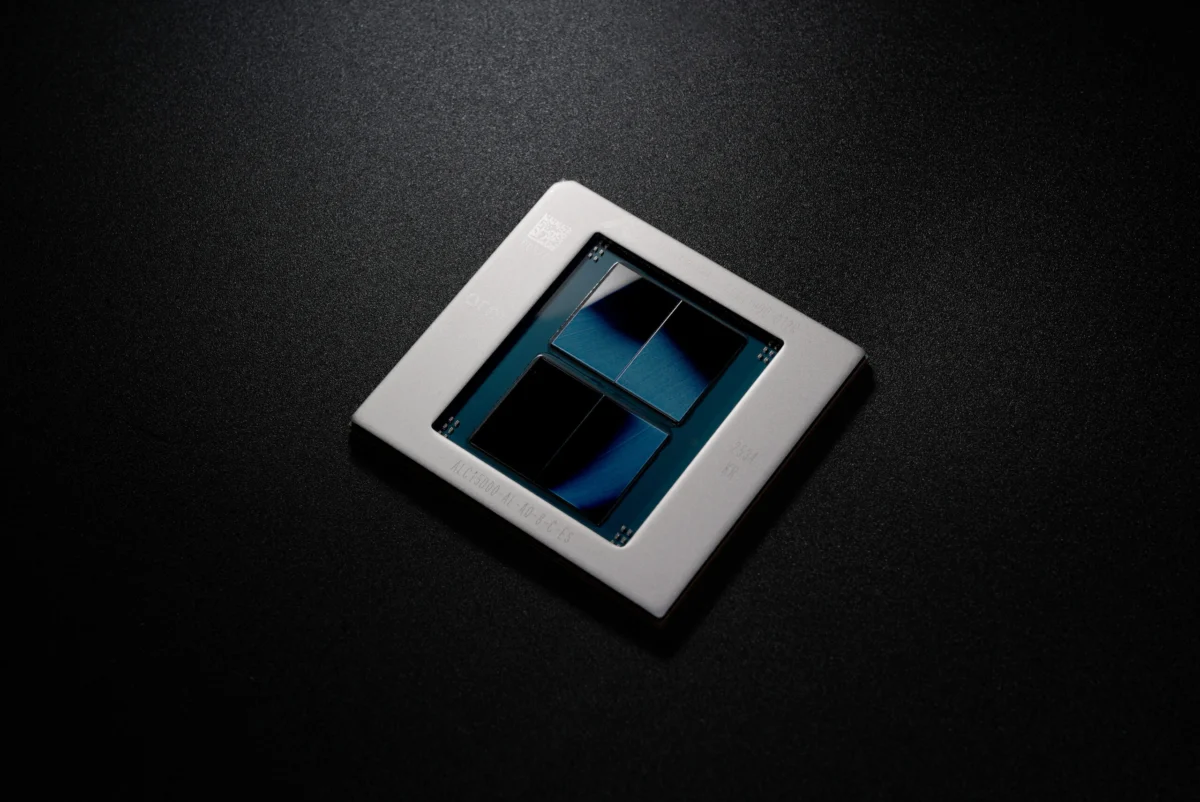
In the rapidly evolving landscape of cloud computing, the processor is the heartbeat of every operation. For the past eight years, Amazon Web Services (AWS) has methodically rewritten the rules of data center silicon, shifting away from generic off-the-shelf hardware toward custom-engineered, Arm-based processors. Today, that trajectory reaches a new peak with the general availability of the Amazon EC2 M9g and M9gd instances, powered by the Graviton5 processor—the most powerful and energy-efficient chip ever produced by the cloud giant.
Main Facts: The Graviton5 Advantage
The introduction of M9g and M9gd instances marks a significant generational leap. Designed to address the increasingly compute-intensive nature of modern digital infrastructure, Graviton5 introduces a suite of architectural advancements. With a staggering 192 cores, a 5x increase in L3 cache capacity, and a 33% reduction in inter-core latency, these instances are engineered to eliminate the bottlenecks that plague traditional server architectures.
Supporting the latest PCIe Gen6 and DDR5-8800 memory, Graviton5 delivers the fastest memory throughput currently available in the public cloud. These technical specifications translate directly into tangible business outcomes: customers can expect up to 25% better compute performance compared to the already capable Graviton4, with specific workload optimizations yielding up to 35% faster performance for web applications and machine learning inference, and a 30% boost for database operations.
A Chronology of Continuous Innovation
The journey to Graviton5 is not a story of overnight success, but one of disciplined, iterative development.
- 2018: AWS launches the original Graviton processor, signaling the company’s intent to control its own silicon destiny.
- 2019-2023: Through successive generations (Graviton2, 3, and 4), AWS refined its power-to-performance ratios, steadily capturing market share from legacy x86 providers.
- December 2025 (re:Invent): AWS announces the preview of the M9g instances, inviting key partners to stress-test the new silicon in real-world production environments.
- June 2026: Following months of successful benchmarking and rigorous testing, AWS officially moves the M9g and M9gd series into general availability.
This timeline reflects a strategic commitment to the "virtuous cycle" of AWS: by building more efficient hardware, AWS lowers its own operating costs, allowing it to pass those savings to customers while simultaneously offering higher performance ceilings.
Supporting Data: Real-World Performance Metrics
The effectiveness of the Graviton5 is best evidenced by the performance gains observed by early adopters during the preview phase. The migration data suggests that the "Graviton jump" is no longer just for specialized tasks; it is now a powerhouse for general-purpose computing.
ClickHouse, the high-performance analytics database, reported a 36% performance increase over the previous M8g generation without requiring a single line of code modification. Similarly, Honeycomb, which manages complex observability data, achieved a 36% improvement in throughput per core during a six-month A/B test. For database-heavy operations, HubSpot saw query durations plummet by up to 60% after migrating their MySQL workloads to the new M9g instances.

These results are supported by the updated network and storage capabilities. The M9g series offers up to 15% higher network bandwidth and 20% higher Amazon EBS throughput. For the largest instances, network bandwidth has effectively doubled, ensuring that the compute power of the 192 cores is never throttled by data ingress or egress limitations.
Official Responses and Strategic Partnerships
The industry impact of Graviton5 is perhaps best highlighted by the commitment of Meta, which has emerged as one of the largest Graviton users globally. Meta is currently deploying the processors at a massive scale, utilizing tens of millions of cores to power its burgeoning "agentic AI" efforts.
"Agentic AI"—where systems move beyond simple queries to perform multi-step actions and autonomous reasoning—is inherently CPU-heavy. The massive cache sizes and memory bandwidth of Graviton5 are critical for these tasks. By offloading these workloads to custom silicon, organizations like Meta are effectively decoupling their AI progress from the limitations of legacy CPU architectures.
The Security Paradigm: The Nitro Isolation Engine
Beyond raw speed, the launch of M9g introduces a cornerstone advancement in cloud security: the Nitro Isolation Engine. While the AWS Nitro System has long been the gold standard for hardware-based virtualization, the new Isolation Engine takes security to a mathematically verifiable level.
By utilizing formal verification—a rigorous mathematical process used to prove that hardware and software behave exactly as intended—AWS has established a new standard for cloud security. The Nitro Isolation Engine mediates all access to virtual machine memory, CPU registers, and I/O devices through a minimal API set. This provides customers with a mathematical assurance of isolation, effectively neutralizing the risk of side-channel attacks and unauthorized cross-instance data access.
Implications for the Future of IT
The rollout of Graviton5 has profound implications for every layer of the technology stack:
1. Sustainability and Carbon Footprint
As enterprises face increasing pressure to meet ESG (Environmental, Social, and Governance) targets, the energy efficiency of the data center has become a board-level concern. By maximizing compute per watt, Graviton5 allows companies to scale their infrastructure without a linear increase in their carbon footprint.

2. The Rise of Agentic AI
The shift toward agentic AI is arguably the most significant trend in software development for the current decade. These applications require high concurrency and the ability to orchestrate tasks across thousands of environments. Graviton5’s core density and low-latency communication allow developers to build these agents with the confidence that their compute foundation can scale dynamically.
3. Democratization of High-Performance Computing
Historically, high-performance computing (HPC) was reserved for companies with the budget to manage custom hardware. The AWS Graviton ecosystem has effectively democratized this. By making this performance available through standard, elastic cloud instances, startups now have access to the same compute power as global tech conglomerates.
4. Simplified Migration
AWS is acutely aware that even the most powerful processor is useless if the migration process is too complex. To bridge the gap, the company has introduced tools like the AWS Transform service, which uses AI to automate the re-platforming of Java applications from x86 to Graviton. By automating dependency updates and code validation, AWS is removing the final barriers to adoption.
Conclusion: A New Standard for the Cloud
The general availability of the M9g and M9gd instances marks more than just a hardware refresh; it represents a fundamental maturation of cloud computing. AWS has transitioned from being a provider of "rented servers" to a vertically integrated technology manufacturer that defines the capabilities of its own hardware.
For the developer, the data scientist, and the enterprise architect, the Graviton5 is not just an incremental improvement—it is a platform for the next generation of digital innovation. Whether it is powering real-time analytics, scaling microservices, or enabling the autonomous agents that will define the future of AI, the Graviton5 provides the performance, security, and efficiency necessary to build at the speed of thought.
As the industry continues to pivot toward AI-driven architectures, the "Graviton footprint"—now spanning over 350 instance types and serving over 120,000 customers—stands as a testament to the power of continuous, long-term investment in custom silicon. The era of Graviton5 has arrived, and it promises to make the cloud faster, more secure, and more sustainable than ever before.
 Neng Nana
  Lina Hope