
 By Nana Muazin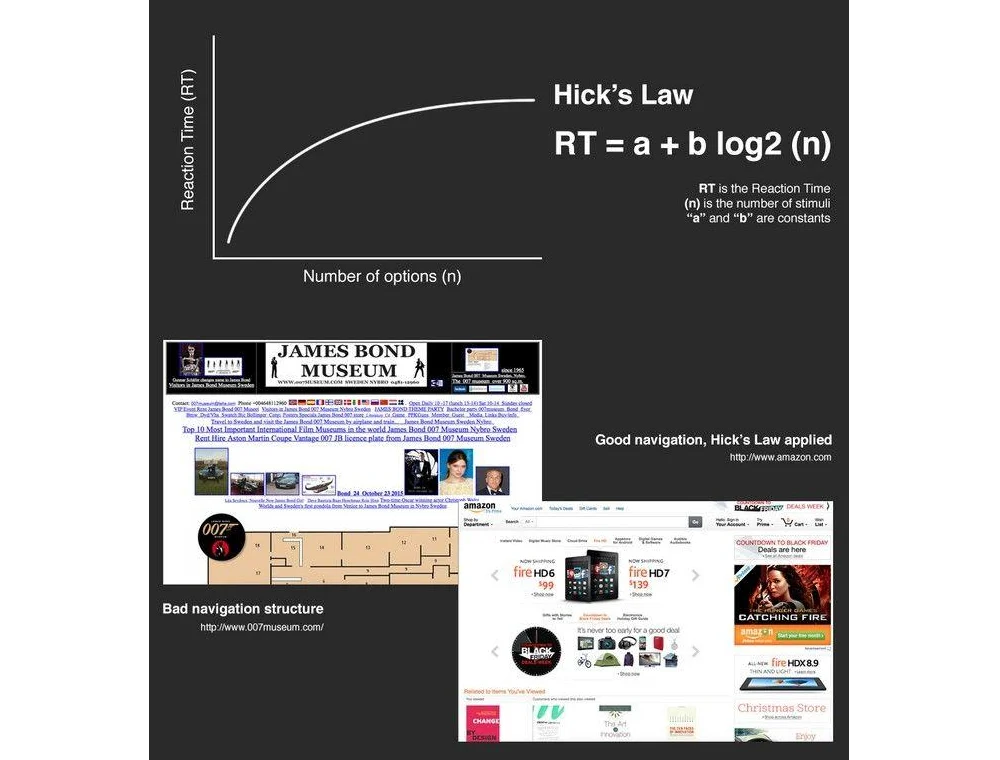
In the modern, hyper-saturated digital economy, the distinction between a "pretty interface" and a "functional business tool" has effectively vanished. As global markets transition deeper into the late 2020s, the cost of a friction-heavy interface is no longer measured merely in "lost clicks" or minor user frustration. Instead, it is measured in millions of dollars in wasted engineering spend, plummeting retention rates, and eroded brand equity.
Veteran UX designer Carrie Webster, who has navigated the digital product landscape since the early mobile-first era, argues that business leaders have reached a critical turning point. Design is no longer a cosmetic preference; it is the primary engine of business survival. "A UX design role is as much about research and analytics as it is about pixels," Webster asserts. "Hard data is the only tool powerful enough to bridge the gap between design and the boardroom."
The following analysis explores the data-backed pillars of UX ROI, the chronological shift of design’s role in the corporate hierarchy, and the long-term implications for companies navigating an AI-driven world.
I. The Ten Pillars of UX Profitability
To understand why UX is a non-negotiable requirement for a healthy bottom line, one must look at the clinical, data-backed facts that govern user behavior and financial outcomes.
1. The 1:100 Rule: Engineering Insurance
One of the most compelling financial arguments for UX is the "1:100 rule." Research from the IBM Systems Institute and Sugue Technologies demonstrates that fixing an error after a product has launched can be up to 100 times more expensive than addressing it during the initial design and prototyping phase.
By treating UX as "engineering insurance," companies ensure that every interaction is validated before a single line of code is written. When a fundamental navigation flaw is discovered post-launch, the company isn’t just paying for the fix; it is paying for technical debt, lost developer productivity, and the revenue hemorrhaged while users struggle with a broken flow.
2. The Performance-Conversion Link
In today’s landscape, performance is the foundation of user experience. A beautiful interface is worthless if the user bounces before it renders. Current data indicates that 47% of users expect a page to load in two seconds or less. A mere one-second delay can reduce conversions by 20% and customer satisfaction by 16%.
Retail giants lose an estimated $2.6 billion annually due to slow load times. Conversely, microscopic improvements offer massive levers for growth: a 0.1-second improvement in load speed can lift retail conversions by 8.4%.

3. The 50-Millisecond First Impression
First impressions are visceral and aesthetic. Research shows that users form an opinion about a website’s visual appeal in approximately 50 milliseconds (0.05 seconds). This "gut feeling" is a survival mechanism that dictates whether a user stays or leaves. In the current market, 94% of first impressions are strictly design-related. If the interface feels dated or "off," users subconsciously project that lack of quality onto the entire product or service.
4. Hick’s Law and the Cost of Overwhelm
Stakeholders often mistakenly believe that "more options" equals "more value." Psychology proves the opposite. Hick’s Law states that the time it takes to make a decision increases with the number of options available. Every extra menu item or form field acts as a "tax" on the user’s cognitive load. Top-performing sites, which simplify the user journey, achieve conversion rates exceeding 11%, while average performers struggle below 3%.
5. White Space as a Comprehension Tool
White space is often viewed by non-designers as wasted real estate. In reality, it is a tool for focus. Strategic use of white space can increase content comprehension by up to 20%. By giving the user’s eyes a place to rest, designers guide them toward high-value actions, such as "Buy" or "Sign Up" buttons.
6. The Goal Gradient Effect: Managing Momentum
The "Goal Gradient Effect" reveals that users complete tasks faster if they believe they have already made progress. A digital progress bar that starts at 15% (perhaps for simply creating an account) can increase onboarding completion rates by over 40%. This is not just about screens; it is about managing user dopamine and momentum.

7. Readability as a Conversion Tool
Typography is often undervalued, yet proper line spacing and paragraph width can increase content comprehension and reading speed by 20%. Optimal line height (1.5x the font size) reduces visual noise. If a product is hard to read, it is hard to buy.
8. Designing for the "Scanner"
Users do not read websites; they scan them. On average, users only read 20% to 28% of the text on a page. Consequently, design must accommodate "F-patterns" and "Spotted patterns" through the use of bullet points, bold headers, and short paragraphs.
9. The Magic Number Five
Massive user studies are often unnecessary and wasteful. Testing with just five users typically uncovers 85% of usability problems. This mathematical sweet spot allows companies to iterate quickly and cost-effectively, reaching a point of diminishing returns before costs spiral.
10. The 9,900% ROI
The most staggering statistic in the industry remains the $1 to $100 return on UX investment. This 9,900% ROI is the cumulative result of increased conversion rates (which can jump by 400% with optimized UX) and significantly reduced customer support costs.

II. Chronology: The Evolution of the Design-Value Chain
The role of UX has undergone a radical transformation over the last two decades:
- The Early Web Era (Pre-2010): Design was largely seen as "decoration." Websites were digital brochures, and UX was a niche concern for high-end software.
- The Mobile-First Shift (2010–2018): As smartphones became the primary gateway to the internet, businesses realized that "visual preference" was secondary to "functional necessity." The constraints of small screens forced a discipline of simplicity.
- The Experience Economy (2019–2024): Companies like Airbnb and Uber proved that the experience was the product. Design moved from the marketing department to the product development core.
- The Data-Driven Era (2025–Present): We have entered an age where design decisions are no longer subjective. UX is now a research-driven, clinical discipline integrated with business strategy and AI-driven personalization.
III. Supporting Data: The Business Value of Design
The cumulative effect of a mature UX practice is backed by global consultancy findings. McKinsey & Company’s "Business Value of Design" report, which tracked 300 publicly listed companies over five years, found that those with high design maturity scores saw 32% higher revenue growth and 56% higher total returns to shareholders compared to their peers.
This discrepancy exists because mature UX organizations move beyond "user delight" and into "user efficiency." For instance, shaving 30 seconds off an internal workflow for a team of 1,000 employees can reclaim hundreds of thousands of dollars in annual productivity.
IV. Official Responses and Industry Consensus
The industry’s leading voices maintain that the "Experience Gap" remains a significant market opportunity. According to research by Bain & Company, 80% of companies believe they deliver a "superior experience," but only 8% of customers agree.

The Nielsen Norman Group (NN/g), the gold standard in usability research, reinforces the "Testing with 5 Users" rule, noting that while more users may find more bugs, the cost-benefit ratio peaks at five. "The most successful firms are those that treat UX as a continuous improvement loop rather than a one-off project," states the consensus among top-tier UX consultants.
Furthermore, the integration of AI has not replaced these fundamentals but accelerated them. Adobe’s research into the AI-driven world suggests that while AI can automate layout and personalization, the underlying human psychology—such as the need for white space and the 50ms judgment—remains unchanged.
V. Implications: The Future of Design Strategy
As we move toward 2030, the line between design and business strategy has effectively vanished. The implications for the corporate world are clear:
- UX as a Revenue Center: Companies that view UX as a "cost center" or a "visual team" will continue to lose market share to design-led competitors who outperform them by 1.7x in revenue growth.
- Productivity Gains: The ROI of UX is not just external. Internal UX—the design of the tools employees use—will become a primary lever for operational efficiency.
- The Death of Intuition: Subjective opinions in the boardroom are being replaced by rigorous user testing and performance metrics. The era of "I like this color better" is over; the era of "This layout increases checkout completion by 12%" has arrived.
In conclusion, the data is undeniable. The ROI of user experience is not magic; it is the logical result of aligning digital products with human psychology and technical efficiency. For modern enterprises, the question is no longer whether they can afford to invest in high-level UX, but whether they can afford to let their competitors do it first.
 Nana Wu
  Nana
Nana 