
 By Lina Hope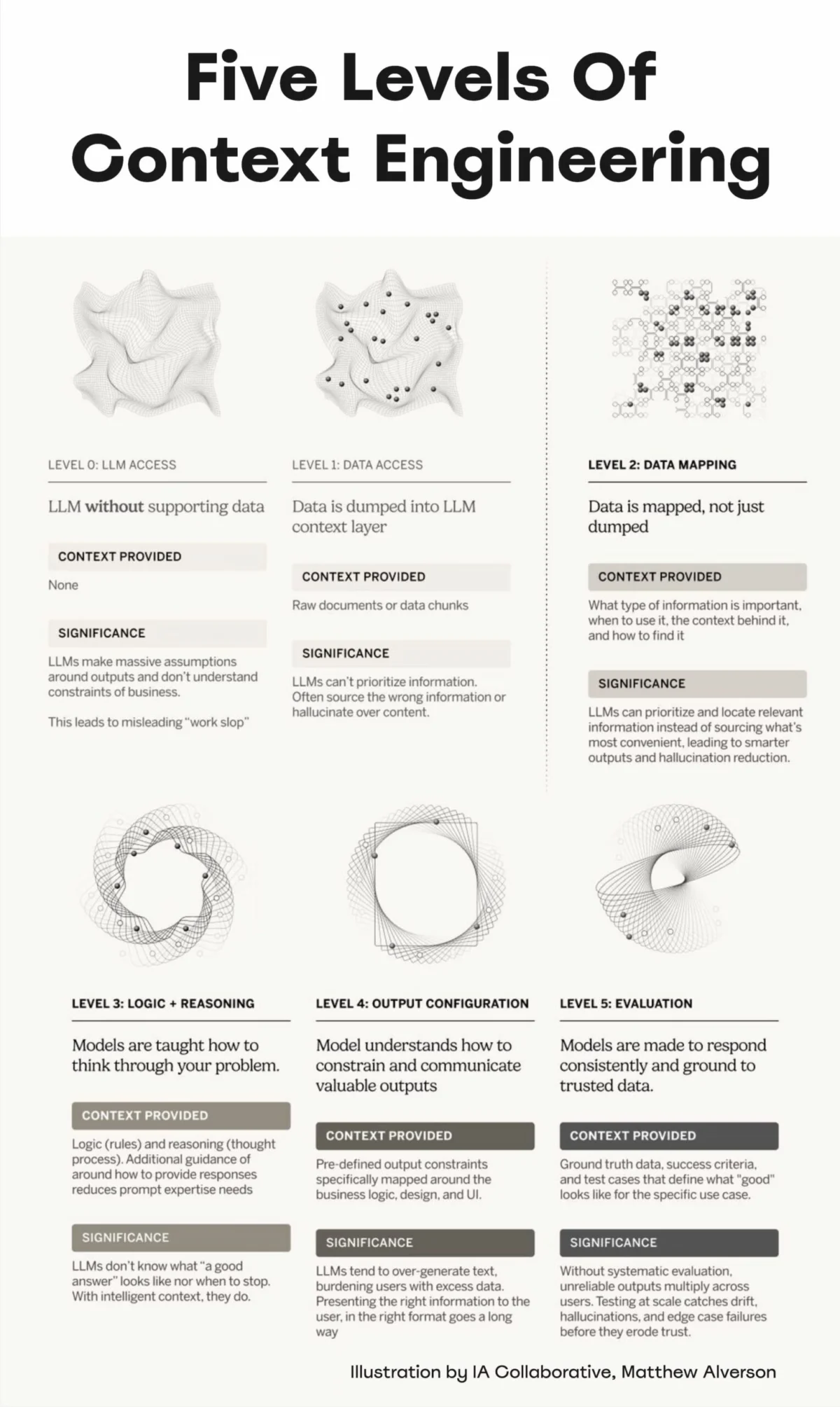
In the rapidly evolving landscape of product design, the promise of artificial intelligence has often been met with a frustrating reality: AI-generated prototypes frequently fall short of professional standards. While large language models (LLMs) can generate code and layouts at blistering speeds, the resulting designs often suffer from "drift"—a term used to describe the subtle inconsistencies, broken patterns, and lack of contextual awareness that separate a generic mockup from a production-ready interface.
Recent insights from industry leaders, including Hardik Pandya of Atlassian and UX expert Vitaly Friedman, suggest that the problem does not lie with the AI’s capabilities, but rather with the quality and structure of the data it consumes. To move beyond mediocre prototypes, design systems must transition from static libraries into "AI-ready" infrastructure.
Main Facts: The Crisis of AI Consistency in Design
The primary challenge facing designers today is that AI-generated prototypes often lack the nuance required for a cohesive user experience. These failures typically stem from three areas: scattered inconsistencies within the design system, undocumented design decisions, and an over-reliance on the AI’s ability to "guess" the logic behind a visual mockup.
When an AI is asked to generate a prototype based on a traditional Figma file, it often encounters hard-coded values, detached components, and missing interactive states. Without a clear set of rules, the AI makes assumptions. These assumptions lead to technical and design debt, requiring significant human intervention to fix.
To combat this, the design community is pivoting toward a new methodology: treating design systems as machine-readable infrastructure. By providing AI with structured "spec files" and rigorous token layers, organizations can minimize mistakes, maintain context, and significantly improve the output of AI-driven design workflows.
Chronology: From Visual Libraries to Machine-Readable Infrastructure
The evolution of design systems has reached a critical juncture. To understand the current shift toward AI-readiness, one must look at the progression of how design data is stored and utilized.
The Era of Static Libraries
Initially, design systems were merely collections of visual assets—buttons, forms, and icons stored in tools like Photoshop or early versions of Figma. Humans interpreted these assets, and the "context" lived in the designer’s head or in lengthy, often unread, PDF documentation.
The Rise of Design Tokens
With the advent of design tokens, systems became more programmatic. Colors, spacing, and typography were assigned variables. This allowed for better handoff between designers and developers but was still primarily intended for human consumption and manual implementation.

The Shift to LLM-Readable Systems
As of 2024, the industry is entering the third phase. Led by practitioners like Hardik Pandya, the focus has shifted to making these systems "LLM-readable." This involves translating design principles and component logic into structured text formats, such as Markdown, which AI models can parse more accurately than visual pixels.
Supporting Data: The Three-Layer Framework for AI Quality
To achieve consistency in AI-generated prototypes, experts recommend a three-layered architecture that provides the AI with a "source of truth" that is both rigid and descriptive.
1. The Spec File Layer (The Logic)
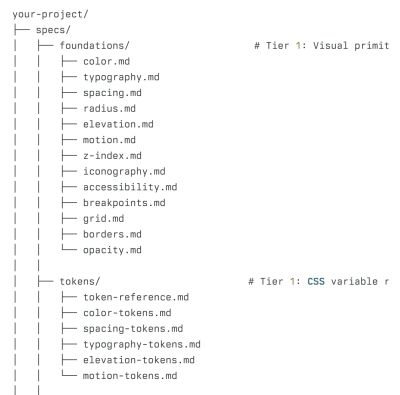
The most significant shift in AI-ready design is the use of structured Markdown files to define "specifications." Unlike a visual mockup, a spec file explicitly outlines:
- Spacing Rules: Not just "16px," but the logic of when to use specific increments.
- Component Usage Guidelines: Detailed instructions on when to use a primary button versus a ghost button.
- Accessibility Priorities: Explicit rules for ARIA labels and color contrast.
Because LLMs process text more efficiently and accurately than images, providing these rules in Markdown reduces the "hallucination" rate of the AI. It no longer has to guess the intent; it simply follows the documentation.

2. The Token Layer (The Variables)
A robust AI-ready system relies on a closed set of named variables. When an AI has access to a comprehensive token layer, it is prevented from inventing "plausible" but incorrect values. For example, instead of the AI choosing a random shade of blue that "looks right," the token layer forces it to select from color-brand-primary or color-background-subtle. This ensures that every generated prototype aligns perfectly with the existing brand identity.
3. The Audit Layer (The Quality Control)
Human-in-the-loop design remains essential, but it is increasingly augmented by automated auditing. Tools like FigmaLint have become indispensable in this workflow. FigmaLint is a free plugin designed to audit design systems for:
- Detached Instances: Finding components that have been broken away from their master logic.
- Missing Interactive States: Ensuring hover, focus, and disabled states are defined.
- Hard-Coded Values: Flagging any pixel values that haven’t been converted to tokens.
By running these audits before feeding a system into an AI, designers ensure the training data is "clean," leading to higher-fidelity outputs.
Official Responses: Expert Insights on Context Engineering
The consensus among industry leaders is that "Context Engineering" is the most critical skill for the modern designer. Vitaly Friedman, founder of Smashing Magazine and creator of the "Design Patterns For AI Interfaces" course, emphasizes that AI cannot magically resolve technical debt.
"AI relies heavily on clear decisions, established priorities, and well-defined principles," Friedman notes. "The more deliberate and precise designers are in guiding AI, the better the overall outcomes will be."
Friedman points to the Five Levels of Context Engineering (a framework popularized by Matthew Alverson and Addy Osmani) as a roadmap for improving AI interaction. These levels range from simple prompting to providing the AI with full access to the design system’s "infrastructure"—its history, its logic, and its future goals.
Hardik Pandya of Atlassian echoes this sentiment, arguing that design decisions must be treated as infrastructure. Every time a team decides how to prioritize work or select a specific UI pattern, that decision should find its way into a spec file. This ensures that the AI isn’t just generating a layout, but is actively "thinking" like a member of the design team.
Implications: The Future of the Design Profession
The transition to AI-ready design systems has profound implications for the role of the product designer and the lifecycle of software development.

The End of "Pixel Pushing"
As AI becomes more adept at generating layouts based on structured specs, the traditional role of the designer as a "pixel pusher" is likely to diminish. Instead, designers will become "Systems Architects." Their primary value will lie in their ability to define the rules, logic, and ethical boundaries of the design system, rather than manually drawing buttons in Figma.
Reduction of Design Debt
One of the most promising implications is the potential for AI to help clear technical and design debt. By using audit scripts and sync routines, organizations can ensure that their design documentation never becomes "stale." When a design system updates, a sync routine can automatically flag which spec files need to be revised, ensuring the AI is always working with the most current information.
Accessibility by Default
AI-ready systems provide a unique opportunity to bake accessibility into the foundation of design. By including accessibility requirements in the Markdown spec files, designers can ensure that every AI-generated prototype is inclusive by design, rather than as an afterthought.
Economic Efficiency
There is also a clear economic benefit. Processing structured text (Markdown) is significantly more cost-effective than processing high-resolution design files through computer vision models. Companies that adopt LLM-readable design systems will likely see faster iteration cycles and lower computational costs in their design-to-code pipelines.

Conclusion
The integration of AI into the design process is not a replacement for human creativity, but a call for greater human precision. As Vitaly Friedman suggests, the industry will be "busy for years to come" cleaning up design systems and translating human intuition into machine-readable logic.
To succeed in this new era, design teams must stop viewing their work as a collection of screens and start viewing it as a sophisticated data structure. By establishing rigorous spec files, maintaining deep token layers, and utilizing automated auditing tools like FigmaLint, designers can finally unlock the true potential of AI—moving from inconsistent "drifts" to high-quality, production-ready prototypes.
 Nana Wu
  Nana
Nana 