
 By Ali Ikhwan
When tennis icon Naomi Osaka stepped onto the court for her first-round match at the Australian Open, spectators and fashion critics alike paused. Her outfit was aggressively unconventional: strange, over-designed, theatrical, and balancing on the razor’s edge between high fashion and a sci-fi costume. It was a silhouette that felt deliberately off-kilter. The immediate internal reaction for many industry insiders was clear—this is not your standard Nike endorsement statement; this is pure absurdity.
And then came the second, more profound realization: Of course, it is.
We are currently living through a historical cultural loop where reality frequently outperforms satire. From collapsing geopolitical norms and institutional fractures to news cycles that read like rejected speculative fiction, coherence has become an optional luxury. In that context, Osaka’s outfit did not feel like a cheap provocation. It felt like absolute alignment—a visual shrug at a world that has systematically stopped making sense.
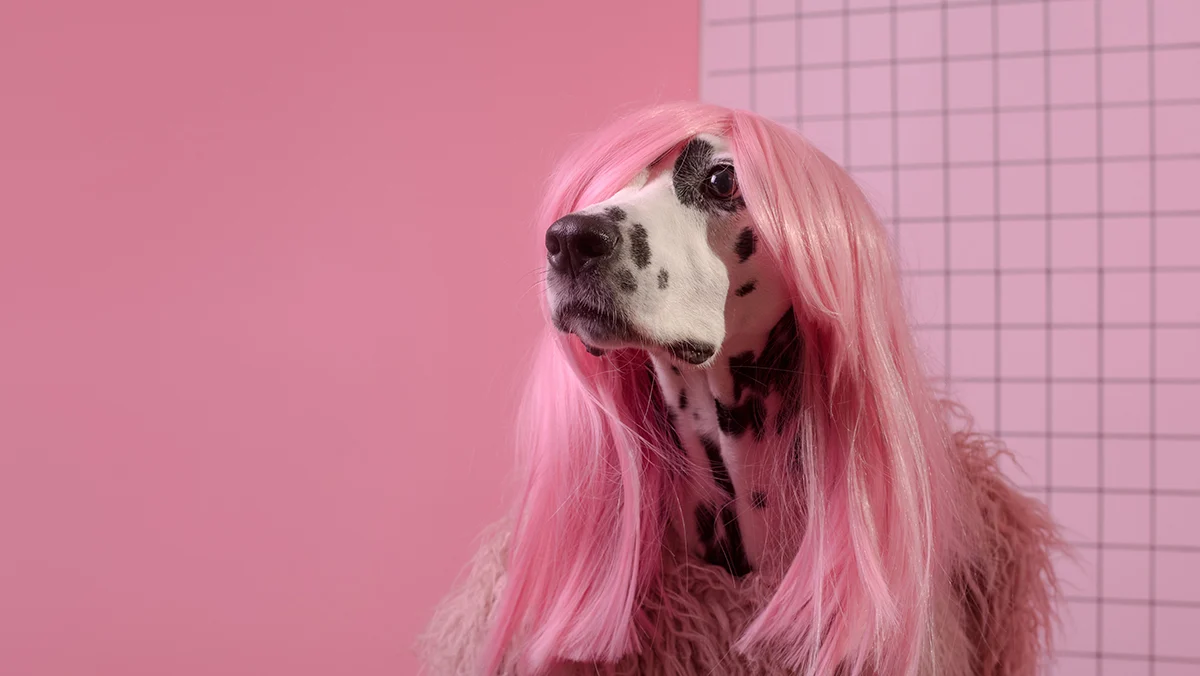
Welcome to the era of the "Absurdgasm": the strange, collective psychological relief we feel when brands, cultural arbiters, and designers stop pretending that everything is normal, and instead fully embrace the chaotic, unhinged aesthetics of a refreshingly creative breakdown.
Main Facts: The Anatomy of Nonsense Branding
The phenomenon of absurd branding is rapidly reshaping how consumer goods, luxury houses, and massive fast-food chains capture market share. Key elements of this trend include:
- Emotional Synchronization over Rational Utility: Brands are abandoning traditional value propositions (durability, efficiency, cost-effectiveness) in favor of shared psychological states, acknowledging consumer fatigue, climate anxiety, and political exhaustion.
- Cross-Category Hybridization: Unlikely collaborations—such as Sonic Drive-In partnering with Grillo’s Pickles, or Krispy Kreme joining forces with Crocs—are breaking traditional product classifications.
- The Attention Economy Engine: Absurdity acts as a pattern-interrupter in saturated digital landscapes, leveraging shock, mild disgust, or humor to force organic social media amplification.
- Long-Term Spatial and Retail Integration: Beyond temporary marketing stunts, brands like Gentle Monster are utilizing irrational retail design—turning stores into contemporary art installations devoid of standard product data—to build lasting brand equity.
Chronology: How the Cultural Logic of Nonsense Evolved
To understand how we arrived at the Absurdgasm, it is necessary to trace how pop culture and branding slowly untethered themselves from rational frameworks over the past decade.
Phase 1: The Memeification of the Internet (Late 2010s)
Long before brands embraced nonsense, internet culture paved the way. Fueled by algorithmic feeds and Gen Z humor, memes evolved away from structured punchlines toward deep-fried, non-sequitur surrealism. Logic was systematically abandoned in favor of pure, abstract vibes. Consumers spent hours engaging with content that meant nothing yet communicated everything about modern alienation.
Phase 2: Pandemic Fatigue and the Collapse of Linear Planning (2020–2022)
The global pandemic and subsequent macroeconomic instability shattered the illusion of long-term certainty. Traditional marketing roadmaps—built on linear trajectories of progress and rational consumer behavior—began to fail. Consumers grew deeply cynical of hyper-polished corporate optimism. Brands that maintained a straight face while pushing toxic positivity felt increasingly out of touch.
Phase 3: The Stunt Economy and Bizarre Collaborations (2023–2025)
Marketers realized that polite, clean-cut innovations were drowning in market saturation. This era gave rise to a wave of increasingly unhinged brand crossovers. Companies discovered that a questionable product—such as a donut-scented deodorant or a pickle-juice slushie—generated exponential earned media compared to millions spent on traditional feature-benefit advertising.
Phase 4: Mainstream Institutionalization of the Absurd (2026 and Beyond)
Today, absurdity is no longer reserved for fringe pop-up stunts or underground art collectives. It has infiltrated elite sports, high-end retail flagships, and global luxury fashion houses. The absurd has officially become a legitimate, structural design framework.
Supporting Data and Case Studies: The Proof Is in the Pickle Juice
Critics often dismiss absurd branding as a fleeting millennial or Gen Z gimmick. However, market performance and consumer engagement metrics suggest otherwise. When brands execute calculated irrationality, the results speak for themselves.
1. The Sonic Drive-In x Grillo’s Pickles "Picklerita Slush"
When Sonic announced a collaboration featuring pickle juice, lime, slush textures, and boba pearls, the culinary world blinked in confusion. Functionally, it was a beverage nobody organically needed. Many consumer reviews leaned toward mild disgust. Yet, the drink became a viral juggernaut across TikTok and Instagram. It succeeded not because it quenched thirst, but because it provoked an emotional cocktail: curiosity, laughter, and communal debate. It transformed a simple fast-food visit into a piece of participatory performance art.
2. Krispy Kreme x Crocs Classic Clog
Turning donuts into footwear and shoes into a sugar-glazed visual spectacle defies every rule of classic ergonomic retail design. Yet, the Krispy Kreme Crocs collaboration became an instant cultural collector’s item. It worked because it was instantly legible as a shared joke—a piece of wearable irony that transcended the physical utility of shoes.
3. Native x Dunkin’ Deodorant
Deodorant is an intensely functional product built on a straightforward promise: keep the user smelling neutral and fresh. By introducing coffee- and donut-scented variants, Native shattered category norms. Consumers did not buy it purely for sweat protection; they purchased it to participate in a sensory wink, proving their allegiance to a brand universe that doesn’t take itself too seriously.
4. Gentle Monster’s Irrational Retail Architecture
Korean eyewear brand Gentle Monster has mastered the art of the long-term absurd. Rather than building sterile showrooms filled with neatly organized racks of glasses, Gentle Monster treats its retail spaces—such as its flagship in Paris—as contemporary art galleries. Visitors encounter bizarre robotic installations, surreal sculptures, and little-to-no product information. By prioritizing immersive disorientation over frictionless shopping, the brand has cultivated intense global loyalty.
Official Responses and Industry Perspectives
The shift toward irrational design has sparked intense debate among corporate strategists, creative directors, and brand architects.
Marketers and Agency Strategists:
Many traditional brand strategists are wrestling with a fundamental identity crisis. For decades, the gospel of marketing demanded rigorous data modeling, consumer journey mapping, and rational optimization. Today, creatives are questioning whether that tight strategic grip is suffocating innovation.
As one prominent agency strategist noted:
"Should our approaches leave a little less room for strategic framing to make space for more creative chaos? Absurd products may not optimize life, but they do oxygenate it. They offer dopamine without moral pressure, and relief without explanation."
The Anti-Workshop Movement (MSCHF):
Art and branding collective MSCHF has effectively operationalized this philosophy. Operating at the intersection of internet culture and corporate provocation, MSCHF functions as an anti-workshop manifesto. They operate largely without sprawling slide decks or rigid consumer testing frameworks. Instead, they rely purely on cultural instinct, precise timing, and bold creative leaps—proving that deep emotional resonance often emerges precisely where rational corporate optimization stops.
Strategic Implications: Why Absurdity Is Here to Stay
As we look toward the future of brand development, the rise of the Absurdgasm carries profound implications for how companies build relationships with their audiences.
1. From "Target Segments" to Exhausted Humans
Traditional marketing segments consumers into rigid demographic and psychographic boxes. Absurd branding bypasses these analytical constructs and speaks directly to the emotional reality of modern human existence. It acknowledges that consumers are tired, overstimulated, and emotionally saturated. When a brand embraces absurdity, it stops talking down to consumers from a pristine corporate pedestal and instead stands next to them in the fog, sharing a laugh at the sheer strangeness of modern life.
2. Redefining the Boundaries of Innovation
Innovation departments must expand their definitions of value. While functional utility will always have a place, emotional utility—providing relief, humor, serendipity, and self-derision—is proving to be equally, if not more, valuable in building brand love. Loosening the marketing grip allows unexpected ideas to surface.
3. The Power of Emotional Generosity
Ultimately, the Absurdgasm is not about meaningless noise; it is an act of emotional generosity. In a world that increasingly feels surreal, cynical, and heavy, the role of design and branding is not always to endlessly optimize or explain. Sometimes, the most powerful thing a brand can do is to comfort, amuse, and remind us that we are not alone in finding the world to be a bit absurd.
 Dwi Wanna
 Sagoh
 Lina Irawan
