
 By Nana Wu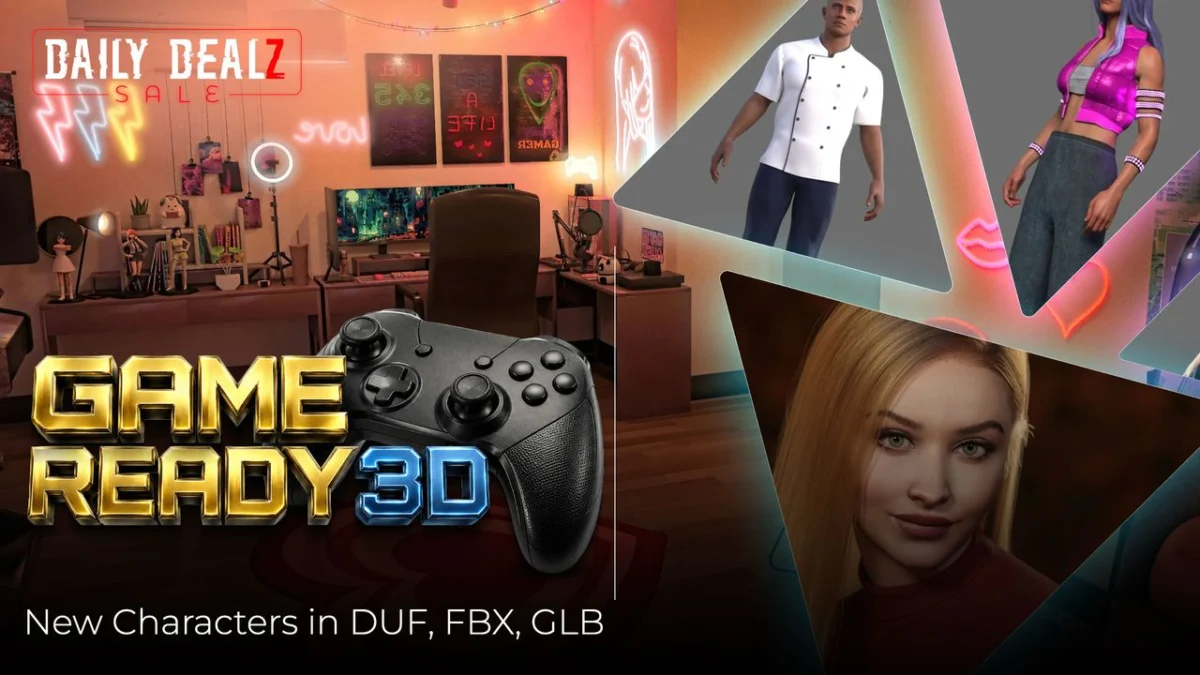
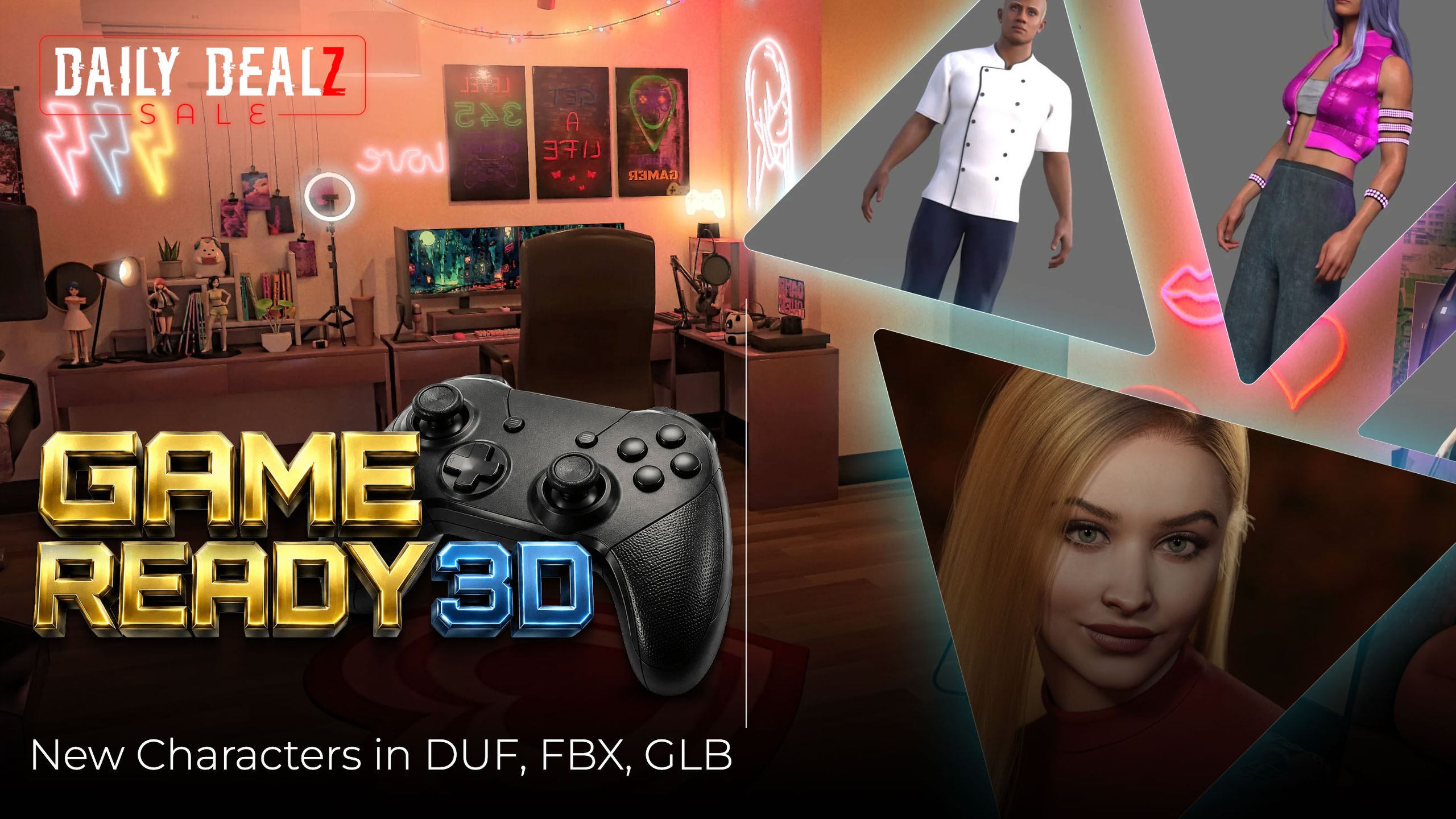
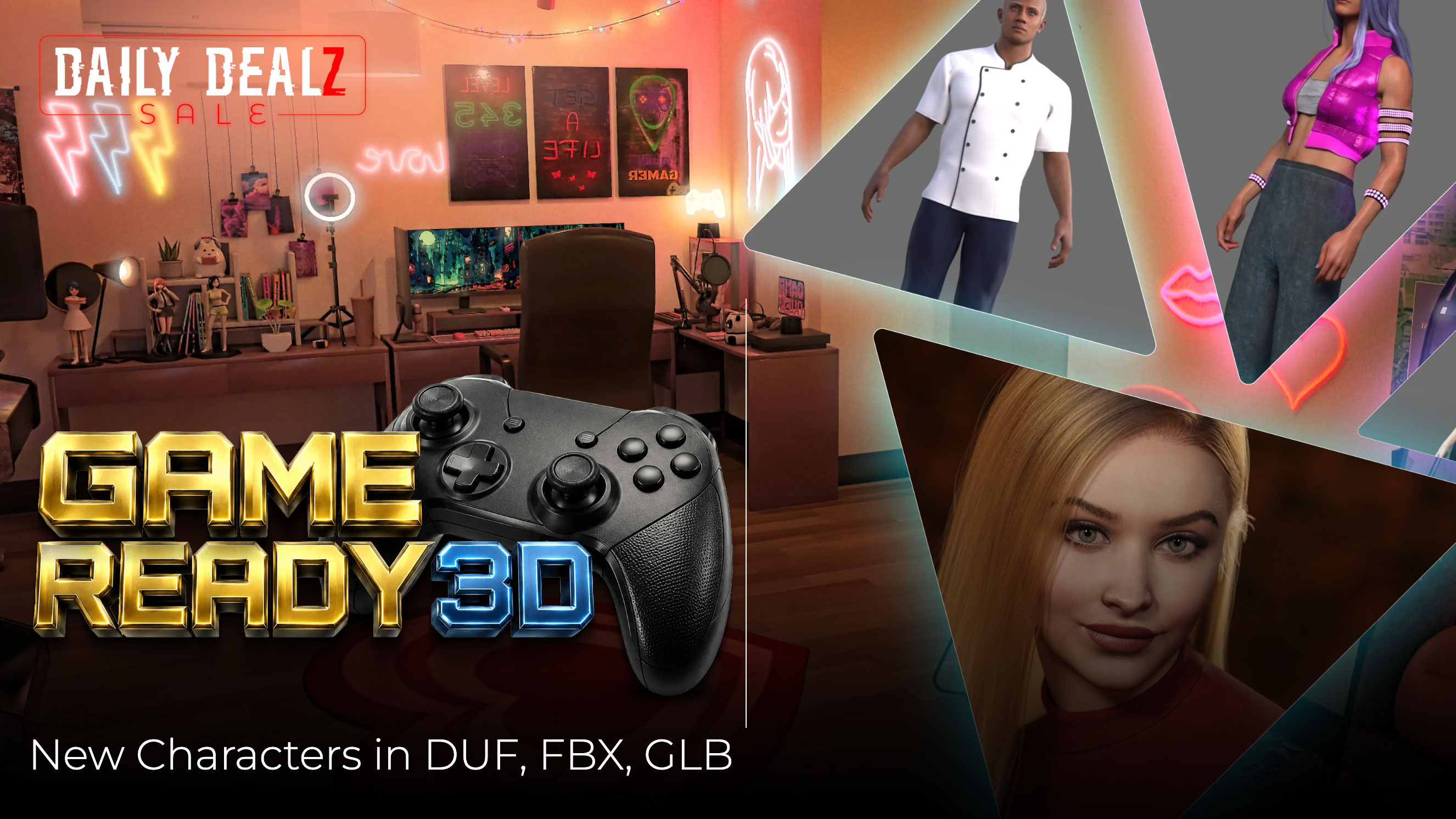
Salt Lake City, Utah – [Date of Publication] – Daz 3D, a leading provider of 3D content and software, has announced the launch of a groundbreaking new line of game-ready character assets. This initiative directly addresses a long-standing challenge faced by 3D artists, game developers, and virtual production teams: the arduous and time-consuming process of integrating high-fidelity 3D characters into real-time engines and interactive environments. The new collection is specifically engineered to streamline workflows, offering meticulously organized assets designed for immediate use across major platforms like Unreal Engine, Unity, and Blender.
The launch signals a significant shift in Daz 3D’s strategy, moving beyond its traditional role as a source of detailed character models to become a critical enabler for efficiency in modern, interconnected 3D pipelines. This curated selection of assets promises to dramatically cut down the hours typically spent on material cleanup, geometry optimization, and scene reconstruction, freeing artists to concentrate on creative development rather than technical troubleshooting. The target audience is broad, encompassing seasoned game developers, virtual production specialists, interactive project creators, concept artists seeking rapid prototyping tools, and even illustrators looking for high-quality poseable references. By delivering assets that are production-ready "out of the box," Daz 3D aims to accelerate development cycles and lower the barrier for integrating sophisticated characters into diverse creative projects, thereby boosting the capabilities of numerous 3D modeling software options.
The Evolution of 3D Asset Integration: A Chronology of Challenges and Solutions
The journey of a high-fidelity 3D character from creation to integration into a real-time engine has historically been fraught with technical hurdles. This new offering from Daz 3D is a direct response to these persistent challenges, reflecting an industry-wide push towards greater efficiency and interoperability.
The Persistent Pain Point for 3D Artists
For years, 3D artists and developers have grappled with the "integration gap." Importing highly detailed character assets, whether originating from Daz Studio, intricate ZBrush sculpts, or high-resolution scan data, into game engines or virtual production environments has rarely been a straightforward drag-and-drop operation. These assets, while visually stunning in their native software, often arrive in a state far from production-ready. Common issues include fragmented material setups, where a single character might be composed of dozens or even hundreds of disparate materials, each requiring manual adjustment or re-linking within the target engine’s shader graph. This leads to an overwhelming and unwieldy material pipeline, forcing artists to spend countless hours untangling complex node networks and rebuilding shaders from scratch.
Furthermore, excessive layered geometry is another frequent culprit. Models designed for static renders or cinematic pre-visualization often contain superfluous polygons, hidden meshes, or multiple overlapping elements that are detrimental to real-time performance. Cleaning up this "scene bloat" involves meticulous mesh optimization, retopology, and often the manual culling of unnecessary elements. The underlying scene structures can also be incredibly messy, with disorganized hierarchies, unlabelled objects, and inconsistent naming conventions, making it a scavenger hunt just to identify and manipulate specific parts of a character. This tedious, unglamorous work is not only a drain on resources but also a significant bottleneck in production timelines, diverting valuable creative energy towards purely technical remediation. For independent developers or smaller studios with limited technical art resources, these integration challenges can be prohibitive, delaying projects or forcing compromises on visual fidelity.
Daz 3D’s Response: A Targeted Approach
Recognizing this pervasive industry pain point, Daz 3D has strategically positioned its new asset line as a direct solution. Historically known for providing an expansive library of highly customizable 3D figures, Daz 3D has now pivoted to optimize these assets specifically for performance and ease of use in real-time applications. This launch is not merely an expansion of their existing catalog but a re-engineering effort rooted in extensive feedback from their professional user base.
The core promise of the new game-ready range lies in its "cleaner asset organization, simplified texture workflows, and tidier material structures out of the box." This means that upon import, artists should find a more logical grouping of components, streamlined material assignments that are easier to understand and modify, and optimized geometry that is ready for rendering in real-time. The emphasis is on reducing the friction points that typically plague asset integration. While the ultimate efficacy will be determined by how these assets perform under the diverse and often demanding conditions of real-world production pipelines, the theoretical benefits outlined by Daz 3D represent a significant leap forward in workflow efficiency. This proactive approach aims to bridge the gap between high-fidelity creation and real-time application, addressing a critical need across the creative technology landscape.
Technical Specifications for Seamless Integration
The technical underpinnings of Daz 3D’s new game-ready assets are designed for maximum compatibility and minimal friction. The assets are exported in industry-standard formats: FBX and GLB. FBX (Filmbox) is a proprietary file format owned by Autodesk, widely used for 3D content interchange, particularly in animation, games, and virtual reality due to its robust support for mesh, animation, and material data. GLB (GL Transmission Format Binary) is a more modern, open-standard, and efficient format, particularly favored for web-based 3D applications, AR/VR, and game engines due to its compact nature and ability to embed all asset data (models, textures, animations) into a single file. The inclusion of both formats ensures broad compatibility across the spectrum of 3D software and engines.
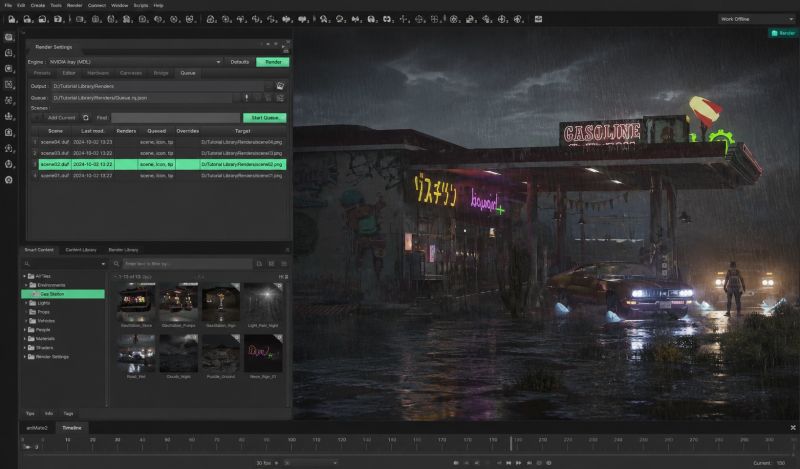
A cornerstone of this release is the explicit claim that these assets are built to "drop into Unreal Engine, Unity, and Blender without extensive conversion or bridge plugins." This direct integration capability is a monumental time-saver. Artists often rely on cumbersome plugins or manual conversion processes, which can introduce errors, break material links, or necessitate significant post-import cleanup. The promise of immediate usability in these dominant engines (Unreal Engine for high-fidelity games and virtual production, Unity for diverse interactive experiences, and Blender for its growing influence as a complete 3D suite) underscores Daz 3D’s commitment to broad industry applicability.
Further technical refinements include logical grouping of texture maps by area (head, body, hair, outfit, and eyes). This seemingly small detail offers substantial practical benefits, eliminating the frustration of hunting through a disorganized mess of unlabelled files when trying to make specific texture adjustments. Perhaps even more strategically significant is the inclusion of MetaHuman-compatible UV layouts. This detail suggests a deliberate alignment with Epic Games’ MetaHuman framework, a powerful tool for creating realistic digital humans. By adopting compatible UVs, Daz 3D is not merely aiming for generic "engine-agnostic" support but is actively positioning its assets for easier integration into Epic’s increasingly influential ecosystem, potentially allowing for more seamless interaction with MetaHuman Creator and its associated tools.
Finally, outfits and accessories have been consolidated into fewer, unified materials. In many high-end character models, each individual clothing item or accessory might come with its own set of materials, leading to an explosion of draw calls and rendering overhead in real-time environments. By unifying these, Daz 3D reduces scene bloat and improves performance. While this consolidation is a welcome change for efficiency, artists will be keen to observe whether it impacts flexibility, specifically the ability to easily swap or customize individual outfit elements without having to break apart or re-engineer the consolidated material structure. The balance between optimization and artistic freedom will be a key factor in the long-term adoption of these streamlined assets.
Supporting Data and Industry Context
The introduction of Daz 3D’s game-ready assets arrives at a pivotal moment for the 3D industry, where the demand for efficiency and high-quality content is escalating across multiple sectors.
The Growing Demand for Efficiency in 3D Production
The landscape of 3D production has undergone a profound transformation in recent years. The proliferation of real-time engines like Unreal Engine and Unity has democratized access to high-fidelity visuals, making them attainable for projects beyond AAA game development. Virtual production, where real-time engines drive LED walls for film and television, demands instantaneous asset integration and iteration. Interactive experiences, from architectural visualizations to educational simulations, require dynamic and responsive 3D content. This burgeoning ecosystem has created an insatiable appetite for high-quality 3D assets, but equally, it has highlighted the inefficiencies of traditional asset pipelines.
The "scattered modern pipelines" referenced by Daz 3D CEO James Thornton are a testament to this complexity. Production teams today often leverage a diverse array of specialized tools—modeling in Maya or Blender, sculpting in ZBrush, texturing in Substance Painter, animation in MotionBuilder, and final integration in a game engine. Moving assets between these disparate software environments inevitably creates friction. Each tool has its own proprietary data structures, material definitions, and optimization methodologies. The current industry standard often involves custom scripts, specialized bridge plugins, or dedicated technical artists whose primary role is to ensure assets are "pipeline-ready." Daz 3D’s new line directly challenges this paradigm by offering a more unified and pre-optimized solution, aiming to minimize the need for these intermediary steps and resources.
The Indie Developer and Concept Artist Advantage
While large studios might have the resources to build robust internal pipelines and employ dedicated technical art teams, indie developers and individual concept artists often operate with severe resource constraints. For these creators, the time spent on technical cleanup is time not spent on creative iteration, gameplay development, or storytelling. Daz 3D’s game-ready assets offer a significant advantage here.
For indie studios, access to pre-optimized, high-quality character models means they can achieve a level of visual fidelity typically associated with larger productions, without the associated development overhead. This can accelerate prototyping, facilitate rapid iteration on character designs, and ultimately bring projects to market faster. Concept artists, too, stand to benefit immensely. The ability to quickly drop a character into an environment, pose it, and render it with minimal setup allows for faster visualization of ideas, enabling quicker feedback loops and more dynamic conceptualization. Illustrators, who frequently use 3D models for accurate anatomical reference or complex scene composition, can now bypass the painstaking process of preparing models, directly incorporating them into their workflow to inform their 2D art. The claim that these assets will "boost many of the best 3D modeling software options" is pertinent; they are designed to augment existing creative toolsets rather than replace them, providing a foundational layer of pre-optimized content that can be further customized and integrated.
The Commercial Landscape of 3D Assets
The market for ready-made 3D assets is robust and continuously expanding, driven by the increasing demand for efficient content creation. Daz 3D has long been a significant player in this space, particularly known for its Genesis figures and extensive ecosystem of clothing, hair, and props. However, the game-ready segment often has distinct requirements for polygon count, material complexity, and animation rigging. Other companies offer their own solutions, such as Reallusion’s Character Creator, which focuses on creating game-ready characters with PBR materials and animation tools, or marketplaces like Sketchfab and ArtStation, where artists sell individual optimized assets.
Daz 3D’s new line enters this competitive landscape with a strong value proposition: reducing the hidden costs of asset integration. While the initial purchase price of an asset is visible, the true cost often includes the hours of labor required to make it production-ready. By minimizing this technical overhead, Daz 3D aims to offer a more compelling return on investment, particularly for projects with tight deadlines and budgets. This strategic move positions Daz 3D not just as a content provider, but as a solution provider for pipeline efficiency, directly addressing a critical pain point that many in the industry have simply accepted as an unavoidable part of the 3D production process.
Official Responses and Strategic Vision
The launch of Daz 3D’s game-ready character assets is underpinned by a clear strategic vision articulated by the company’s leadership, reflecting an understanding of contemporary production challenges and a commitment to future-proofing creative workflows.
Daz 3D’s CEO on Pipeline Simplification
James Thornton, CEO of Daz 3D, frames this release as a direct and necessary response to the evolving demands of the digital content creation industry. His statement highlights the core problem: "Production pipelines have become much more connected over the past several years. Teams are working across more tools, more engines, and more complex production environments." This observation underscores a fundamental shift in how digital content is produced. The days of monolithic, single-software pipelines are largely over; modern workflows are inherently distributed and multidisciplinary, requiring assets to travel seamlessly between various specialized applications and platforms.
Thornton’s vision for these new assets is clear: "These assets were designed to simplify setup and make high-quality characters easier to integrate into complex workflows." This simplification is not just about convenience; it’s about enabling a fundamental shift in focus for creators. By removing the technical burden of asset preparation and cleanup, Daz 3D aims to allow artists and developers to "stay focused on building experiences instead of spending time rebuilding or reorganizing assets." This philosophy aligns with a broader industry trend towards democratizing advanced content creation, ensuring that sophisticated tools and assets are accessible and usable by a wider range of creators, regardless of their technical expertise in asset optimization. It’s a strategic move to add significant value beyond the raw polygons and textures, providing a solution that addresses the practical realities of modern production.
Commitment to a Broader Ecosystem
The current release is presented as merely "the start of a broader game-ready library," signaling Daz 3D’s long-term commitment to this new product category. This is not a one-off offering but the foundation for an expanding ecosystem of optimized content. Daz 3D has explicitly stated its intention to commit to "more characters and assets down the line," suggesting a continuous pipeline of new releases tailored for game development, virtual production, and interactive media.
This commitment has several significant implications for Daz 3D’s future strategy. Firstly, it indicates a strong pivot towards becoming a more central and indispensable resource for studios and individual creators operating within real-time environments. By consistently providing "drop-in" solutions, Daz 3D aims to cultivate a loyal user base that relies on its assets for rapid prototyping and production. Secondly, it suggests potential for deeper integration with other Daz 3D products and services. For instance, if the core Genesis figures are made game-ready, it opens the door for optimizing the vast library of clothing, hair, and morphs that are compatible with them, creating a truly comprehensive game-ready character customization system. This strategic expansion could solidify Daz 3D’s position as a dominant force in the high-quality, pre-optimized 3D asset market, challenging existing solutions and setting new benchmarks for ease of use and pipeline integration.
Implications for the Future of 3D Content Creation
Daz 3D’s launch of game-ready character assets carries significant implications that could reshape how 3D content is produced, integrated, and consumed across various industries.
Democratizing High-Fidelity Production
One of the most profound implications of this development is the potential for democratizing high-fidelity 3D production. Historically, achieving realistic character visuals in real-time engines required substantial technical expertise and computational resources, often placing it out of reach for independent developers, educational institutions, or small creative agencies. By providing assets that are pre-optimized and designed for seamless integration, Daz 3D effectively lowers the barrier to entry. Smaller studios can now leverage professional-grade characters without needing to hire extensive technical art teams or invest heavily in complex internal pipelines. This could lead to a surge in the quality of indie games, more sophisticated virtual experiences, and richer interactive narratives, as creators are empowered to focus on their unique visions rather than battling technical overheads. Faster iteration and experimentation become possible, fostering a more agile and innovative development environment.
The Evolving Role of 3D Artists
This shift will undoubtedly impact the role of 3D artists. While the fundamental skills of modeling, sculpting, and texturing remain crucial, the demand for extensive technical cleanup and optimization might diminish, at least for initial asset integration. Artists may find themselves shifting their focus from tedious, repetitive tasks to more creative endeavors such as advanced customization, unique asset development, character animation, and the overall artistic direction of a project. Technical artists, rather than spending their time on basic asset preparation, could concentrate on more complex shader development, advanced rigging, or building bespoke pipeline tools that further enhance Daz 3D’s offerings. However, it will still be essential for artists to understand the underlying principles of asset pipelines and optimization, as even "game-ready" assets may require project-specific tweaks and further refinement to fit a particular aesthetic or performance target.
Industry Benchmarks and Competition
Daz 3D’s move is likely to set a new benchmark for "game-ready" assets in the commercial marketplace. This could spur other asset providers and marketplaces to follow suit, leading to a wider availability of pre-optimized content across the industry. Competition among asset creators may intensify, with a focus shifting from sheer model detail to the ease of integration and real-time performance. This could challenge existing solutions and complement others. For example, tools like Reallusion’s Character Creator, which already emphasizes game-ready character generation, might find themselves with a more direct competitor, or alternatively, opportunities for even deeper interoperability. The ongoing demand for "out-of-the-box" solutions is a clear trend in a fast-paced industry where time-to-market and efficiency are paramount.
Conclusion: A Step Towards Streamlined Creativity
Daz 3D’s launch of game-ready character assets represents more than just a new product line; it’s a strategic response to the evolving demands of digital content creation. By tackling the persistent problem of complex asset integration head-on, Daz 3D is taking a significant step towards streamlining creative workflows across game development, virtual production, and interactive projects. The promise of cleaner organization, simplified textures, and direct engine compatibility aims to empower artists, allowing them to redirect their valuable time and energy from technical troubleshooting to pure creative expression. As Daz 3D commits to expanding this library, the implications for a more accessible, efficient, and creatively focused 3D content ecosystem are profound. This initiative marks a pivotal moment, pushing the industry closer to a future where high-fidelity digital characters are not just beautiful, but effortlessly usable.
To explore the initial range of game-ready assets and learn more about Daz 3D’s vision, visit their official website at Daz 3D’s website.
 Lina Hope
  Layla Zulfa
  Lina Irawan