
 By Reynand Wu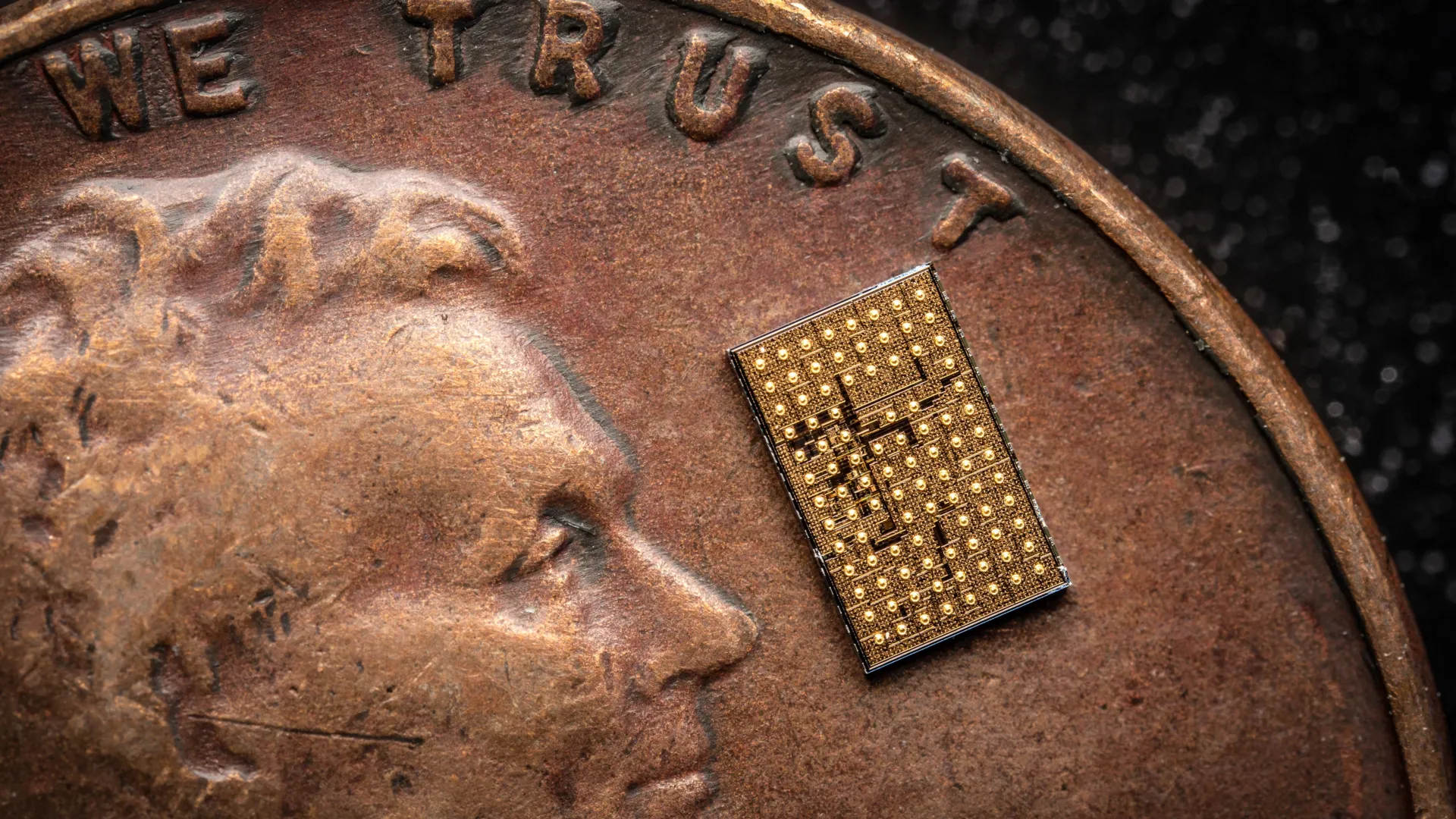
As the global appetite for artificial intelligence, cloud computing, and high-performance data processing skyrockets, the physical infrastructure supporting these technologies faces an existential crisis: power consumption. Data centers, the silent engines of the digital age, are consuming electricity at an unprecedented rate. Now, a team of engineers at the University of California San Diego has unveiled a pioneering chip design that promises to radically improve the energy efficiency of the systems powering modern Graphics Processing Units (GPUs), potentially curbing the massive energy footprint of the world’s most advanced computing environments.
The breakthrough, published in the journal Nature Communications, focuses on the critical—and often inefficient—process of voltage conversion. By shifting away from traditional magnetic-based technology toward a novel hybrid piezoelectric architecture, the researchers have demonstrated a prototype capable of maintaining high efficiency while handling the extreme voltage drops required by modern server racks.
The Growing Crisis: Digital Demand vs. Physical Limits
To understand the magnitude of this innovation, one must first understand the fundamental challenge of power delivery in a modern data center. Electricity is typically transmitted to server racks at 48 volts, a high-potential state that minimizes transmission losses over long distances. However, the delicate silicon hearts of these racks—GPUs, CPUs, and specialized AI accelerators—operate at drastically lower voltages, usually between 1 and 5 volts.
Bridging this gap is the responsibility of DC-DC step-down converters. These components act as the gatekeepers of energy, throttling the flow of electricity to ensure that processors receive the precise, stable current they need without burning out.
For decades, engineers have relied on magnetic components, specifically inductors, to manage this conversion. While inductive converters have been the industry standard for a generation, they are currently hitting a wall. As processors become more compact and power-dense, the demand for higher current grows. Traditional magnetic converters are struggling to keep pace, suffering from efficiency losses as they attempt to manage increasingly steep voltage drops. In a data center, even a one-percent improvement in conversion efficiency can equate to millions of dollars in electricity savings and a significant reduction in carbon emissions.
Chronology of the Innovation: From Magnetic to Mechanical
The journey toward this new design began with an acknowledgment that the "low-hanging fruit" of inductive power management has already been picked.
The Limits of Induction
For years, the industry has optimized inductors to the point of diminishing returns. As senior author Patrick Mercier, a professor in the Department of Electrical and Computer Engineering at the UC San Diego Jacobs School of Engineering, noted, "We’ve gotten so good at designing inductive converters that there’s not really much room left to improve them to meet future needs."
The Piezoelectric Pivot
Recognizing this stalemate, Mercier and his lead researcher, Ph.D. student Jae-Young Ko, pivoted toward a different physical phenomenon: piezoelectricity. Unlike traditional magnetic components that store energy in magnetic fields, piezoelectric resonators store and transfer energy through mechanical vibrations.
In the early phases of their research, the team identified the inherent promise of piezoelectric materials: they are naturally smaller, more energy-dense, and potentially easier to scale than their magnetic counterparts. However, early piezoelectric converters were plagued by "performance anxiety." They struggled to maintain efficiency when tasked with the high voltage-conversion ratios common in modern data centers, often failing to deliver the current necessary to support power-hungry GPUs.
The Hybrid Solution
The breakthrough came when the team moved away from a "pure" piezoelectric approach. By designing a hybrid system that integrated a piezoelectric resonator with a series of small, commercially available capacitors, they created a new architecture. This configuration allowed for multiple energy pathways, effectively "sharing the load" and preventing the resonator from being overwhelmed by the high-voltage input.
In laboratory testing, this hybrid design was applied to a prototype chip. The results were striking: the device successfully performed a conversion from 48 volts down to 4.8 volts—a ten-fold reduction—with a peak efficiency of 96.2 percent, all while delivering four times the output current of previous piezoelectric-only designs.
Technical Specifications and Supporting Data
The data generated by the UC San Diego team provides a compelling case for the transition away from conventional magnetic technology.
- Conversion Ratio: 48V to 4.8V.
- Peak Efficiency: 96.2%.
- Current Delivery: 4x improvement over previous piezoelectric-based benchmarks.
- Design Philosophy: A hybrid architecture utilizing piezoelectric resonators paired with integrated capacitors to create multi-path power distribution.
The success of the prototype relies on the specific way the hybrid system manages voltage stress. In a standard converter, the burden of the "step-down" is often concentrated on a single component, leading to heat generation and energy waste. The UC San Diego design distributes this stress across the piezoelectric element and the capacitive network. By creating a collaborative electrical environment, the chip reduces the strain on the resonator, allowing for a more stable and efficient current output even as the system scales.
Official Responses and Expert Perspective
The implications of this research have been met with guarded optimism from the engineering community. Professor Patrick Mercier, while clearly proud of the milestone, remains grounded regarding the timeline for commercialization.
"Piezoelectric-based converters aren’t quite ready to replace existing power converter technologies yet," Mercier stated in a press release. "But they offer a trajectory for improvement. We need to continue to improve on multiple areas—materials, circuits, and packaging—to make this technology ready for data center applications."
The research was supported by the Power Management Integration Center (PMIC), an Industry-University Cooperative Research Center (IUCRC) funded by the National Science Foundation (award number 2052809). This funding underscores the national importance of power management as a strategic priority for the United States, particularly as the nation seeks to maintain its leadership in AI infrastructure.
Jae-Young Ko, the first author of the study, emphasized that the "mechanical" nature of these components is a double-edged sword. While the vibrations allow for higher energy density, they also present a unique integration challenge: you cannot simply solder a vibrating component onto a standard circuit board. The researchers are now shifting their focus toward "packaging," seeking novel ways to mount these resonators so they can function effectively within the rigid, high-density environment of a commercial motherboard.
Implications for the Future of Computing
The potential impact of this research on the tech industry is profound. If successfully scaled, the hybrid piezoelectric converter could usher in a new era of "compact power."
Smaller, Cooler Data Centers
As the size of power conversion components decreases, the physical footprint of server racks can be reduced, or alternatively, more computing power can be packed into the same amount of space. Reduced energy waste also means less heat generation, which in turn reduces the burden on data center cooling systems—often one of the largest secondary expenses in large-scale computing.
Sustainability and Carbon Footprint
Data centers are responsible for a significant percentage of global electricity consumption. Any technology that increases the efficiency of the "last mile" of power delivery—the conversion from the rack input to the GPU—has an immediate, positive impact on the total carbon footprint of the digital ecosystem.
A Path Toward Next-Generation AI
As AI models grow in complexity, they require more GPUs running in parallel. Current power delivery systems are already struggling to keep these clusters cool and powered efficiently. The UC San Diego research provides a viable roadmap to overcome these physical constraints, potentially allowing for the next generation of "super-GPUs" that would otherwise be limited by current power delivery capabilities.
Conclusion: The Long Road to Adoption
While the UC San Diego prototype represents a significant leap forward, it is important to view it as a foundational step rather than an overnight solution. The engineering community is currently in a phase of experimentation where new materials—such as high-performance thin-film piezoelectrics—are being explored to further refine the efficiency and longevity of these devices.
The transition from a laboratory prototype to a commercial-grade, mass-produced chip will require years of iterative design, rigorous reliability testing, and the development of new manufacturing standards for piezoelectric integration. However, the trajectory is clear: as we reach the theoretical limits of traditional magnetic power conversion, the mechanical vibrations of piezoelectric resonators are positioning themselves as the technology of the future.
By rethinking the fundamental way we move electricity through our most advanced machines, the team at UC San Diego has not only provided a more efficient way to power GPUs but has also opened a vital new frontier in the quest for a more sustainable digital future. As computing demands continue to climb, this hybrid approach may prove to be the key to keeping the lights on in the data centers of tomorrow.
 Dwi Wanna
  Nana Wu
  Siti Muinah