
 By Muslim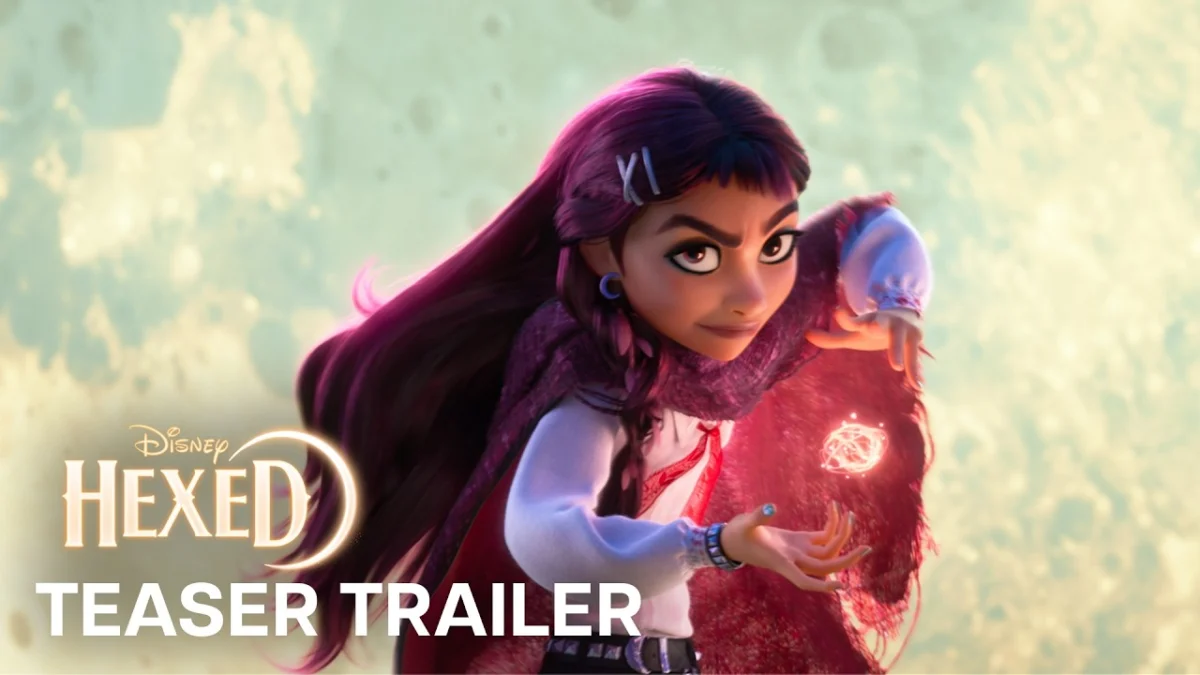
Los Angeles, CA – Disney’s upcoming animated feature, "Hexed," is once again at the epicenter of a swirling controversy, this time not over its character designs, but its fundamental cinematic framing. Following an initial uproar in April regarding the main character’s gender swap and a perceived departure from early concept art aesthetics, the recently unveiled teaser trailer has sparked a vigorous debate: is Disney designing its films with TikTok and other vertical social media platforms in mind, potentially at the expense of traditional cinematic artistry?
The trailer for "Hexed," which promises a vibrant magical world for its protagonist, Billie Doe (voiced by Hailee Steinfeld), has drawn both praise for its visuals and sharp criticism for its compositional choices. Many viewers and industry observers have noted a conspicuous tendency to center key action and characters, leading to widespread speculation that the film is being intentionally framed to facilitate easy cropping for vertical video formats prevalent on mobile devices. This perceived concession to fleeting digital consumption has ignited a conversation about the evolving landscape of filmmaking, artistic integrity, and the commercial pressures influencing major studios.
A Chronology of Controversy
The journey of "Hexed" from its initial announcement to its latest teaser has been marked by a series of public discussions, highlighting the intense scrutiny Disney projects often face and the shifting expectations of modern audiences.
Early Whispers: Character Design & Aesthetic Shift
The first wave of public contention surrounding "Hexed" emerged in April, months before the trailer’s release. Initial concept art and preliminary details indicated a male protagonist, but subsequent revelations confirmed a change to a female lead, Billie Doe. While studios frequently adapt and evolve projects during development, this particular alteration drew criticism from a segment of the audience, who felt it represented a trend of studios altering established creative visions.
Compounding this was the perceived aesthetic shift. Early concept art for "Hexed" reportedly hinted at a distinct visual style, which some fans felt was not reflected in the eventual 3D CG animation presented. The move towards a more generalized, contemporary CG aesthetic, rather than a potentially unique or hand-drawn inspired look, fueled anxieties among animation enthusiasts about creative homogenization within major studios. This initial phase set a precedent for a critical eye on the film’s development, laying the groundwork for the more profound debate that would follow.
The Trailer Drops: Framing Sparks New Firestorm
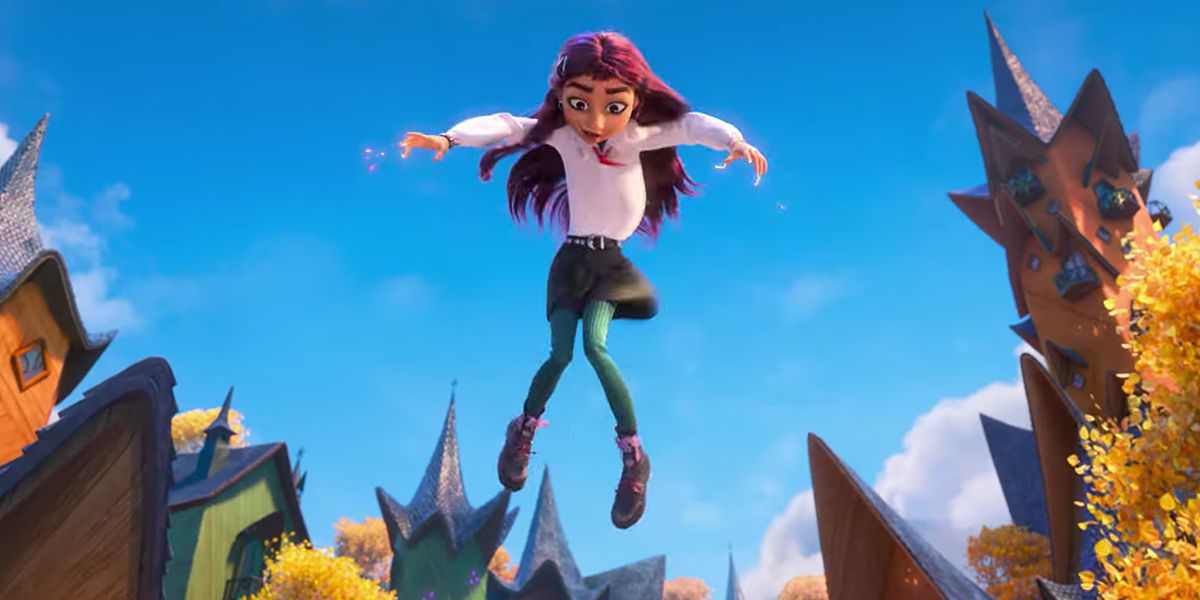
The release of the official teaser trailer for "Hexed" ushered in a new, and arguably more significant, wave of controversy. While some lauded the vibrant backgrounds of Hexe, the magical world Billie Doe inhabits, and the engaging voice work of Hailee Steinfeld, a critical mass of viewers quickly identified an unusual pattern in the visual composition. Across numerous shots, the central action, character expressions, and vital plot elements appeared consistently confined to the very middle of the frame.
This compositional choice immediately raised red flags for many in the filmmaking and animation communities. Unlike traditional cinematic framing, which often utilizes the full breadth of the widescreen aspect ratio for dynamic compositions, expansive environments, and sophisticated visual storytelling, "Hexed" seemed to deliberately restrict its focal points. The suspicion quickly mounted that this was a strategic decision to ensure that when the horizontal footage is cropped into a vertical 9:16 aspect ratio – the standard for platforms like TikTok, Instagram Reels, and YouTube Shorts – no crucial information would be lost. Social media platforms, particularly X (formerly Twitter), became a hotbed of discussion, with users sharing examples and overlaying 9:16 guides onto the trailer to demonstrate the perceived design choice. The immediacy and virality of these observations underscored the profound impact of social media on how film content is consumed and dissected, even before a movie’s release.
Supporting Data and Industry Context
The "Hexed" framing controversy is not an isolated incident but rather a symptom of broader trends and tensions within the entertainment industry, particularly concerning the intersection of artistic vision and commercial imperative in the digital age.
The Aspect Ratio Debate in Modern Cinema
The discussion around "Hexed"’s framing echoes earlier, high-profile debates concerning aspect ratios in cinema. Christopher Nolan’s recent "The Odyssey" trailer, for instance, sparked extensive discourse about the "best" way to watch a movie, owing to his distinctive use of IMAX film. Nolan’s commitment to shooting in IMAX means that his films are often composed for varying screen shapes, requiring careful consideration to ensure that crucial visual information is not lost when presented in standard widescreen formats. This often means avoiding placing vital elements at the extreme top or bottom of the original IMAX frame, as these areas may be cropped in more common theatrical or home viewing setups.
Historically, aspect ratios have been integral to cinematic artistry, with filmmakers meticulously choosing ratios like 4:3, 1.85:1 (widescreen), 2.35:1 (Cinemascope), or even unique ratios to enhance narrative, mood, and immersion. Each ratio offers a different canvas for storytelling, influencing how characters relate to their environment, how suspense is built, and how emotional beats are conveyed. The idea that a film’s primary framing might now be dictated not by the grandiosity of a cinema screen, nor the standard of a television, but by the narrow verticality of a phone, represents a significant paradigm shift, challenging long-held principles of visual composition.
The Rise of Vertical Content and its Influence
The driving force behind the speculation surrounding "Hexed"’s framing is the undeniable ascendancy of vertical video content. Platforms like TikTok have revolutionized how billions consume media, particularly among younger demographics. Data consistently shows that mobile devices are the primary portal for entertainment for a significant portion of the global population, and the vertical format, optimized for handheld viewing, has become a dominant mode of engagement.
This shift presents a compelling business case for studios. To capture the attention of a mobile-first generation, content creators are increasingly adapting their output for these platforms. For a major studio like Disney, with immense marketing budgets and a constant need to engage diverse audiences, tailoring content for maximum shareability and visibility on these pervasive social media channels becomes a powerful incentive. The creative implications, however, are profound. Designing for a vertical crop inherently limits the horizontal scope of a shot, potentially sacrificing the panoramic vistas, intricate background details, or dynamic spatial relationships that often define cinematic storytelling. While it might optimize for casual, single-glance viewing, critics argue it risks flattening the visual language and reducing the immersive potential of a film.
The "Disneyfication" Critique and Creative Homogenization
The framing controversy also ties into a broader critique often leveled at major studios, dubbed "Disneyfication" – a term describing a perceived trend towards generic aesthetics, narrative predictability, and an aversion to creative risks, often driven by market research and brand consistency. The comparison between "Hexed" and DreamWorks’ upcoming "Forgotten Island" highlights this concern. Many online commentators have expressed that "Forgotten Island" appears to embrace a more distinctive art style and a bolder use of its cinematic frame, making it feel more "creative" and "story-driven" in contrast to "Hexed."
Critics of "Hexed" describe its trailer as "soft and generic," suggesting it "doesn’t push its colors, it doesn’t play with its angles, there’s no creativity in the design of its characters." This sentiment underscores a tension between artistic innovation and commercial viability. In an era where intellectual property is king, and franchises are meticulously managed, studios may prioritize broad appeal and formulaic approaches to mitigate financial risks. However, as the "Hexed" controversy demonstrates, this strategy can backfire, leading to accusations of sacrificing artistic distinctiveness for perceived market safety, particularly for a film that purports to be an "ode to the imagination." The perceived lack of trust in its audience’s engagement capacity, by reducing complex compositions to central focal points, directly contradicts the film’s thematic promise of uniqueness.
Official Responses and Expert Commentary
While the debate rages across social media and within industry circles, Disney has, as of yet, maintained a characteristic silence on the specific allegations regarding "Hexed"’s framing. This lack of an official statement is typical for major studios, who often choose not to directly address online controversies unless they escalate significantly or directly impact box office performance. Their strategy is usually to let the conversation subside or to subtly counter criticisms through positive marketing narratives.
Disney’s Stance (or Lack Thereof)
The absence of a direct response from Disney is subject to various interpretations. It could indicate that the studio does not view the criticism as substantial enough to warrant a public comment, preferring to let the film speak for itself upon release. Alternatively, it could be a strategic decision to avoid legitimizing the "TikTok framing" narrative, which could be seen as an admission of creative compromise. Studios are often careful about how they frame their artistic choices, and confirming a commercial motivation for compositional decisions might detract from the film’s perceived artistic merit. Instead, they might choose to emphasize the film’s story, characters, and overall positive themes.
Voices from the Animation Community
Despite the official silence, the online discourse has been rich with commentary from various corners of the animation and film communities. Many voices have expressed dismay, viewing the perceived vertical-optimization as a dangerous precedent.
One prominent argument, widely shared on X, states: "The bad framing for the sake of TikTok/YouTube shorts sharing is part of what makes movies look amateur, since good framing and blocking are a skill." This sentiment highlights a core concern among professionals: that fundamental principles of cinematography and visual storytelling, honed over a century of filmmaking, are being eroded. Good framing is not merely about placing objects within a rectangle; it’s about guiding the viewer’s eye, establishing mood, conveying emotion, and deepening narrative through spatial relationships and compositional balance. Reducing this to a crop-friendly center point is seen by some as a degradation of the craft.
Another commentator lamented, "TikTok formats have way too much influence these days. It’s a shame because it kills creativity and everything you see around is empty." This critique extends beyond "Hexed" to a broader anxiety about the homogenizing effect of social media trends on creative output. When content is designed primarily for quick, passive consumption, the incentive for bold, challenging, or complex visual artistry diminishes. The film’s stated message of embracing uniqueness is ironically undermined by a visual approach perceived as generic and commercially driven.
However, counterarguments have also emerged, pointing out that drawing conclusions solely from a trailer can be misleading. A trailer is a montage of highlights, often cut for fast pacing and impact, which might naturally favor close-ups and centered action over wider, more contemplative shots. It’s also been suggested that Disney has the technical capability to produce bespoke teasers for different platforms, reframing horizontal shots for vertical use without necessarily compromising the original film’s composition. This implies that the centered framing in the main trailer might be an intentional aesthetic choice rather than a universal design principle for the entire movie.
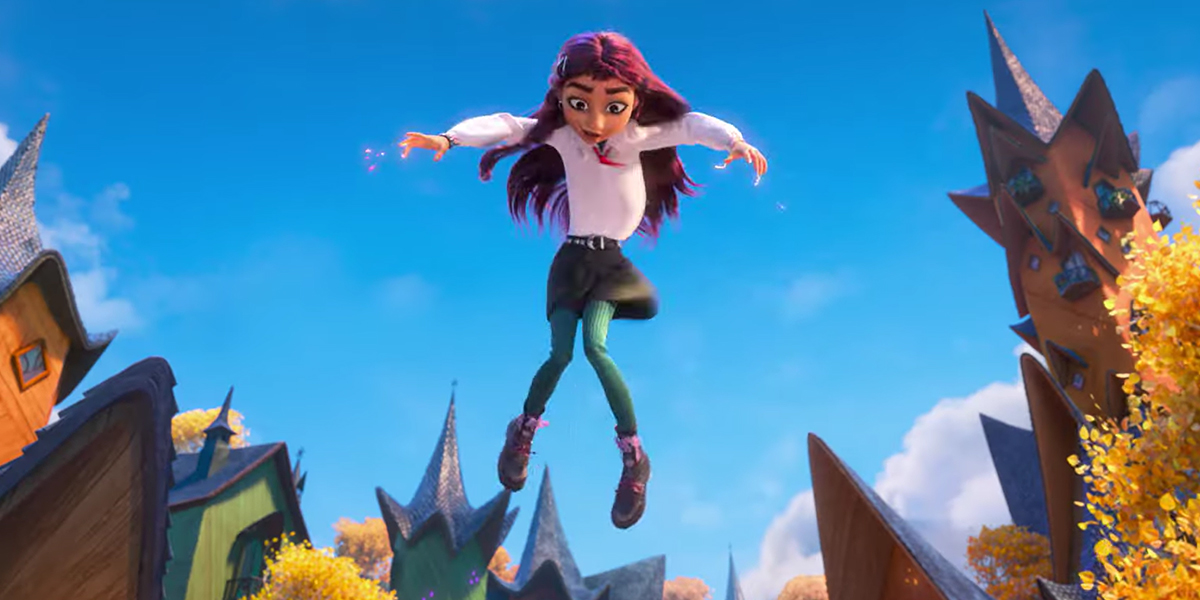
Furthermore, some defenders of the framing have invoked the names of celebrated filmmakers like Stanley Kubrick and Wes Anderson, renowned for their distinctive use of symmetrical and centered compositions. This argument posits that centered framing is a legitimate aesthetic choice that predates social media, offering a sense of order, focus, or even surrealism. While this is true, critics would likely counter that the context and intent behind such framing are crucial. Kubrick and Anderson’s symmetrical shots are part of a deliberate, overarching visual language, often imbued with thematic significance. If "Hexed"’s centered framing is primarily driven by the commercial goal of social media compatibility, rather than a profound artistic vision, then the comparison becomes less valid. The debate thus hinges on distinguishing between artistic intent and commercial compromise.
Implications for Filmmaking and Audience Engagement
The "Hexed" framing controversy transcends a single animated film; it acts as a microcosm for larger shifts in the entertainment industry, posing significant questions about the future of visual storytelling, audience expectations, and artistic integrity.
The Future of Film Composition in a Multi-Platform World
The most immediate implication is for the craft of film composition itself. If studios increasingly adopt a "vertical-first" or "crop-safe" mentality, it could fundamentally alter how cinematographers, animation directors, and visual artists approach their work. Will the traditional widescreen canvas become a secondary consideration, with filmmakers prioritizing the central, crop-friendly area? This could lead to a "lowest common denominator" approach, where visual dynamism and expansive world-building are sacrificed for universal compatibility. The rich visual tapestry that makes cinema so immersive could be flattened, diminishing the artistic potential of the medium.
Moreover, this trend reflects an ongoing redefinition of "watching a movie." For many, particularly younger audiences, the cinematic experience is no longer confined to a dark theater or a living room TV. It’s an on-the-go, multi-tasking activity, often consumed on a small screen amidst distractions. If "Hexed" is indeed designed for such consumption, it signifies a studio’s direct acknowledgement and catering to this casual, fragmented viewing habit. The question then becomes: can deep, enchanting storytelling truly thrive when its visual presentation is optimized for fleeting attention spans?
Audience Expectations and Artistic Integrity
The controversy also highlights a growing tension between audience expectations and artistic integrity. A segment of the audience, particularly film enthusiasts and animation purists, expects a certain level of creative ambition and fidelity to traditional cinematic principles. They view perceived commercial compromises, like tailoring framing for social media, as a betrayal of the art form. For a film like "Hexed," which is themed around imagination and individuality, this perceived compromise feels particularly ironic and contradictory. "For a work that claims to be an ‘ode to the imagination,’ showing so little trust in its audience… that hurts," as one commenter noted.
Conversely, a broader, more casual audience might be entirely unaware of or indifferent to the technicalities of framing. For them, accessibility and immediate engagement on their preferred platforms might be paramount. Studios are thus caught in a challenging balancing act: how to appeal to both the discerning cinephile and the casual mobile viewer, without alienating either. The risk is that by trying to be everything to everyone, a film becomes truly distinctive to no one.
The Competitive Landscape: Disney vs. DreamWorks
Finally, the side-by-side comparison with DreamWorks’ "Forgotten Island" underscores the competitive dynamics within the animation industry. While Disney has long been the dominant force, other studios are constantly vying for market share and critical acclaim. If "Forgotten Island" truly embodies a more adventurous and artistically uncompromising approach, as many currently perceive, it could gain an advantage in critical reception and audience goodwill, especially among those who feel "Disneyfication" is stifling creativity.
The contrasting release dates – "Forgotten Island" on September 25 and "Hexed" on November 25 – will provide a real-world test of these divergent strategies. Will the perceived "generic" approach of "Hexed," if indeed confirmed, resonate with a mass audience, or will the more creatively lauded "Forgotten Island" capture the imagination of viewers seeking originality? The outcomes of these two films, particularly in light of the framing debate, could offer valuable insights into the future direction of animated feature films and the ongoing struggle to balance artistic ambition with the ever-evolving demands of a multi-platform media landscape.
 Evan Lee Salim
  Nana
Nana  Ammar Sabilarrohman