
 By Nana Muazin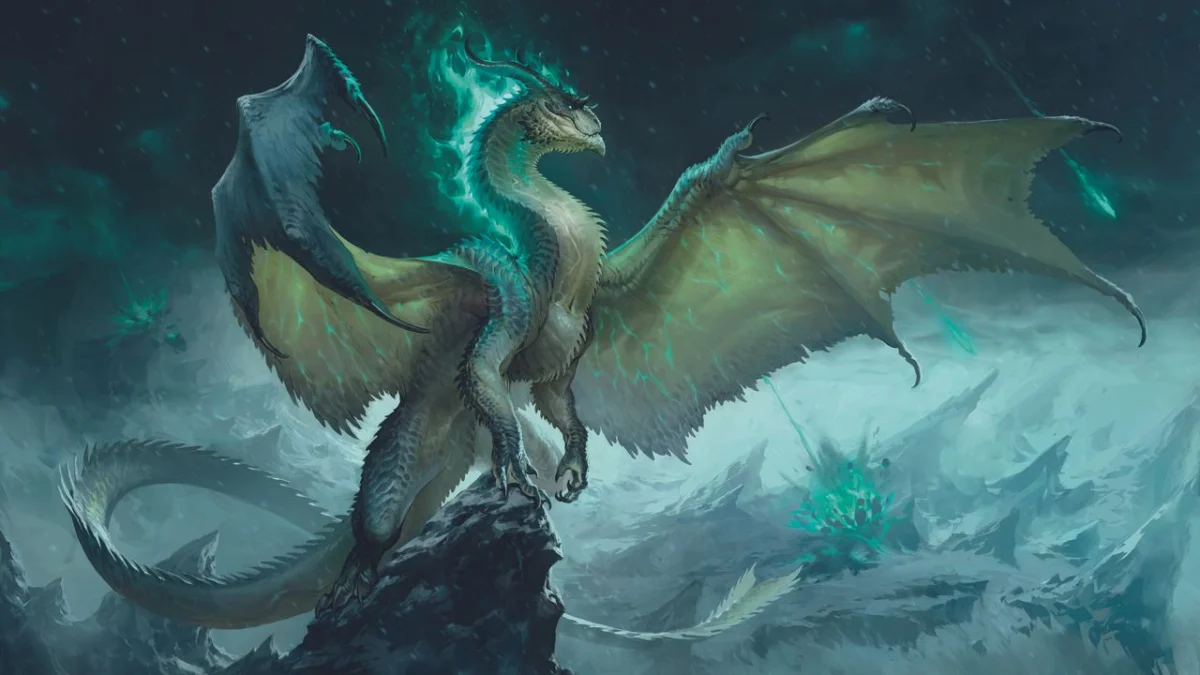
Madrid, Spain – Digital artist Javier Franco Santacreu has once again captivated the art world with his latest personal piece, a breathtaking depiction of a dragon poised on the brink of unleashing an epic calamity. The artwork, originally featured in the esteemed ImagineFX magazine, stands as a testament to the boundless creativity afforded by digital mediums and Santacreu’s masterful command of narrative through visual design.
At the core of Santacreu’s artistic philosophy lies a profound appreciation for the dragon – a creature he describes as offering "a wide variety of types and forms," providing immense creative freedom while simultaneously challenging the imagination to forge something truly novel. This particular piece, however, transcends mere aesthetic appeal, serving as a powerful visual narrative of impending doom, meticulously crafted to evoke a sense of awe and dread in equal measure.
The Anatomy of a Digital Dragon: Santacreu’s Creative Process
Santacreu’s approach to bringing this formidable beast to life is a methodical journey from abstract concept to finely rendered detail, a process that offers invaluable insights for aspiring and seasoned digital artists alike. He meticulously outlines his workflow, emphasizing the strategic choices made at each stage to amplify the artwork’s emotional resonance and visual impact.
Conceiving the Calamity: Initial Vision and Sketching
The genesis of this powerful artwork lay in Santacreu’s desire to portray a dragon in its most primal, menacing form. "For this personal piece, I wanted to portray a dragon in a powerful and menacing pose, as if it were a great threat about to unfold," he explains. This initial spark guided the foundational stages of his creation.
Before diving into the intricate details, Santacreu embarked on a series of preliminary sketches. These weren’t just simple outlines; they were crucial explorations of the dragon’s posture and body movement. He understood that the creature’s pose would be the primary conveyor of its power and the looming threat it represented. Just as a dancer uses their body to tell a story, Santacreu leveraged the dragon’s form to communicate its inherent danger and formidable presence. This iterative sketching process allowed him to experiment with different dynamics, ensuring that the final pose would be both biologically plausible and dramatically compelling. It’s a vital step, often overlooked by beginners, where the foundational energy and direction of the artwork are established.
Strategic Palette: Harnessing Cold Tones for Impact
Once the definitive pose and movement were established, Santacreu moved into the critical phase of color testing. This stage is not merely about choosing aesthetically pleasing hues but about leveraging color theory to reinforce the narrative and emotional landscape of the scene.
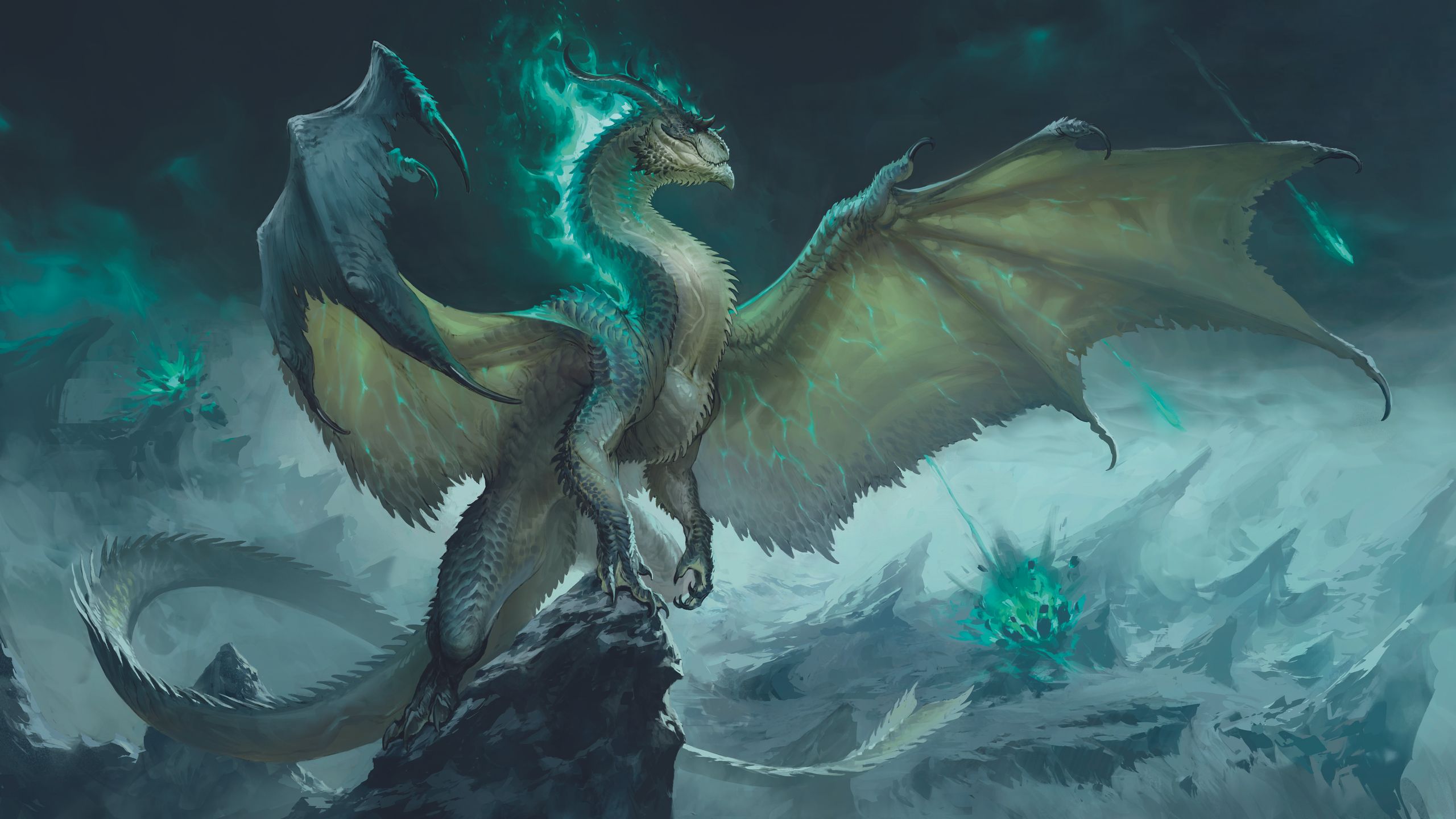
"Since it’s a cold scene, I used a colour scheme consisting mainly of blues and greens," Santacreu notes. This deliberate choice of a cool palette is instrumental in setting the artwork’s somber, menacing tone. Blues often evoke feelings of coldness, vastness, and a certain detachment, while greens, particularly muted ones, can suggest decay or an ominous natural force. Together, these colors create an atmosphere of foreboding, hinting at the harsh environment and the chilling nature of the impending disaster. The cold scheme also serves to visually isolate the dragon, making its fiery potential feel even more impactful by contrast, even if that fire is yet to be unleashed. This strategic use of color transforms the visual into a visceral experience, immediately communicating the "incoming calamity" long before specific details are observed.
Orchestrating the Gaze: Composition and Narrative Flow
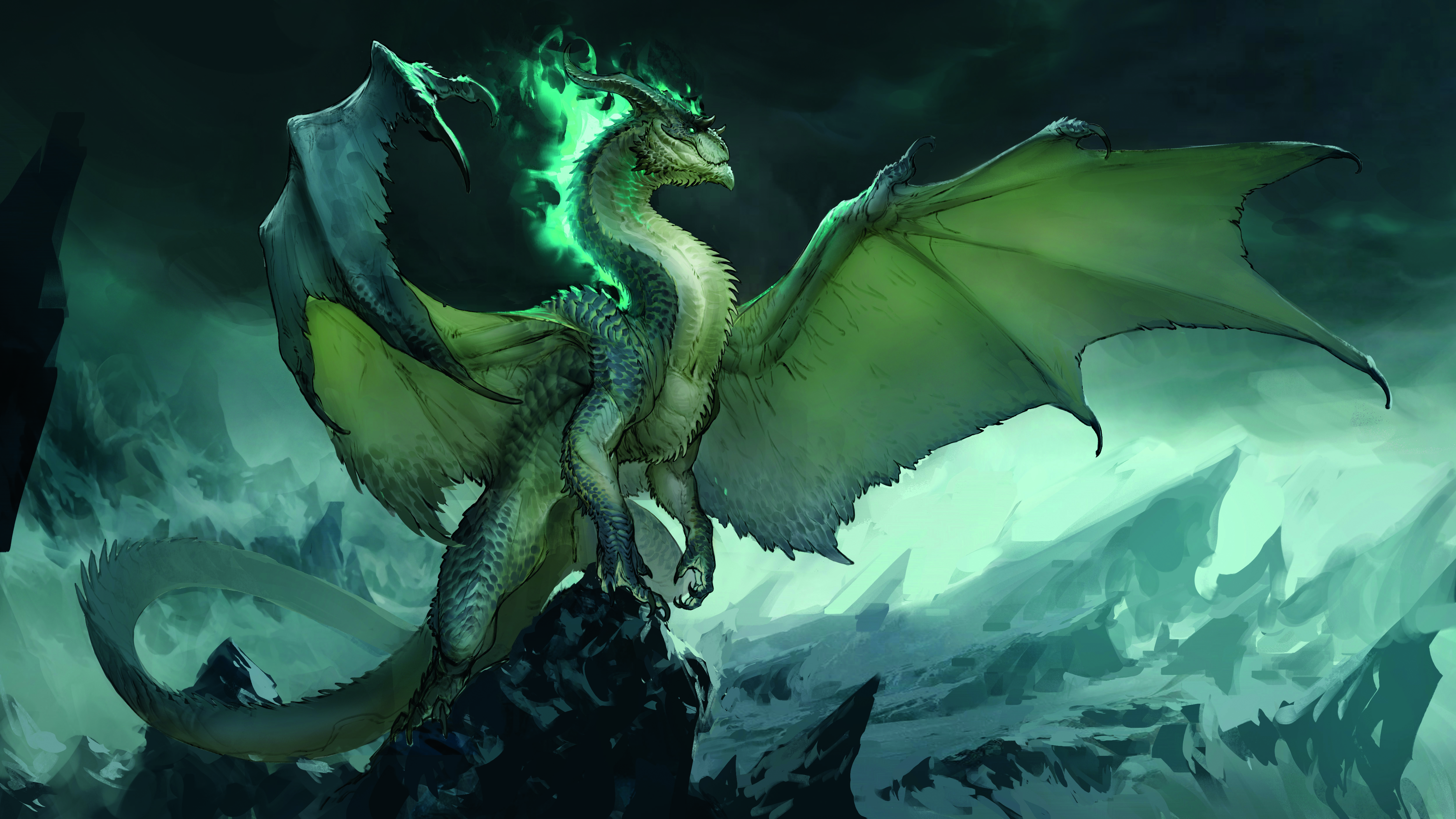
With the dragon’s form and the general color scheme in place, Santacreu shifted his focus to the background – an element he regards not merely as a backdrop, but as an active participant in the narrative. "The background reinforces its posture and adds narrative to depict an incoming calamity," he states.
The creation of the background involved "broad brushstrokes to blend the mountains and sky." This technique, often employed in traditional landscape painting, allows for a sense of grandeur and atmospheric depth without drawing excessive attention away from the main subject. More importantly, Santacreu paid meticulous attention to compositional principles, particularly the use of negative space and directional lines. Negative space – the area around and between the main subjects – is skillfully manipulated to enhance the dragon’s silhouette and emphasize its scale. The artist intentionally uses the contours of the mountains and the sweep of the sky to create invisible lines that guide the viewer’s eye towards the dragon, ensuring that its powerful form remains the undeniable focal point.
A crucial element in this stage was the strategic placement of light. "The light in the background frames the silhouette of the wings," Santacreu explains. This backlighting technique dramatically accentuates the dragon’s colossal wings, which "take up almost the entire canvas, giving it a strong presence in the scene." By framing the wings with light, Santacreu not only highlights their impressive span but also imbues them with an almost sacred, yet terrifying, quality, further cementing the creature’s role as a harbinger of destruction. The expressive quality of the wings, akin to human hands in their ability to convey emotion and intent, becomes paramount through this careful lighting, signaling the immense power held within their shadow.
The Art of Refinement: Bringing Depth and Detail to Life
The final stage of Santacreu’s process is where the artwork truly comes alive, transitioning from a compelling composition to a richly textured and immersive scene. This involves the intricate work of detailing and refinement, a phase that demands both precision and an understanding of visual hierarchy.
"I added detail to the scales, cleaned up the shapes to define the planes of depth, and added the meteorites and blizzard," Santacreu elaborates. The addition of individual scales brings a tactile realism to the dragon’s skin, suggesting ancient, hardened armor. Cleaning up shapes and defining planes of depth are crucial steps for achieving photographic realism and a sense of three-dimensionality. This involves meticulously adjusting values, edges, and atmospheric perspective to ensure that objects appear to recede or advance naturally, preventing the image from looking flat. Santacreu’s emphasis on this aspect underscores a fundamental principle of illustration: clarity in depth perception is paramount for a convincing final piece.
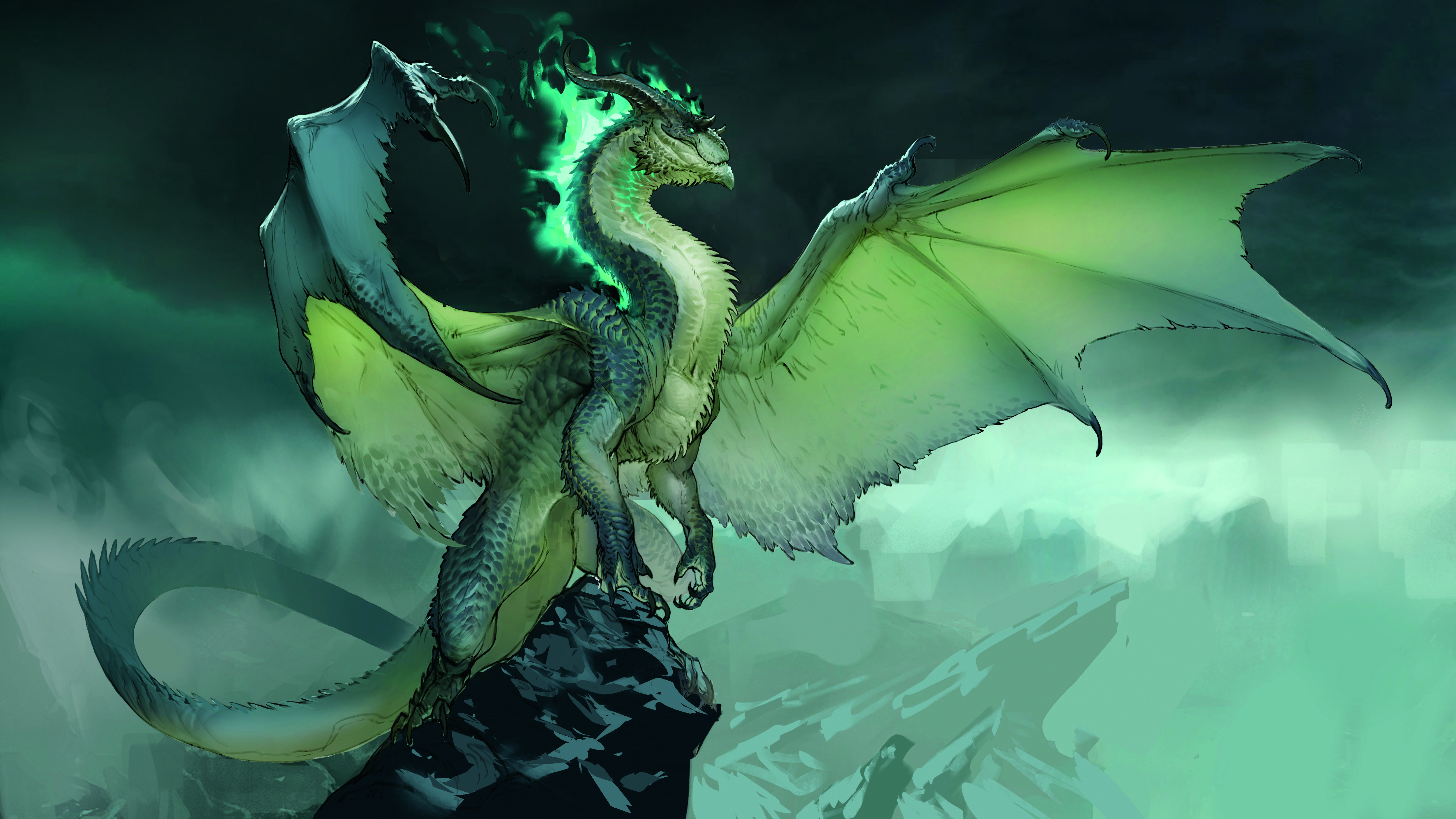
The narrative elements of meteorites and the blizzard are not merely decorative additions; they are vital to solidifying the "incoming calamity" theme. The streaks of meteorites cutting through the frigid sky inject dynamic action and a sense of urgent peril, while the swirling blizzard reinforces the harsh, unforgiving environment that the dragon commands. These details transform the background from a static landscape into an active participant in the unfolding drama, enhancing the artwork’s overall storytelling power. Santacreu wisely advises, "You can always add more detail, but the key to finishing an illustration is ensuring the planes of depth are clearly defined in relation to one another." This encapsulates the balance between adding intricate textures and maintaining a clear visual structure, preventing the artwork from becoming muddled.
Beyond the Canvas: The Enduring Allure of Dragons in Art
Santacreu’s work is a powerful reminder of the enduring fascination with dragons across human cultures and artistic expressions. From the benevolent, wise serpents of East Asian mythology to the fearsome, treasure-hoarding beasts of Western folklore, dragons have transcended time and geography to become one of humanity’s most potent symbols. Their adaptable nature, as Santacreu points out, makes them an ideal subject for artists seeking to explore themes of power, mystery, and the sublime.
In contemporary fantasy art, dragons continue to reign supreme, evolving with each generation of artists and storytellers. Santacreu’s depiction, with its focus on raw power and an impending threat, taps into a primal fear and respect for these mythical creatures. His ability to render such a complex and emotionally charged scene highlights the sophisticated techniques now available to digital artists. The freedom to experiment with forms, textures, and lighting in a non-destructive digital environment empowers artists to push the boundaries of what is possible, bringing increasingly vivid and immersive worlds to life.
Empowering the Digital Artist: Tools and Inspiration
Santacreu’s journey from concept to finished artwork also serves as an implicit guide for aspiring digital artists. His process underscores the importance of a solid foundation in traditional art principles – sketching, composition, color theory, and understanding light – even when working in a digital medium. The digital tools, such as the best digital art software and drawing tablets, are merely extensions of the artist’s hand and vision.
Platforms like Creative Bloq and ImagineFX play a crucial role in disseminating such knowledge and inspiring a global community of artists. By showcasing the workflows of professionals like Santacreu, these publications demystify the creative process, making high-level techniques accessible to a wider audience. They provide not only inspiration but also practical guidance on the tools and resources necessary to embark on or advance one’s digital art journey. For those inspired by Santacreu’s work, exploring resources like guides to the best digital art software and drawing tablets is a logical next step, offering the means to translate their own imaginative visions into tangible art.
A Glimpse into the Future of Fantasy Art
Javier Franco Santacreu’s dragon is more than just a striking image; it is a meticulously constructed piece of narrative art that exemplifies the pinnacle of modern digital illustration. It showcases how artists can blend traditional artistic principles with cutting-edge technology to create deeply resonant and impactful visuals. His work contributes to the ever-evolving landscape of fantasy art, constantly challenging perceptions and expanding the visual lexicon of mythical creatures.
The implications of such artistry are far-reaching. It inspires a new generation of creators, demonstrating the potential for storytelling and emotional depth within the digital realm. It reinforces the idea that true artistry lies not just in technical skill, but in the ability to imbue an image with compelling narrative and profound emotion. As digital art continues to advance, artists like Santacreu will undoubtedly lead the charge, pushing the boundaries of imagination and inviting viewers into worlds both terrifying and beautiful.
For those eager to delve deeper into the world of digital art and creature design, Santacreu’s insights offer a masterclass in conceptualization, execution, and the critical importance of artistic intention. His work is a powerful testament to the fact that even in a world saturated with digital imagery, originality and masterful execution continue to captivate and inspire.
This article originally appeared in ImagineFX. Subscribe to ImagineFX to never miss an issue. Print and digital subscriptions are available. Inspired? See below for deals on drawing tablets that we’ve reviewed.
Creative Bloq is now easier to access than ever before with our on-the-go app, which brings you all the content you know and love from our website, but in a super-streamlined design.
Download the Creative Bloq app for iOS
Download the Creative Bloq app for Android
Sign up to Creative Bloq’s daily newsletter, which brings you the latest news and inspiration from the worlds of art, design and technology.
 Evan Lee Salim
  Nana
Nana  Ammar Sabilarrohman