
 By Nana
The landscape of professional content creation has undergone a seismic shift. As of 2026, generative AI has evolved from a novel curiosity into an industry standard, with AI-generated text now outpacing human-authored content across the social media ecosystem. For marketers, agencies, and enterprise communication teams, the question is no longer whether to adopt AI, but how to integrate it without sacrificing brand integrity, factual accuracy, or the nuanced emotional resonance that distinguishes human connection.

The Mechanics of Machine-Generated Prose
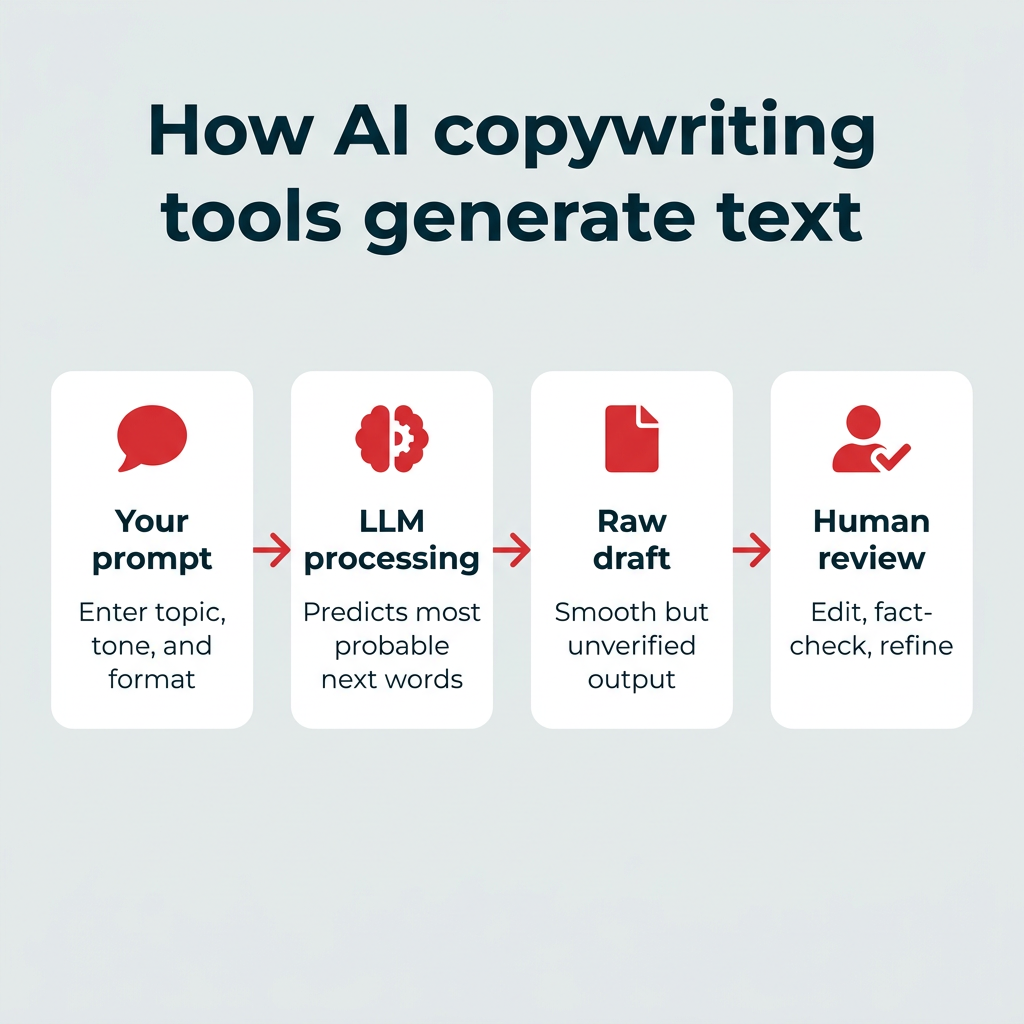
To understand the current state of AI copywriting, one must first demystify the technology. Most contemporary tools are powered by Large Language Models (LLMs) that function as sophisticated pattern-prediction engines. These systems do not "think" in the traditional sense; they process vast datasets to predict the most statistically probable sequence of words in response to a user prompt.

While this allows for the rapid assembly of grammatically sound and syntactically smooth copy, it introduces a significant "competence gap." Because these models lack a foundational understanding of truth or context, they are prone to "hallucinations"—the confident assertion of false facts or fabricated statistics. For the marketing professional, this makes AI a powerful but literal-minded intern: capable of incredible speed, but perpetually in need of rigorous supervision.
Chronology of the AI Adoption Curve
The trajectory of AI in marketing has been rapid and non-linear:
- 2022-2023: The Experimental Phase. Early adopters began testing basic LLMs for brainstorming and overcoming writer’s block. Tools were rudimentary, often requiring extensive "prompt engineering" to produce usable results.
- 2024: The Integration Phase. Platforms like Hootsuite and HubSpot began embedding native AI assistants directly into existing workflows. This marked the shift from "copy-pasting from a chatbot" to "AI-assisted production" within professional dashboards.
- 2025: The Governance Crisis. As AI-generated content flooded the web, brands faced backlash regarding authenticity and misinformation. This led to the rise of specialized "Brand Voice" AI models designed to keep content within specific corporate guardrails.
- 2026: The Maturity Phase. The market has reached a state of "AI Saturation." Agencies now focus on the "Human-in-the-Loop" (HITL) model, where AI handles the heavy lifting of drafting, while human specialists focus exclusively on strategy, compliance, and emotional editing.
Supporting Data: The Consumer and Professional Divide
The adoption of these tools is driven by a clear economic imperative, yet it is tempered by growing consumer skepticism. Industry data from 2026 highlights a complex paradox:
- The Productivity Gain: Marketing teams utilizing AI-assisted workflows report an average reduction in content production time of 40–60%.
- The Accuracy Barrier: Despite this efficiency, 60% of advertising professionals identify "factual accuracy" as their primary barrier to full-scale AI adoption.
- The Consumer Sentiment Gap: Perhaps most critically, 50% of consumers now report a preference for brands that explicitly avoid the use of generative AI in consumer-facing communications. This data suggests that "AI-native" content is increasingly perceived as cold or generic, reinforcing the necessity of a "human touch."
Official Perspectives: The Role of the Human Strategist
Industry leaders emphasize that AI should be viewed as a tool for "augmentation, not replacement." The consensus among creative directors is that while an LLM can simulate a tone of voice, it cannot replicate the lived experience required to build genuine brand loyalty.
"The goal is to let AI handle the busywork—the initial drafts, the rephrasing, and the mundane structural bits," says the current consensus among marketing strategists. By offloading these tasks, professionals are freed to focus on high-level strategic positioning, which remains the exclusive domain of human cognition.
Comparative Analysis of Top 2026 Tools
As the market matures, the differentiation between tools has become more pronounced:

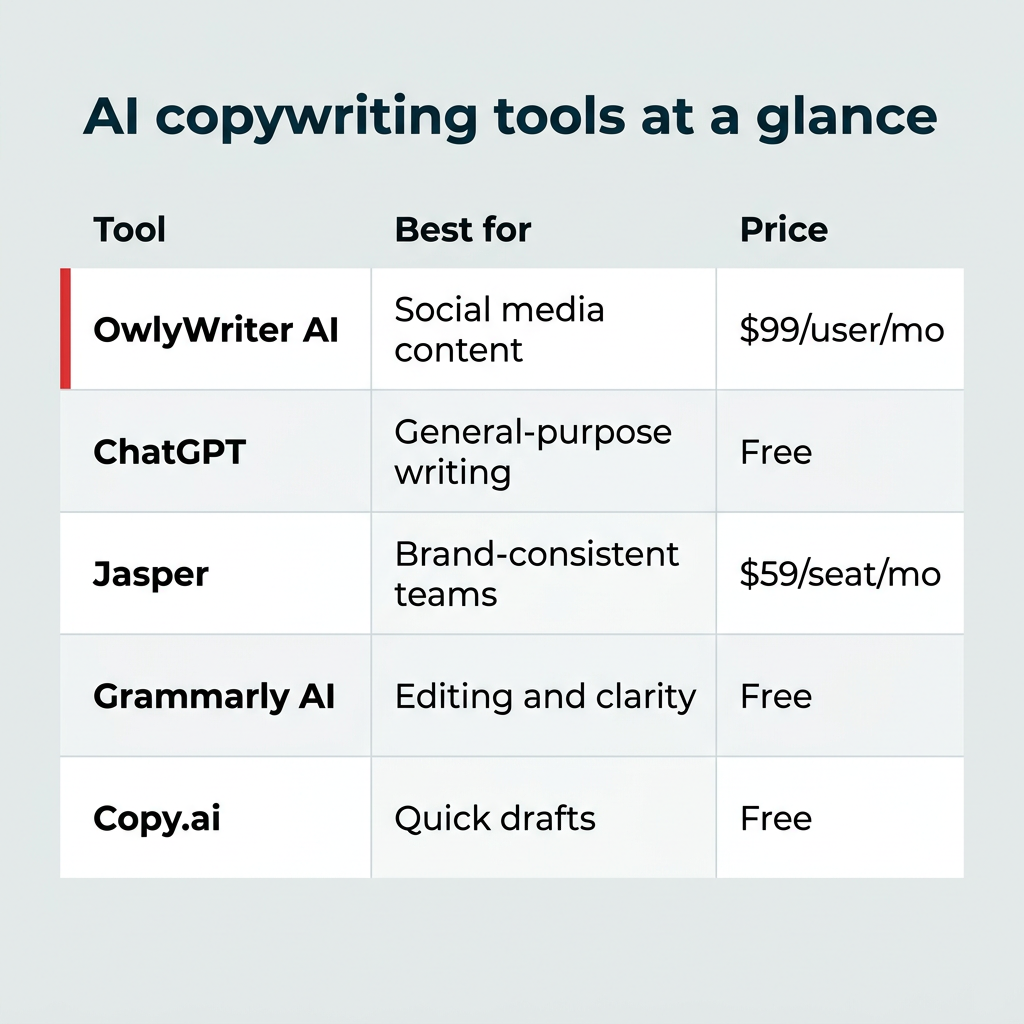
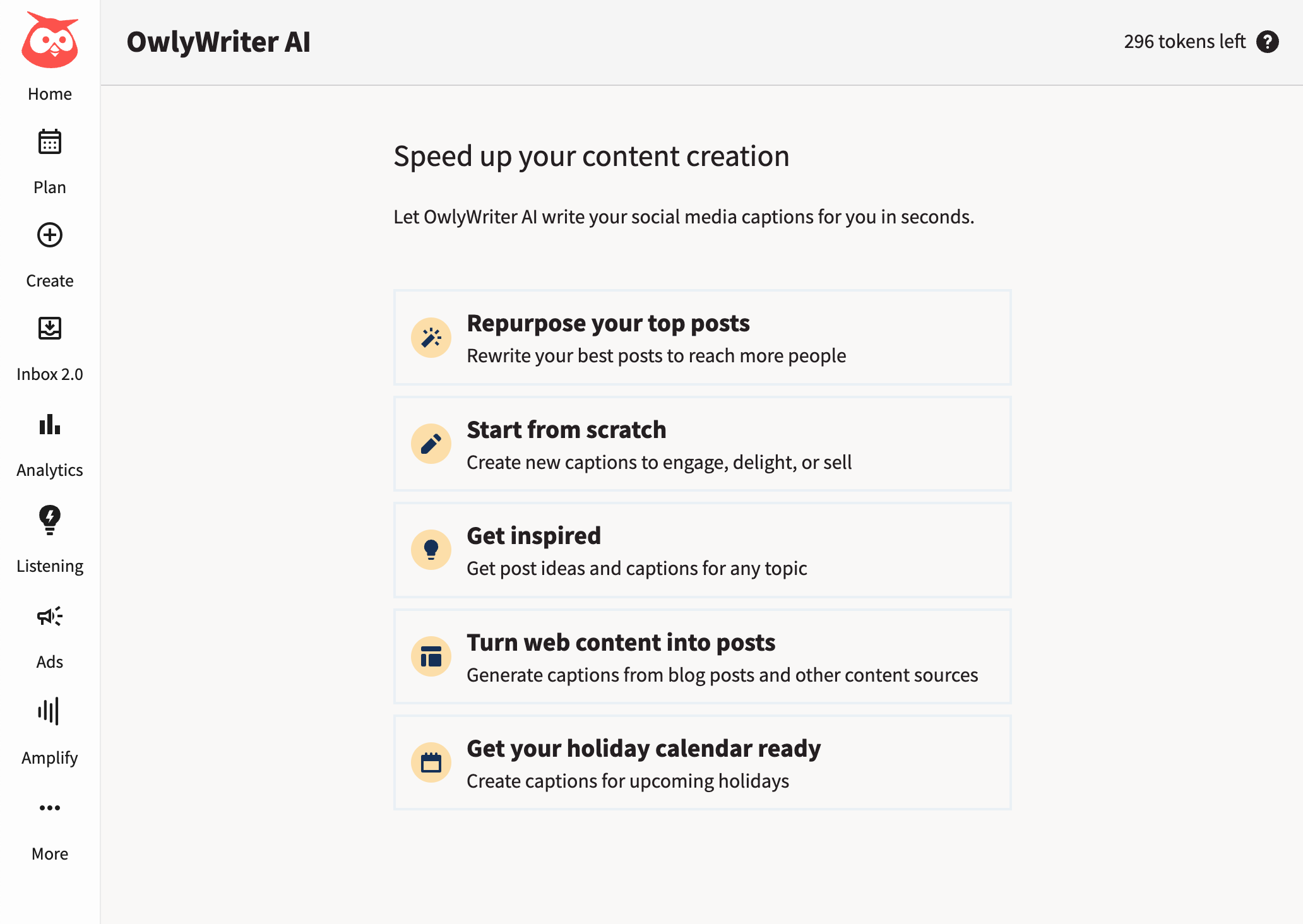
1. OwlyWriter AI (Hootsuite)
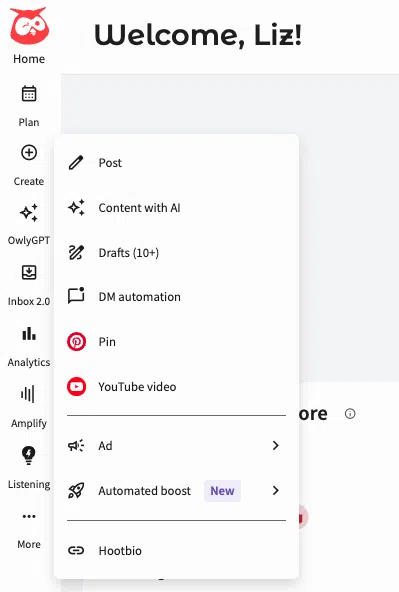
Optimized for social media, this tool is unique because it integrates directly into the scheduling dashboard. It is specifically designed to handle brand voice and compliance, making it the preferred choice for social media managers who need to move quickly from ideation to publishing.
2. ChatGPT (OpenAI)
Remains the industry benchmark for general-purpose utility. Its conversational memory and ability to handle complex, unstructured requests make it an essential Swiss Army knife for content marketers.

3. Jasper & Copy.ai
These platforms have carved out a niche in team collaboration. Unlike individual chat interfaces, these tools offer cloud-based "workspaces" where teams can store brand guidelines, style guides, and collaborative drafts, ensuring consistency across a large organization.

4. Grammarly & DeepL Write
These tools occupy the "refinement" layer of the stack. Rather than generating content from scratch, they serve as advanced editors that polish existing text, adjust tone, and ensure clarity, bridging the gap between a rough AI draft and a professional-grade final product.

Strategic Implications: Protecting the Brand
The rise of AI has introduced new risks, particularly in regulated industries. For companies in finance, healthcare, or legal services, the implications of a "hallucinated" fact can be catastrophic.

The Mandate of Human Review
To mitigate these risks, organizations must implement a "Human-in-the-Loop" workflow:

- Fact-Check Everything: Every statistic and external claim must be verified against primary, authoritative sources.
- Brand Voice Alignment: Use tools that allow for custom "voice" training to ensure the output sounds like the brand, not like a default LLM.
- Compliance Sign-off: For enterprise teams, AI-generated content must pass through the same legal and compliance filters as any other form of communication.
Future Outlook: The "Authenticity Premium"
As we look toward the remainder of 2026 and beyond, the market is likely to see an "authenticity premium." As high-quality, human-centric content becomes scarcer due to the deluge of automated output, brands that invest in human creativity will likely see higher engagement rates and improved long-term brand equity.

The future of copywriting is not "Man vs. Machine," but rather "Man plus Machine." The most successful marketers will be those who master the art of the prompt, the rigor of the fact-check, and the nuance of the final, human edit. In a world of automated text, the human voice is rapidly becoming the ultimate competitive advantage.
 Muslim
  Nana Muazin
  Lina Irawan