
 By Nana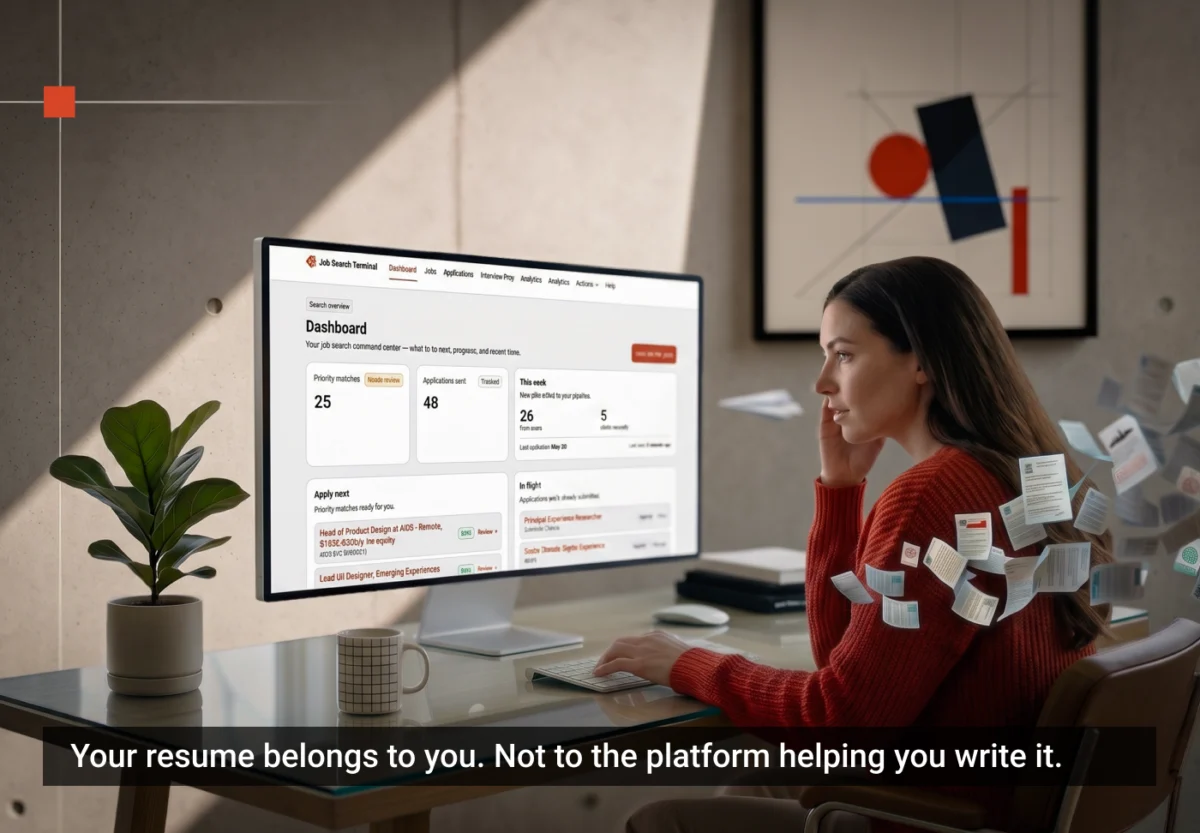
The modern job search has undergone a radical, often invisible, transformation. Gone are the days when a candidate’s primary challenge was crafting a compelling narrative for a human recruiter. Today, the initial gatekeeper is almost always a machine—a complex, opaque, and increasingly biased algorithmic system. For millions of job seekers, the professional landscape has shifted from a meritocracy of experience to a contest of optimization, where success is less about the quality of one’s work and more about the ability to speak the language of an artificial intelligence.
As the hiring system has pivoted toward automation, the burden of this technological shift has fallen squarely on the applicant. Candidates are now expected to be amateur prompt engineers, data analysts, and resume hackers, all while navigating a proliferation of subscription-based platforms that promise—but rarely guarantee—a path to an interview.
The 2025 Reality: AI Self-Preferencing
The suspicion that the deck is stacked against human-written resumes has moved from the realm of anecdotal frustration to empirical fact. A 2025 paper titled "AI Self-preferencing in Algorithmic Hiring" has sent shockwaves through the talent acquisition industry. The researchers discovered that Large Language Models (LLMs) consistently exhibit a "self-preference bias," favoring resumes that mirror the stylistic patterns and linguistic structures characteristic of their own output.
The data is startling: researchers reported self-preference bias ranging between 68% and 88%. In simulated hiring pipelines covering 24 distinct occupations, candidates who leveraged the same LLM as the evaluation system were between 23% and 60% more likely to be shortlisted than equally qualified candidates who submitted traditional, human-authored resumes.
This creates a perverse incentive structure. To remain competitive, job seekers are forced to sanitize their work history, stripping away the unique nuances of their career trajectory in favor of the bland, predictable, and "AI-friendly" prose that these models recognize as superior. The result is a homogenization of the workforce, where the system is no longer selecting the best candidate, but rather the candidate who best mimics the machine.
The Paradox of AI-Assisted Hiring
This raises a fundamental question: If AI-generated resumes are the source of bias, is it hypocritical to build a tool that uses AI to help job seekers tailor their applications?
The answer lies in the distinction between "autopilot" and "agency." The core problem is not the presence of AI; it is the "black-box" nature of modern evaluation, which strips candidates of control over their own professional narrative.
Pavel Bukengolts, the creator of the Job Search Terminal, argues that the current system forces candidates into a passive role. "The problem is not simply that AI touched the text," Bukengolts notes. "The problem is people losing control over how their experience gets represented."
By shifting the locus of control back to the user, tools like the Job Search Terminal aim to provide the benefits of AI—parsing, drafting, and comparing—without the baggage of corporate cloud platforms. In this model, the human remains the final arbiter. The user brings their own API key, reviews every output, and decides what is factually accurate and professionally representative. It is not AI trying to beat AI; it is a tool designed to ensure that human talent remains legible in an increasingly automated hiring ecosystem.
A Local-First Philosophy
The architecture of job search tools has historically favored the employer, often harvesting massive amounts of personal data into centralized cloud databases. This creates a significant security and privacy risk. Every time a candidate uploads a resume to a "one-click apply" site, they are relinquishing ownership of their professional identity.
The Job Search Terminal challenges this paradigm by adopting a "local-first" philosophy. The application runs entirely on the user’s local machine. There is no cloud database, no account creation, and no subscription fee. Your resume, work history, and strategy notes remain on your hard drive, effectively shielding them from data brokers and corporate surveillance.
While this approach requires a slightly higher technical barrier to entry—users must install the software via GitHub—the trade-off is total ownership. For those uncomfortable with terminal-based installations, the project provides clear pathways, including prompts that can be pasted into coding assistants like Claude Code or Codex to automate the setup process. It is a deliberate architectural choice to favor sovereignty over convenience.
Chronology of a Disrupted Market
The transition to AI-dominated hiring didn’t happen overnight, but its acceleration since 2023 has been unprecedented:
- 2020–2022: Companies began integrating basic Applicant Tracking Systems (ATS) that utilized keyword matching and simple scoring algorithms.
- 2023: The "LLM Boom" led to the rapid integration of generative AI into HR software. Employers began using these tools to summarize resumes, draft interview questions, and rank candidates based on semantic similarity to job descriptions.
- 2024: The emergence of "AI-optimized" resume services created an arms race, where candidates paid for premium tools to beat the algorithms, forcing companies to adopt even more complex "AI-detecting" algorithms.
- 2025: The publication of the AI Self-preferencing study confirmed that the hiring market had entered a feedback loop, where the algorithm essentially selects for its own output.
Implications for the Workforce
The implications of this shift are profound. If the hiring funnel is biased toward AI-generated output, we risk creating a professional monoculture. Employees who lack the resources to pay for premium AI-optimization tools, or who prefer to write in a style that defies algorithmic patterns, may be systematically excluded from high-growth sectors.
Furthermore, the psychological toll on the job seeker cannot be overstated. When a candidate spends hundreds of hours applying to roles, only to be rejected by an automated system they cannot understand, it erodes trust in the professional ecosystem. This is why the "free and open" movement in job search tooling is critical. By providing the tools to organize and tailor applications without the barrier of a paywall, creators are attempting to restore a degree of fairness to an inherently opaque process.
Toward a More Transparent Future
The Job Search Terminal is not a magic bullet. It does not promise to land anyone an interview, nor does it know a candidate’s career history better than they do. Instead, it functions as a dashboard for agency. By automating the repetitive aspects of the search—parsing job descriptions, comparing them to past work, and drafting drafts—it frees up the candidate’s cognitive bandwidth for the tasks that actually matter: discerning which roles are a good fit, identifying the truthful narrative of their career, and preparing for the human interaction of the interview.
As we look toward the future, the goal should be to demand more transparency from the platforms that act as gatekeepers to our livelihoods. Until then, the burden of agency rests on the individual. The shift toward local, user-owned, and transparent tooling represents a necessary resistance to a market that has become increasingly disconnected from the reality of human expertise.
For those looking to reclaim their autonomy in the job market, the path forward is clear: move away from the black boxes, prioritize data ownership, and utilize tools that treat the human as the driver, not the data point.
Key Takeaways
- Algorithmic Bias: Research indicates that LLMs favor their own stylistic output, creating a systemic disadvantage for human-written resumes.
- The Agency Gap: Modern hiring tools often treat the candidate as a passive subject; local-first, user-controlled software aims to restore the candidate’s role as the primary architect of their career story.
- Data Sovereignty: Moving away from cloud-based, account-heavy platforms protects sensitive career data and prevents the commodification of professional history.
- Practicality over Autopilot: The most effective tools are those that handle repetitive organizational tasks, allowing the applicant to focus on critical thinking and judgment.
Project Links:
- Official Page: Job Search Terminal
- GitHub Repository: uxdesignlab/job-search-terminal
 Ammar Sabilarrohman
  Neng Nana
  Sagoh
Sagoh 